Automatic Exemption from Penalty: What CPAs Must Know After IRS Replaces First Time Abate
The IRS has replaced the familiar First Time Abate process with a new automatic exemption from penalty system — and many CPAs are still relying on outdated FTA playbooks. This guide breaks down exactly what changed, how the new automatic relief process works, and what penalty abatement strategies…
For years, First Time Abate (FTA) was the go-to move whenever a client landed a failure-to-file, failure-to-pay, or failure-to-deposit penalty. CPAs learned the script: verify compliance history, call the IRS, invoke FTA, wait. It worked well enough. Then, in 2026, the IRS changed the rules — introducing an automatic exemption from penalty that eliminated the need to request FTA for many common situations. Suddenly, the playbook most practitioners had memorized was out of date.
The change generated significant discussion across the tax professional community. Threads on r/taxpros surfaced quickly, with CPAs and EAs trying to figure out which clients would be covered automatically, which would still need manual advocacy, and how the new system interacted with existing penalty history. The IRS's stated goal was simplification, but the transition has created real confusion for firms mid-season. Many practitioners were specifically trying to determine which clients would qualify for an automatic exemption from penalty without any additional steps.
This article walks through exactly what the IRS changed, how the new automatic relief process works, which penalty scenarios it covers, and — critically — what CPAs must do differently right now to protect clients who fall outside the automatic threshold. Whether you manage 50 returns or 500, this shift has direct implications for how you handle penalty exposure at every stage of the engagement. Understanding who qualifies for an automatic exemption from penalty under the new rules is now a core competency for any CPA managing a substantial client base.
What Changed: From First Time Abate to Automatic Penalty Relief
First Time Abate was never formally codified in the Internal Revenue Code. It was an IRS administrative policy — a discretionary waiver the IRS extended to taxpayers who had a clean compliance history for the three prior years. CPAs had to request it, usually by calling the Practitioner Priority Service line or submitting a written request. The IRS granted it at a high rate, but only after a human reviewed the account. Unlike the new system, First Time Abate provided no true automatic exemption from penalty — it required taxpayers or their representatives to actively request relief and hope for a favorable discretionary decision.
The new automatic exemption from penalty process removes the request step for qualifying situations. When the IRS system detects that a taxpayer meets specific compliance criteria — broadly, a clean filing and payment history for the prior three years — the qualifying penalty is waived automatically at the time of assessment, before the taxpayer or practitioner ever sees the notice. In many cases, a penalty that would have appeared on a CP2000 or initial assessment notice simply does not appear at all.
This is a meaningful operational shift. The IRS's goal, as described in Treasury guidance on penalty administration, is to reduce the volume of low-value IRS-practitioner interactions and concentrate enforcement resources on genuinely non-compliant taxpayers. For clients who qualify, it is good news. For clients who do not — including those with a prior abatement, a history of late filings, or escalating penalties — the burden of proof and the process for requesting relief remains unchanged, and CPAs need to know exactly where the line is. For firms evaluating their automatic exemption from penalty approach, this trade-off compounds over time.
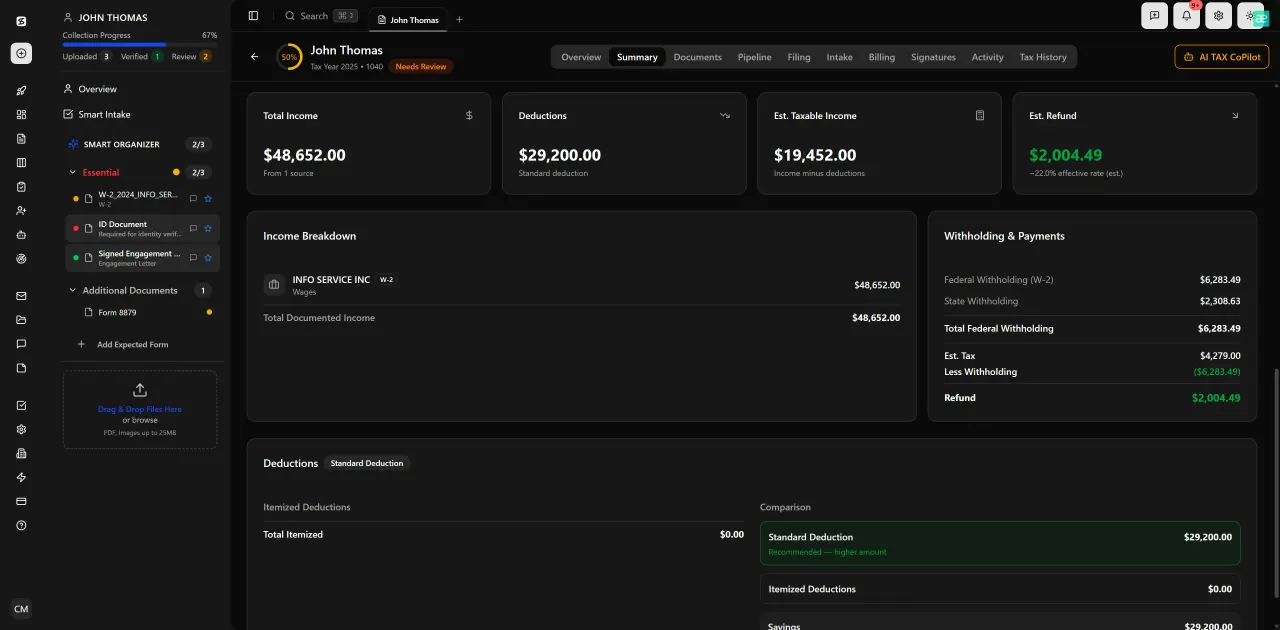
Review with AI assist — 9 agents answer questions with full client context
Which Penalties Are Covered by the New Automatic Process
Tired of manual workflows slowing your firm down? See how TaxScout handles this with AI-powered automation. → Book a 15-Min Demo Each of these factors directly shapes how automatic exemption from penalty plays out in practice.
The automatic exemption from penalty currently applies to the three penalty types that First Time Abate historically addressed: the failure-to-file penalty under IRC § 6651(a)(1), the failure-to-pay penalty under IRC § 6651(a)(2), and the failure-to-deposit penalty under IRC § 6656. These remain the most common penalty types CPAs encounter for individual and small business clients.
The automatic process does not extend to accuracy-related penalties under IRC § 6662, civil fraud penalties, or information-return penalties such as those under IRC § 6721 and § 6722 for late or incorrect 1099 filings. Those still require a formal reasonable cause analysis and a written or verbal request. CPAs managing clients with significant 1099 filing obligations should review our post on IRS 1099 reporting threshold changes alongside this update, since both affect penalty exposure for the same client population. Understanding automatic exemption from penalty in this context is what separates firms that scale from those that stall.
Critically, the three-year clean history requirement carries over from the FTA framework largely intact. A taxpayer who received penalty abatement in any prior year — even informally — generally does not qualify for the automatic exemption. This is the detail that has caught the most practitioners off guard: a client who benefited from FTA in tax year 2023 may not be eligible for automatic relief on a 2024 or 2025 penalty, even if they filed and paid on time in those years. This is precisely where a deliberate automatic exemption from penalty strategy pays off.
Tracking penalty exposure across hundreds of clients without a system?
TaxScout's AI research agents monitor IRS guidance in real time and surface penalty relief eligibility directly in your client's file — so you never miss an abatement opportunity. Automatic exemption from penalty sits at the center of this decision — get it wrong and the rest unravels.
How CPAs Should Update Their Penalty Abatement Strategy
The biggest strategic risk right now is assuming that a client is covered by the automatic exemption when they are not. Before 2026, the FTA request process forced CPAs to verify compliance history. Now, that verification step is easy to skip because practitioners assume the IRS handled it. The IRS system applies the automatic exemption only to the data it has — and if a client's account has discrepancies, a prior informal waiver, or a short filing history, the automatic process may not apply even when the client believes they are penalty-free.
The practical implication: CPAs should build a compliance history review into every engagement where penalty exposure is plausible, not just when a notice arrives. For estimated tax payment shortfalls and failure-to-pay situations, reviewing the client's IRS transcript — particularly the tax modules showing prior assessed penalties and any TC 290 or TC 301 abatement transaction codes — is the fastest way to confirm eligibility before relying on automatic relief.
For clients who do not qualify for the automatic exemption, reasonable cause remains the primary path. The IRS's reasonable cause standard has not changed: taxpayers must show they exercised ordinary business care and prudence. Documented events — serious illness, natural disasters, erroneous IRS advice, inability to obtain records — continue to support reasonable cause claims, and written submissions backed by documentation outperform verbal requests. CPAs handling these cases for the first time after relying on FTA calls should expect a more deliberate process.
It is also worth noting that the IRS's Taxpayer Advocate Service continues to track systemic penalty issues and publishes annual reports identifying penalty administration as a persistent area of taxpayer burden. Where a client faces a penalty that appears to result from IRS error or processing delay, a TAS referral remains a valid and often faster resolution path than standard penalty abatement channels.
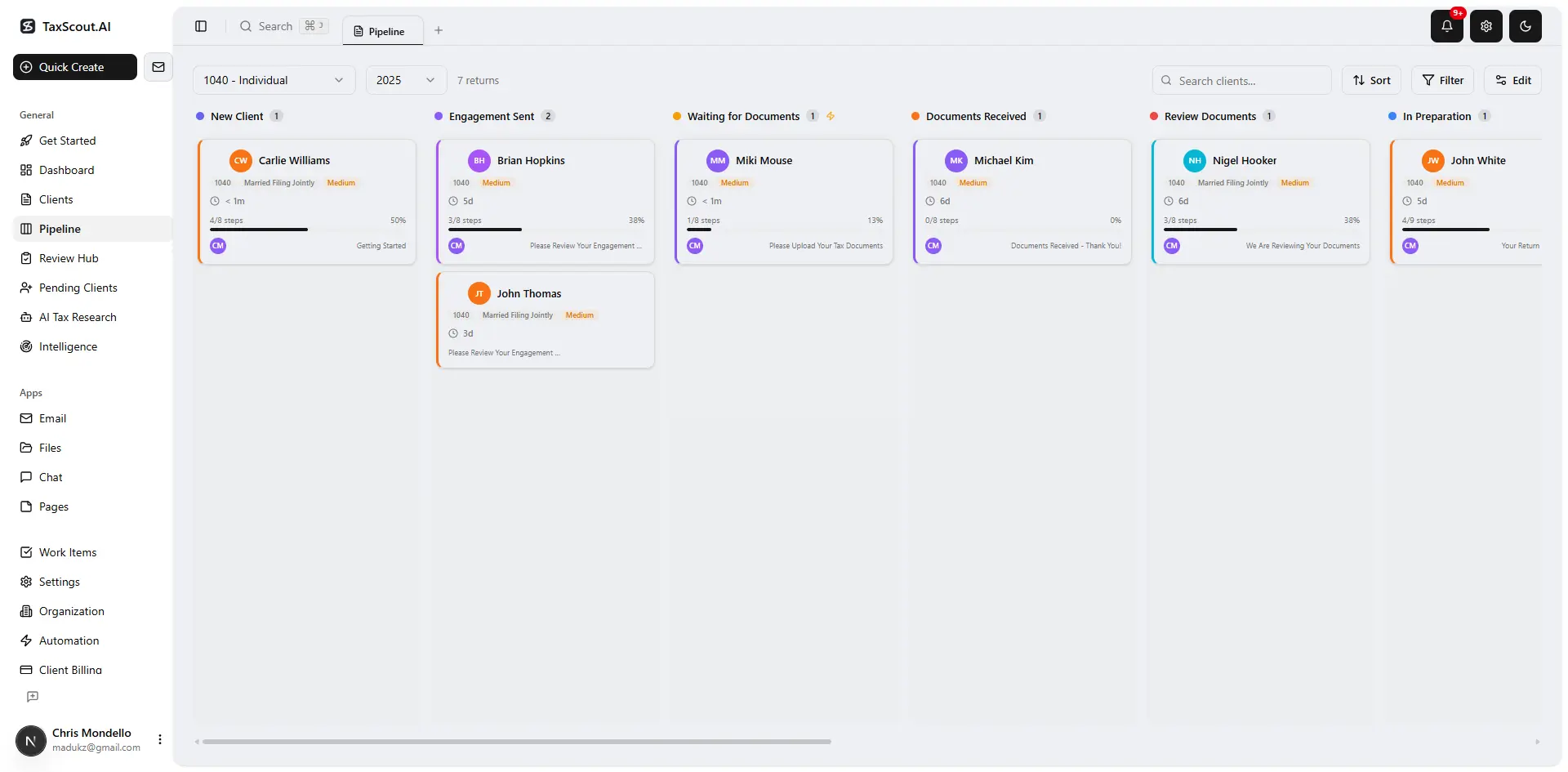
Track every return from intake to filed with drag-and-drop pipeline management

Your clients see your brand — OTP login, document upload, and real-time status
Repeat Penalties and Escalating Situations: What the Automatic Process Does Not Fix
The automatic exemption from penalty was designed for straightforward first-offense situations. It does not address the more complex scenarios that CPAs increasingly face: clients with two or three years of late filings, payroll clients with recurring failure-to-deposit penalties, or S-corporation shareholders with K-1 income that created underpayment problems for multiple years in a row.
For these clients, the new automatic system may actually create a false sense of security. If the first year's penalty was automatically waived, the client may not realize the three-year clean history clock has now reset — and that a second penalty in the following year has no automatic relief path. CPAs need to proactively communicate this to clients, particularly business owners who view the first waiver as proof that the IRS is lenient on late payments.
Escalating penalty situations — where failure-to-pay penalties accrue month over month at 0.5% of unpaid tax up to 25% — require a different approach entirely. Here, the priority is stopping the accrual, which means getting the return filed and negotiating an installment agreement or currently-not-collectible status if the client cannot pay in full. Penalty abatement is secondary until the underlying liability is addressed. CPAs who jump straight to abatement requests without resolving the payment situation often find their requests denied because the taxpayer is not in current compliance — a prerequisite under IRM 20.1.1.3 for most administrative waivers.
Workflow Changes for CPA Firms Managing Penalty Relief at Scale
If your firm handles 200 or more individual and small business returns, managing penalty relief manually — transcript reviews, IRS calls, written reasonable cause letters — becomes a serious capacity problem during tax season. The FTA process was already time-consuming at scale; the new automatic exemption from penalty system helps with the easy cases but does not reduce the burden for complex ones.
Firms that have built practice management workflows around the old FTA call script need to retool. A few structural changes make the biggest difference. First, add a penalty exposure checkpoint to your intake process: before filing, confirm whether the client had any assessed penalties in the prior three years. This can be done during document collection using a simple transcript request workflow. Second, flag clients whose prior-year FTA request was granted — these clients have a reset compliance clock and may be surprised to learn they are not automatically covered for any new penalties.
Third, and most importantly, use the time your team previously spent on FTA calls to build deeper reasonable cause documentation libraries. Since the hard cases still require written submissions, having templates for the most common scenarios — illness, death in the family, IRS processing delays, reliance on professional advice — significantly reduces the per-case time cost. You can find other practice management resources covering workflow efficiency alongside this guide.
TaxScout's pipeline management feature lets firms add custom stages specifically for penalty review, so no return moves to the filing queue without a compliance history check. Combined with the AI research agents that monitor real-time IRS guidance, your team can identify which clients are covered by the automatic exemption and which need a manual reasonable cause analysis — without making a single IRS phone call for routine cases.
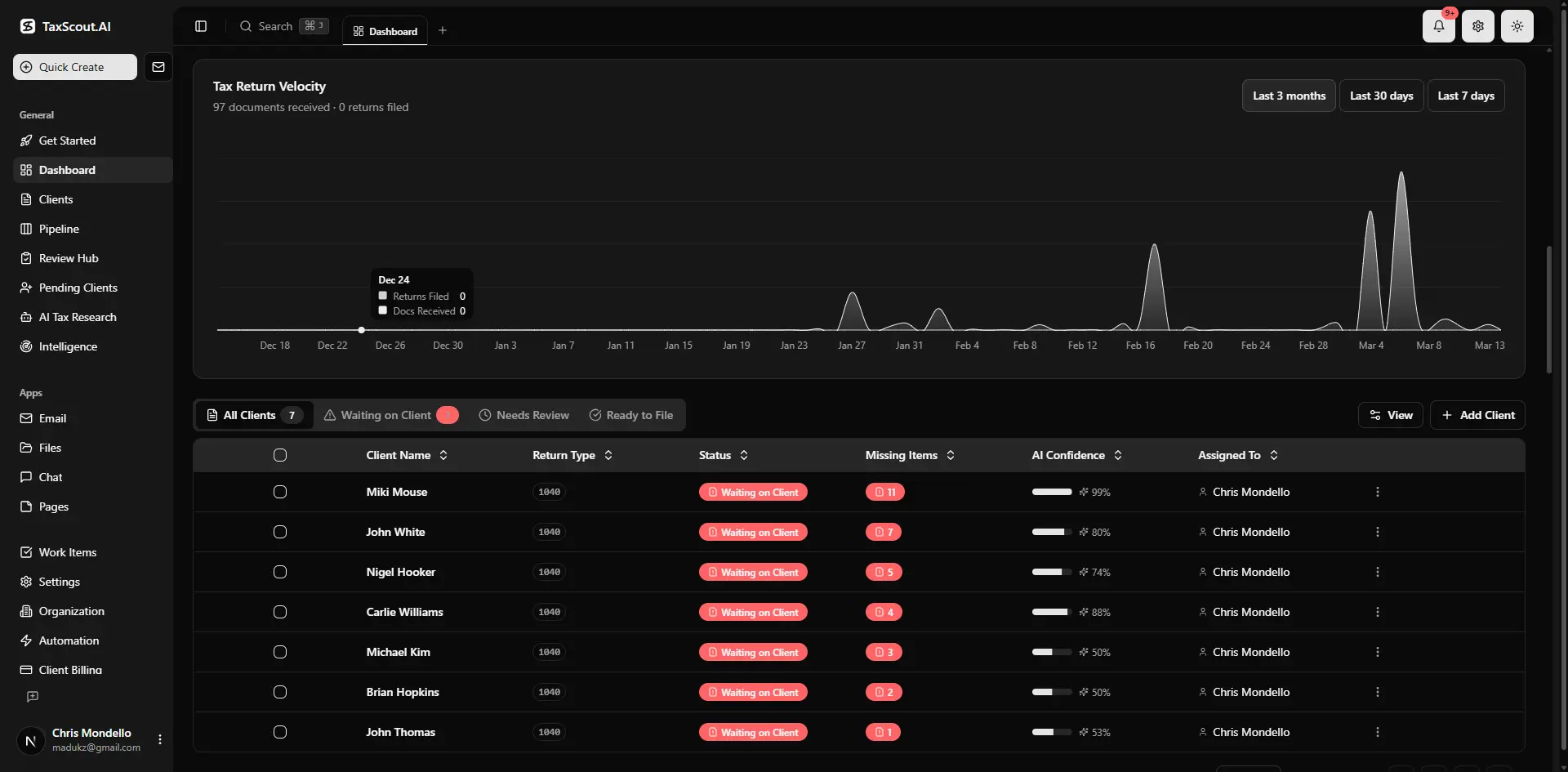
Real-time dashboard showing returns in progress, revenue, and upcoming deadlines
FTA vs. New Automatic Exemption: Key Differences for CPAs
| Factor | First Time Abate (Pre-2026) | Automatic Exemption from Penalty (2026+) |
|---|---|---|
| How relief is granted | Practitioner requests via phone or letter | Applied automatically at assessment if criteria met |
| Penalties covered | Failure-to-file, failure-to-pay, failure-to-deposit | Same three penalty types |
| Compliance history requirement | 3 years clean — manually verified by IRS rep | 3 years clean — verified by IRS system at time of assessment |
| Prior abatement impact | Disqualifies — but practitioner could argue the point | Disqualifies — system check is automatic, no negotiation |
| Client notification | Practitioner confirms waiver after call | Penalty simply does not appear on notice (client may never know) |
| Reasonable cause path still available | Yes, as fallback | Yes, still required for clients who do not qualify automatically |
| Best for | Clients with clean history who received a penalty notice | Same clients — but now handled without practitioner action |
Using AI Tools to Stay Current on IRS Penalty Relief Guidance
The pace of IRS administrative change has accelerated. The shift from FTA to automatic penalty exemption in 2026 followed closely on changes to estimated quarterly payment safe harbors, updated IRM provisions on reasonable cause, and adjustments to the penalty relief programs tied to COVID-era filings that expired in 2025. Keeping current manually — scanning IRM updates, Treasury press releases, and practitioner alerts — is increasingly impractical for a busy CPA firm.
TaxScout's 9 specialized AI research agents address this directly. Unlike a static knowledge base, the agents conduct real-time searches across IRS.gov, Treasury.gov, Cornell Law's LII, the SSA, and congressional sources to surface current guidance on the specific penalty or relief provision you are researching. When a client comes in with a CP2000 notice and a complicated three-year filing history, you can query the research agent with the specific penalty code and the client's situation and get a current, sourced answer in seconds rather than spending 45 minutes on an IRS transcript review and two IRM searches.
This capability is built into TaxScout's AI Tax Intelligence feature and is available on the Prep Pro plan. For firms managing more than 100 clients with any penalty exposure, the time savings on research alone typically exceed the plan cost within the first month of tax season. You can review full pricing details to compare plan tiers.
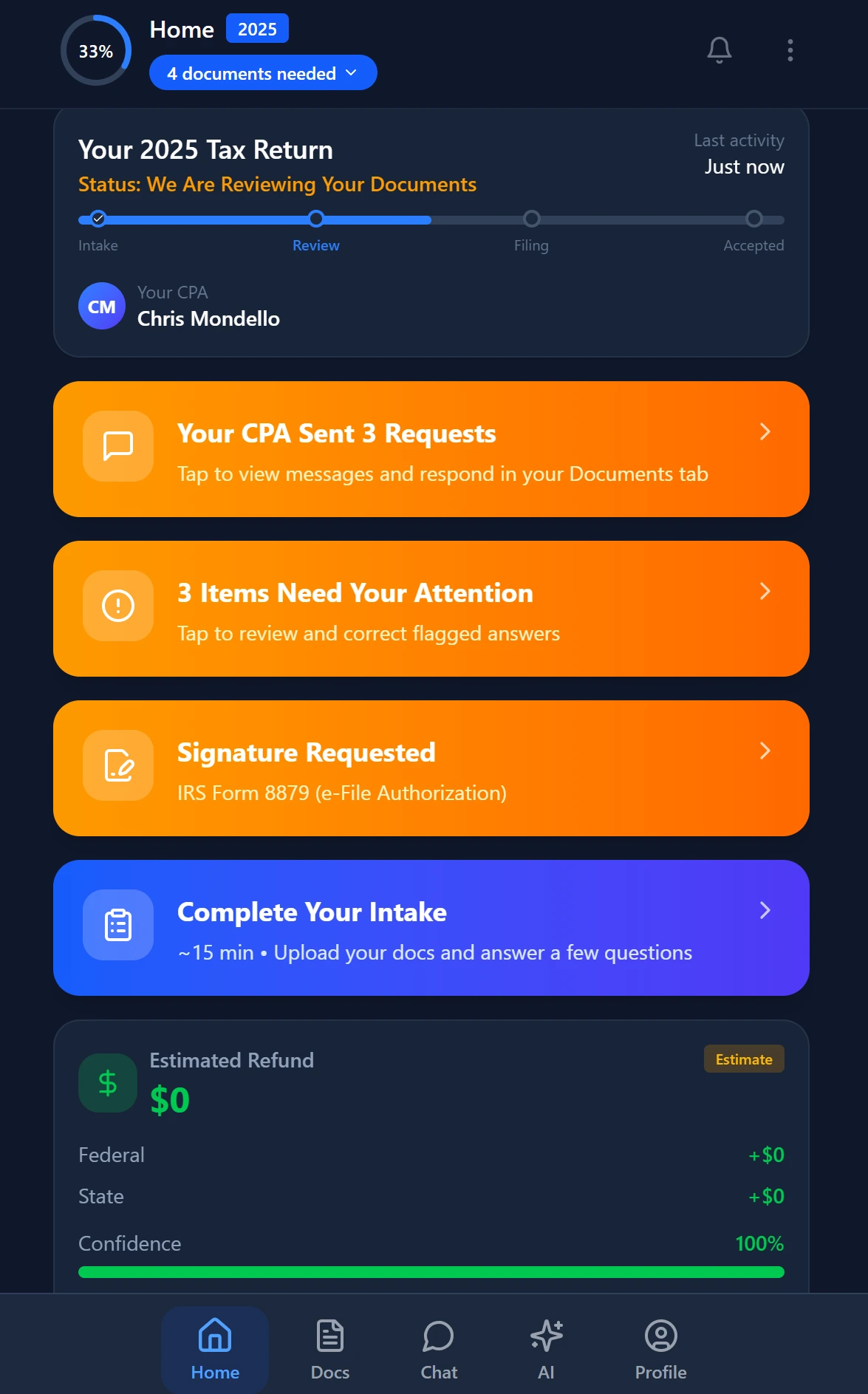
Smart intake auto-fills from uploaded documents and prior-year data
What to Tell Clients Right Now About the New Penalty Relief System
Client communication is where many CPAs will face the most friction from this change. Clients who received FTA relief in prior years may expect the same outcome automatically. Clients who heard that the IRS now grants penalty relief automatically may assume they are always covered — including for accuracy-related penalties, which they are not.
A short, plain-language client communication — an email or portal message — explaining that the new automatic exemption applies only to certain penalty types, only for clients with clean three-year histories, and only once, goes a long way toward setting correct expectations. This is also an opportunity to reinforce the value of timely filing and payment as the primary penalty avoidance strategy. As noted in IRS Publication 17, avoiding penalties through compliance is always preferable to seeking relief after the fact.
For clients who are not in current compliance — particularly small business owners with payroll tax obligations or pass-through entity owners with estimated tax shortfalls — the conversation should be proactive and happen before notices arrive. Document the advice you give, confirm the client understood, and use your practice management system to track the outcome. TaxScout's client portal lets you send these communications, capture client acknowledgment, and log the interaction in the client file, creating a defensible record if a professional liability question arises later. For more on protecting your firm's professional standing during penalty disputes, see our post on cybersecurity and data protection practices — safeguarding client records is part of the same risk management posture.
Still managing IRS penalty research with manual transcript reviews and IRM searches?
TaxScout's AI research agents and real-time IRS monitoring surface penalty relief eligibility, current IRM guidance, and client-specific risk flags — all inside your practice management platform.
Frequently Asked Questions
For the three covered penalty types — failure-to-file, failure-to-pay, and failure-to-deposit — the automatic exemption from penalty handles what FTA handled for qualifying taxpayers. The key difference is that the waiver now happens automatically at assessment rather than requiring a practitioner request. However, taxpayers who do not meet the three-year clean compliance history requirement still need to pursue relief through reasonable cause or other administrative channels, just as they did under FTA.
Keep reading
Uniform Capitalization Rules: How CPAs Apply UNICAP to Inventory and Self-Constructed Assets
Oct 17, 2026 · 1 min read
Non-Applicability of Section 357(c) to Consolidated Groups: What CPA Firms Must Do Now
Oct 17, 2026 · 1 min read
Reasonable Basis Defense: How CPAs Shield Clients From Accuracy-Related Penalties
Oct 17, 2026 · 1 min read
Stay up to date
Get the latest tax tech insights delivered to your inbox.