Charitable Remainder Annuity Trust Listed Transaction: What CPA Firms Must Do Now
The IRS published final regulations on July 9, 2026, officially designating certain charitable remainder annuity trust (CRAT) transactions as listed transactions. CPA firms with high-net-worth clients, nonprofit advisees, or estate planning engagements face immediate disclosure obligations and…
Effective July 9, 2026, the IRS finalized regulations that classify the charitable remainder annuity trust listed transaction — and substantially similar transactions — as a designated listed transaction under the reportable transaction rules. The rule, published in the Federal Register as Charitable Remainder Annuity Trust Listed Transaction, triggers mandatory disclosure requirements for both participants and material advisors, with penalties for failure to file.
For most small and mid-size CPA firms, this is not an abstract regulatory update. If your client roster includes high-net-worth individuals using CRATs as part of an estate or income-deferral strategy, you may already have disclosure obligations that are running on a clock. This brief cuts through the Federal Register language and focuses on what your firm needs to do in the next five business days. Understanding your obligations under the charitable remainder annuity trust listed transaction rules is essential before that clock runs out.
The IRS has been targeting abusive CRAT arrangements for years — structures that purport to eliminate capital gains tax entirely by funneling appreciated assets into a trust, taking a charitable deduction, and then using annuity payments to return most of the value to the grantor. The final rule closes the loop by making these arrangements formally listed, not merely scrutinized. The formal designation of a charitable remainder annuity trust listed transaction reflects the IRS's escalation from informal scrutiny to enforceable disclosure requirements.
What the Final Rule Actually Changes
Before this rule, certain CRAT-based arrangements existed in a gray zone — known to the IRS as problematic but not formally designated. Formal listing under Treasury Regulation § 1.6011-4 dramatically changes the compliance picture. Participants in a listed transaction must file IRS Form 8886 (Reportable Transaction Disclosure Statement), and material advisors must file IRS Form 8918 (Material Advisor Disclosure Statement). The official classification as a charitable remainder annuity trust listed transaction removes any ambiguity that previously allowed advisors and clients to sidestep reporting.
The final rule also sweeps in 'substantially similar' transactions — meaning CRAT structures that achieve the same economic result through slightly different mechanics. This is the phrase that creates uncertainty for advisors: a client's CRAT that was not structured identically to the IRS's described transaction may still be caught if it was designed to eliminate or substantially reduce capital gains recognition. For firms evaluating their charitable remainder annuity trust listed transaction approach, this trade-off compounds over time.
Penalties for participants who fail to disclose can reach $10,000 per failure for individuals and $50,000 per failure for entities. Material advisor penalties under IRC § 6707 are steeper — the greater of $50,000 or 50% of the fees received for the arrangement. Accuracy-related penalties under IRC § 6662A also apply, with a 30% rate for listed transactions where adequate disclosure was not made. Each of these factors directly shapes how charitable remainder annuity trust listed transaction plays out in practice.
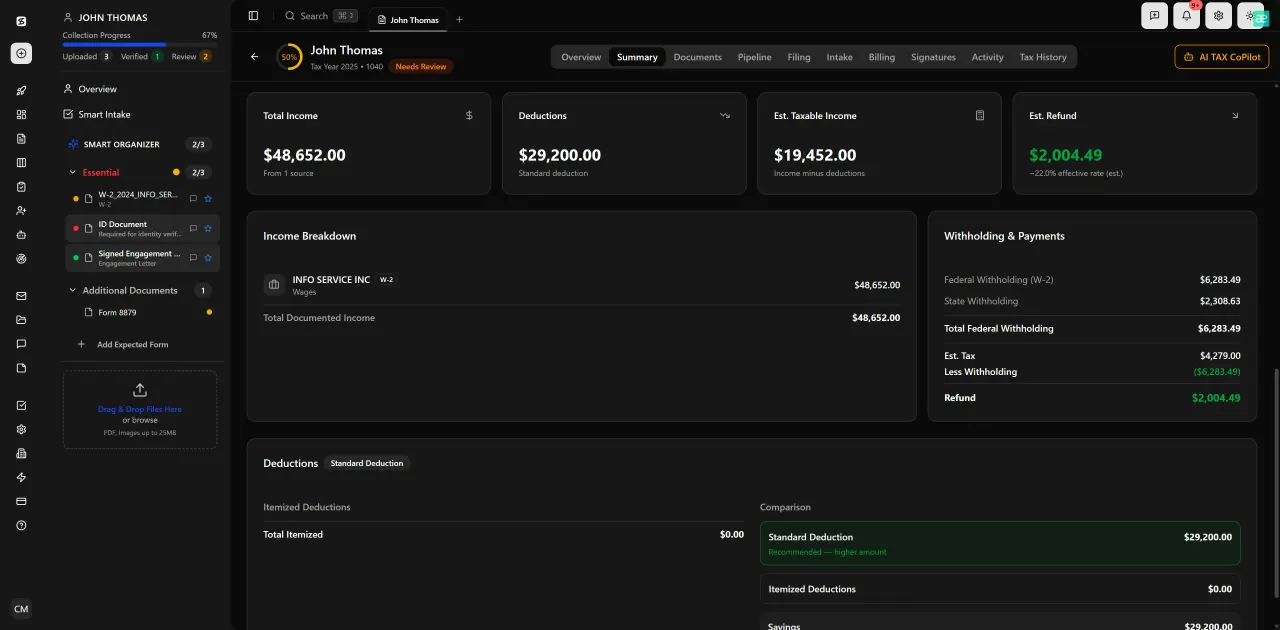
Review with AI assist — 9 agents answer questions with full client context
Which Client Types and Filing Segments Are Affected
Tired of manual workflows slowing your firm down? See how TaxScout handles this with AI-powered automation. → Book a 15-Min Demo Understanding charitable remainder annuity trust listed transaction in this context is what separates firms that scale from those that stall.
The rule does not affect all clients equally. Here is a breakdown by entity type your firm likely serves: This is precisely where a deliberate charitable remainder annuity trust listed transaction strategy pays off.
Individual filers (Form 1040): High-net-worth clients who contributed appreciated assets — real estate, closely held stock, or cryptocurrency — to a CRAT and took a charitable deduction while structuring annuity payments to themselves or family members are the primary target. If the CRAT was structured to produce little or no taxable income to the trust while delivering most of the economic value back to the grantor, that pattern is now squarely listed. These clients need Form 8886 filed with their return, or as a standalone disclosure if the return has already been filed. Charitable remainder annuity trust listed transaction sits at the center of this decision — get it wrong and the rest unravels.
S-corporations and partnerships (pass-through entities): A pass-through entity that contributed appreciated business interests to a CRAT on behalf of its owners — or that received K-1 distributions routed through such a structure — may itself be a participant. Check whether any Schedule K-1 reflects a CRAT-related charitable contribution deduction paired with minimal income recognition. If so, the entity-level disclosure obligation applies alongside the individual owner's obligation.
Nonprofit organizations (Form 990): Charitable organizations named as remainder beneficiaries in abusive CRAT structures may receive IRS scrutiny, even if they are not participants in the transaction. However, their primary filing obligation is informational — review existing relationships and flag any CRAT where the charity's role was essentially nominal. See our nonprofit audit preparation guide for context on how these relationships surface during IRS examinations.
Estate and trust returns (Form 1041): Trusts that are CRATs — or that hold interests in CRATs — are direct participants and must file Form 8886. If you prepare 1041 returns for any CRAT, review the trust instrument immediately.
Tracking IRS listed transaction alerts manually across dozens of client files?
TaxScout's AI research agents monitor IRS and Treasury regulatory changes in real time, so your firm surfaces compliance obligations before they become penalty notices.
What to Do This Week: A Five-Step Action List
The following steps are sequenced for urgency. Complete them in order.
Step 1: Pull your CRAT client list today. Search your client management system for any client with a CRAT in their entity structure, a Form 5227 (Split-Interest Trust Information Return) in your file history, or a charitable contribution deduction paired with a trust distribution. If you use TaxScout's client management tools, run a tag or note search for 'CRAT,' 'charitable remainder,' or 'split-interest trust.'
Step 2: Identify material advisor exposure. If your firm recommended, structured, or significantly assisted in establishing any CRAT arrangement — not just prepared the return — you may be a material advisor under IRC § 6111. The threshold is low: gross income derived from the arrangement of $10,000 for individuals or $25,000 for entities. Consult your firm's professional liability counsel before the end of this week.
Step 3: File or amend Form 8886 for affected clients. For open tax years (generally 2021 forward, depending on statute), participants must file Form 8886. If the original return has already been filed, a standalone Form 8886 must be sent directly to the IRS Office of Tax Shelter Analysis (OTSA) in Ogden, UT, in addition to attaching it to the next filed return. See the IRS instructions for Form 8886 for mailing details.
Step 4: Issue client communications immediately. Clients who participated in a CRAT arrangement need to know about this rule change now — not at next year's tax appointment. Draft a brief advisory letter this week. Firms using TaxScout's client portal can push a secure message directly to affected clients with no email exposure of sensitive details.
Step 5: Update your engagement letters and intake process. Add a CRAT disclosure question to your onboarding and annual intake questionnaire. Clients may not self-report charitable trust involvement unless directly asked. This is also a good moment to review our IRS deadlines resource for any overlapping reporting dates on currently open returns.
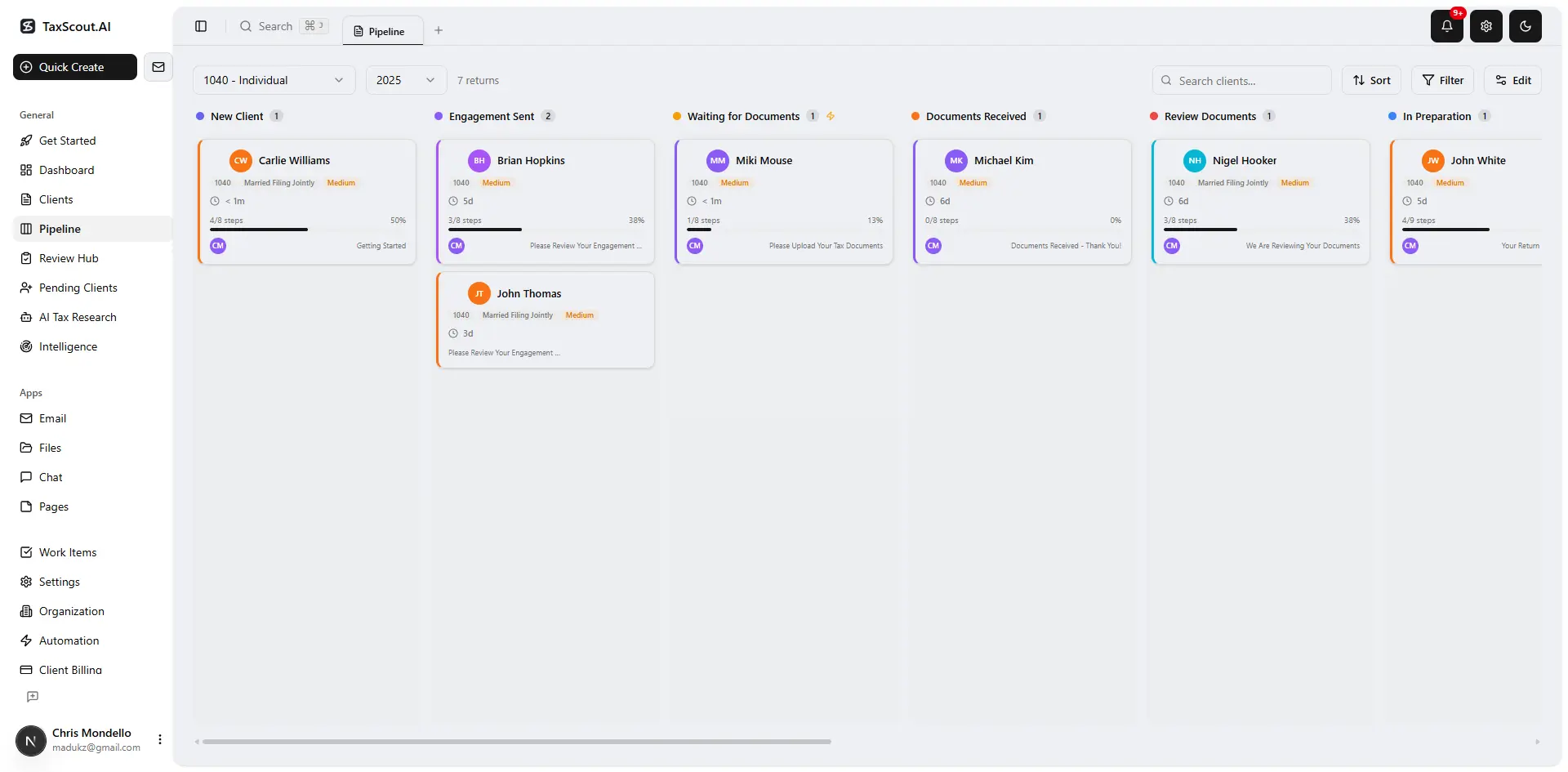
Track every return from intake to filed with drag-and-drop pipeline management
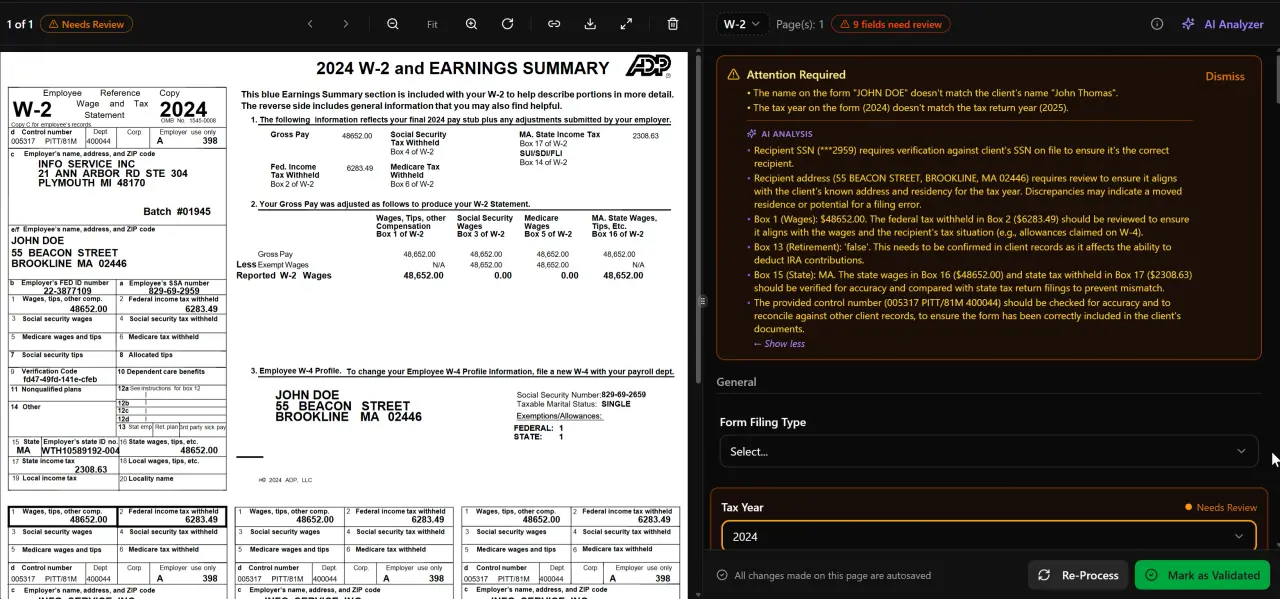
AI classifies, extracts, and validates every document automatically
Statutes of Limitations and Retroactive Reach
One of the most consequential aspects of listed transaction rules is how they interact with statutes of limitations. Under IRC § 6501(c)(10), the normal three-year limitation period does not begin to run for a listed transaction until the Form 8886 is filed. In practical terms, this means a CRAT arrangement entered into in 2019 that was never disclosed remains open indefinitely — for both the participant and the material advisor.
For clients who entered into CRAT arrangements before this final rule but whose transactions are 'substantially similar' to the newly listed transaction, the clock starts only upon proper disclosure. Do not assume that older arrangements are outside the statute. This is the argument that will be made in any IRS examination, and the burden of proof is on the taxpayer.
You can track the full text and any subsequent IRS guidance on this rule through our latest regulatory intelligence updates as they are published.
How TaxScout Helps Firms Manage Regulatory Compliance Flags
Keeping up with listed transaction designations, penalty exposure, and cross-client impact is exactly the kind of workflow that breaks down in general-purpose tools. TaxScout's AI research agents run continuously against IRS, Treasury, and law.cornell.edu sources — surfacing regulatory changes that affect your specific client base, not just a generic news feed.
When a new listed transaction rule drops, firms using TaxScout's pipeline management can immediately create a compliance stage, tag affected client files, and push tasks to the responsible preparer — all without switching between spreadsheets, email, and a separate document system. The AI document extraction engine also flags Form 5227 filings and CRAT-related deduction patterns during document review, giving preparers an early warning before the return is assembled.
For firms comparing practice management options, it is worth noting that platforms like TaxDome or Canopy do not include integrated regulatory intelligence or AI research agents — you can review a detailed breakdown at our TaxDome alternative comparison. TaxScout's flat-fee Prep Pro plan at $149/month includes all nine AI research agents for up to 10 seats, with no per-user surcharge.
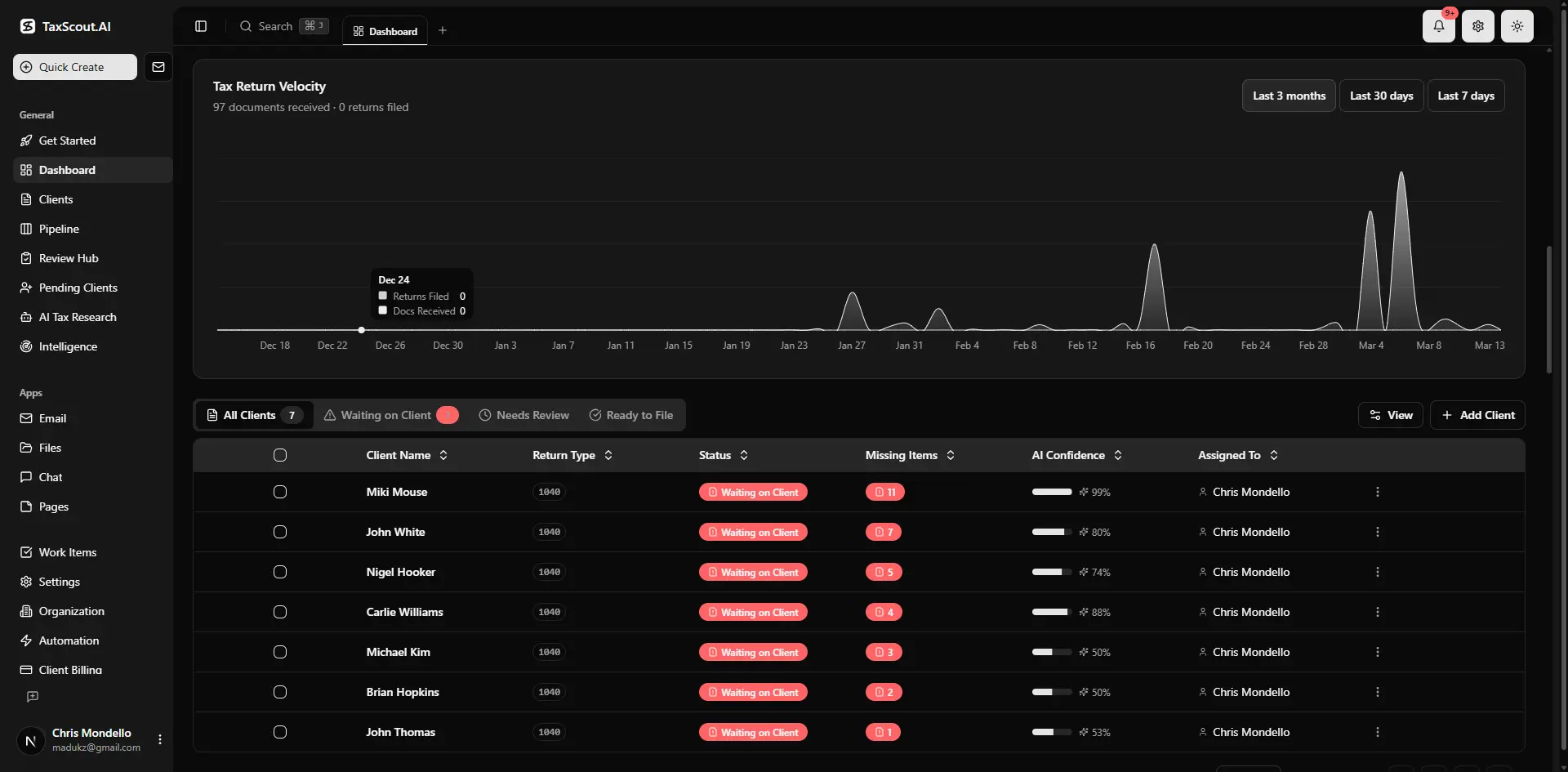
Real-time dashboard showing returns in progress, revenue, and upcoming deadlines
CRAT Listed Transaction: Key Disclosure Obligations at a Glance
| Obligation | Who It Applies To | Form Required | Deadline |
|---|---|---|---|
| Participant disclosure | Individual, S-corp, partnership, trust that was party to CRAT transaction | Form 8886 | With return or standalone to OTSA if return already filed |
| Material advisor disclosure | Any CPA/advisor who received $10K+ (individual) or $25K+ (entity) in fees for arranging | Form 8918 | 60 days after the transaction became listed |
| List maintenance | Material advisors must maintain a list of advisees | No form — maintain records | Available on IRS request within 20 business days |
| Amended return/standalone | Participants with filed returns for open years | Form 8886 standalone to OTSA | As soon as practicable — no tolling until filed |
Primary Source and Further Reading
The controlling document is the final rule published July 9, 2026: Charitable Remainder Annuity Trust Listed Transaction in the Federal Register (Docket No. 2026-13851). Read the full text before advising any client — the 'substantially similar' definition in the preamble is doing significant legal work and is broader than the headline suggests.
Additional context: the SBA's guidance on retirement and estate planning structures for small business owners is a useful reference if your clients are pass-through owners who may have been pitched CRAT arrangements as a tax reduction strategy alongside business succession planning.
For firms that need to move quickly on client communications, TaxScout's communication hub lets you draft, review, and send templated advisories from a single interface — with a full audit trail for professional liability documentation. If you have not yet seen how the platform handles compliance-driven client outreach, a live demo takes under 30 minutes.
Spending hours manually tracking IRS rule changes that could expose your clients to six-figure penalties?
TaxScout gives CPA firms a single platform for AI-powered regulatory monitoring, client communication, and compliance pipeline management — at a flat rate your firm will not outgrow.
Frequently Asked Questions
A charitable remainder annuity trust (CRAT) listed transaction is a specific type of trust arrangement that the IRS has formally designated as a listed transaction as of July 9, 2026. The IRS targets CRAT structures that purport to eliminate capital gains tax by transferring appreciated assets into the trust, claiming a charitable deduction, and then using annuity payments to return most economic value to the grantor with little taxable income recognized. Both participants and material advisors must now file disclosure forms with the IRS.
Keep reading
Backdoor Roth IRA: How CPAs Execute the Strategy Without Triggering Pro-Rata Tax
Oct 12, 2026 · 1 min read
Amended FBAR Procedures: How CPAs Correct Foreign Account Errors Without Triggering Penalties
Oct 12, 2026 · 1 min read
Transparency in Coverage Final Rules: What CPA Firms Must Do Now
Oct 12, 2026 · 1 min read
Stay up to date
Get the latest tax tech insights delivered to your inbox.