California Sales Tax on Software 2027: What CPA Firms Need to Know About SB 122
California's SB 122 will extend the state's sales tax to SaaS subscriptions and downloaded software beginning in 2027 — a significant shift that raises operating costs for every CPA firm relying on cloud-based practice management tools. This guide breaks down exactly what the law covers, how much…
California sales tax on software is about to become a real line item on your firm's monthly bills. For decades, California carved out digital goods and SaaS subscriptions from its sales tax base, making the state an outlier compared to the growing number of states that tax software-as-a-service. That is changing. Senate Bill 122, advancing through the California Legislature as of mid-2026, would impose the state's full sales and use tax rate on SaaS subscriptions, downloaded software, digital games, and other specified digital products beginning January 1, 2027.
For CPA firms in California, the timing is pointed. Practice management platforms, AI tax research tools, document management systems, e-signature services, and cloud-based tax preparation suites all fall squarely within the categories SB 122 targets. A firm currently spending $1,000 per month on software subscriptions could see an additional $87.25 or more in tax per month — and that number compounds across every cloud tool in the stack. The proposed california sales tax on software hits CPA firms particularly hard, since practice management platforms, AI tax research tools, document management systems, e-signature services, and cloud-based tax preparation suites all fall squarely within the categories SB 122 targets.
This article explains what SB 122 covers, what it means for your firm's operating budget, how to advise clients whose businesses will also be affected, and how to use this moment as a planning opportunity — including whether switching to a flat-rate, all-in-one platform makes financial sense before the tax takes effect. This article explains what SB 122 covers, what the california sales tax on software means for your firm's operating budget, how to advise clients whose businesses will also be affected, and how to use this moment as a planning opportunity — including whether switching to a flat-rate, all-in-one platform makes financial sense before the law takes effect.
What SB 122 Actually Says: Scope of the New California Software Tax
SB 122 amends the California Revenue and Taxation Code to treat specified digital products — including remotely accessed software (SaaS), downloaded software, streamed video, digital audio, and digital games — as taxable tangible personal property for purposes of the state's sales and use tax. The California Legislative Analyst's Office has noted for years that the existing exclusion of digital goods creates an increasingly large hole in the sales tax base as commerce shifts online. SB 122 amends the California Revenue and Taxation Code to treat specified digital products as taxable tangible personal property, making california sales tax on software a concrete compliance reality rather than a theoretical concern — covering remotely accessed software (SaaS), downloaded software, streamed video, digital audio, and digital games.
Under the bill's current text, the tax applies to both business-to-consumer and business-to-business transactions. That means a CPA firm paying for a cloud-based practice management platform, an AI document extraction service, or a SaaS tax research tool would owe California sales tax on each subscription — even if the vendor is headquartered outside California — provided the firm has a California business address and uses the software in-state. For firms evaluating their california sales tax on software approach, this trade-off compounds over time.
The legislation defines 'remotely accessed software' broadly: any software accessed via the internet or a network where the customer does not receive a copy is covered. This language is deliberately wide. Under this definition, virtually every major CPA-facing SaaS product — from document portals to pipeline management tools to AI research agents — would be taxable. The California Department of Tax and Fee Administration (CDTFA) would administer collection, and vendors with California economic nexus would be required to collect and remit the tax at the point of sale. Each of these factors directly shapes how california sales tax on software plays out in practice.
California's combined state and local average sales tax rate is approximately 8.725%, one of the highest in the country according to Tax Foundation data. Some localities — Los Angeles, San Jose, Long Beach — carry combined rates of 10.25% or higher. That means the effective tax burden on a firm's SaaS stack will vary by location, and firms in high-rate jurisdictions will feel the pinch most acutely. Understanding california sales tax on software in this context is what separates firms that scale from those that stall.
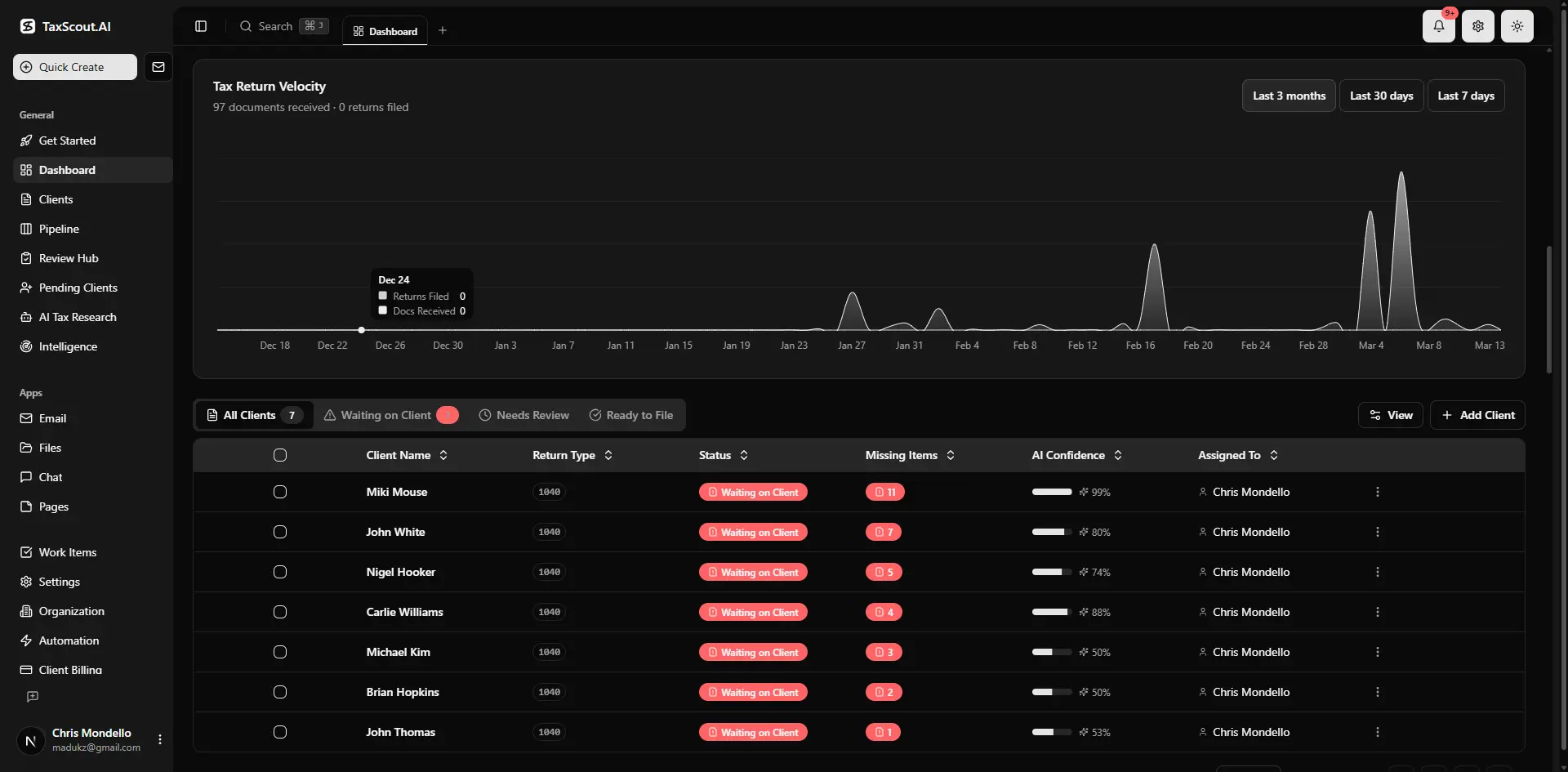
Real-time dashboard showing returns in progress, revenue, and upcoming deadlines
Why California Has Avoided Taxing SaaS Until Now
California's long-standing exemption for digital goods traces back to a 1993 administrative ruling that software must be delivered on tangible media (diskettes, CDs) to constitute taxable personal property. As the software industry moved to downloads and then cloud delivery, the CDTFA extended this reasoning to hold that remotely accessed software was not taxable — a policy position that distinguishes California from states like Texas, New York, and Pennsylvania, which tax at least some categories of software. This is precisely where a deliberate california sales tax on software strategy pays off.
The result has been a growing revenue gap. With SaaS now the dominant delivery model for enterprise and SMB software alike, the exclusion costs California billions in foregone revenue annually. Fiscal pressure from the state's structural deficit — estimated at over $27 billion for fiscal year 2025–2026 by the California Department of Finance — has accelerated interest in broadening the tax base rather than raising rates. California sales tax on software sits at the center of this decision — get it wrong and the rest unravels.
SB 122 is not the first attempt. Similar legislation failed in prior sessions amid opposition from the tech industry and concerns about double taxation (some SaaS vendors already pay California corporate income tax on subscription revenue). What makes the 2026 session different is the severity of the fiscal gap and a broader national trend: over 25 states now tax SaaS in some form, reducing the competitive-disadvantage argument that previously stalled reform. Practitioners who want deeper context on how multi-state software taxation works should also review our guide on state tax nexus for growing clients. When firms revisit their california sales tax on software priorities, the gaps usually surface here.
Worried about rising software costs hitting your firm in 2027?
TaxScout.ai bundles AI document extraction, 9 research agents, client portal, e-signatures, pipeline management, and invoicing — all for one flat monthly fee with no per-user charges, so your total cost stays predictable even as California adds tax to every SaaS line item.

Your clients see your brand — OTP login, document upload, and real-time status
Direct Cost Impact on California CPA Firms
The most immediate consequence of California sales tax on software for CPA practices is straightforward arithmetic: every cloud-based tool your firm pays for gets more expensive starting January 1, 2027. Consider a typical 10-person California firm running a practice management suite, a document management system, an AI tax research tool, e-signature software, and a client portal separately — a combined monthly software spend that frequently exceeds $1,500 to $2,000 per month. At a blended 9% rate, that is $135 to $180 in additional monthly tax, or $1,620 to $2,160 per year — before accounting for any price increases vendors pass through in response to their own compliance costs.
The burden is amplified for firms using per-user pricing models, because both the base subscription cost and the new sales tax scale with headcount. A firm on TaxDome's approximately $100 per user per month plan with 10 staff is already paying roughly $1,000 per month before tax; add 9.25% and that becomes $1,093 per month — and every additional hire increases the tax exposure. The same math applies to Canopy (approximately $45 per user per module, plus $11 per client for Smart Intake) and Karbon (approximately $59 per user per month).
Flat-rate, unlimited-seat platforms become materially more attractive under this regime. TaxScout.ai's Prep Pro plan, for example, is $149 per month for unlimited seats and up to 500 returns — meaning the 2027 sales tax hit on that subscription would be roughly $13.75 per month at a 9.25% rate, versus $92.75 on a comparable 10-seat per-user plan at the same rate. Consolidating your stack onto one all-in-one platform with AI document extraction, pipeline management, client portal, and e-signatures also reduces the number of taxable subscription transactions your firm must track and reconcile for use-tax compliance purposes.
Firms should also consider that SB 122 creates a new use-tax self-reporting obligation for any SaaS subscription where the out-of-state vendor does not collect California sales tax. The CDTFA already expects businesses to self-report use tax on untaxed purchases; SB 122 would dramatically expand the universe of transactions subject to that obligation. Maintaining accurate records of every SaaS subscription, the vendor's collection status, and the applicable local rate will require either a new administrative workflow or a unified billing view — something an invoicing and billing dashboard can help systematize.
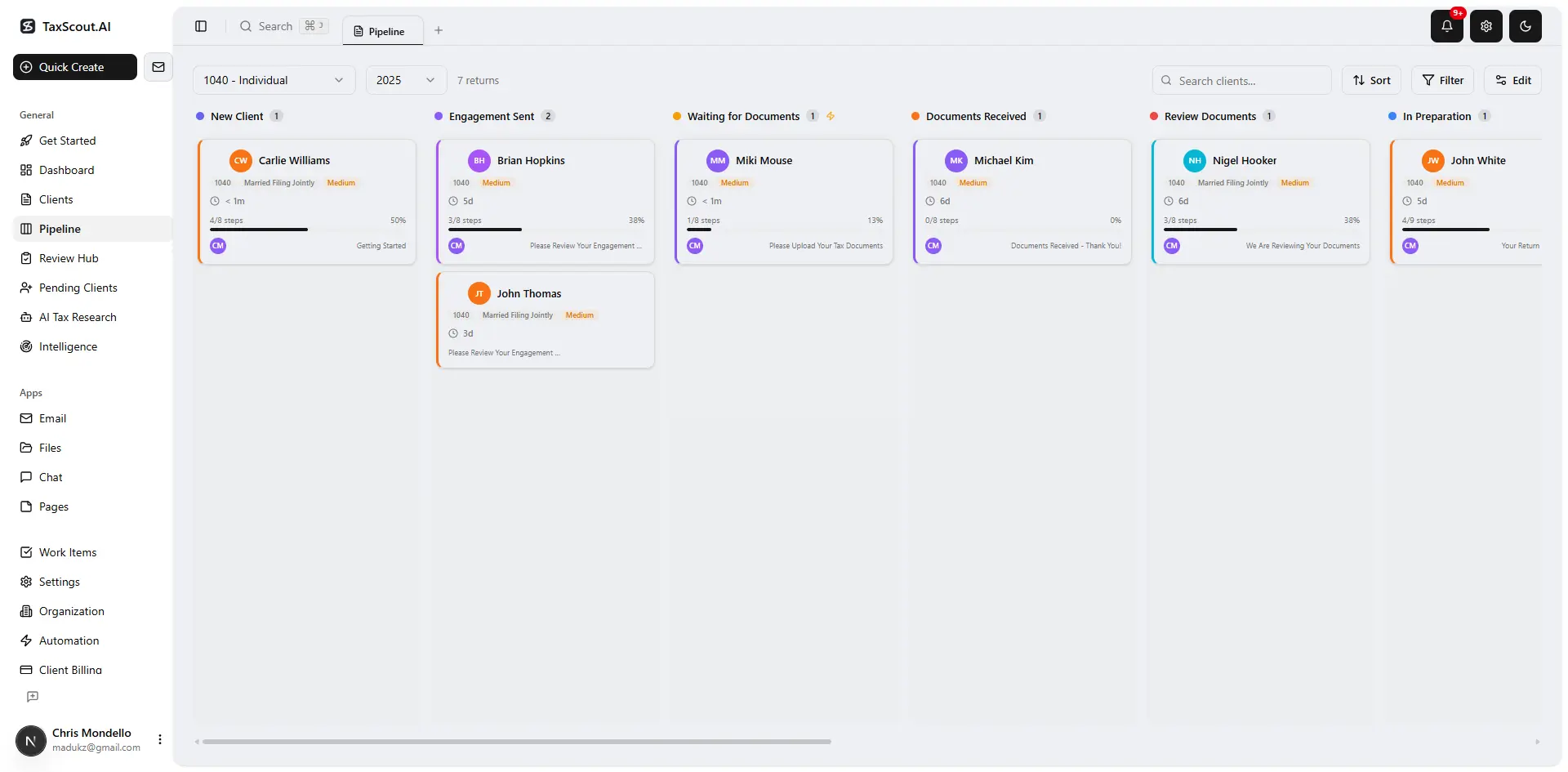
Track every return from intake to filed with drag-and-drop pipeline management
Estimated 2027 Monthly Sales Tax Cost on Practice Management Software (California, 9.25% blended rate, 10-person firm)
| Platform | Monthly Base Cost (10 seats) | Est. Monthly Sales Tax (9.25%) | Annual Tax Hit |
|---|---|---|---|
| TaxScout Prep Pro (flat, unlimited seats) | $149 | ~$14 | ~$165 |
| TaxDome (~$100/user) | $1,000 | ~$93 | ~$1,110 |
| Canopy (~$45/user/module) | $660+ | ~$61+ | ~$735+ |
| Karbon (~$59/user) | $590 | ~$55 | ~$655 |
Advising Business Clients Affected by California SaaS Tax 2027
California CPA firms will not only bear the cost themselves — their business clients face the same shock. Any California-based company paying for Salesforce, Microsoft 365, QuickBooks Online, Slack, or any other SaaS product will owe sales tax on those subscriptions starting in 2027. For clients with large software spend — technology companies, professional services firms, staffing agencies — the aggregate tax liability could be significant enough to affect financial projections, budgeting, and even entity structure decisions.
Advisory conversations to initiate now include: (1) Auditing a client's current SaaS spend and projecting the 2027 tax exposure. (2) Identifying subscriptions where the vendor may not collect California tax at the point of sale, creating a self-reported use-tax obligation. (3) Evaluating whether multi-year prepayment of annual SaaS contracts before January 1, 2027 could lock in tax-free pricing — though clients should be cautious about prepayment risk and vendor stability. (4) Assessing whether any in-house or on-premise software alternatives exist that might fall outside SB 122's definition of 'remotely accessed software.'
For clients in the technology sector, SB 122 may also affect revenue recognition and pricing strategy, since California customers will see higher effective prices once vendors begin collecting. This is a natural opportunity to position your firm's advisory services as forward-looking tax planning, not just compliance. Connecting these conversations to broader California tax changes CPAs must know helps clients understand that SB 122 is part of a wider pattern of state-level fiscal tightening.
CPAs practicing in the sales and use tax space should also monitor CDTFA guidance carefully. The agency will need to publish regulations defining 'remotely accessed software' with enough specificity to distinguish taxable SaaS from non-taxable professional services delivered partly with software assistance — a line that has proven litigious in other states. The law.cornell.edu Legal Information Institute provides a useful primer on sales tax nexus concepts that underpin these distinctions.
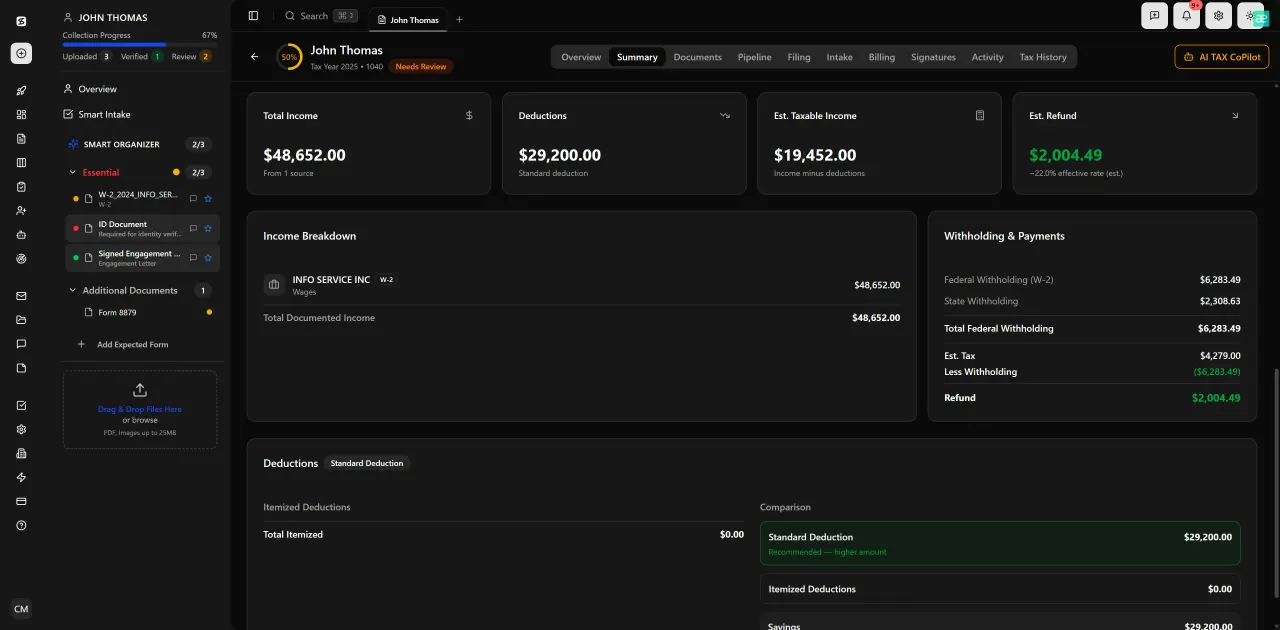
Review with AI assist — 9 agents answer questions with full client context

Click any extracted field to see its source highlighted on the original PDF
Compliance Steps California Firms Should Take Before January 2027
The effective date gives California CPA firms roughly 18 months from mid-2026 to prepare. That is enough time to act thoughtfully — if you start now. Here are the concrete steps practitioners should work through:
First, inventory every SaaS and downloaded software subscription your firm carries. Include practice management, tax preparation software, document storage, e-signature, communication tools, payroll software, and any per-transaction services that qualify as digital products under SB 122's definition. Assign each line item the correct local sales tax rate based on your firm's address using the CDTFA's rate lookup tool.
Second, contact each vendor to confirm whether they will collect and remit California sales tax as of January 1, 2027. Major vendors like Intuit, Adobe, and Microsoft are likely to have compliance programs in place; smaller or foreign SaaS vendors may not. For any vendor that will not collect, your firm is responsible for self-reporting use tax on your California sales and use tax return.
Third, revisit your software stack for consolidation opportunities. Every redundant subscription is a separate taxable transaction. An all-in-one platform that replaces five point solutions cuts your taxable transactions to one and often reduces total cost simultaneously. TaxScout.ai's full feature set — covering AI extraction, client portal, pipeline, e-signatures, PDF tools, and research agents — is designed exactly for this consolidation. See our broader blog resources for additional operational guides.
Fourth, update your firm's engagement letters and client agreements to reflect that advisory services around indirect tax — including SaaS tax compliance — may require additional scope. The California Society of CPAs and the AICPA's tax section have both flagged expanding state sales tax obligations on digital goods as a growing area of professional liability risk. Reviewing your engagement letter templates now prevents scope creep disputes later.
Fifth, consider the timing of any multi-year contract renewals. If you have annual SaaS subscriptions renewing in late 2026, negotiating a two- or three-year renewal before December 31, 2026 may lock in a pre-tax price — though you should review contract terms carefully, as some vendors include tax pass-through clauses regardless of billing cycle.
How Platform Consolidation Reduces Your 2027 Tax Exposure
One of the clearest practical responses to California sales tax on software is reducing the number of taxable subscriptions your firm carries. Every separate SaaS tool — even a $20-per-month utility — becomes a line item with a California sales tax obligation and a compliance tracking burden attached. The administrative overhead of confirming vendor collection status, self-reporting gaps, and reconciling use-tax accruals across a fragmented stack is itself a cost that grows linearly with the number of subscriptions.
TaxScout.ai was built to replace that fragmentation. A single subscription covers AI document extraction across 180+ tax form types, a branded client portal with OTP login, smart AI intake modeled on IRS Form 13614-C, 9 specialized AI research agents with real-time IRS and Treasury search, 12-stage pipeline management, e-signatures via Documenso, and 14+ PDF tools — all for $149 per month on the Prep Pro plan, regardless of how many seats your firm needs.
That consolidation means one vendor to confirm sales tax collection status with, one line item to accrue use tax on if needed, and one price point that does not scale with headcount. For a 10-person California firm currently spending $500–$660 per month across separate tools, consolidating to TaxScout's $149 plan reduces both the base software cost and the incremental 2027 sales tax hit — from an estimated $46–$61 in monthly tax down to roughly $14.
If you want to see exactly what TaxScout replaces in your current stack and what the cost comparison looks like, request a demo and we'll walk through your specific situation. You can also review our pricing page to compare plan tiers and the included return volume before making any commitment.
Want to cut your 2027 California SaaS tax bill before it starts?
TaxScout.ai consolidates your entire CPA tech stack into one flat-rate subscription — AI extraction, research agents, client portal, e-signatures, and more — so you face one tax line, not ten.
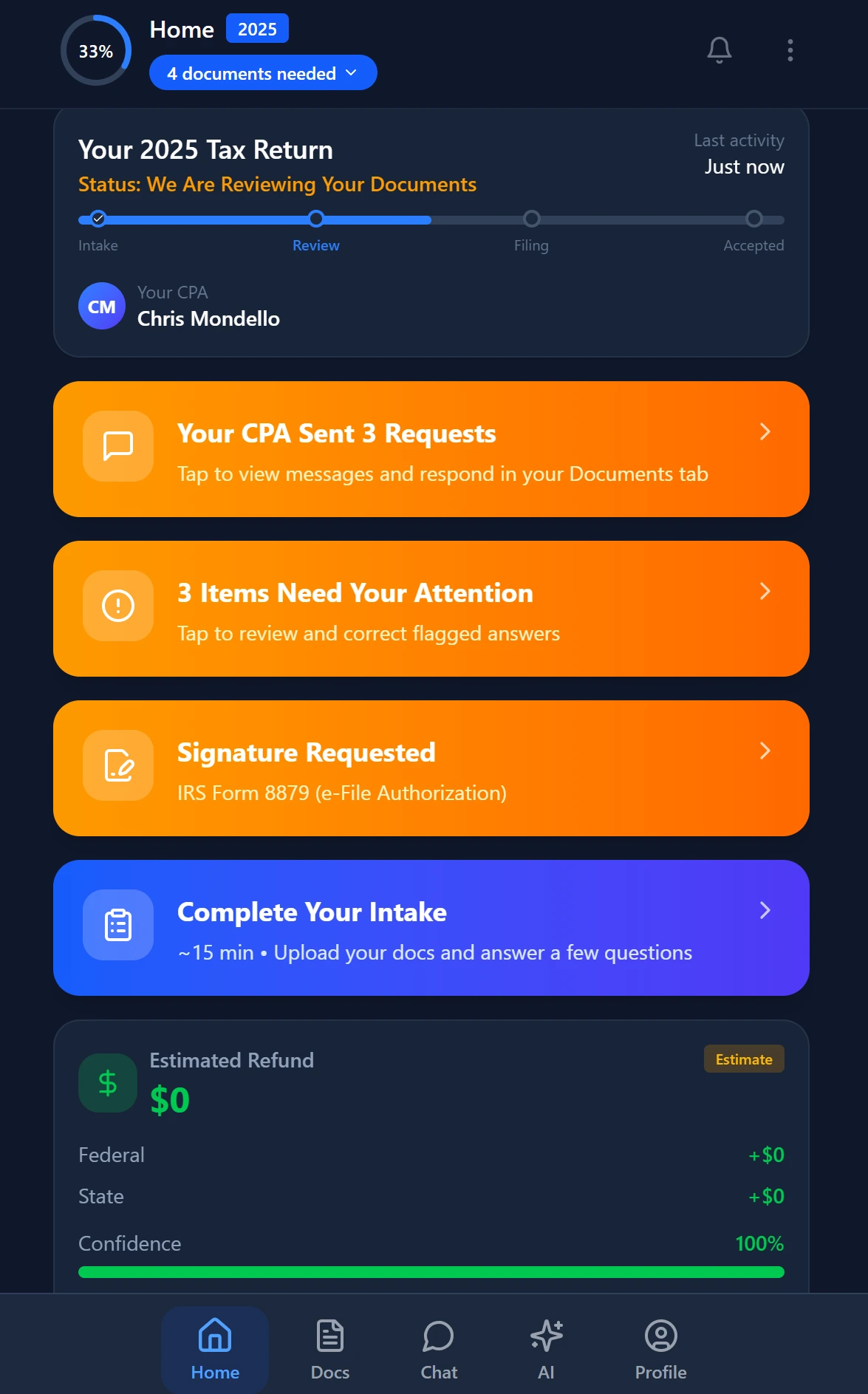
Smart intake auto-fills from uploaded documents and prior-year data
Frequently Asked Questions
Yes. SB 122 is written to cover all 'remotely accessed software' — meaning any software delivered via the internet where the customer does not receive a downloaded copy. This includes virtually every practice management, tax preparation, document management, and AI research SaaS tool a CPA firm uses. The tax applies to business-to-business transactions, not just consumer purchases.
Keep reading
SALT Deduction Cap Workarounds: How CPAs Reduce State Tax Burden for High-Income Clients
Oct 12, 2026 · 1 min read
Multistate Payroll Tax Compliance: How CPAs Keep Distributed Clients Out of Trouble
Oct 4, 2026 · 1 min read
Multistate Payroll Tax Compliance: How CPAs Handle Remote Employees for Business Clients
Oct 4, 2026 · 1 min read
Stay up to date
Get the latest tax tech insights delivered to your inbox.