CPA Adding RIA: How to Register an Investment Advisory Practice Alongside Your Tax Firm
Many CPAs already provide informal investment guidance — the leap to a registered RIA is a natural next step for formalizing that value. This guide walks through Series 65 licensing, state vs. SEC registration thresholds, custodian selection, AUM fee structures, and the compliance obligations that…
If you are a CPA who already answers questions like 'Should I max out my Roth IRA before paying down my mortgage?' or 'How should I allocate my 401(k) given my tax bracket?', you are already doing investment advisory work — you just are not getting paid for it, and you may be doing it without the legal authority to do so. The idea of a CPA adding RIA registration has never been more practical: the Series 65 exam is accessible to most licensed CPAs, state registration can happen in weeks, and a growing cohort of custodians actively courts small RIAs.
The financial planning profession is converging with the tax profession. Clients want one trusted advisor who understands both their tax return and their portfolio — and they are willing to pay recurring fees for that relationship. According to FINRA's regulatory guidance, advisors who provide personalized investment advice for compensation must register as investment advisers under federal or state law. For CPAs already deep in client financials, the compliance lift is real but manageable. This convergence is exactly why the trend of a CPA adding RIA services to their practice has accelerated dramatically over the past decade.
This step-by-step guide covers everything a solo CPA or small firm needs to evaluate before pursuing dual registration: licensing requirements, the state vs. SEC registration decision, custodian selection, fee model options, ongoing compliance obligations, and how your existing practice management infrastructure either helps or hinders the transition. Whether you are just beginning to explore the idea or are ready to file your paperwork, understanding the full scope of what CPA adding RIA entails will help you avoid costly missteps.
Step 1: Understand the Legal Framework Before You Register
The Investment Advisers Act of 1940, administered by the SEC, defines an investment adviser as any person who, for compensation, is in the business of advising others about securities. Cornell Law's annotated version of the Act provides the full statutory definition. Most solo CPAs will fall under state jurisdiction rather than federal SEC registration, because the SEC generally requires at least $110 million in assets under management (AUM) before an RIA must register at the federal level. For a CPA adding RIA registration to their existing practice, this definition is particularly important because routine tax advice generally falls outside its scope, while specific investment recommendations do not.
Below $100 million AUM, the Investment Adviser Registration Depository (IARD) and your state securities regulator govern registration. Between $100 million and $110 million you may choose either. Most CPA-founded RIAs start with state registration and graduate to SEC registration only after substantial AUM growth. Understanding which regulator owns your relationship from day one shapes every compliance decision that follows. For firms evaluating their CPA adding RIA approach, this trade-off compounds over time.
CPAs who are already providing tax-only services can continue doing so under their CPA license without RIA registration, but the moment you charge separately for investment advice or discretionary portfolio management, the line is crossed. The dual-hatted CPA-RIA is a recognized professional category, and many state boards have published guidance on managing the two licenses side by side — check your state CPA society's ethics rulings before proceeding. Each of these factors directly shapes how CPA adding RIA plays out in practice.
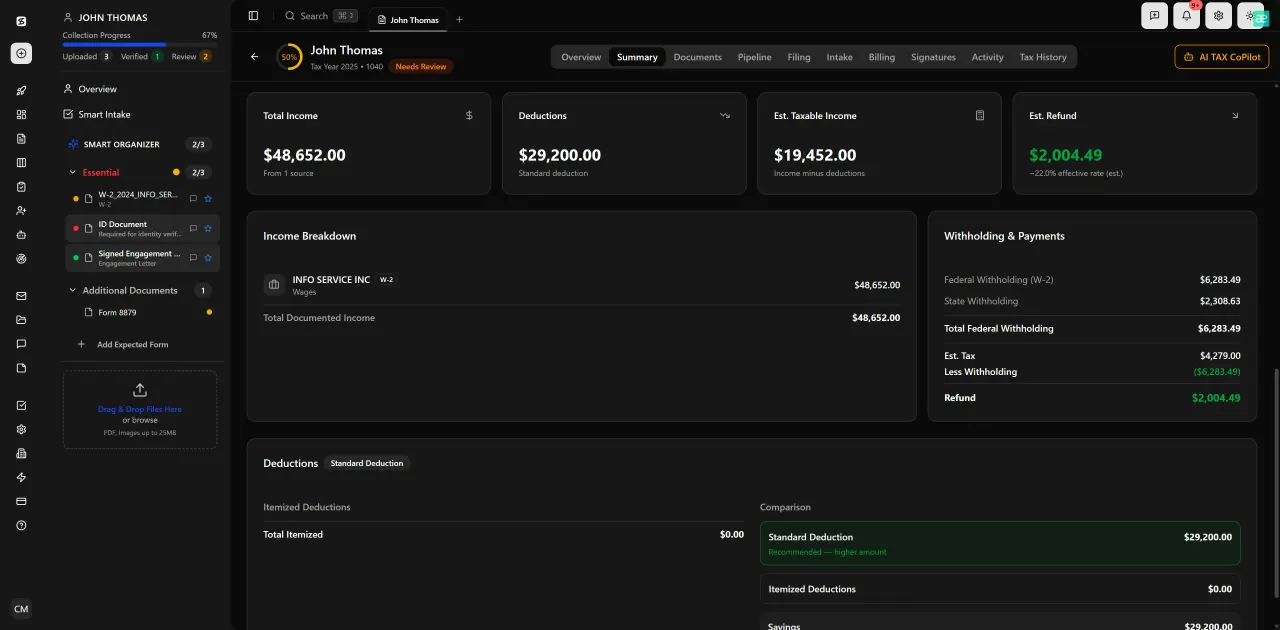
Review with AI assist — 9 agents answer questions with full client context
Step 2: Pass the Series 65 Exam
The most common licensing path for a CPA adding RIA services is the Series 65 (Uniform Investment Adviser Law Examination), administered by FINRA on behalf of state securities regulators. Unlike the Series 7, the Series 65 does not require sponsorship by a broker-dealer, which makes it the natural choice for fee-only RIAs. The exam covers investment vehicle characteristics, investment strategies, economic factors, legal and regulatory guidelines, and ethics.
Importantly, holders of certain professional designations — including the CPA — may be exempt from the Series 65 requirement in many states. The North American Securities Administrators Association (NASAA) maintains the list of accepted designations, and most state securities regulators honor it. Check your state's specific rules: approximately 30 states currently waive the Series 65 for active CPAs, but waiver policies do change. Even if your state offers a waiver, many CPAs take the exam anyway to deepen their investment knowledge before managing client assets. Understanding CPA adding RIA in this context is what separates firms that scale from those that stall.
The exam consists of 130 scored questions and a 10-question pretest section. The passing score is 72%. Most CPAs report that 60–100 hours of focused study is sufficient given their existing tax and financial background. Study materials from providers like Kaplan and Securities Training Corporation cover the investment law topics that are least familiar to a tax-focused professional. Registering for the exam costs $187 and is coordinated through FINRA's exam registration portal. This is precisely where a deliberate CPA adding RIA strategy pays off.
Already managing client documents across two disciplines?
TaxScout.ai centralizes tax documents, client communications, e-signatures, and invoicing for CPA-RIA practices — all at a flat fee with no per-user charges. CPA adding RIA sits at the center of this decision — get it wrong and the rest unravels.
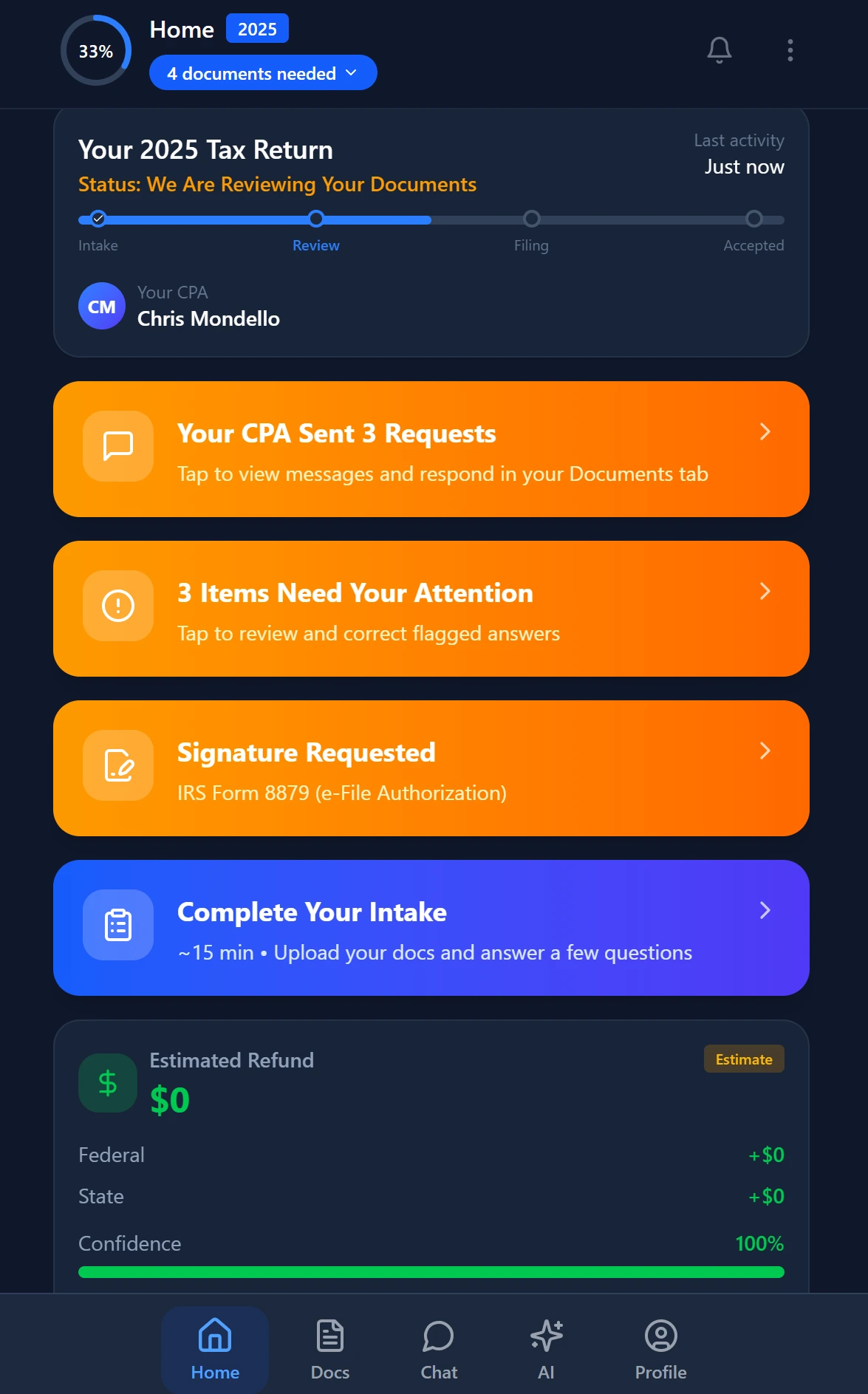
Smart intake auto-fills from uploaded documents and prior-year data
Step 3: Choose Between State and SEC Registration
Once licensed, you will file your Form ADV through the IARD system. For most new CPA-RIAs, state registration is the starting point. You register in your home state and in any additional state where you have more than five clients. The SEC's adviser registration page outlines the federal thresholds in detail, but the practical rule is simple: if you expect to manage less than $25 million initially, you will register only with your state. Between $25 million and $100 million, state registration remains the default. When firms revisit their CPA adding RIA priorities, the gaps usually surface here.
Your Form ADV has two critical parts. Part 1 is the structured IARD database filing that regulators use to assess your firm's operations, ownership, and disciplinary history. Part 2A is your firm brochure — a plain-English description of your services, fees, conflicts of interest, and investment strategies. Part 2B covers supervised persons. These documents become public record. Writing clear, accurate ADV language matters both for regulatory approval and for client trust, so consider having a securities attorney review your drafts.
State fees vary but are typically $200–$500 for initial registration. You will also need to file a consent to service of process, designate a chief compliance officer (CCO), and adopt a written compliance program before your registration is granted. A realistic timeline from passing the Series 65 to receiving state approval is six to twelve weeks, depending on the state.
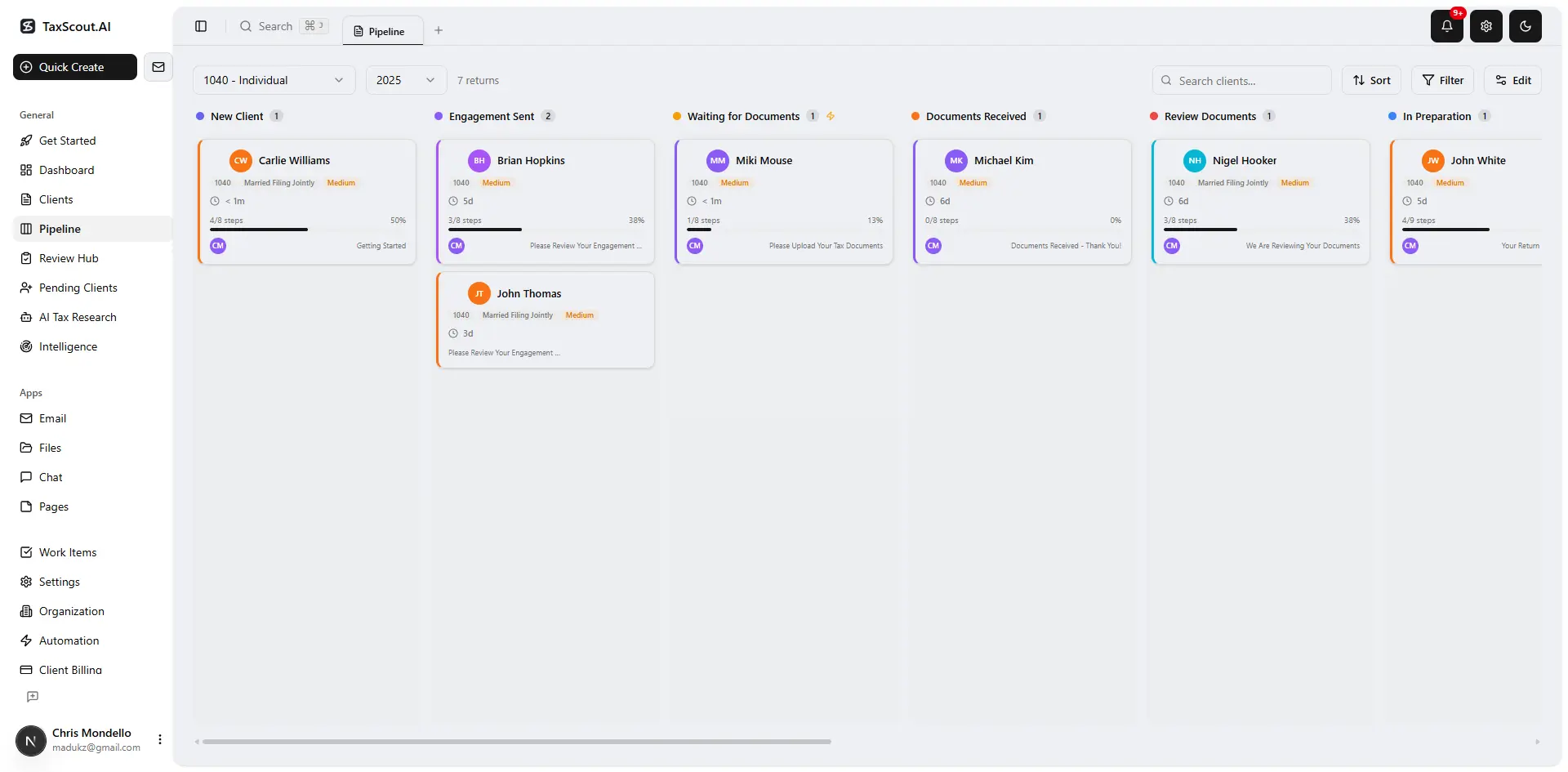
Track every return from intake to filed with drag-and-drop pipeline management
Step 4: Select a Custodian
As an RIA, you will not hold client assets yourself. A qualified custodian — typically a broker-dealer or bank — holds securities on behalf of your clients. Custodian selection has massive downstream consequences for technology, reporting, and client experience. The dominant custodians for small RIAs are Schwab Advisor Services, Fidelity Institutional, and Pershing/BNY Mellon, though newer platforms like Altruist and Interactive Brokers specifically target sub-$50M AUM advisors with lower minimums and modern integrations.
Key questions to evaluate for each custodian include: What is the minimum AUM to open an institutional account? What portfolio reporting software integrates with their platform? What are the trading costs for client accounts? Do they offer model marketplace access so you can implement third-party strategies without being a portfolio manager yourself? Altruist, for example, has no AUM minimum and charges $1 per trade, which significantly lowers the economics of starting small. Schwab requires no minimum but has more extensive onboarding documentation.
Your custodian will also influence which performance reporting and rebalancing tools you use. Platforms like Orion, Riskalyze (Nitrogen), and Morningstar Office typically integrate with major custodians and produce the client-facing reports your investment advisory agreement will require. Budget $100–$400 per month for portfolio reporting software in addition to your custodian's costs.

Click any extracted field to see its source highlighted on the original PDF
Step 5: Design Your Fee Model
The AUM fee model is the industry standard for RIAs: you charge a percentage of the assets you manage, typically ranging from 0.50% to 1.25% annually, billed quarterly in arrears. For a CPA adding RIA services, this creates a meaningful recurring revenue stream alongside your tax fees. A client with $500,000 in investable assets paying 1.00% AUM generates $5,000 per year in advisory fees — approximately the same as a complex individual return — without the concentrated labor of tax season.
Many CPA-RIAs adopt a bundled or tiered model that combines tax preparation and investment advisory into a single annual retainer. This advisory services approach is increasingly popular because it aligns pricing with client value rather than hours, mirrors how wealth management firms price comprehensive planning, and reduces the feast-or-famine tax season dynamic. You can also charge planning fees (one-time or annual retainers) for clients who want advice but are not ready to transfer assets — check your ADV language to make sure flat-fee planning is properly disclosed.
Document your fee schedule clearly in both your Form ADV Part 2A and your investment advisory agreement (IAA). Your IAA is the contract governing the advisory relationship, distinct from your CPA engagement letter. For best practices on engagement letter language in your tax practice, see our guide to flat fee billing for CPAs, which covers how to structure recurring fees across multiple service lines. The SEC's guidance on investment adviser fees offers the regulatory backdrop on fee disclosure requirements.
AUM Fee Model vs. Flat Retainer: Comparing Structures for CPA-RIA Practices
| Factor | AUM Percentage Fee | Flat Annual Retainer |
|---|---|---|
| Revenue predictability | Grows with markets; volatile in downturns | Fixed; highly predictable |
| Client alignment | Incentive to grow AUM | Incentive to deliver outcomes |
| Typical rate | 0.50%–1.25% of AUM annually | $3,000–$10,000/year for comprehensive planning |
| Best for | Clients with $200K+ in investable assets | High-income clients needing planning, not management |
| Billing complexity | Requires quarterly AUM calculations | Simple flat invoice; integrates with existing billing |
| Form ADV disclosure | Required; must disclose conflicts | Required; must disclose scope clearly |

Your clients see your brand — OTP login, document upload, and real-time status
Step 6: Build Your Compliance Program
Every registered RIA must adopt a written compliance program under SEC Rule 206(4)-7-7). Your program must include policies and procedures reasonably designed to prevent violations of the Advisers Act, a designated chief compliance officer (who can be you, as a solo practitioner), and annual reviews of the program's adequacy. State-registered advisers face equivalent requirements under their state's securities rules.
Core compliance documents include: your Investment Policy Statement templates, your Code of Ethics (required under SEC Rule 204A-1), your privacy policy (required by Reg S-P), your cybersecurity policies, your Books and Records policy, and your Annual Review documentation. For solo CPA-RIAs, compliance consulting firms like Comply, RIA in a Box, and National Regulatory Services (NRS) offer subscription packages ranging from $150–$500/month that provide template libraries, annual review support, and regulatory update monitoring — substantially cheaper than hiring outside securities counsel for every question.
Cybersecurity deserves particular attention. As a CPA-RIA, you will hold client financial data across two regulated domains. Your existing CPA cybersecurity obligations under the IRS Written Information Security Plan (WISP) framework overlap with SEC Regulation S-P requirements. Our guide on cybersecurity essentials for accounting firms covers the baseline controls that also satisfy securities regulators. TaxScout's security infrastructure — including AES-256-GCM encrypted SSN vault and 7-role RBAC — provides a compliant foundation for the tax side of the practice.
You should also review the SBA's small business compliance resources for general recordkeeping obligations that apply across professional service firms. Maintaining books and records for five years (or longer under certain state rules) is a baseline RIA requirement, and the document management habits you have built as a CPA translate directly.

Every client gets organized documents, status tracking, and a complete history
Managing the Dual Practice: Operations and Technology
The biggest operational challenge for a CPA adding RIA services is running two distinct compliance regimes from a single office. Your tax practice has IRS deadlines, engagement letters, and document workflows. Your advisory practice has ADV filings, client agreement renewals, performance reporting cycles, and quarterly billing. Without disciplined systems, the two can bleed into each other in ways that create both regulatory risk and client confusion.
Separate your service offerings clearly in client-facing materials. Maintain distinct engagement letters: one for tax services (governed by IRS Circular 230 and your state CPA board) and one for investment advisory services (your IAA, governed by securities law). TaxScout's e-signature workflow supports both document types and logs execution timestamps for audit trails — which matters when a securities examiner asks for evidence that clients received and signed your ADV disclosure brochure before you began advisory services.
For practice management, you will want a system that handles the document-heavy nature of both disciplines. The intake workflows you have for tax clients — collecting W-2s, 1099s, and K-1s — can expand to include custodial account statements, prior investment advisory agreements, and beneficiary information. TaxScout's AI document extraction handles 180+ tax form types and can classify supporting financial documents, reducing manual sorting time as your advisory practice grows. You can explore other blog resources covering dual-service CPA practice operations for additional guidance.
Invoicing is another integration point. If you are billing AUM fees quarterly and tax fees annually, you need a billing system that handles both without confusion. TaxScout's invoicing via Stripe Connect supports recurring billing schedules. For deeper detail on structuring recurring advisory retainers, see our post on automating recurring client invoicing.
Common Mistakes CPAs Make When Adding RIA Services
The most common mistake is providing investment advice before completing registration. The moment you recommend specific securities or allocations for compensation — even informally, in a planning meeting included in your flat tax fee — you may be acting as an unregistered investment adviser. The SEC and state regulators can and do issue deficiency letters and fines for this. Complete your Form ADV filing and receive your registration confirmation before discussing specific securities recommendations with clients.
A second common error is filing an ADV that does not accurately describe your actual services. Many first-time RIAs write ADV language that is too narrow (omitting planning services they do provide) or too broad (describing capabilities they do not yet have). Your ADV is a living document that must be updated annually and promptly whenever material changes occur. Filing inaccurate ADV disclosures is a violation of the Advisers Act regardless of intent.
Third, many CPA-RIAs underestimate the time required for investment-related client service. Managing even 20 households with $300,000 average AUM — a $6M book generating roughly $60,000 in advisory fees — requires portfolio monitoring, rebalancing, client communication, and performance reporting that can easily consume one day per week. Build your capacity model before you commit to clients. Our accounting firm capacity planning guide offers a framework for thinking through service capacity that applies equally to advisory workflows.
Running a dual CPA-RIA practice on disconnected tools?
TaxScout.ai gives CPA-RIA practices one platform for document extraction, client portals, e-signatures, and invoicing — at $149/month flat for up to 10 seats.
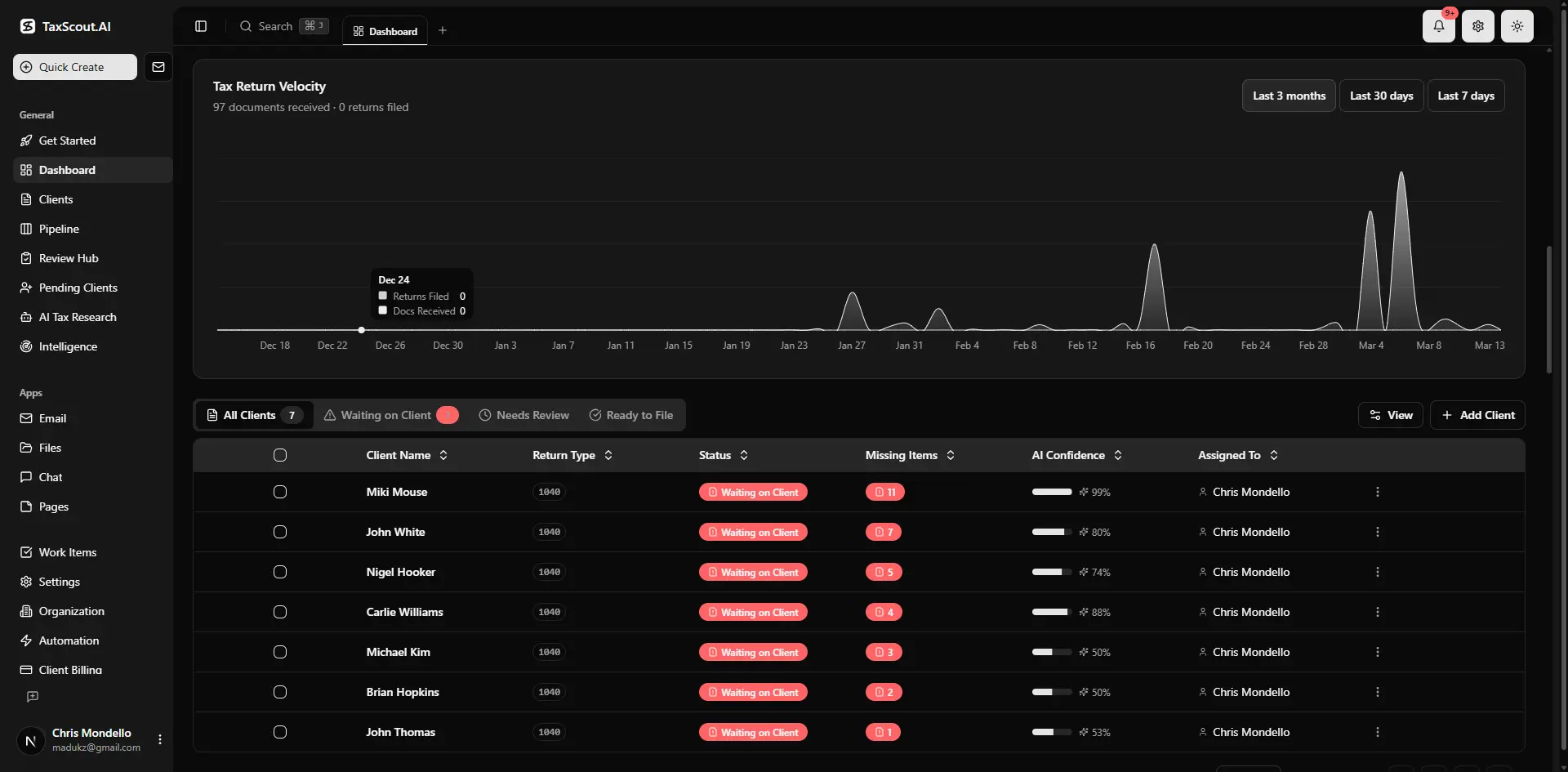
Real-time dashboard showing returns in progress, revenue, and upcoming deadlines
Frequently Asked Questions
In most states, an active CPA license qualifies for a Series 65 waiver because the CPA credential is on NASAA's accepted designations list. However, waiver policies vary by state and can change, so always verify with your specific state securities regulator before relying on an exemption. Even with a waiver, many CPAs elect to take the Series 65 to strengthen their investment knowledge prior to managing client assets.
Keep reading
Backdoor Roth IRA: How CPAs Execute the Strategy Without Triggering Pro-Rata Tax
Oct 12, 2026 · 1 min read
Amended FBAR Procedures: How CPAs Correct Foreign Account Errors Without Triggering Penalties
Oct 12, 2026 · 1 min read
Transparency in Coverage Final Rules: What CPA Firms Must Do Now
Oct 12, 2026 · 1 min read
Stay up to date
Get the latest tax tech insights delivered to your inbox.