Increase in Threshold for Requiring Information Reporting
On July 2, 2026, the IRS published a hearing notice for proposed regulations (REG-113229-25) that would raise the dollar thresholds triggering 1099 information reporting and backup withholding for trade or business payments. CPA firms serving self-employed clients, S-corps, partnerships, and…
The IRS moved quickly this summer on a rule that could reduce the volume of 1099s your firm prepares — and change how you handle backup withholding conversations with clients. On July 2, 2026, the Federal Register published a hearing notice for proposed rulemaking REG-113229-25, which focuses on the increase in threshold for requiring information reporting with respect to certain payees, an extension and modification of the limitation on wagering losses, and scheduling a public hearing on the proposals.
The proposed amendments, originally introduced on April 17, 2026, target the dollar thresholds embedded in the Treasury regulations governing information reporting for payments made in the course of a trade or business — as well as the corresponding backup withholding rules. If finalized, these changes will directly affect how firms advise clients on vendor payments, contractor compensation, and documentation requirements for 1099 filings. At their core, the proposed amendments represent a significant increase in threshold for requiring information reporting, aimed at reducing administrative burden for businesses that have long operated under dollar limits set decades ago.
This is not a routine technical correction. For small and mid-size CPA practices managing high volumes of 1040s with Schedule C income, S-corp payroll, partnership distributions, and nonprofit vendor payments, a threshold shift can compress or expand your filing workload meaningfully. Here is what your firm needs to know and do this week. Any increase in threshold for requiring information reporting directly affects how many 1099s your firm must prepare, review, and file on behalf of clients — making it essential to model the impact before the rules take effect.
What the Proposed Rule Actually Changes
The core of REG-113229-25 is a proposed upward revision to the dollar thresholds that trigger mandatory information reporting under 26 U.S.C. § 6041, which governs payments made in the course of a trade or business. Under current rules, payers must file a Form 1099 when aggregate payments to a single payee in a calendar year meet or exceed $600. The proposed rule would raise that floor. This proposed increase in threshold for requiring information reporting under Section 6041 would mean that many routine vendor payments currently triggering a 1099 obligation would fall below the new minimum, potentially eliminating filing requirements for a meaningful portion of your client base.
The regulations also address corresponding backup withholding obligations under 26 U.S.C. § 3406. When a payee fails to furnish a correct TIN or is otherwise subject to backup withholding, the payer is currently required to withhold at a flat rate on any reportable payment. The threshold change would reduce the number of transactions that fall into the reportable — and therefore potentially withholdable — category. For firms evaluating their increase in threshold for requiring information reporting approach, this trade-off compounds over time.
Separately, the notice encompasses an extension and modification of the limitation on wagering losses, which primarily affects clients with gambling activity on their 1040s. This provision is narrower in its practice-management implications but should be flagged for any firm with clients who itemize deductions and report W-2G income. Each of these factors directly shapes how increase in threshold for requiring information reporting plays out in practice.
The public hearing has been scheduled to allow practitioners, payers, and industry groups to comment before final rules are issued. Firms that want to influence the final threshold number — or present evidence about operational burden — should act before the comment period closes. Check the Federal Register notice for the exact hearing date and comment deadline. Understanding increase in threshold for requiring information reporting in this context is what separates firms that scale from those that stall.
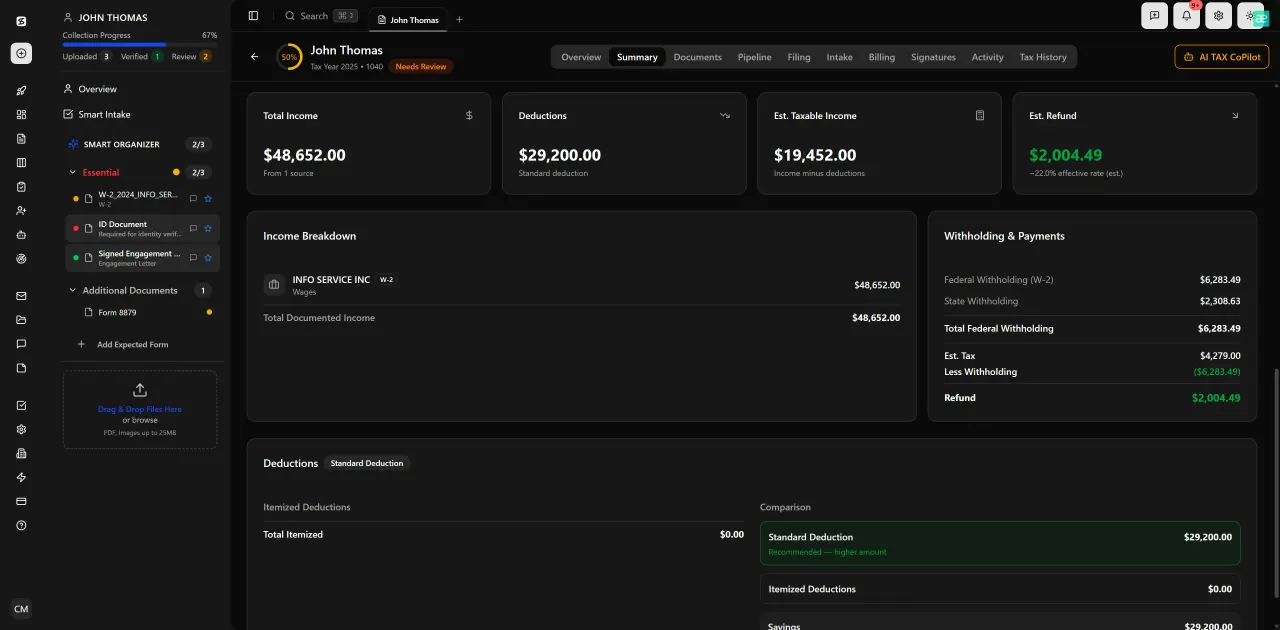
Review with AI assist — 9 agents answer questions with full client context
Which Client Segments Are Affected
Tired of manual workflows slowing your firm down? See how TaxScout handles this with AI-powered automation. → Book a 15-Min Demo This is precisely where a deliberate increase in threshold for requiring information reporting strategy pays off.
Not every client on your roster will feel the impact equally. The threshold change is most operationally significant for payers — businesses and entities that issue 1099s — rather than recipients. Here is how it breaks down by entity type. Increase in threshold for requiring information reporting sits at the center of this decision — get it wrong and the rest unravels.
Self-employed and Schedule C filers (1040): Sole proprietors who hire contractors or pay service vendors will see the most direct effect. If the new threshold is set significantly above $600, a meaningful share of their current 1099 obligations could disappear. That simplifies your year-end workflow but also changes the advice you give clients about retaining vendor documentation and collecting W-9 forms. When firms revisit their increase in threshold for requiring information reporting priorities, the gaps usually surface here.
S-corporations and partnerships: These pass-through entities are frequent 1099 issuers for consulting, legal, and subcontractor payments. A higher threshold reduces their filing burden but also changes the calculus for the pass-through entity owners who rely on 1099 cross-matching to catch under-reported income on K-1s. See our related discussion of 1099-NEC vs 1099-MISC for context on the existing form-type distinctions that still apply.
Nonprofits: Tax-exempt organizations under 501(c)(3) are payers subject to the same information reporting rules when making qualifying business payments. A threshold increase could reduce Form 990 Schedule O disclosures and internal compliance costs, but nonprofits should not assume they are exempt from any new backup withholding mechanics until final rules are published. For a broader look at nonprofit compliance workflows, see our nonprofit audit preparation guide.
Employers with gambling-income clients: The wagering-loss modification is narrower, but firms should flag any 1040 client who reported W-2G income in 2024 or 2025. The extension and modification provision could affect deductibility limits and the math on Schedule A itemized deductions for those clients.
Tired of manually tracking every IRS proposed rule that affects your client roster?
TaxScout's AI Research Agents monitor IRS, Treasury, and Federal Register in real time — so your firm gets actionable alerts, not press-release summaries.
→ See AI Research Agents in Action
What to Do This Week: A Practical Action List
Proposed rules are not final rules, but waiting until finalization to prepare operationally is a mistake. Here is a concrete five-step action list for CPA firm owners this week.
1. Read the primary source. Pull up the Federal Register notice for REG-113229-25 and note the public hearing date and comment deadline. Calendar both dates in your firm's pipeline management system today.
2. Identify your high-volume 1099 issuers. Run a list of all clients who issued 10 or more 1099-NEC or 1099-MISC forms for tax year 2025. These are the practices most likely to benefit from a higher threshold — and the ones whose workflows you will need to update when the rule finalizes.
3. Flag gambling-income clients. Filter your 1040 clients for W-2G entries or Schedule A wagering-loss deductions. Note the current deductibility rules under IRS Publication 529 and prepare a short client advisory explaining that a modification may affect their 2026 returns.
4. Review your W-9 collection process. Regardless of where the final threshold lands, best practice is to collect a valid W-9 before issuing any payment above the current $600 floor. If your firm does not already have a documented W-9 collection workflow inside your client portal, set one up now — before threshold confusion leads a client to skip documentation.
5. Consider submitting a comment. If your firm has data on the administrative burden of the current $600 threshold — hours spent per 1099, error rates, client friction — the public comment process is your opportunity to influence the final number. The IRS comment submission portal accepts written comments from practitioners. This is also a credibility-building opportunity with clients who appreciate proactive advocacy.
For a broader overview of the IRS deadlines and regulatory calendar your firm should be tracking this year, see our full 2026 deadline guide. You can also follow other news resources on the TaxScout blog for ongoing Federal Register updates relevant to CPA practices.
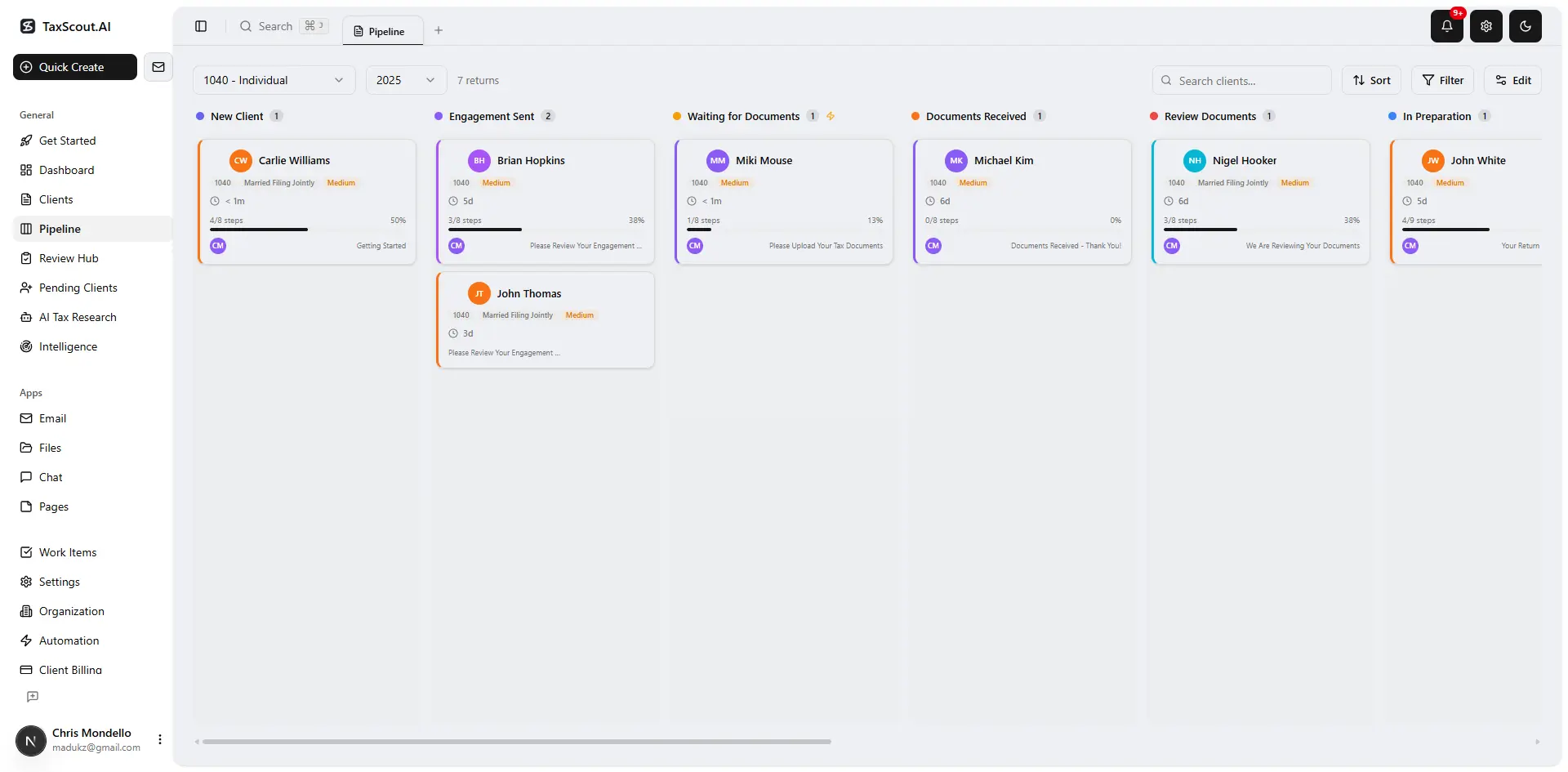
Track every return from intake to filed with drag-and-drop pipeline management

Click any extracted field to see its source highlighted on the original PDF
How a Threshold Change Affects Backup Withholding Procedures
One dimension that most coverage of this proposed rule overlooks is the cascading effect on backup withholding. Under 26 C.F.R. § 31.3406, payers are required to withhold 24% from reportable payments when the payee has not provided a valid TIN or is flagged by the IRS. If the reporting threshold rises, fewer transactions qualify as reportable — which means fewer transactions are subject to mandatory backup withholding.
For CPA firms, this matters in two ways. First, clients who currently over-withhold on borderline vendor payments may be able to simplify their payables process. Second, the IRS's compliance cross-matching system depends on 1099 volume to identify unreported income. A higher threshold means less data in that system, which could increase examination pressure on returns that do fall above the threshold. Advise high-payment clients accordingly.
The withholding implications also intersect with estimated tax payments. Self-employed individuals who receive payments just below the new threshold may no longer receive 1099s and may underestimate their income for quarterly payment purposes. That is a planning conversation your firm should initiate proactively, especially with new clients who rely on 1099 receipts to track their own income.
How TaxScout Helps Firms Track Regulatory Changes Like This
Keeping up with Federal Register notices, proposed regulations, and IRS guidance is one of the most time-consuming parts of running a CPA firm — and it rarely gets billed. TaxScout's AI Research Agents are purpose-built to close that gap. The platform deploys nine specialized agents that search IRS.gov, Treasury, Cornell Law, SSA, and Congressional records in real time, returning cited answers with source links rather than generic summaries.
For a notice like REG-113229-25, you can ask the AI Research Agent to pull the full proposed amendment text, compare the proposed threshold to the current regulatory floor, and summarize the comment period timeline — in under two minutes. That same research layer is available inside every client record, so when a client asks whether their vendor payment program needs to change, your team has an answer backed by primary sources, not memory.
TaxScout also handles the downstream document workflows that threshold changes affect. The AI document extraction engine processes 1099-NEC, 1099-MISC, W-9, and 180+ other form types with a 5-layer validation pipeline, so when new rules alter your filing mix, the extraction logic adapts to what your clients actually receive. See what AI document extraction looks like in practice for a technical walkthrough.
Flat-rate pricing — $149/month for up to 10 seats and 500 returns, with no per-user fees — means adding a regulatory monitoring workflow to your practice does not require a budget conversation. Compare that to per-user platforms like TaxDome at roughly $500/month for the same team size. See our full pricing page or compare alternatives before the next rule drops.
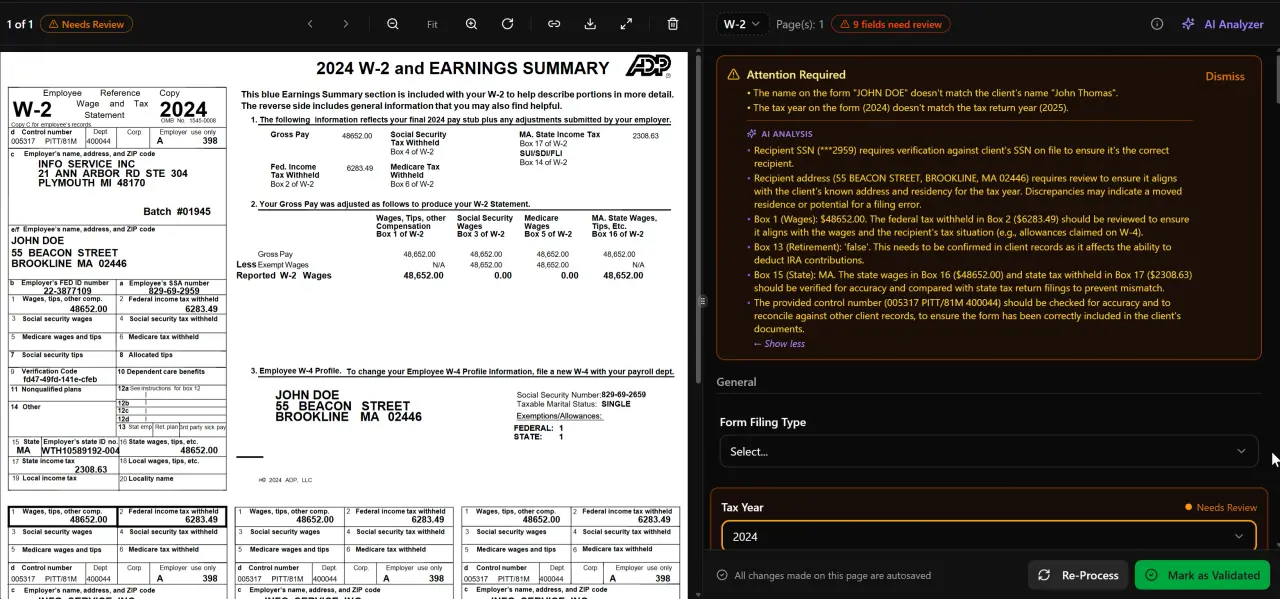
AI classifies, extracts, and validates every document automatically
REG-113229-25 Impact by Entity Type — Quick Reference
| Entity Type | Primary Impact | Action Required |
|---|---|---|
| 1040 / Schedule C | Fewer 1099s to issue if threshold rises above $600 | Audit vendor payment lists; update W-9 collection process |
| S-Corporation | Reduced 1099-NEC filing volume for contractor payments | Review payables workflow; update year-end checklist |
| Partnership | K-1 cross-matching less reliable at lower payment levels | Advise partners on income documentation requirements |
| Nonprofit (501c3) | Lower 1099 filing burden; backup withholding scope may narrow | Review Form 990 vendor payment disclosures |
| 1040 with W-2G income | Wagering-loss limitation extension may change Schedule A math | Flag affected clients; monitor final rule for deductibility cap |
Want your firm to stop chasing IRS notices and start advising clients ahead of every regulatory shift?
TaxScout gives CPA firms AI-powered regulatory intelligence, document extraction, and client workflows — all at a flat monthly rate with no per-user fees.
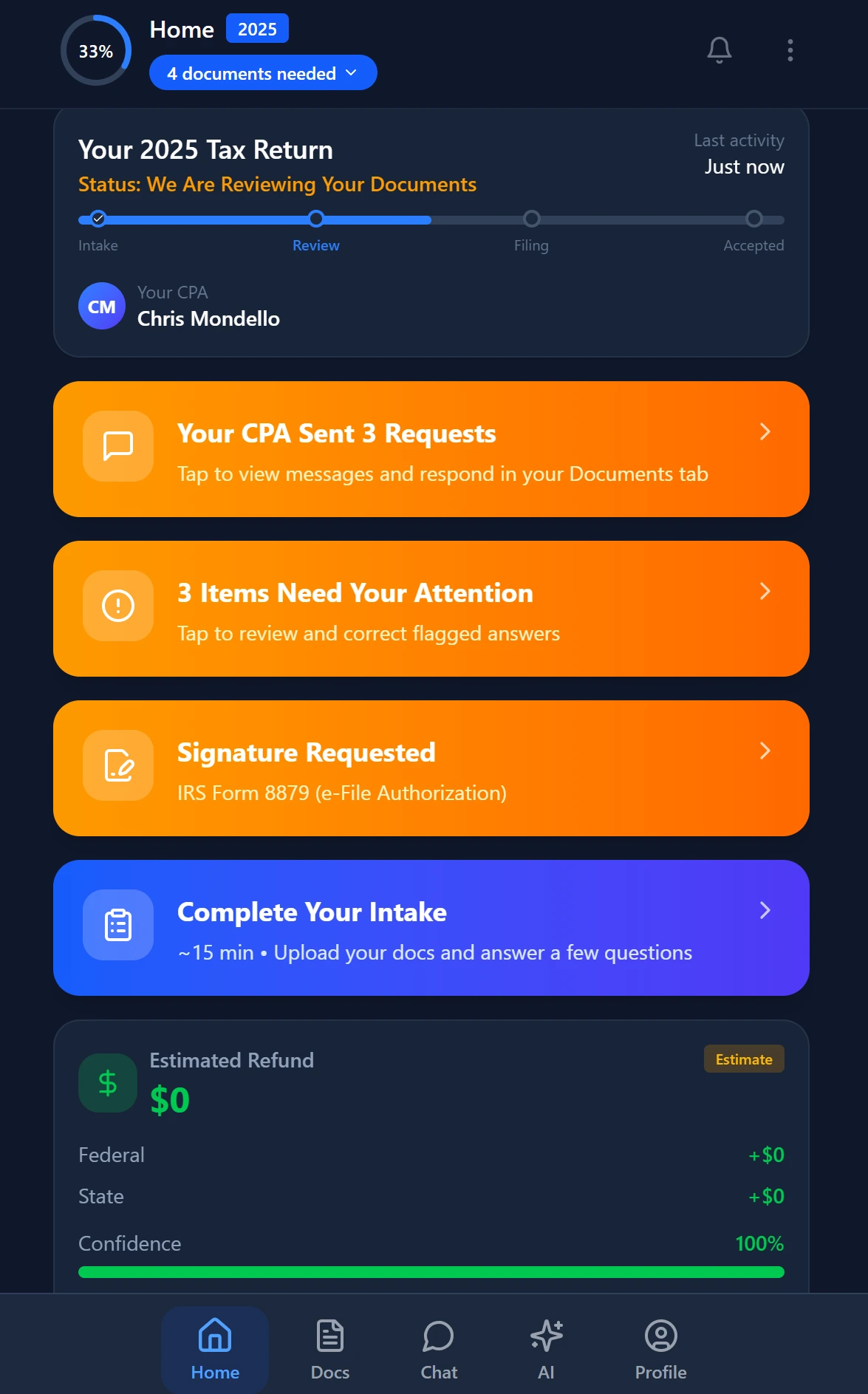
Smart intake auto-fills from uploaded documents and prior-year data
Frequently Asked Questions
The current threshold under 26 U.S.C. § 6041 is $600 per payee per year for most trade or business payments. Proposed rulemaking REG-113229-25, published in the Federal Register on April 17, 2026, proposes to raise that dollar threshold. The July 2, 2026 notice schedules a public hearing where practitioners can comment on the proposed change before final rules are issued.
Keep reading
Backdoor Roth IRA: How CPAs Execute the Strategy Without Triggering Pro-Rata Tax
Oct 12, 2026 · 1 min read
Amended FBAR Procedures: How CPAs Correct Foreign Account Errors Without Triggering Penalties
Oct 12, 2026 · 1 min read
Transparency in Coverage Final Rules: What CPA Firms Must Do Now
Oct 12, 2026 · 1 min read
Stay up to date
Get the latest tax tech insights delivered to your inbox.