Transparency in Coverage Final Rules: What CPA Firms Must Do Now
Federal regulators published final Transparency in Coverage rules on October 6, 2026, amending price reporting requirements under ERISA, the Public Health Service Act, and the Internal Revenue Code. The rules affect non-grandfathered group health plans sponsored by S-corps, partnerships…
On October 6, 2026, federal regulators published final rules on Transparency in Coverage in the Federal Register, amending price transparency reporting requirements that apply to non-grandfathered group health plans and health insurance issuers offering non-grandfathered group and individual health insurance coverage. The rules touch three separate legal frameworks at once: the Public Health Service Act, the Employee Retirement Income Security Act of 1974 (ERISA), and the Internal Revenue Code.
For CPA firms, this is not a benefits-attorney problem to hand off. The changes directly affect employer clients who sponsor self-funded or fully-insured non-grandfathered group health plans — a category that includes most S-corps, partnerships, nonprofits, and mid-size C-corps you already file for. If your firm handles payroll tax, Form 5500, or business-entity returns for any employer with a health plan, your clients are potentially in scope and may need guidance on updated reporting obligations before year-end. Understanding transparency in coverage requirements is essential for CPAs advising these clients, as non-compliance can trigger significant penalties.
This brief summarizes what changed, which client segments are affected, and the concrete steps your firm should take this week — not a legal restatement, but an operational checklist you can act on immediately. Whether your clients are just learning about transparency in coverage or are mid-way through implementation, this checklist will help you identify gaps and prioritize next steps.
What the October 2026 Final Rules Actually Change
The final rules amend existing Transparency in Coverage regulations under all three governing statutes simultaneously. At their core, they update requirements for machine-readable files (MRFs) and price comparison tools that non-grandfathered group health plans and issuers must make publicly available. The amendments affect how plans disclose in-network negotiated rates, out-of-network allowed amounts, and prescription drug pricing data.
Importantly, the rules distinguish between fully-insured and self-funded arrangements. Fully-insured plan sponsors (employers) may be able to rely on their insurer to satisfy certain disclosure obligations, but self-funded plan sponsors bear the compliance burden directly — and those employers are often S-corps, partnerships, and closely held C-corps in the $2M–$20M revenue range that CPA firms serve every day. Under transparency in coverage rules, this distinction between fully-insured and self-funded plans is critical, as it determines who is ultimately responsible for meeting each disclosure requirement.
The U.S. Department of Labor and the IRS share enforcement jurisdiction, which means non-compliance can trigger penalties under both ERISA and the IRC — two problem areas squarely in a CPA's lane. You can track broader regulatory developments for your clients using TaxScout's regulatory intelligence feature.
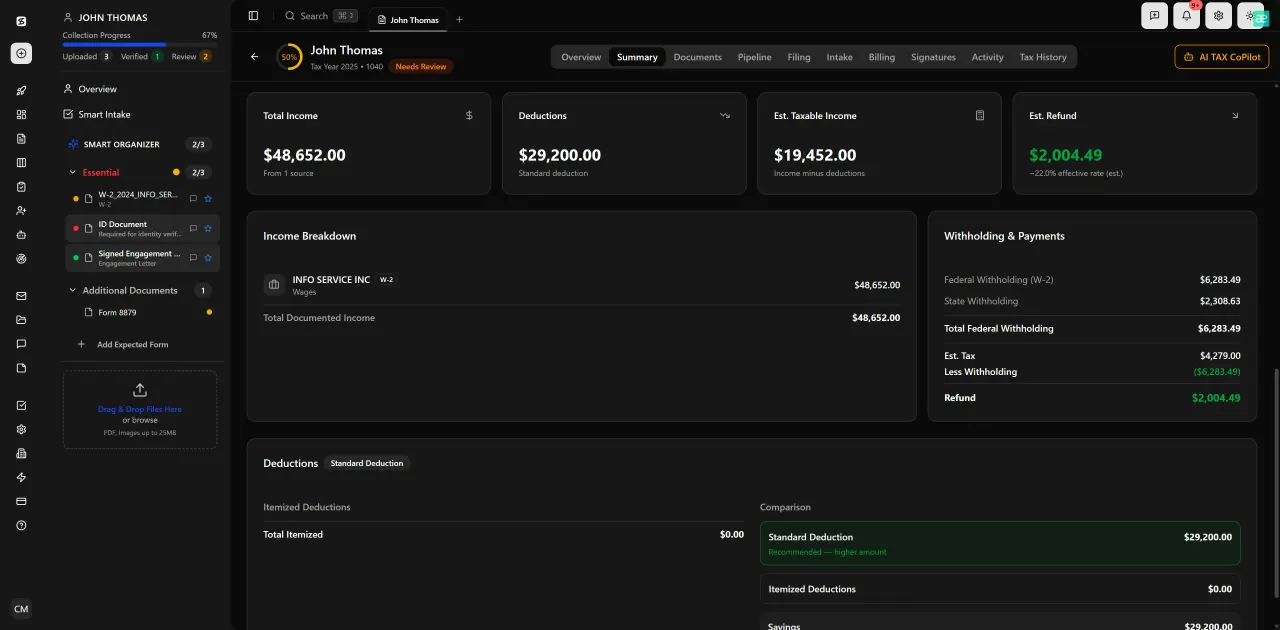
Review with AI assist — 9 agents answer questions with full client context
Which Client Segments and Entity Types Are Affected
Tired of manual workflows slowing your firm down? See how TaxScout handles this with AI-powered automation. → Book a 15-Min Demo
The practical scope is wider than many firms expect. Any employer client that sponsors a non-grandfathered group health plan is in scope — grandfathered status is easy to lose and hard to maintain, so most plans formed or significantly modified after March 23, 2010 are non-grandfathered by default.
S-corporations: Owner-employees of S-corps often design health benefits carefully for tax purposes, but if the S-corp sponsors a group plan with employees (not just the owner), the plan must comply. This intersects with S-corp reasonable compensation planning already on your desk.
Partnerships and multi-member LLCs: Partners are not employees for health-plan purposes, but partnerships that provide health coverage to W-2 employees of the partnership entity fall under the rules. If you prepare Form 1065 for a client with employees, confirm whether a non-grandfathered plan exists.
Nonprofits: Tax-exempt organizations under IRC § 501(c)(3) or other sections that offer group health benefits to staff are fully subject to ERISA and PHSA transparency requirements. The tax-exempt status does not create an exemption. Check nonprofit clients whose unrelated business taxable income you already track.
C-corporations with 50+ employees (ALEs): Applicable Large Employers already managing ACA employer-shared responsibility under § 4980H are the most likely to have compliance infrastructure in place, but they must verify that their plan administrator has updated MRF processes to match the amended rules.
Sole proprietors with no employees and self-employed individuals purchasing individual coverage through the ACA marketplace are generally outside the group-plan rules, though individual market issuers face their own parallel obligations.
Drowning in regulatory updates across dozens of employer clients?
TaxScout's AI research agents monitor IRS, Treasury, and Federal Register publications so your firm surfaces compliance deadlines before clients ask.
What to Do This Week: A Five-Step Action List for CPA Firms
The following steps are not legal advice — they are operational tasks your firm can execute in the next five business days to protect clients and document due diligence.
Step 1: Identify every employer client with a non-grandfathered group health plan. Pull your client list filtered by entity type (S-corp, partnership, LLC, C-corp, nonprofit) and flag any that have W-2 employees. Cross-reference against prior-year Form 5500 filings or benefits questionnaires. Self-funded plans need the most urgent attention.
Step 2: Confirm whether each plan is fully-insured or self-funded. For fully-insured clients, contact the insurer to confirm they are updating MRF processes under the amended rules. Document the response. For self-funded clients, the employer is the plan administrator and bears direct responsibility.
Step 3: Send a brief advisory memo to affected clients this week. Cite the Federal Register final rule (2026-20447) by name. Tell clients what changed, whether they are self-funded or fully-insured, and what action they need to take with their benefits administrator or TPА. Keep the memo short — one page maximum. You can use TaxScout's communication hub to send and track delivery across your client base.
Step 4: Update your engagement scope if necessary. If your engagement letter covers only tax return preparation, monitoring ERISA compliance may fall outside your scope. Consider whether an addendum or referral to an ERISA attorney is appropriate. See our related coverage on estate tax regulatory updates for a template approach to client communications on rule changes.
Step 5: Log the issue in your pipeline and set a follow-up date. Compliance with amended Transparency in Coverage rules is not a one-time task — MRF updates happen on a recurring schedule. Use TaxScout's pipeline management to create a recurring task tied to each affected employer client so nothing falls through the cracks.
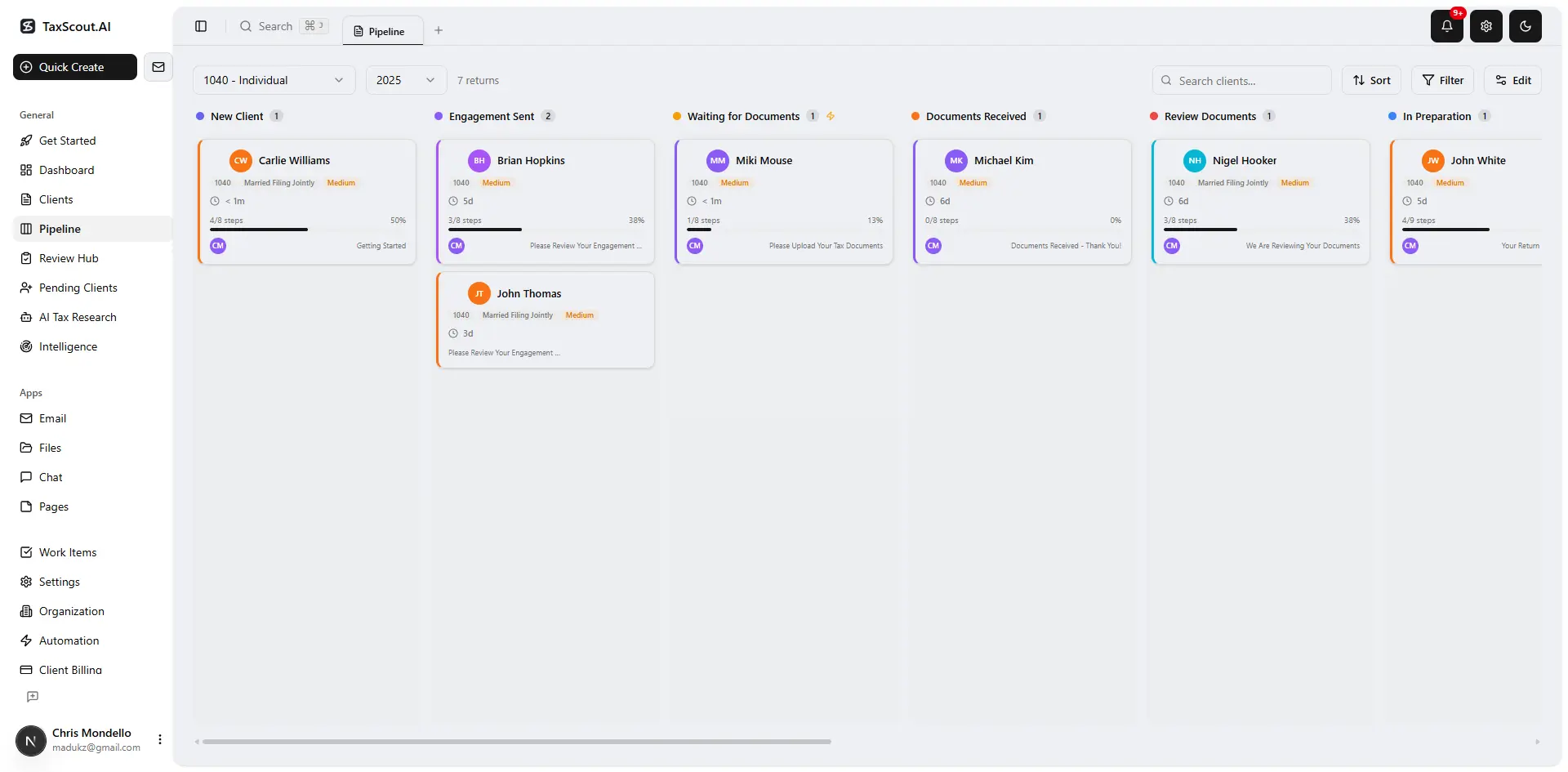
Track every return from intake to filed with drag-and-drop pipeline management
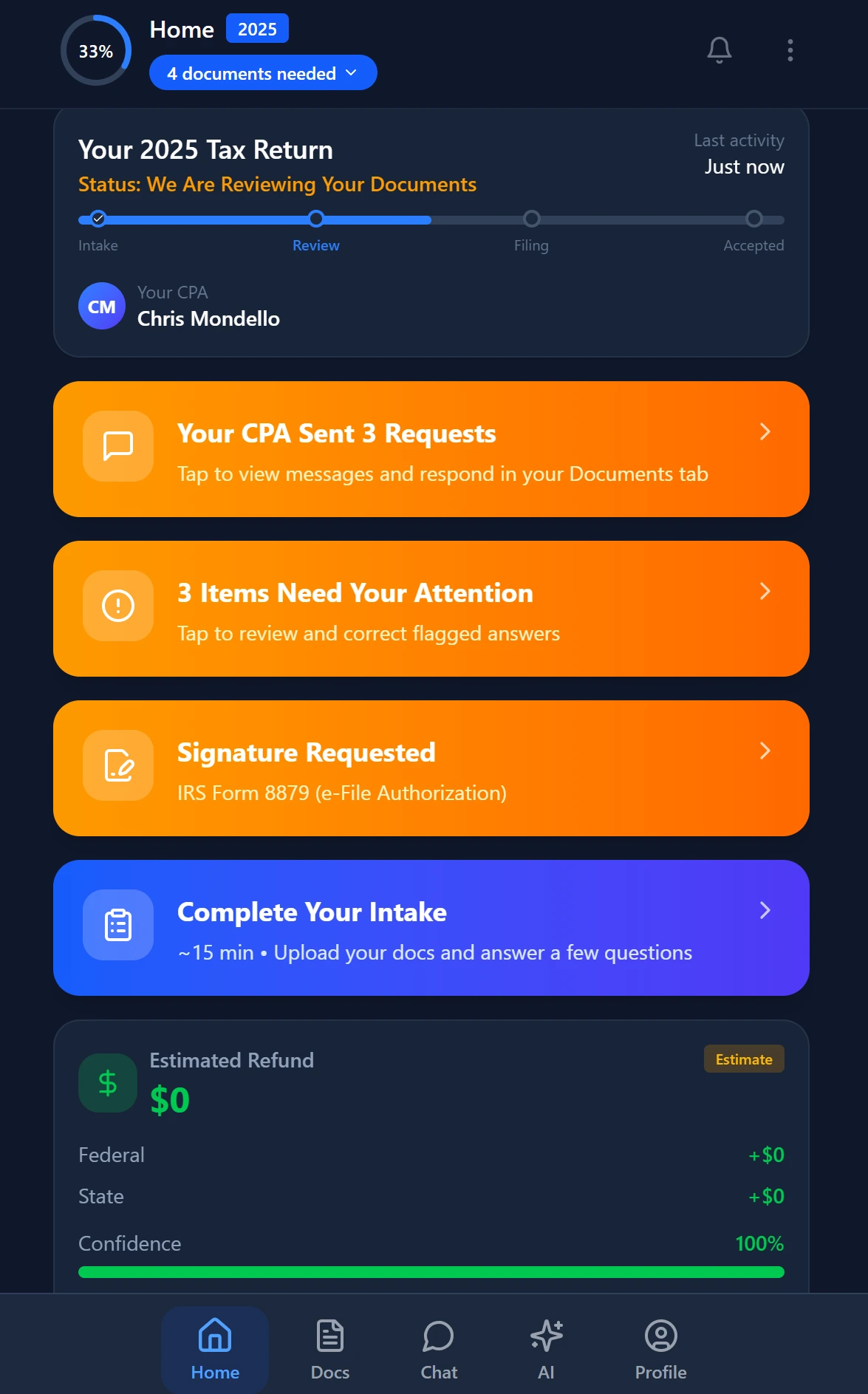
Smart intake auto-fills from uploaded documents and prior-year data
ERISA, PHSA, and IRC: Why Three Statutes Matter to CPAs
Most CPA firms think of health-plan compliance as an HR or benefits-attorney issue. The October 2026 rules are a reminder that three distinct penalty regimes apply simultaneously, and two of them sit squarely in tax practice.
Under ERISA § 502, plan administrators who fail to provide required disclosures can face civil penalties up to $110 per participant per day. Under the IRC, the IRS has separate authority to assess excise taxes on group health plan failures under § 4980D — up to $100 per day per individual for whom the failure occurs. Under the PHSA, HHS retains enforcement authority over issuers.
The tri-agency nature of the final rules — published jointly by HHS, DOL, and Treasury — signals coordinated enforcement. CPA firms that advise employer clients on payroll, benefits fringe, or tax planning need to treat Transparency in Coverage compliance as part of the year-round advisory calendar, not a one-time checklist item. For additional context on how regulatory changes intersect with employer tax filings, browse other news resources published by our team.
The Small Business Administration also notes that small employers often underestimate the compliance cost of health-plan rule changes — a reminder to price advisory services accordingly when scoping this work for smaller clients.
How to Document Your Firm's Due Diligence
Regulatory news briefs age quickly. The most defensible posture for a CPA firm is a documented process — showing that you identified the rule change, assessed which clients are affected, communicated findings, and followed up. That paper trail protects you if a client later claims they were not informed.
A few practical documentation anchors: save a timestamped copy of the Federal Register notice in each affected client's file, log the advisory memo you sent (with delivery confirmation), note any client responses or instructions, and set a calendar reminder for any effective-date milestone in the final rules. TaxScout's file management and client portal features allow you to attach regulatory documents directly to a client record and require client acknowledgment — creating a clean audit trail without manual follow-up.
For firms that handle multistate employer clients, remember that multistate payroll tax compliance already creates overlapping federal and state obligations. Adding Transparency in Coverage to that checklist is straightforward once you have a systematic advisory process in place.
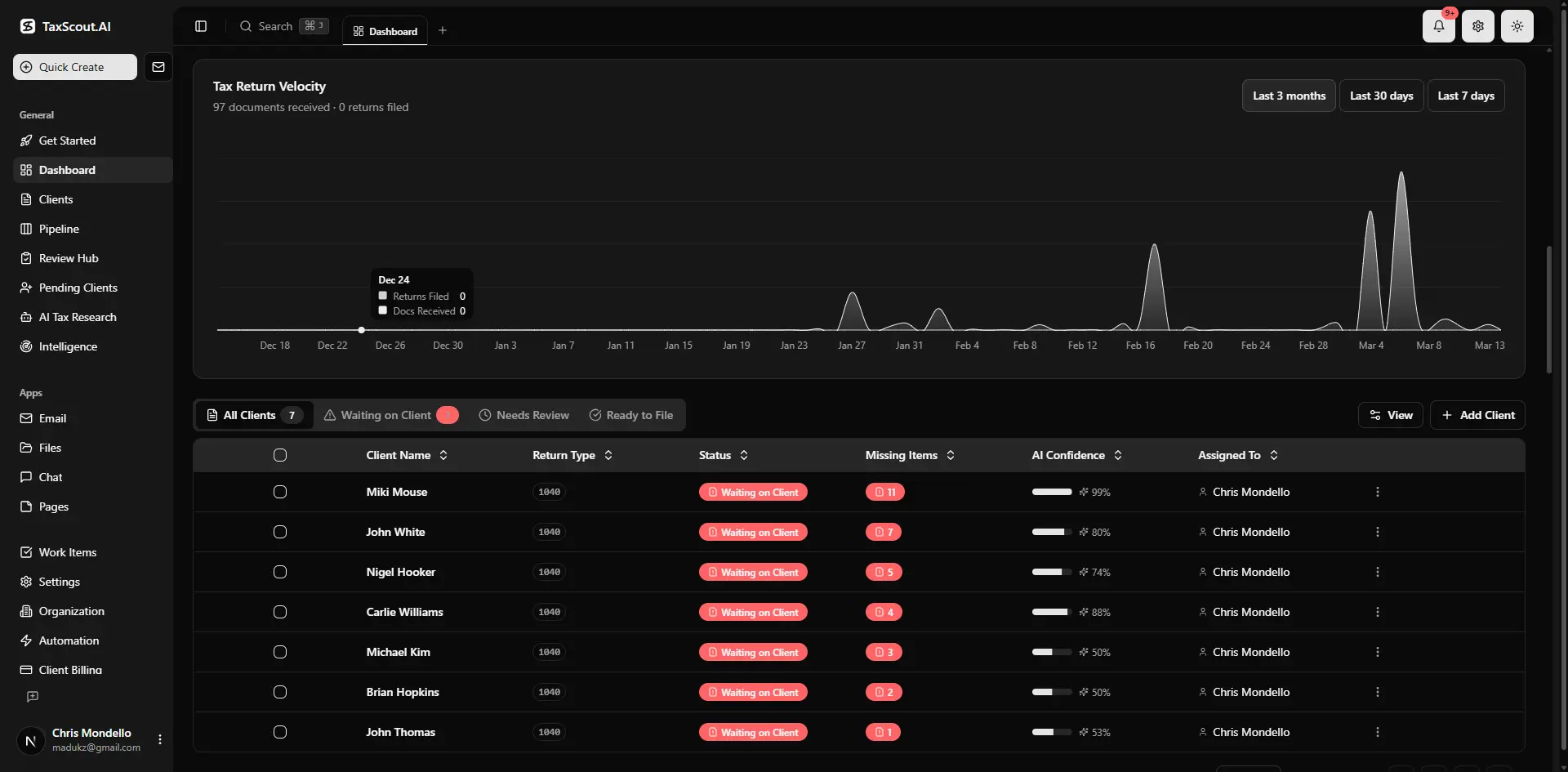
Real-time dashboard showing returns in progress, revenue, and upcoming deadlines

Click any extracted field to see its source highlighted on the original PDF
Primary Source and Where to Read the Full Rule
The complete final rule is publicly available on the Federal Register website. Read the full text at Transparency in Coverage, Federal Register Doc. 2026-20447, published October 6, 2026. The document includes the regulatory text, preamble, and effective date details — all of which your firm should review before advising self-funded plan clients.
For broader IRS guidance on ACA employer provisions, bookmark the IRS Affordable Care Act for Employers landing page, which consolidates § 4980H and related guidance. DOL EBSA maintains parallel resources for ERISA plan administrators at dol.gov/agencies/ebsa.
Want to stop finding out about regulatory changes from clients instead of ahead of them?
TaxScout gives CPA firms AI research agents that monitor federal and state regulatory sources daily — so you advise proactively, not reactively.
Frequently Asked Questions
Any employer that sponsors a non-grandfathered group health plan is potentially in scope — including S-corporations, partnerships, nonprofits, and C-corporations with employees. Self-funded plan sponsors bear the most direct compliance burden, while fully-insured employers may be able to rely on their insurer to satisfy certain obligations.
Keep reading
Charitable Giving Strategies: How CPAs Reduce Client Tax Liability Beyond Simple Donations
Oct 5, 2026 · 1 min read
Multistate Payroll Tax Compliance: How CPAs Keep Distributed Clients Out of Trouble
Oct 4, 2026 · 1 min read
Multistate Payroll Tax Compliance: How CPAs Handle Remote Employees for Business Clients
Oct 4, 2026 · 1 min read
Stay up to date
Get the latest tax tech insights delivered to your inbox.