Multistate Payroll Tax Compliance: How CPAs Handle Remote Employees for Business Clients
Remote work didn't just change where employees sit — it created a patchwork of withholding registrations, SUTA accounts, and reciprocity agreements that CPA firms must actively manage for their business clients. This guide walks through every employer-side trigger, from the first remote hire to a…
Multistate payroll tax compliance became a permanent operational burden the moment remote work normalized. A small business with ten employees used to have one state payroll account, one SUTA rate, and one withholding deposit schedule. Hire a customer success rep in Colorado, a software developer in Virginia, and a bookkeeper in Tennessee, and that same company suddenly owes registrations, deposits, and quarterly filings in four jurisdictions — each with its own deadlines, wage bases, and penalty structures.
Most CPA content on remote work taxes gravitates toward the employee side: home office deductions, the convenience-of-employer rule, residency sourcing. But the compliance burden that lands on your desk is the employer side — and that burden is operational, not conceptual. Your client doesn't need a white paper on nexus theory. They need to know which state agencies to register with, what forms to file, and when deposits are due before the penalty notices start arriving. The operational reality of multistate payroll tax compliance is what keeps your phone ringing and your billing hours climbing.
This guide is written for CPAs who manage payroll tax compliance for small-to-midsize business clients with employees working in multiple states. It covers withholding registration triggers, SUTA obligations and wage base differences, how reciprocity agreements affect employer duties, and how to build a compliance calendar that runs consistently across your client roster. Mastering multistate payroll tax compliance means understanding not just the rules, but the sequencing and systems required to keep clients consistently ahead of their obligations.
When One Remote Hire Triggers State Payroll Registration
The threshold question in multistate payroll tax compliance is deceptively simple: when does a remote employee create an employer registration obligation in their state of residence? The answer, unfortunately, varies by state — but the baseline rule is consistent. The moment a business pays wages to an employee physically working in a state, it typically owes that state's income tax withholding on those wages, regardless of where the company is incorporated or headquartered.
Most states require employers to register with the state's department of revenue (or equivalent) for withholding purposes before the first payroll runs. Some states give a grace period of a payroll or two; others assess penalties retroactively from the first paycheck. A few states — Alaska, Florida, Nevada, South Dakota, Texas, Washington, Wyoming, and New Hampshire on earned income — have no state income tax and therefore no withholding obligation, but that doesn't eliminate payroll tax nexus rules for other purposes like SUTA. Registration timing is one of the most common failure points in multistate payroll tax compliance, and getting it wrong can trigger penalties that dwarf the cost of proactive setup.
The practical trigger for your clients is the employee's physical work location, not their residence address on a W-4. An employee who lives in Delaware but works remotely from a home office in Pennsylvania is working in Pennsylvania. That distinction matters enormously when reviewing intake documents. States generally use physical presence as the withholding situs, though some states apply the convenience-of-employer doctrine — New York's approach is the most aggressive example, treating days worked from home as New York days if the remote arrangement is for the employee's convenience rather than a business necessity of the employer. For firms evaluating their multistate payroll tax compliance approach, this trade-off compounds over time.
For your CPA firm's intake process, building a simple question into your business client onboarding workflow — "List every state where an employee physically performs work" — catches these triggers before they become penalties. The TaxScout AI intake engine can embed employer-side questions like this directly into your client's annual organizer, ensuring you capture location data before payroll runs rather than during a penalty response. Each of these factors directly shapes how multistate payroll tax compliance plays out in practice.

Every client gets organized documents, status tracking, and a complete history
State Payroll Registration for Employers: The Step-by-Step Process
Once you've identified a new work state, state payroll registration for employers typically involves two parallel tracks: registering for withholding tax with the state revenue agency, and registering for unemployment insurance (SUTA) with the state workforce agency. These are almost always separate accounts with separate agencies, separate login credentials, and separate filing calendars. Understanding multistate payroll tax compliance in this context is what separates firms that scale from those that stall.
The registration sequence is generally: (1) obtain or verify the client's federal EIN, (2) register for a state withholding account with the state department of revenue or taxation, (3) register for a state unemployment insurance account with the state department of labor or workforce development, and (4) set up deposit schedules based on expected withholding amounts. Some states require a combined registration form; others use entirely separate applications. This is precisely where a deliberate multistate payroll tax compliance strategy pays off — firms that document each step for every client jurisdiction are the ones that avoid the registration gaps that generate the costliest notices.
Processing times vary. California's Employment Development Department (EDD) issues a state employer account number within a few days for online registrations. Some states still process paper applications and can take three to six weeks. If a client has already run a payroll before registration is complete, document the timeline carefully — many states allow backdated registrations with an explanation, but the request needs to accompany the first late deposit rather than arrive months later. Multistate payroll tax compliance sits at the center of this decision — get it wrong and the rest unravels.
One structural issue that CPAs frequently encounter: the client's payroll processor (ADP, Gusto, Paychex, etc.) may offer to handle state registrations, but the CPA firm often has better visibility into whether the registration has actually been completed and what the account numbers are. Establish a protocol where your firm confirms receipt of state account numbers before the next payroll cycle. This single checkpoint prevents the most common penalty scenario: payroll running without a valid account number, creating unallocated deposits that trigger a delinquency notice. When firms revisit their multistate payroll tax compliance priorities, the gaps usually surface here.
Tracking employer registrations, SUTA accounts, and withholding deadlines across a dozen states for multiple clients?
TaxScout gives your firm a centralized client management hub with AI-assisted document workflows and research agents built for exactly this kind of multi-jurisdiction complexity — at a flat rate with no per-user fees.

Track every return from intake to filed with drag-and-drop pipeline management
SUTA Multistate Obligations and Wage Base Differences
State unemployment tax (SUTA) obligations are where multistate payroll tax compliance gets genuinely complex, because every state sets its own taxable wage base and experience-rated tax rate. For a business with employees in five states, the CPA must track five different wage bases, five different rate notices (issued each year in late November or December for the following year), and five different deposit schedules.
To illustrate the spread: for 2025, the federal unemployment (FUTA) wage base is $7,000 per employee. State SUTA wage bases range dramatically — Washington state's wage base is over $72,000, while states like Florida and Arizona sit far lower. A business paying a $120,000 salary to an employee in Washington owes SUTA on the full $72,000+ of wages before the wage base cap kicks in. That same salary in a low-wage-base state might cap SUTA at $7,000. For a client with high earners in high-wage-base states, the SUTA exposure difference can be material.
The assignment of wages to a state for SUTA purposes follows a four-factor test under the Interstate Reciprocal Coverage Arrangement, administered through the U.S. Department of Labor. In order of priority: (1) the state where the work is localized, (2) the state of the employee's base of operations, (3) the state where direction and control is exercised, and (4) the employee's state of residence. For a true remote employee who works from home in one state, factor one typically controls — wages are assigned to the state where the employee physically works.
Practically, this means a new remote hire in Washington should have their wages assigned entirely to Washington for SUTA, and the employer should not be splitting SUTA contributions across multiple states for that employee. This distinction matters for experience rating: each state's SUTA rate is experience-rated based on claims history in that state, so misassigning wages can affect the client's rates in both the originating and receiving states.
Your firm's annual workflow for each client with SUTA multistate obligations should include: pulling all state rate notices in November/December, updating the payroll processor's tax tables before the first payroll of the new year, and verifying that wage base caps are coded correctly in the system. The S Corp reasonable compensation guide addresses a related issue — owner-employee salary levels affect SUTA exposure when the business operates in high-wage-base states, making this a connected planning conversation for clients already navigating multistate payroll tax compliance across multiple jurisdictions.
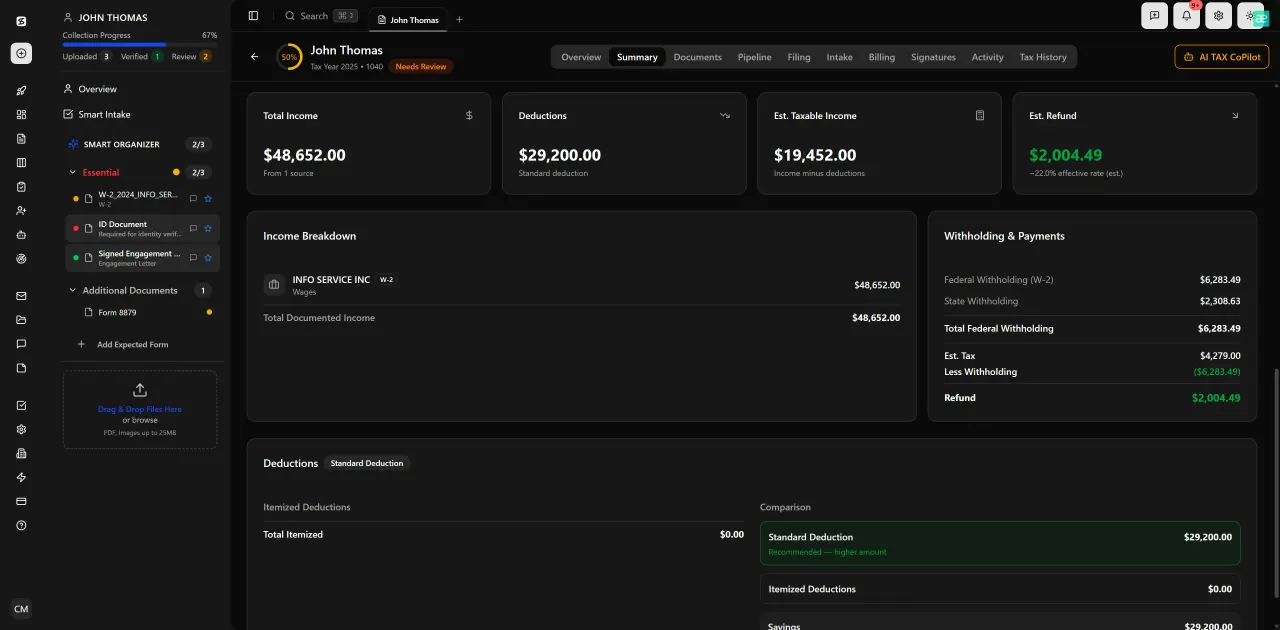
Review with AI assist — 9 agents answer questions with full client context
Reciprocity Agreement States and What They Actually Mean for Employers
Reciprocity agreements between states allow an employee who lives in one state and works in another to pay income tax only to their state of residence, rather than splitting liability between both states. From the employee's perspective, this simplifies their individual return. From the employer's perspective, it changes which state's withholding you remit — and it requires affirmative action from both the employee and the employer to be effective.
The most significant regional reciprocity clusters for CPAs to know: Pennsylvania and New Jersey have a reciprocity agreement, so a New Jersey resident working in Pennsylvania (or vice versa) owes tax only to their home state. The Mid-Atlantic cluster covers Maryland, Virginia, West Virginia, and Washington D.C. — employees crossing these borders under reciprocity arrangements pay tax to their home jurisdiction. Indiana has agreements with multiple neighboring states including Kentucky, Michigan, Ohio, Pennsylvania, and Wisconsin. Illinois has agreements with Iowa, Kentucky, Michigan, and Wisconsin.
The employer mechanics work like this: the employee submits an exemption form to the employer claiming residence-state withholding. Each state has its own form — Pennsylvania uses REV-419, Virginia uses Form VA-4. Once the form is on file, the employer withholds only for the employee's resident state. Critically, the employer still needs to be registered for withholding in the work state — reciprocity exempts the employee from that state's income tax, but the employer may still need a registration on file, particularly in states that require it as a condition for employing workers there. This is a nuance that even experienced practitioners miss when first building out a multistate payroll tax compliance framework for clients with cross-border workforces.
Two important caveats: reciprocity agreements apply only to income tax withholding, not to SUTA. Unemployment taxes follow the physical work location rules regardless of any reciprocity arrangement. Additionally, reciprocity agreements can be terminated — New Jersey gave notice in 2016 that it intended to terminate its agreement with Pennsylvania before reversing course. CPAs should treat reciprocity arrangements as jurisdiction-specific facts to verify annually, not permanent fixtures. The IRS publication on state and local tax withholding provides baseline federal context, but each state's revenue department is the authoritative source for current agreement status.

Your clients see your brand — OTP login, document upload, and real-time status
The Convenience-of-Employer Doctrine and Other Employer-Side Traps
Several states apply sourcing rules that override simple physical-presence logic, and CPAs advising clients in these jurisdictions need to flag them specifically. New York's convenience-of-employer rule is the most litigated: if a nonresident employee works from home in another state primarily for their own convenience (rather than because the employer requires it), New York treats those days as New York workdays for withholding purposes. This means a New York employer with a remote employee in New Jersey may owe New York withholding on a significant portion of that employee's wages — even though the employee never physically enters New York.
Connecticut, Delaware, Nebraska, and Pennsylvania have adopted similar convenience-of-employer doctrines, though the details differ. Pennsylvania's Department of Revenue guidance addresses this specifically for cross-border arrangements. The practical implication for clients: a business headquartered in one of these states cannot simply reassign all remote-work wages to the employee's home state without analyzing whether the remote arrangement was required by the employer for legitimate business reasons. For firms building out a multistate payroll tax compliance process, documenting the business-necessity rationale for each remote arrangement is a step that pays dividends if a state ever challenges the withholding treatment.
Another common trap is the failure to account for local payroll taxes. Several states permit municipalities to impose their own withholding obligations. Pennsylvania's earned income tax structure, for example, requires employers to withhold local earned income tax based on the employee's municipality of residence, with rates set by local taxing authorities. Ohio has a similar municipal income tax framework. For a client with employees in multiple Pennsylvania municipalities, local withholding adds another layer of accounts, rates, and filing obligations on top of state-level compliance.
For CPAs managing backup withholding on third-party network transactions alongside payroll accounts, the administrative overlap of multiple withholding accounts across jurisdictions underscores the value of centralized document and workflow management. Our complete resource library covers both employer-side payroll issues and related compliance topics so your firm can advise clients holistically.
Building a Repeatable Multistate Payroll Compliance Calendar
Reactive compliance — registering after a notice arrives, adjusting SUTA rates after the first quarter payroll has run — is the most expensive way to manage multistate obligations. The CPA firms that handle this well build a forward-looking calendar that ties employer payroll tax events to fixed annual milestones, then run that calendar consistently across every affected client.
The calendar should be structured around five recurring windows:
November through December is rate-update season. State SUTA rate notices arrive. Pull them, update payroll processor tax tables, and verify wage base changes for the coming year. This is also the time to confirm that all registration accounts are in good standing before year-end W-2 processing. Firms that treat this window as a structured multistate payroll tax compliance review — rather than a one-off task — catch rate discrepancies before they compound into quarter-one errors.
January is registration and deposit setup. New remote hires from the prior year who triggered registration obligations should be fully registered and coded in the payroll system before the first payroll of the new year. Confirm that state withholding deposit frequencies are set correctly — states classify employers as monthly, quarterly, or annual depositors based on prior-year withholding amounts, and misclassification generates penalty notices.
Q1 through Q4 deposit compliance follows the deposit schedule. For most small business clients, this means monthly or quarterly deposits to each state withholding account and quarterly SUTA filings. States have varying grace periods and penalty structures for late deposits; the SBA's employer tax guide provides orientation on federal and state employer obligations for clients who need background context.
January of the following year is W-2 reconciliation. Every state where wages were withheld should reconcile to the W-2 totals. Discrepancies between amounts remitted and amounts reported on W-2s are a primary trigger for state notices and audit inquiries.
Ongoing: location monitoring. Clients need a process for notifying your firm when employees change their work location — even temporarily. A two-month temporary relocation to care for a family member in another state can create a registration obligation. Build the question into your annual engagement renewal and your client intake update cycle.
Using pipeline management to track each client's compliance milestones across these five windows gives your firm visibility without relying on individual staff memory. Attach the compliance calendar as a recurring workflow template so that a new hire on your team can pick up where a departing staff member left off without losing context on which states each client has registered in.
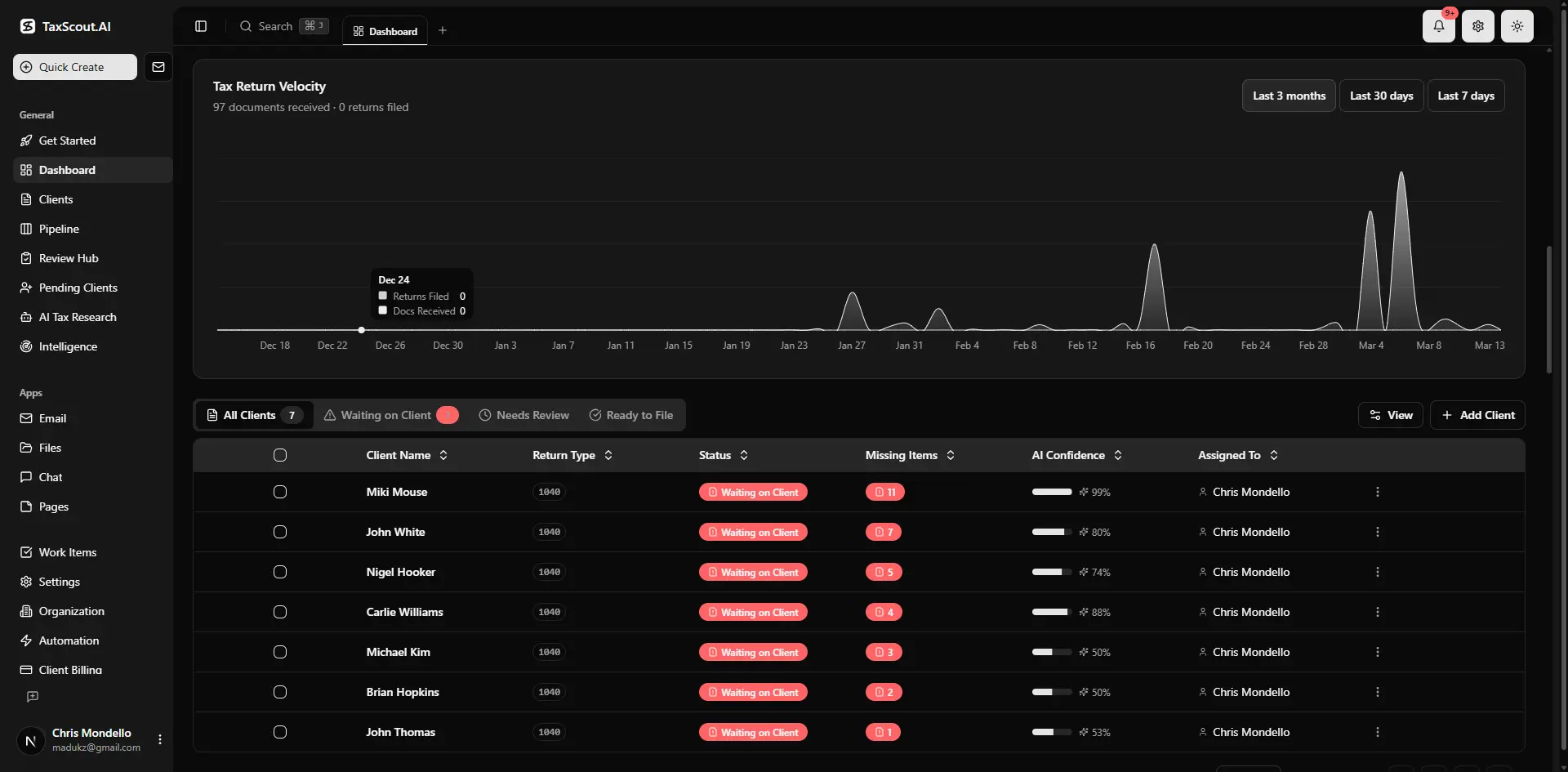
Real-time dashboard showing returns in progress, revenue, and upcoming deadlines
SUTA Wage Base Comparison: Selected States for 2025 (Approximate — Verify Annually with State Agency)
| State | 2025 SUTA Wage Base | State Income Tax | Reciprocity Agreements |
|---|---|---|---|
| Washington | $72,800+ | None (no income tax) | None |
| Hawaii | $56,700 | Yes | None |
| Minnesota | $42,000 | Yes | Michigan, North Dakota, Wisconsin, Montana |
| New York | $12,500 | Yes | None |
| Pennsylvania | $10,000 | Yes (flat 3.07%) | NJ, IN, MD, OH, VA, WV, DC |
| Florida | $7,000 | None (no income tax) | None |
| Texas | $9,000 | None (no income tax) | None |

Click any extracted field to see its source highlighted on the original PDF
How AI Research Tools Help CPAs Stay Current on Multistate Rules
State payroll tax rules change frequently. SUTA wage bases are adjusted annually. States adopt, modify, or terminate reciprocity agreements. Deposit frequency thresholds shift. Local tax rates change in Pennsylvania every year as school districts and municipalities update their levies. No CPA can maintain current knowledge of all 50 states' employer payroll requirements from memory — but the research burden is real and time-consuming, and for firms managing multistate payroll tax compliance across a large client base, the hours add up fast.
This is where purpose-built AI research capability changes the operational picture. TaxScout's AI research agents conduct real-time searches across IRS, Treasury, state revenue department publications, and authoritative legal sources to surface current guidance on jurisdiction-specific payroll questions. Instead of navigating each state's revenue department website separately to verify a SUTA wage base or confirm a reciprocity agreement is still in effect, your staff can query the research agent and receive a sourced answer in seconds.
The regulatory intelligence feature monitors for changes to state payroll rules that affect your client roster, so your firm learns about a wage base increase before year-end rather than in February when the first-quarter payroll has already run wrong. For firms managing multistate payroll compliance across 20 or 30 business clients, that kind of proactive monitoring is the difference between clean compliance calendars and reactive fire drills.
The qualified plan audit requirements guide illustrates a similar principle: complex employer-side compliance obligations require systematic tracking, not one-off research. The same operational discipline that keeps benefit plan filings on schedule applies directly to multistate payroll tax compliance — the firms that systematize it early are the ones that scale advisory work without proportional staff increases.
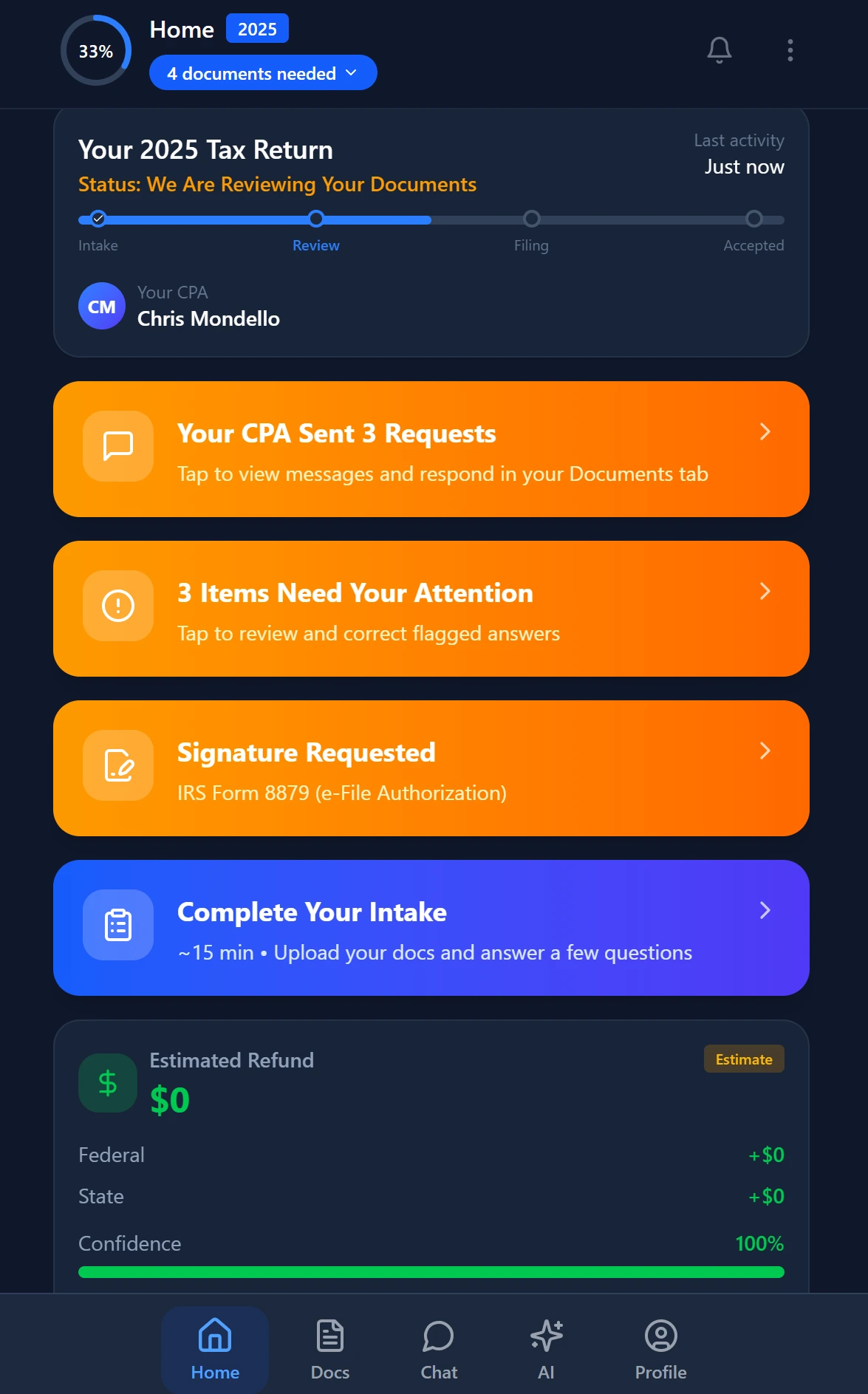
Smart intake auto-fills from uploaded documents and prior-year data
Communicating Multistate Payroll Obligations to Business Clients
Many small business owners who hire their first remote employee genuinely do not know they've created a new state tax obligation. Your advisory value in these situations is as much about communication as compliance. A client who understands why their CPA is asking for the employee's work location — and what the penalty exposure looks like if they skip registration — will provide that information promptly and consistently going forward.
Frame the communication in concrete terms. Most state withholding penalties are a percentage of the unpaid tax per month, compounded. SUTA late-filing penalties are typically fixed per-filing plus interest. For a client running a $500,000 annual payroll split across four states, a six-month delay in registering in one state can easily produce $2,000–$5,000 in penalties and interest — more than the CPA fee for handling the registration correctly in the first place. Clients who understand the real cost of ignoring multistate payroll tax compliance are almost always more forthcoming with the location data your firm needs to stay ahead of it.
Document your engagement scope clearly when payroll compliance is involved. If your engagement letter covers federal payroll tax advisory but not state registration management, note that explicitly. If the client's payroll processor handles registrations and you're providing oversight, define the handoff. Ambiguous scope in multistate payroll work is a professional liability risk — see the engagement profitability analysis guide for a broader framework on scoping advisory engagements that protects both your firm and your clients.
The client portal built into TaxScout gives you a secure channel to exchange state registration documents, SUTA rate notices, and payroll compliance checklists with business clients without relying on email attachments. When a state sends a rate notice directly to the client, they can upload it to the portal and your team gets it immediately — no lost faxes, no forgotten forwarding.
Managing payroll registrations, SUTA accounts, and compliance calendars across dozens of business clients with no centralized system?
TaxScout gives CPA firms a flat-rate practice management platform with AI research agents, pipeline tracking, and a client portal built for exactly the kind of multi-jurisdiction advisory work that grows revenue without growing headcount.

Track firm performance with real-time analytics and client activity monitoring
Frequently Asked Questions
Yes, in nearly every state. The moment a business pays wages to an employee physically working in a state, the employer typically must register for withholding tax with that state's revenue agency and for unemployment insurance with the state's workforce agency. Most states require registration before the first payroll runs. The only exceptions are states with no income tax (such as Texas, Florida, and Washington), though SUTA registration obligations still apply in those states regardless of the absence of an income tax.
Keep reading
Stay up to date
Get the latest tax tech insights delivered to your inbox.