Estate Tax Closing Letter User Fee Update: What CPA Firms Must Do Now
The IRS finalized regulations on September 25, 2026, raising the user fee for requesting an estate tax closing letter (IRS Letter 627). Small and mid-size CPA firms with estate administration clients need to update their engagement scopes, client disclosures, and billing procedures immediately.
The IRS has finalized an increase to the estate tax closing letter user fee, effective September 25, 2026. The final rule, published in the Federal Register under docket number 2026-19666, raises the fee imposed on requests for IRS Letter 627 — the official estate tax closing letter — from its prior level of $56. CPA firms handling estate administration engagements must update client disclosures and billing structures before they submit any new closing letter requests.
This is not a proposed rule or a notice of intent. The final regulations adopt the proposed text without change, which means the higher fee is in effect now. If your firm has open Form 706 engagements or is advising executors still awaiting estate tax clearance, this change applies to every request submitted on or after the effective date. The estate tax closing letter user fee increase applies to every qualifying request submitted on or after the effective date, with no grandfather provision for engagements already in progress.
The operational impact falls almost entirely on CPA firms and estate attorneys handling post-filing estate administration — not on individual 1040 filers, S corporations, or partnerships. However, the downstream cost reaches clients directly, and failing to communicate the change promptly creates billing disputes and erodes trust. Proactively disclosing the updated estate tax closing letter user fee in your engagement letters and client communications is the most effective way to prevent billing disputes down the line.
What the Final Rule Changes
The final regulations published September 25, 2026 formalize an increase to the user fee charged when an authorized person requests IRS Letter 627, the document that confirms the IRS has accepted the estate tax return and closed its examination. The fee was previously set at $56 per request; the final rule increases that amount. Those final regulations establish the current estate tax closing letter user fee schedule that all authorized requestors must follow when submitting Form 4506 or an equivalent written request.
User fees for IRS services are governed by 31 U.S.C. § 9701, which authorizes federal agencies to recover the cost of services rendered to identifiable beneficiaries. Treasury and the IRS conduct periodic cost-of-service reviews and adjust fees accordingly. This rule is the result of such a review. For firms evaluating their estate tax closing letter user fee approach, this trade-off compounds over time.
The regulations adopt the proposed rule text without modification — meaning the comment period produced no changes. The IRS determined the revised fee level accurately reflects the cost of processing closing letter requests, and no grandfather provisions apply to requests already in queue but not yet submitted. For other recent IRS compliance updates affecting CPA firms, the pattern is the same: final rules take effect on publication date. Each of these factors directly shapes how estate tax closing letter user fee plays out in practice.
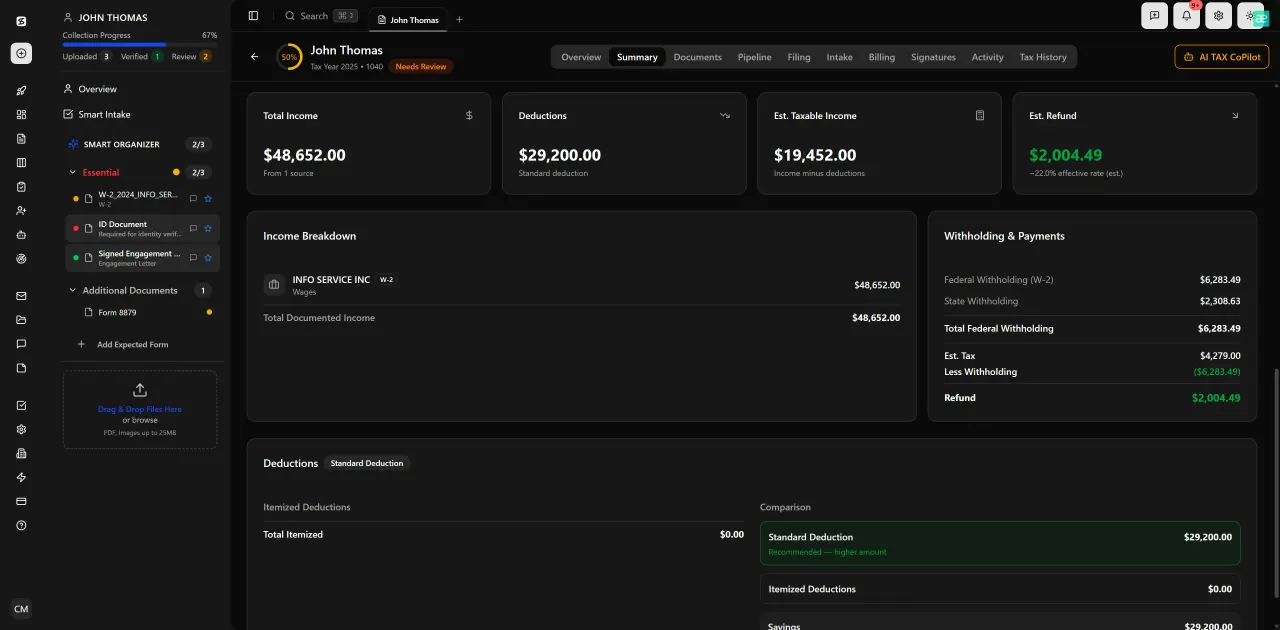
Review with AI assist — 9 agents answer questions with full client context
Which Clients and Entity Types Are Affected
The estate tax closing letter applies exclusively to estates that file Form 706, United States Estate (and Generation-Skipping Transfer) Tax Return. Only estates whose gross value exceeds the applicable exclusion amount — $13.61 million for decedents dying in 2024, adjusted for 2025 and 2026 under IRS Rev. Proc. inflation adjustments — are required to file Form 706 and would seek a closing letter. Understanding estate tax closing letter user fee in this context is what separates firms that scale from those that stall.
Entity types NOT directly affected by this rule change: individual 1040 filers with no estate administration role, S corporations, partnerships filing Form 1065, nonprofit organizations, and trusts that are not the estate's executor. That said, trusts that serve as estate beneficiaries may be indirectly affected if the executor is seeking clearance before distributing assets. This is precisely where a deliberate estate tax closing letter user fee strategy pays off.
The affected client segments for most small and mid-size CPA firms are: (1) high-net-worth individual clients whose estates exceed the filing threshold, (2) surviving spouses and executors for whom your firm is acting as authorized representative under Form 2848, and (3) any estate where your firm filed Form 706 and is now pursuing a closing letter to confirm examination closure and enable final distributions. For background on how to file Form 2848 without delays, see our guide on IRS Power of Attorney for CPAs. Estate tax closing letter user fee sits at the center of this decision — get it wrong and the rest unravels.
Tracking estate administration deadlines across a dozen open engagements by spreadsheet?
TaxScout's pipeline management gives you 12 customizable stages, drag-and-drop kanban, and client-context AI memory — so nothing falls through the cracks when fee rules change mid-engagement.
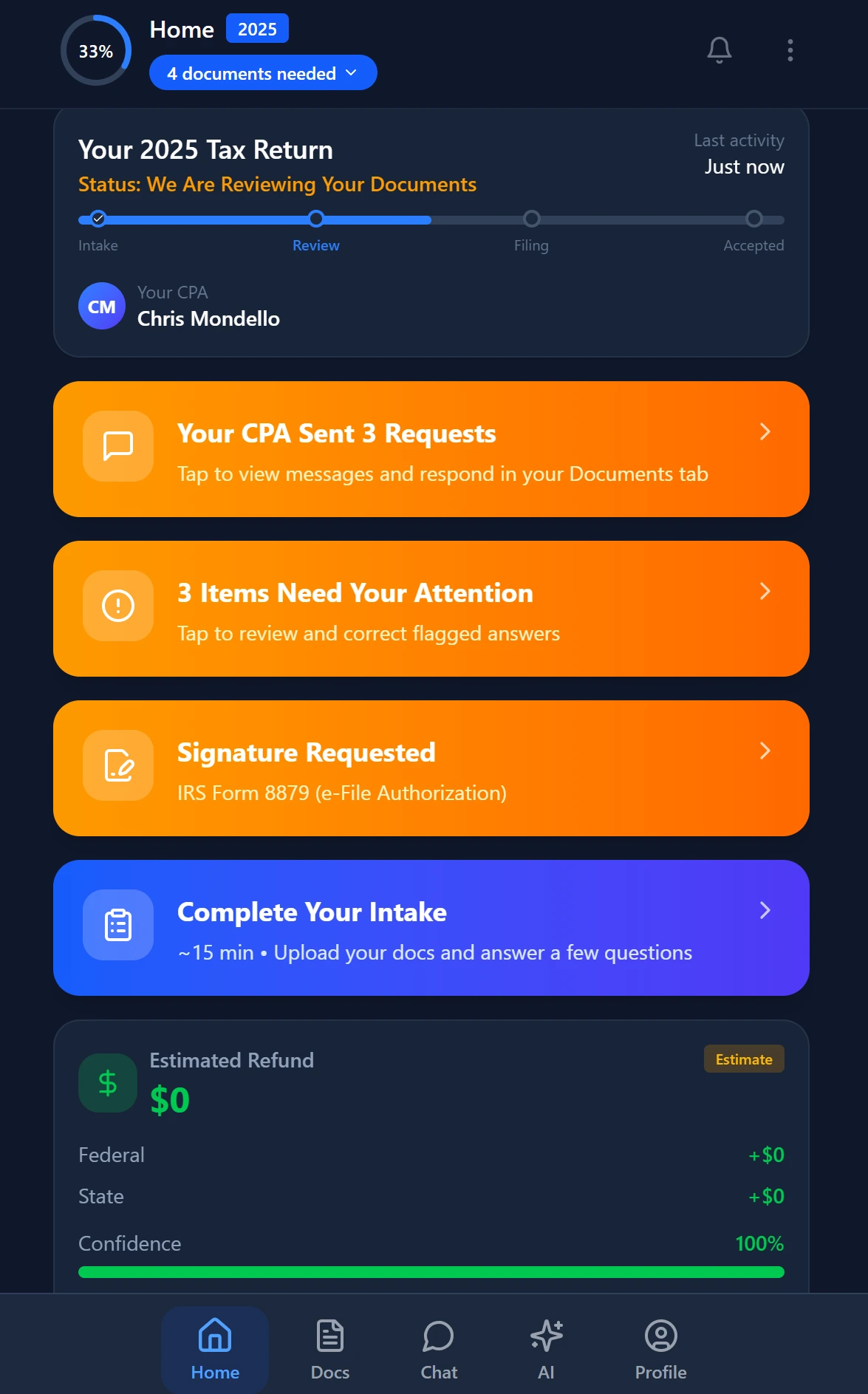
Smart intake auto-fills from uploaded documents and prior-year data
Why CPAs — Not Just Estate Attorneys — Need to Act
Many CPA firms treat estate administration as a secondary service line, often handling the Form 706 preparation while an attorney manages the probate process. But in practice, it is frequently the CPA who submits the closing letter request through the IRS's online portal (or via written request) on behalf of the executor. If your engagement letter quotes a fixed fee for 'post-filing estate tax clearance,' the increased user fee now comes out of your margin — unless you have a cost-pass-through clause.
Additionally, the IRS requires that closing letter requests be submitted by an authorized person, which typically means the executor or an authorized representative with a valid Form 2848 on file. If your Power of Attorney is expired or was not filed for the estate, you cannot submit the request, and the executor must do it directly — at the higher fee.
For firms that handle estates with complex asset structures — including interests in closely held businesses — this update intersects with the broader estate valuation and buy-sell planning work you may already be doing. See our guide on buy-sell agreement valuation for context on how estate tax exposure connects to business succession planning.
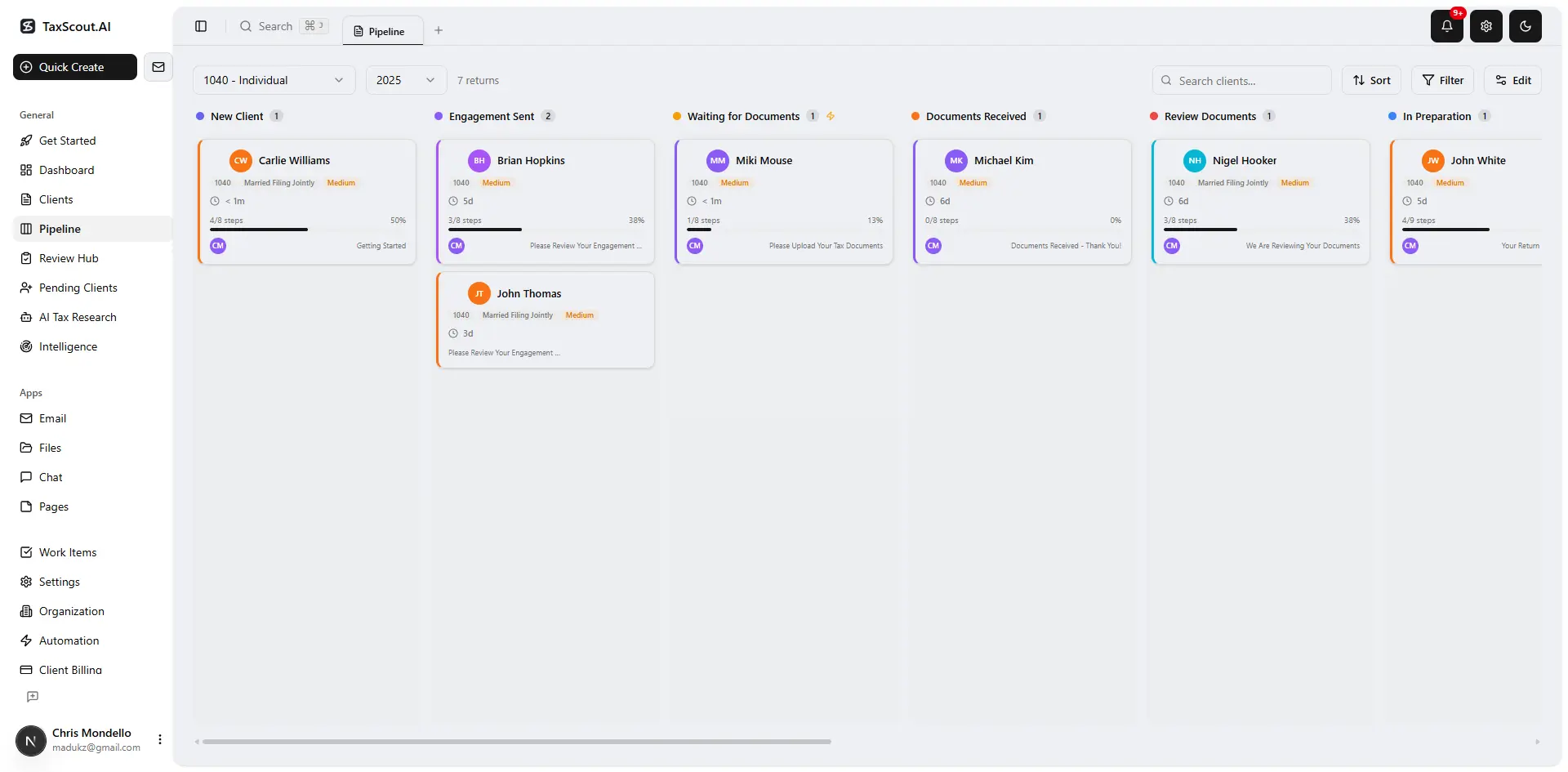
Track every return from intake to filed with drag-and-drop pipeline management
What to Do This Week: A Firm Action List
The following steps are organized by urgency. Firms with active estate administration engagements should complete items 1 through 3 before submitting any new closing letter requests.
1. Audit open Form 706 engagements. Pull every client file where Form 706 has been filed and a closing letter has not yet been received. Flag which engagements have a closing letter request pending, in process, or not yet initiated. Your pipeline management tool should allow you to filter by engagement type and status.
2. Review engagement letter fee language. Check whether your standard engagement letter for estate administration includes a cost-pass-through clause for third-party fees (IRS user fees, court filing fees, etc.). If it does not, update your template for all new engagements signed after September 25, 2026. For existing engagements, send a brief written disclosure to the executor explaining the fee increase before submitting the request.
3. Confirm Form 2848 authorization is current. Verify that your Power of Attorney for each estate is active, covers the relevant tax periods, and identifies the correct authorized representative at your firm. Expired or incomplete authorizations will block your ability to submit the request.
4. Update your billing workflow. If your firm uses flat-fee billing for estate administration, revise your internal cost model to account for the increased user fee. For firms using invoicing through Stripe Connect Express, consider adding a line-item pass-through for the closing letter fee so clients can see it clearly.
5. Notify affected clients proactively. A one-paragraph email to executors and trustees explaining the fee increase — before they see it on an invoice — is standard client communication practice. Proactive disclosure prevents billing disputes and reinforces your role as a trusted advisor.
6. Bookmark the primary source. The authoritative text is the Estate Tax Closing Letter User Fee Update final rule in the Federal Register. Save it to your firm's compliance reference library. For other news updates affecting CPA practice management, bookmark our regulatory news feed.

Click any extracted field to see its source highlighted on the original PDF
How This Fits Into Broader Estate Planning Advisory Work
The closing letter user fee is a small but operationally significant cost in the full lifecycle of estate tax administration. From a client advisory standpoint, the more important conversation is why an estate is large enough to require Form 706 in the first place — and what planning could have reduced the gross estate value before death.
For high-net-worth clients who have not yet engaged in pre-death estate planning, the TCJA sunset provisions remain the dominant issue: the doubled estate tax exclusion is scheduled to revert to pre-2017 levels (inflation-adjusted, approximately $7 million) after December 31, 2025, unless Congress acts. Any client whose estate falls between $7 million and $13.61 million faces potential estate tax exposure that did not exist under current law.
Firms that connect this closing letter fee update to a broader client conversation about estate planning advisory — including gifting strategies, irrevocable trust structures, and net investment income tax exposure for high-income beneficiaries — will extract more value from the client relationship than firms that treat this as a pure compliance task. The IRS estate and gift tax overview provides the statutory framework if you need to walk a client through the basics.
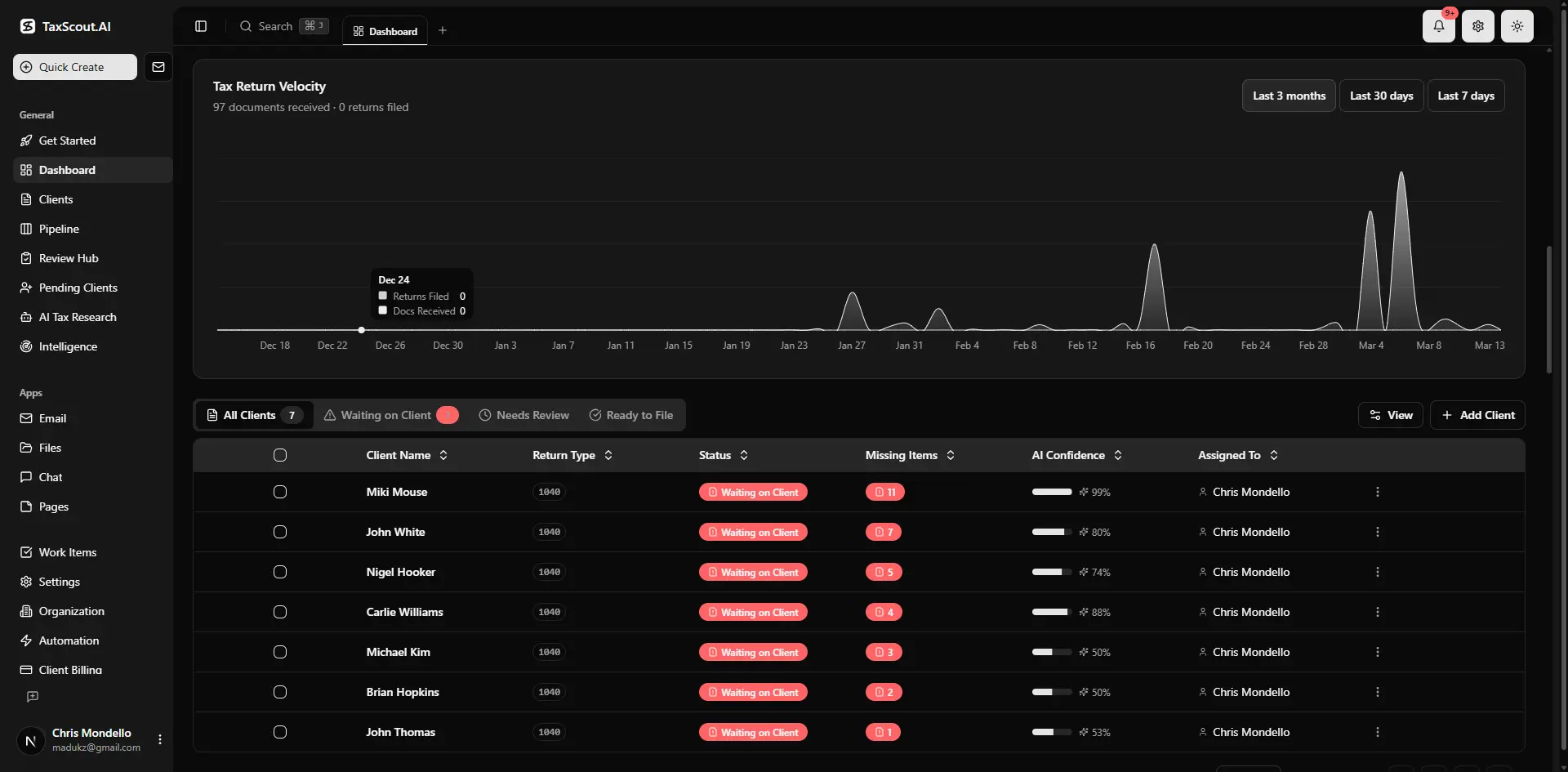
Real-time dashboard showing returns in progress, revenue, and upcoming deadlines
How TaxScout Supports Estate Administration Engagements
TaxScout is built for CPA firms handling complex, multi-document engagements — including estate administration files that combine Form 706, K-1s from partnership interests, 1099s from investment accounts, and supporting appraisal documents. The AI document extraction engine processes these recognized document classes through a 5-layer validation pipeline, reducing the manual time spent cross-referencing asset values across documents.
For firms tracking multiple open estate engagements simultaneously, the pipeline management feature provides 12 customizable stages with drag-and-drop kanban — so you can create a dedicated 'Closing Letter Pending' stage and monitor every estate in that status from a single view. When the fee changes, you know exactly which clients need a disclosure email before anything is submitted.
The AI research agents can search IRS, Treasury, and Cornell Law sources in real time, which means your team can pull the statutory basis for the user fee increase, check the current Form 2848 requirements, or research the applicable estate tax exclusion amount for a specific decedent's year of death — without leaving the platform. Pricing starts at $49/month for solo practitioners and $149/month for firms, with no per-user fees. See TaxScout pricing for full details.
Managing estate administration alongside tax season on a patchwork of spreadsheets and email threads?
TaxScout gives CPA firms AI document processing, a full pipeline board, and real-time IRS research — all on one flat-fee platform with no per-user charges.
Frequently Asked Questions
The IRS estate tax closing letter user fee is charged when an authorized person requests IRS Letter 627, which confirms the IRS has closed its examination of a Form 706 estate tax return. Final regulations published September 25, 2026 increased the fee from its prior level of $56. The new amount is specified in the final rule at federalregister.gov/documents/2026/09/25/2026-19666/estate-tax-closing-letter-user-fee-update. The change is effective immediately upon publication.
Keep reading
Estimated Tax Penalty Waiver: How CPAs Get Clients Off the Hook for Underpayment
Sep 28, 2026 · 1 min read
Net Investment Income Tax: How CPAs Minimize Exposure for High-Income Clients
Sep 24, 2026 · 1 min read
Qualified Plan Audit Requirements: How CPAs Prepare Employee Benefit Plans for DOL Review
Sep 24, 2026 · 1 min read
Stay up to date
Get the latest tax tech insights delivered to your inbox.