Niche Pricing Strategy: How CPAs Command Premium Rates in Specialized Markets
Most CPA pricing articles debate hourly vs. flat fee — but none address how specialization itself becomes your most powerful pricing lever. This guide shows how CPAs who dominate a vertical like real estate, crypto, or e-commerce command 2-3x generalist rates, and how AI tools help define scope…
The most effective niche pricing strategy for CPAs isn't about billing mechanics at all — it's about positioning. When a real estate investor calls five CPA firms, four of them quote an hourly rate and hope for the best. The fifth quotes a flat annual fee that's 2.5x higher, wins the engagement, and never apologizes for it. The difference isn't confidence. It's specialization made tangible.
Most pricing content for accountants gets stuck on the hourly vs. flat-fee debate. That's the wrong conversation. The real lever is vertical depth. A generalist CPA charges $800 to prepare a Schedule E. A CPA who has prepared 400 Schedule Es for short-term rental operators, knows exactly how cost segregation interacts with passive activity rules, and can cite the relevant IRS revenue procedures on demand — that CPA charges $2,500 for the same document and clients consider it a bargain. Understanding niche pricing strategy is what separates CPAs who scale revenue from those who stay trapped in commodity billing cycles.
This guide breaks down how CPAs in high-value verticals — real estate, cryptocurrency, medical practices, and e-commerce — build and defend premium fee structures. More importantly, it shows how AI-assisted scope definition turns your expertise into a documented, invoiceable asset rather than tribal knowledge you give away for free. Each vertical covered here represents a proven niche pricing strategy that allows CPAs to move beyond market-rate fees and into premium territory.
Why Specialization Is a Pricing Lever, Not Just a Marketing Tactic
Vertical specialization compounds in ways that generalist practice cannot. Every real estate client you serve teaches you something that makes the next engagement faster, more accurate, and more defensible. That compounding expertise is not just a quality differentiator — it's a direct input to your cost structure. A specialized CPA can complete a complex return in 60% of the time a generalist would need, while delivering better outcomes. That efficiency gap is where premium pricing lives. This compounding effect is the engine behind any successful niche pricing strategy — the deeper your expertise, the stronger your justification for higher fees.
The Journal of Accountancy has documented that accounting firms with defined niches consistently report higher realization rates and lower client churn than generalist competitors. When clients perceive that switching to another firm means starting from scratch with someone who doesn't understand their industry, they become significantly less price-sensitive. For firms evaluating their niche pricing strategy approach, this trade-off compounds over time.
This is value-based pricing in its most practical form. You're not pricing your time — you're pricing the outcome. A crypto investor who avoids a $40,000 IRS penalty because their CPA understood the nuances of like-kind exchange disallowance post-2017 doesn't think of that fee as an expense. They think of it as a 10x return. Framing your invoices around that logic is the foundation of a defensible niche pricing strategy.
For a deeper look at how other billing models complement this approach, the flat-fee billing guide for CPAs is worth reading alongside this article — but keep in mind that fee structure is secondary to the positioning work described here. Each of these factors directly shapes how niche pricing strategy plays out in practice.
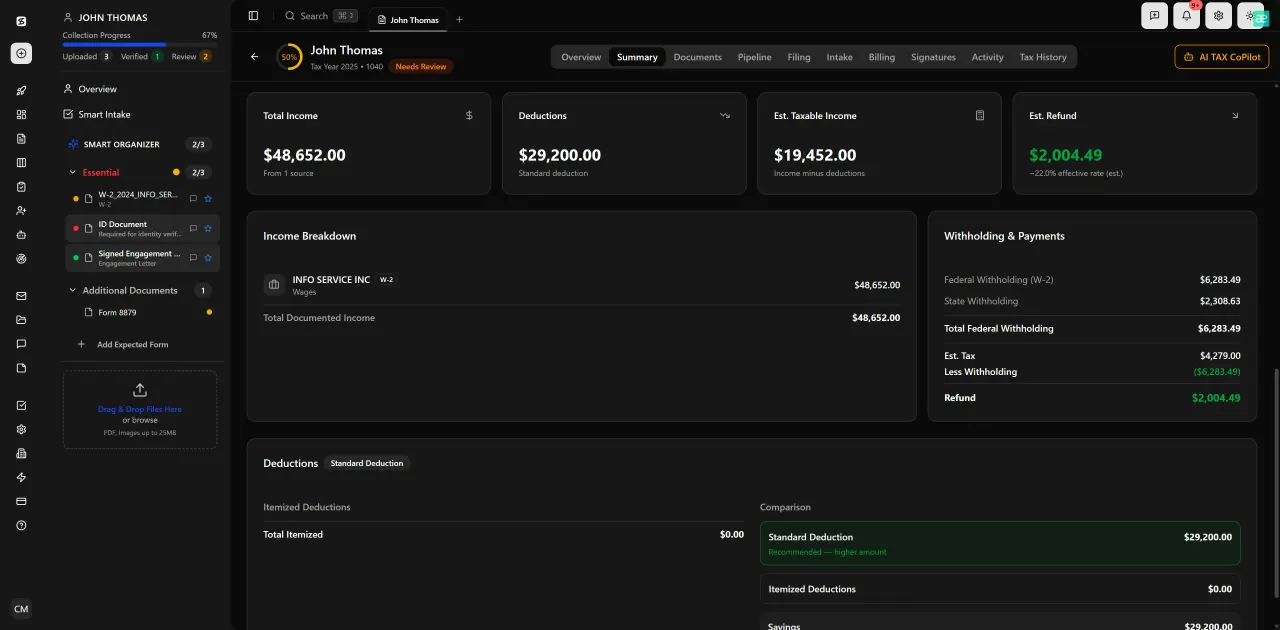
Review with AI assist — 9 agents answer questions with full client context
Four Verticals Where Premium Rates Are Already Justified
Not every niche supports premium fees equally. The verticals below have structural complexity, high financial stakes, and clients who have already been burned by generalist advice — making them ideal markets for specialized accounting fees. Understanding niche pricing strategy in this context is what separates firms that scale from those that stall.
Real Estate Investors and Operators
Real estate clients generate some of the most complex tax situations in individual and business taxation: depreciation, passive activity rules, cost basis tracking across multiple properties, 1031 exchanges, and increasingly, cost segregation studies. A CPA who can integrate all of these — and proactively model the tax impact of a proposed acquisition — is worth multiples of a generalist. See our cost segregation studies guide for a sense of the technical depth clients in this vertical expect. This is precisely where a deliberate niche pricing strategy strategy pays off.
Cryptocurrency and Digital Asset Holders
The IRS treats cryptocurrency as property, which means every transaction is potentially a taxable event. Clients with active trading histories, DeFi participation, NFTs, or staking income face calculation complexity that most generalist CPAs are not equipped to handle accurately. The penalty exposure is real, and clients know it — making them willing to pay significantly more for a CPA with documented crypto expertise. Niche pricing strategy sits at the center of this decision — get it wrong and the rest unravels.
Medical and Dental Practices
Physicians, dentists, and other licensed healthcare providers operate under entity structures, compensation arrangements, and benefit plan rules that differ materially from general small business taxation. Reasonable compensation analysis for physician S-corporations, the interplay between QBI deduction eligibility and specified service trade status, and retirement plan design for high-income professionals all require specialized knowledge. According to Bureau of Labor Statistics data, physicians earn a median of over $200,000 annually — their accounting fees reflect a small fraction of what's at stake. When firms revisit their niche pricing strategy priorities, the gaps usually surface here.
E-Commerce and Amazon Sellers
Multi-state nexus, sales tax compliance post-Wayfair, inventory accounting under various methods, and platform-specific 1099-K reconciliation create a web of complexity that e-commerce sellers frequently get wrong on their own. A CPA who has built workflows around these specific issues can serve these clients faster and more accurately than a generalist — and can price accordingly.
Tired of writing invoices you feel you have to justify?
TaxScout.ai gives niche CPA firms the AI-assisted scope definition, smart intake, and automated invoicing tools to document and charge for every dollar of expertise they deliver.

Your clients see your brand — OTP login, document upload, and real-time status

Click any extracted field to see its source highlighted on the original PDF
Packaging Niche Expertise: From Hourly Billing to Defined Deliverables
The transition from hourly billing to vertical market CPA pricing requires packaging your expertise into named, scoped deliverables. Instead of 'tax preparation — 6.5 hours at $250,' a real estate specialist sells an 'Annual Real Estate Investor Tax Package' that includes return preparation across all entities and properties, a mid-year projection call, a 1031 exchange readiness review, and written guidance on the client's depreciation recapture exposure. The scope is clear. The value is visible. The price is $3,800.
Packaging works because it shifts the client's mental model from 'am I paying for enough hours?' to 'is this outcome worth this price?' Once you've made that shift, you've moved out of a commodity market. The IRS Form 13614-C interview process — which TaxScout's smart intake engine is modeled on — is a useful framework here: it prompts systematic discovery of every complexity factor, which becomes the evidence base for your package pricing.
TaxScout's smart intake engine automatically identifies complexity signals during client onboarding — multiple K-1s, foreign accounts, rental properties, crypto activity — and surfaces them before you quote. That means you're not discovering scope after you've already committed to a price. You're building the scope document first, then pricing it.
Explore other blog resources on firm operations and pricing strategy for additional context on building sustainable revenue models.
How AI Tools Help CPAs Quantify and Communicate Niche Value
One of the most underutilized arguments for premium pricing is the documented complexity of the work itself. When a client questions a $4,000 fee for their crypto tax return, the most effective response isn't 'trust me, this is complicated.' It's showing them a summary of the 847 transactions processed, the 12 wallet addresses reconciled, the three DeFi protocols analyzed, and the specific Treasury guidance applied to determine their staking income treatment.
This is where AI-assisted document extraction and research agents change the economics of niche pricing. TaxScout's AI document extraction processes over 180 tax form types — including all 1099 variants, K-1s, and supporting schedules — through a 5-layer validation pipeline. Every extraction is logged with confidence scores, cross-verification results, and the specific source fields used. That audit trail is not just an internal quality control mechanism. It's a deliverable you can show clients as evidence of the work performed.
TaxScout's AI research agents — nine specialized agents with real-time access to IRS, Treasury, Cornell Law, and SSA databases — do the same for the advisory layer. When you tell a medical practice client that their S-corp compensation structure should be restructured before they trigger a payroll audit, and you attach a research memo citing the specific IRS reasonable compensation guidance and two analogous Tax Court cases, that memo justifies the advisory fee and differentiates you from every generalist who gave the same recommendation verbally.
The result is that AI tools don't just make you faster — they make your expertise auditable. And auditable expertise is pricing power.
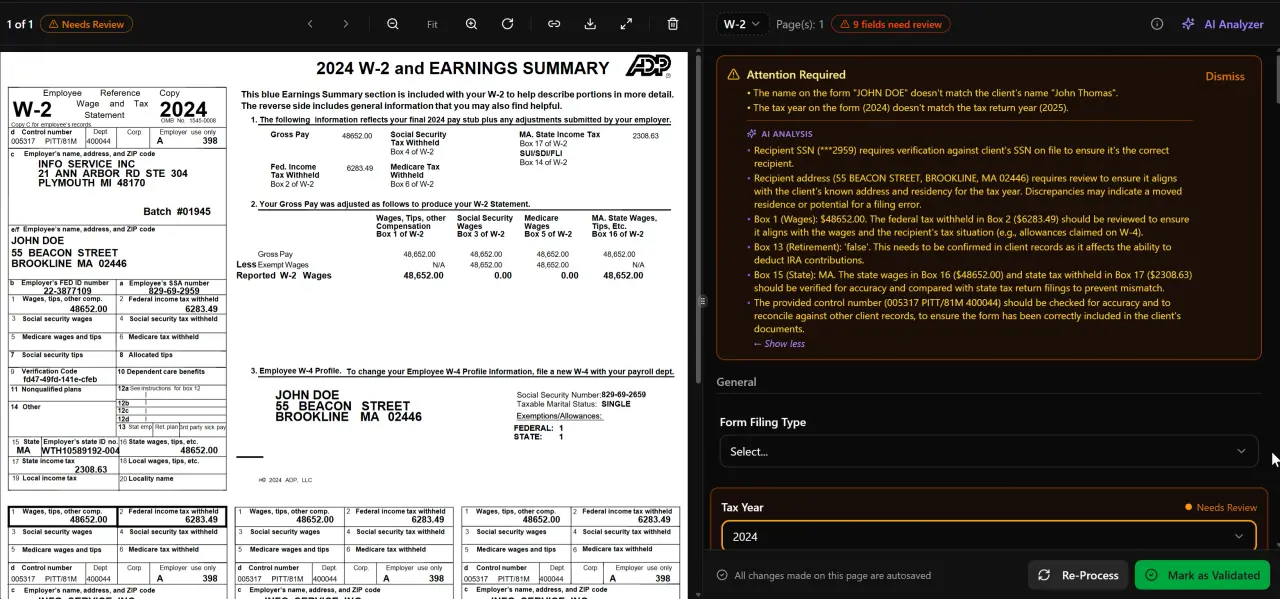
AI classifies, extracts, and validates every document automatically

Track firm performance with real-time analytics and client activity monitoring
Preventing Scope Creep in Niche Engagements
Scope creep is the enemy of accounting niche premium rates. A real estate investor package priced at $3,800 quietly becomes a $1,200-effective-rate engagement when the client starts texting questions about their LLC operating agreement, asks you to review a proposed syndication deal, and wants a call every time they look at a new property. Without defined engagement boundaries, your premium price erodes into a generalist relationship.
The solution is a combination of detailed engagement letters and technology that enforces scope visibility. TaxScout's e-signatures platform via Documenso supports engagement letters that enumerate included and excluded services in plain language. Clients sign digitally — with OTP authentication, no password required — before any work begins. When out-of-scope requests arrive, you have a signed document to reference when you quote the additional work.
Pipeline management matters here too. TaxScout's pipeline management tool gives you 12 customizable stages with a drag-and-drop kanban board, so you can see exactly where every engagement stands and flag when a matter is consuming more time than the fixed fee assumed. That visibility lets you have the 'this is beyond the original scope' conversation proactively, before you've absorbed the cost.
For firms using automated billing, pairing scope enforcement with recurring invoicing automation ensures that out-of-scope additions are captured as separate line items rather than absorbed silently into the base fee.
Generalist vs. Niche CPA Pricing: Illustrative Fee Benchmarks by Vertical
| Client Type | Generalist CPA Fee | Niche Specialist Fee | Key Differentiator |
|---|---|---|---|
| Short-term rental investor (3 properties) | $900 – $1,200 | $2,500 – $3,500 | Cost segregation analysis, passive activity modeling |
| Active crypto trader (500+ transactions) | $600 – $1,000 | $2,000 – $4,000 | Per-transaction reconciliation, DeFi protocol research |
| Physician S-corporation (single owner) | $1,200 – $1,800 | $3,500 – $5,500 | Reasonable compensation analysis, retirement plan design |
| Amazon FBA seller (multi-state) | $800 – $1,200 | $2,200 – $3,800 | Sales tax nexus analysis, inventory method optimization |
| Annual advisory retainer (any vertical) | Rarely offered | $500 – $1,500/mo | Proactive planning, unlimited advisory access within scope |
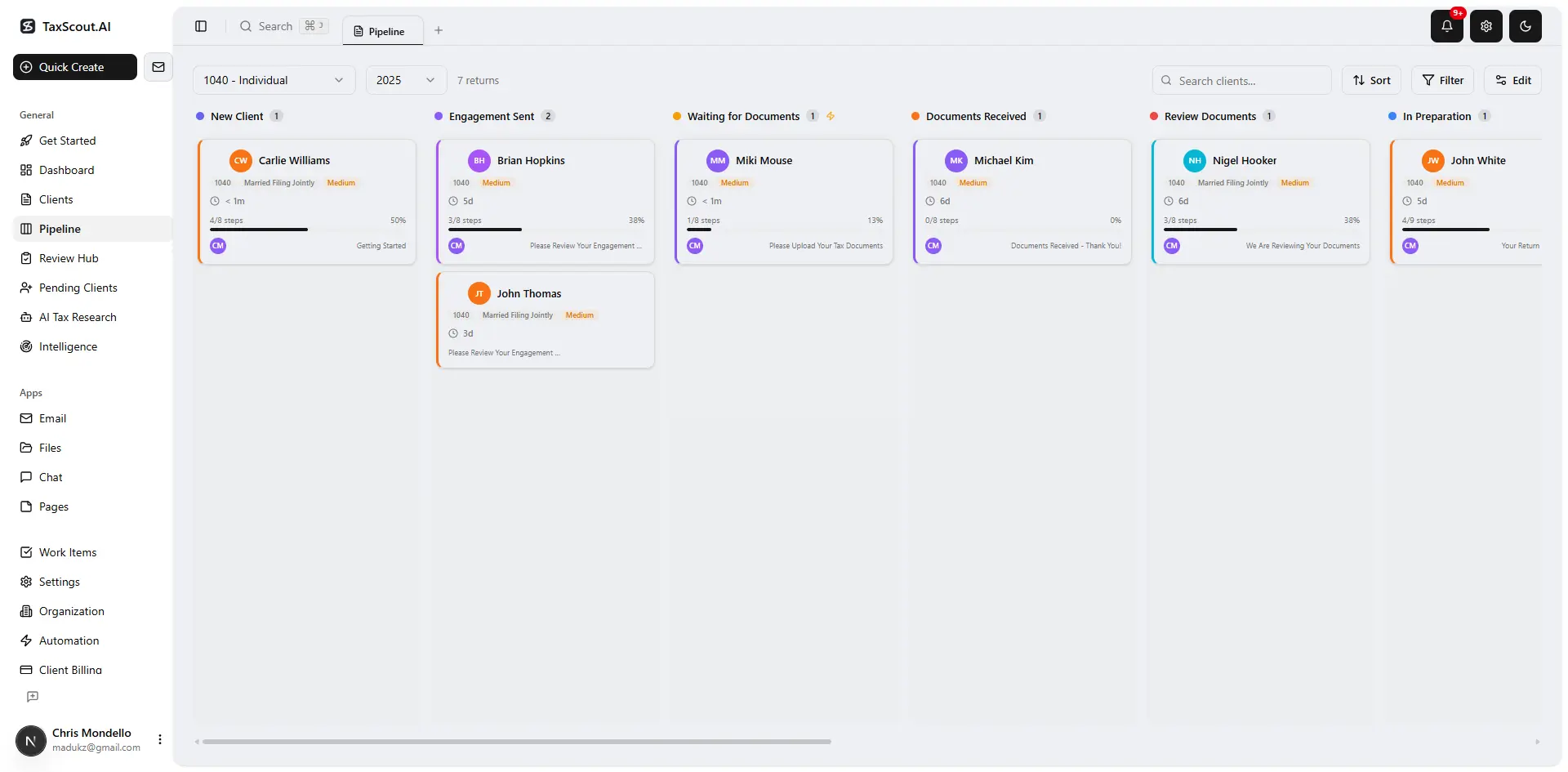
Track every return from intake to filed with drag-and-drop pipeline management
Raising Rates Incrementally Without Losing Existing Clients
One of the most practical challenges in vertical market CPA pricing is the transition period: you've committed to a niche, you're building depth, but you have existing clients paying generalist rates. Raising rates overnight risks churn. Never raising them means you're subsidizing old relationships with the revenue from new ones.
The most effective approach is a staged transition tied to service upgrades. Rather than announcing a price increase, you announce a new service tier — your 'Real Estate Investor Annual Package' — that includes everything you were already doing plus two additions (a mid-year projection call and a written depreciation recapture analysis). The new package is priced at the niche rate. Existing clients are grandfathered at their current rate for one renewal cycle and then offered the new package at the new price, with the option to decline the added services and continue at a modest increase.
This approach works because it reframes the conversation from 'I'm charging you more for the same thing' to 'here's what I'm now offering at this price.' According to SSA guidance on business valuation principles, service differentiation is the primary driver of pricing power in professional services — a principle that applies directly to how CPAs migrate client relationships from commodity to advisory pricing.
Track the transition using KPI dashboards. TaxScout's analytics tools let you monitor revenue per client, effective hourly rate by engagement type, and realization rate across your portfolio — giving you the data to know which relationships are worth retaining at the new rate and which are underperforming relative to your niche focus. For more on the metrics that matter, see accounting firm KPIs to track with AI.
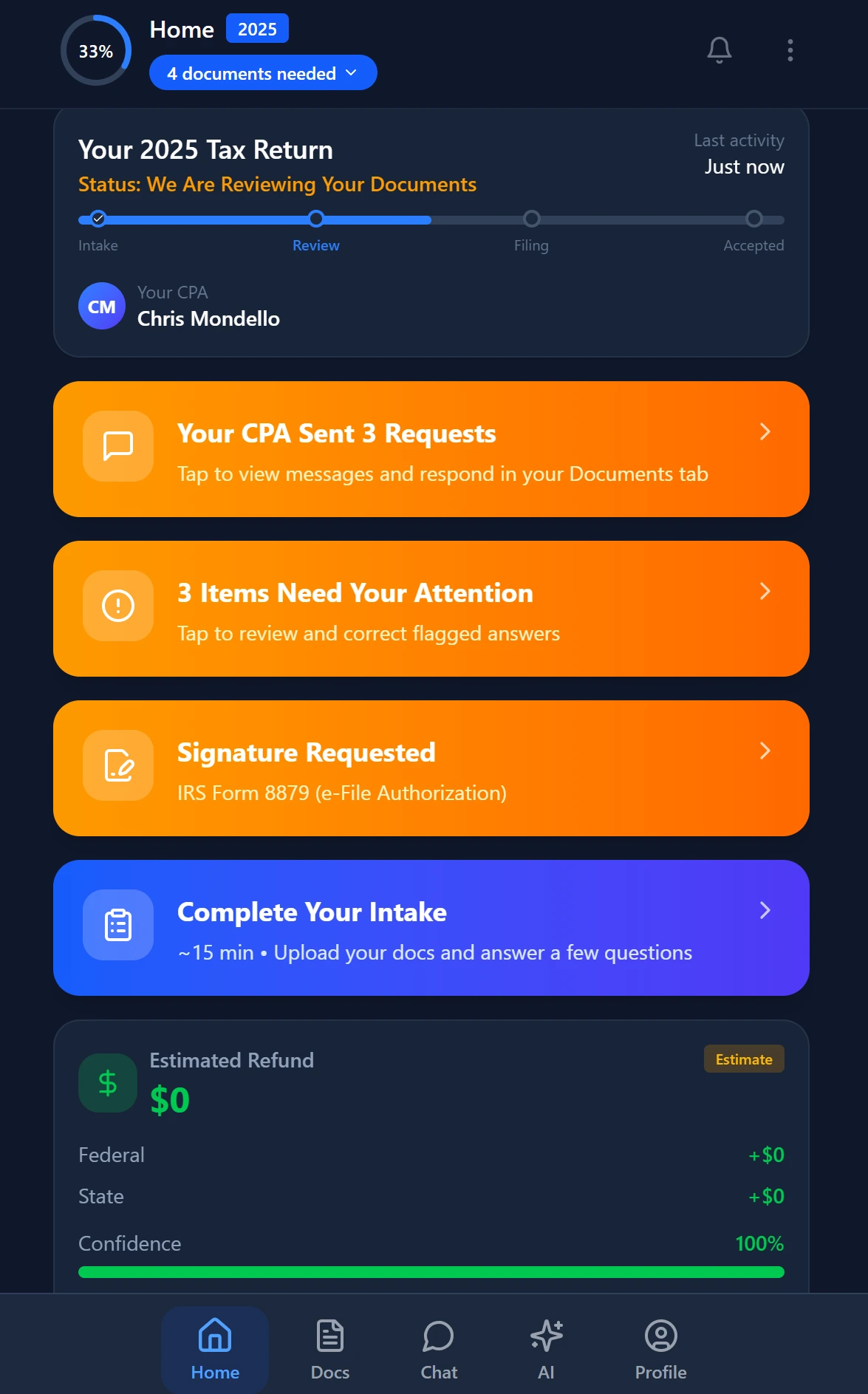
Smart intake auto-fills from uploaded documents and prior-year data
Building the Infrastructure That Supports Premium Pricing
Premium pricing isn't just about charging more — it's about delivering an experience that makes the premium feel obvious. Clients paying $4,000 for a tax engagement expect responsiveness, organization, and visible expertise. If they're emailing PDFs to a generic Gmail address and getting a call back three days later, the price feels unjustified regardless of the quality of the return itself.
A branded client portal changes the perception immediately. When a client logs in with a one-time passcode (no password to remember) to a portal showing your firm's branding, their documents organized by category, and their engagement timeline with clear status updates — that's a premium experience. It signals that you run a serious operation. TaxScout's portal integrates directly with the smart intake engine and document management workflow, so the client's first interaction sets the tone for the entire relationship.
On the invoicing side, TaxScout's invoicing via Stripe Connect Express lets you send branded invoices with itemized scope descriptions — not just 'tax preparation services' but a line-by-line breakdown of what was included. That transparency is a pricing defense mechanism. When a client can see exactly what they paid for, the fee becomes self-justifying.
Firms that invest in this infrastructure — portal, intake, scope definition, transparent invoicing — report dramatically lower fee pushback from clients, because the experience communicates value before the invoice arrives. That's the infrastructure layer of a sustainable niche pricing strategy.
Ready to stop leaving revenue on the table with every niche engagement?
TaxScout.ai is built for CPA firms that specialize — AI extraction, research agents, smart intake, and premium client portals at a flat monthly rate with no per-user fees. Prep Pro is $149/month for your entire firm.
Frequently Asked Questions
A niche pricing strategy for CPA firms means setting fees based on the specialized expertise and measurable outcomes you deliver within a specific vertical — such as real estate, cryptocurrency, medical practices, or e-commerce — rather than on hours worked or commodity market rates. Because specialized CPAs solve problems generalists cannot, they can command 2-3x higher fees while delivering better client outcomes and lower churn.
Keep reading
Late Filing Penalty Relief: How CPAs Reduce or Eliminate IRS Failure-to-File Charges
Oct 12, 2026 · 1 min read
Business Valuation for CPAs: How to Price a Client Company Without Hiring an Appraiser
Sep 18, 2026 · 1 min read
Equity Partner Compensation: How CPA Firms Structure Pay for Owners
Sep 18, 2026 · 1 min read
Stay up to date
Get the latest tax tech insights delivered to your inbox.