Passive Foreign Investment Company Rules: How CPAs Minimize PFIC Tax for Clients With Foreign Mutual Funds
The PFIC regime is one of the most punitive corners of the U.S. tax code, yet most CPA-facing content on international tax stops at FBAR and FATCA. This guide breaks down all three tax regimes — excess distribution, QEF, and mark-to-market — explains Form 8621 filing mechanics, and shows how to…
Few areas of U.S. international tax law carry as much hidden risk for ordinary investors as the passive foreign investment company regime. A client who opened a foreign bank account, contributed to a Canadian RRSP, or simply bought shares in a European index fund through a local brokerage may be sitting on a passive foreign investment company position without knowing it — and without the right elections in place, the tax consequence can be devastating.
Most CPA blog content on international tax stops at FBAR and FATCA obligations. The PFIC rules, governed by IRC §§1291–1298, are almost entirely absent from practitioner-facing coverage, even though the IRS has steadily expanded Form 8621 filing requirements and increased scrutiny of foreign fund holdings. For a client with even a modest foreign mutual fund position, the difference between a timely QEF election and the default excess distribution method can amount to tens of thousands of dollars in extra tax and interest charges. Yet for clients holding foreign mutual funds or pooled investment vehicles, the passive foreign investment company rules often represent a far more significant compliance and tax burden than either of those regimes.
This guide gives CPAs a practical framework for identifying PFIC exposure, choosing the right tax regime for each client's situation, handling Form 8621 filing mechanics, and surfacing the hidden PFIC problem inside foreign retirement accounts. You will also find guidance on how AI-assisted research tools can accelerate the analysis and documentation burden these complex returns require. Understanding the full scope of passive foreign investment company exposure is essential before selecting a tax regime or preparing any related filings.
What Is a Passive Foreign Investment Company
A passive foreign investment company is any non-U.S. corporation that meets either of two tests under IRC §1297: (1) 75% or more of its gross income is passive income (the income test), or (2) 50% or more of its assets produce — or are held for the production of — passive income (the asset test). Foreign mutual funds, exchange-traded funds domiciled outside the U.S., foreign holding companies, and even certain foreign operating companies with large cash positions routinely satisfy one or both tests.
The classification is entity-level, not investor-level. Every U.S. person who holds stock in a PFIC — regardless of ownership percentage — is subject to the regime. There is no de minimis exemption based on ownership stake, which means a client who owns a few hundred dollars' worth of units in an Irish UCITS fund is technically subject to the same compliance framework as an investor with millions at stake. Because the passive foreign investment company definition applies at the entity level rather than the investor level, even a small or incidental foreign fund holding can trigger the full weight of the regime.
The practical challenge for CPAs is that clients rarely know they own a PFIC. Foreign financial advisors, local pension administrators, and even some U.S. brokers do not flag PFIC status at account opening. A thorough client intake process that captures foreign account details, foreign employer retirement plan contributions, and non-U.S. brokerage statements is the first line of defense. For firms evaluating their passive foreign investment company approach, this trade-off compounds over time.
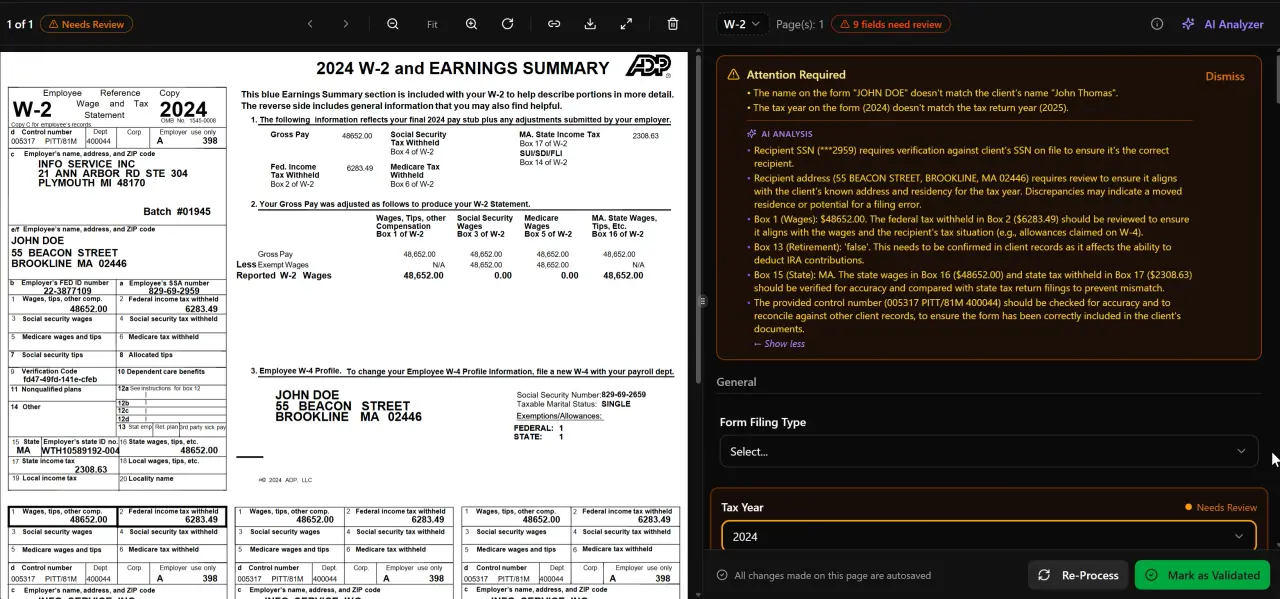
AI classifies, extracts, and validates every document automatically
The Three PFIC Tax Regimes: Excess Distribution, QEF, and Mark-to-Market
The PFIC rules offer three distinct tax regimes, and the choice among them — or the failure to choose — has enormous consequences. Understanding all three is essential before any planning conversation with a client holding foreign mutual fund positions. Each of these factors directly shapes how passive foreign investment company plays out in practice.
Excess Distribution Method: The Default and the Most Punitive
If no election is made, a U.S. investor in a passive foreign investment company is taxed under the excess distribution rules of IRC §1291. An excess distribution is any distribution from the PFIC that exceeds 125% of the average distributions received during the preceding three-year period. On disposition of PFIC stock, the entire gain is also treated as an excess distribution.
The punitive mechanics work as follows: the excess distribution or gain is ratably allocated back over the entire holding period of the PFIC shares. The portion allocated to each prior year is taxed at the highest ordinary income rate in effect for that year — currently 37% under the permanent TCJA brackets — and then subject to an interest charge calculated under IRC §6621(a)(2) as if the tax had been due since that year. No preferential capital gains rate applies, even if the gain would otherwise qualify as long-term. The result is a tax bill that can easily exceed the investor's economic gain on the investment. Understanding passive foreign investment company in this context is what separates firms that scale from those that stall.
The PFIC excess distribution tax is reported on Form 8621, and both the tax and the interest charge are nondeductible by the taxpayer. For clients who have been holding a foreign mutual fund for many years without any election, the accumulated exposure can be severe. This is precisely where a deliberate passive foreign investment company strategy pays off.
Qualified Electing Fund Election: The Preferred Regime for Most Clients
A qualified electing fund, or QEF, election under IRC §1295 allows the U.S. shareholder to include their pro rata share of the PFIC's ordinary earnings and net capital gains in income annually, even if no distribution is made. This current inclusion treatment avoids the interest charge entirely and allows capital gain distributions to receive preferential capital gains rates. Passive foreign investment company sits at the center of this decision — get it wrong and the rest unravels.
The QEF election must be made by the due date (including extensions) of the tax return for the first year the client holds the PFIC. Late QEF elections are possible through Rev. Proc. 2020-27 and the protective statement procedures, but they are administratively complex and may still result in a tax on the pre-election appreciation. Critically, a QEF election is only valid if the PFIC provides a PFIC Annual Information Statement — many foreign funds, particularly those domiciled in non-treaty countries, do not issue these statements, which makes the QEF election unavailable as a practical matter. When firms revisit their passive foreign investment company priorities, the gaps usually surface here.
For clients who can obtain annual information statements from their fund — typically funds domiciled in Canada, Ireland, or Luxembourg that have U.S. investor populations — the QEF election is almost always the preferred regime. The CPA should obtain the PFIC Annual Information Statement or equivalent documentation and attach it to the client's Form 8621. See our AI research agents documentation for how automated treaty and fund-document lookup can accelerate this process.
Mark-to-Market Election: A Simpler Alternative When QEF Is Unavailable
The mark-to-market election under IRC §1296 applies only to PFIC stock that is regularly traded on a qualified exchange or other market. Under this election, the U.S. shareholder recognizes ordinary income or loss each year equal to the change in fair market value of the PFIC shares. Losses are deductible only to the extent of prior mark-to-market gains; excess losses are deferred.
Mark-to-market income is ordinary income — not capital gain — but it avoids the interest charge and the ratable allocation nightmare of the excess distribution method. For clients holding foreign ETFs or foreign company shares that trade on a recognized exchange but cannot obtain PFIC Annual Information Statements, the MTM election is typically the better choice over defaulting to the excess distribution rules.
The MTM election is made on Form 8621 and, like the QEF election, must generally be made in the first year the investor holds the PFIC. Once made, it cannot be revoked without IRS consent. For a comparison of all three regimes side by side, see the comparison table below.
PFIC Tax Regime Comparison: Excess Distribution vs. QEF vs. Mark-to-Market
| Feature | Excess Distribution (Default) | QEF Election | Mark-to-Market Election |
|---|---|---|---|
| Tax character | Ordinary income at highest rate | Ordinary income + capital gains | Ordinary income only |
| Interest charge | Yes — IRC §6621 rate | No | No |
| Annual inclusion required | No — tax deferred until distribution or sale | Yes — pro rata share each year | Yes — annual FMV change |
| Capital gain rates available | No | Yes (for net capital gains) | No |
| Requires PFIC Annual Info Statement | No | Yes | No |
| Requires traded on qualified exchange | No | No | Yes |
| Election timing | No election needed (default) | First year of holding | First year of holding |
| Late election available | N/A | Yes, with conditions (Rev. Proc. 2020-27) | Limited |

Click any extracted field to see its source highlighted on the original PDF
Tired of manually hunting down PFIC exposure across stacks of foreign brokerage PDFs?
TaxScout.ai's AI document extraction and nine specialized research agents help your team identify foreign fund holdings, retrieve treaty data, and draft Form 8621 supporting workpapers in a fraction of the time.
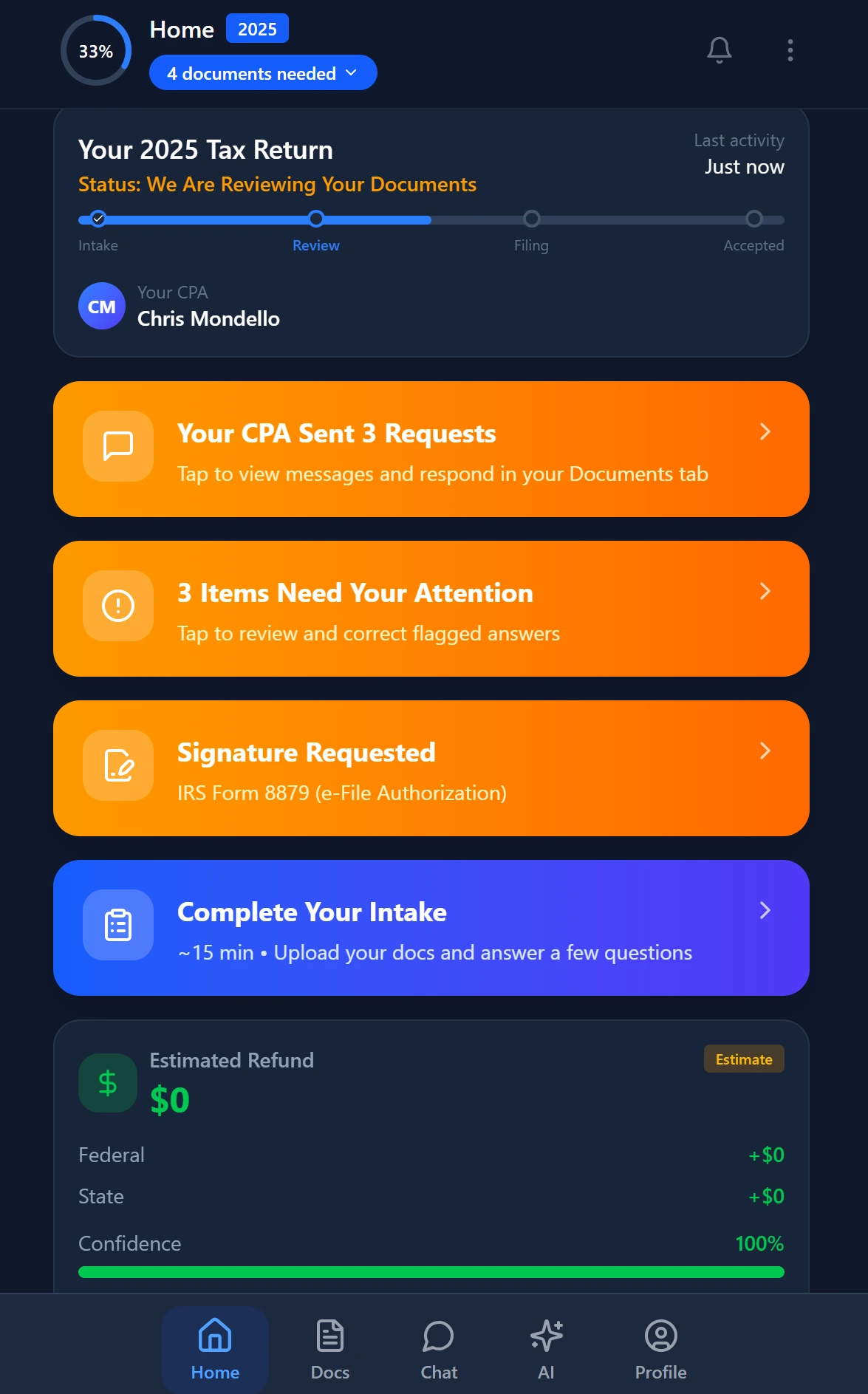
Smart intake auto-fills from uploaded documents and prior-year data
Form 8621 Filing Requirements and Mechanics
Every U.S. person who is a direct or indirect shareholder of a passive foreign investment company must file Form 8621 annually, unless an exception applies. The form was substantially expanded by the 2010 HIRE Act and today covers reporting for each separate PFIC held — meaning a client with five foreign mutual fund positions files five Forms 8621.
Under the current rules, Form 8621 is required in any year the U.S. person (1) receives an excess distribution, (2) disposes of PFIC stock, (3) is making or maintaining a QEF or MTM election, (4) is required to recognize income under the PFIC-as-CFC overlap rules, or (5) is reporting a transfer subject to section 1291(f). Annual filing is also required for each year a QEF or MTM election is in effect, even if the inclusion amount is zero.
Critically, Form 8621 is not filed with the standard tax return package in many commercial tax software programs by default. CPAs must actively build a workflow to identify PFIC positions during intake, generate a Form 8621 for each position, and attach all required statements. The Schedule K-3 reporting guide on this site provides useful context on how similar international information return obligations are tracked in a practice management system.
The statute of limitations does not run on a return that omits a required Form 8621, which means an unfiled or incorrect Form 8621 leaves a tax year perpetually open to IRS examination. This is a significant professional liability risk. Consider building a dedicated checklist stage in your pipeline management workflow specifically for international information returns.
Late QEF Election Procedures and Protective Statements
One of the most overlooked aspects of PFIC practice is the late QEF election. When a client comes to your firm already holding a PFIC for multiple years without any election, the default excess distribution rules apply to all prior years. However, Rev. Proc. 2020-27 provides a framework for making late elections under certain conditions, and the IRS has also allowed protective QEF elections in some circumstances where PFIC status is uncertain.
A late QEF election under Rev. Proc. 2020-27 generally requires the taxpayer to elect to recognize a deemed dividend equal to the amount that would have been included in income if the QEF election had been timely made — essentially paying a 'catch-up' tax on the pre-election appreciation at ordinary rates, but without the punitive interest charge that would apply under the excess distribution method. In many cases, this catch-up tax is far smaller than the prospective excess distribution liability, making the late election worth pursuing even when it requires amended returns.
Practitioners should also consider filing protective QEF elections for clients with positions in funds that may or may not be PFICs. A protective election costs nothing if the entity is later determined not to be a PFIC, but it preserves the client's ability to use QEF treatment if PFIC status is confirmed. The election is made on Form 8621 by checking the appropriate box and attaching a statement. For clients who also have expatriation issues, the quarterly publication of individuals who have chosen to expatriate raises additional coordination considerations around PFIC deemed disposition rules under IRC §877A.
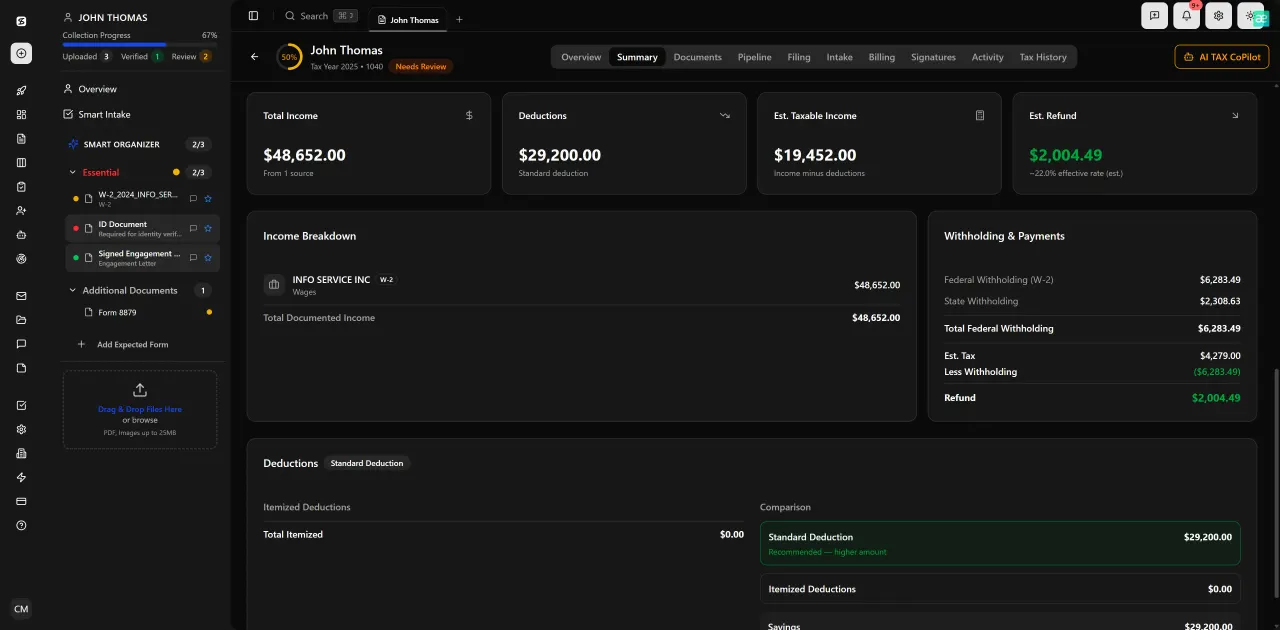
Review with AI assist — 9 agents answer questions with full client context

Every client gets organized documents, status tracking, and a complete history
Hidden PFICs Inside Foreign Retirement Accounts and Canadian RRSPs
Perhaps the most misunderstood dimension of PFIC practice is the prevalence of PFIC holdings inside foreign retirement and pension accounts. Many U.S. practitioners — and virtually all foreign financial advisors — are unaware that the PFIC rules can apply to assets held inside foreign pension plans unless a specific treaty exemption or regulatory exclusion applies.
Canadian Registered Retirement Savings Plans (RRSPs) and Registered Retirement Income Funds (RRIFs) are a common example. Most RRSPs hold Canadian mutual funds, which are typically PFICs. The U.S.-Canada income tax treaty allows U.S. persons to defer recognition of income accruing inside an RRSP, but the treaty deferral does not eliminate PFIC status — it only defers the annual inclusion. When a distribution or withdrawal occurs, the PFIC rules still apply to determine the character and amount of the taxable income unless a QEF or MTM election was in place. The interplay between the treaty deferral election under Revenue Procedure 2020-17 and the PFIC regime requires careful sequencing.
Similarly, clients with foreign employment who participated in local pension schemes funded through collective investment vehicles — common in the UK, Ireland, Australia, and across the EU — may hold PFICs inside plans that have no direct U.S. tax treaty protection. The IRS FBAR and foreign account overview is a useful starting point for cataloging foreign accounts, but FBAR disclosure and PFIC analysis are entirely separate obligations. A client can be FBAR-compliant and still have significant undisclosed PFIC exposure.
Identifying hidden PFICs requires reviewing not just brokerage statements but also: (1) foreign employer pension contribution statements, (2) foreign life insurance or annuity contracts that accumulate value in sub-accounts investing in foreign funds, (3) foreign holding company structures where the client holds shares through a non-U.S. entity, and (4) interests in foreign trusts that in turn hold foreign fund positions. The FBAR penalty negotiation guide covers related disclosure strategies when multiple foreign account filings converge in the same engagement.
Practical PFIC Identification Workflow for CPA Firms
A reliable PFIC identification process starts at intake. Your client questionnaire — or a structured intake engine modeled on IRS Form 13614-C — should explicitly ask about foreign brokerage accounts, foreign employer retirement plans, foreign bank accounts holding investment products, and any non-U.S. mutual funds or collective investment vehicles. Simply asking 'do you have foreign accounts?' is insufficient; many clients do not realize their RRSP or EU pension fund qualifies as a foreign financial account with PFIC exposure.
Once foreign fund holdings are identified, the CPA must determine whether each fund is a PFIC. This analysis is not always straightforward because many foreign funds do not self-identify as PFICs. Useful resources include the fund's annual report (which typically breaks down passive versus active income), the fund's country-of-domicile filings (for income and asset composition), and for Irish-domiciled UCITS funds, public PFIC certification letters that some fund administrators issue to U.S. shareholders. The U.S. Treasury's FATCA IGA partner country list can help identify jurisdictions where enhanced cooperation exists.
After confirming PFIC status, the decision tree is: (1) Is a PFIC Annual Information Statement available? If yes, QEF election is usually optimal. (2) Is the fund traded on a qualified exchange? If yes and QEF is unavailable, MTM election is typically better than defaulting to excess distribution. (3) If neither is available or the client already has a multi-year position without an election, evaluate the late QEF election under Rev. Proc. 2020-27 versus accepting the excess distribution regime going forward with proactive annual Form 8621 filing.
For firms handling a significant volume of international returns, building this analysis into a repeatable workflow automation checklist — with dedicated stages for PFIC identification, election documentation, Form 8621 preparation, and final sign-off — dramatically reduces the risk of missed filings. You can find additional international tax practice resources in other blog resources on this site, including related guides on Schedule K-3, FBAR, and expatriation issues.
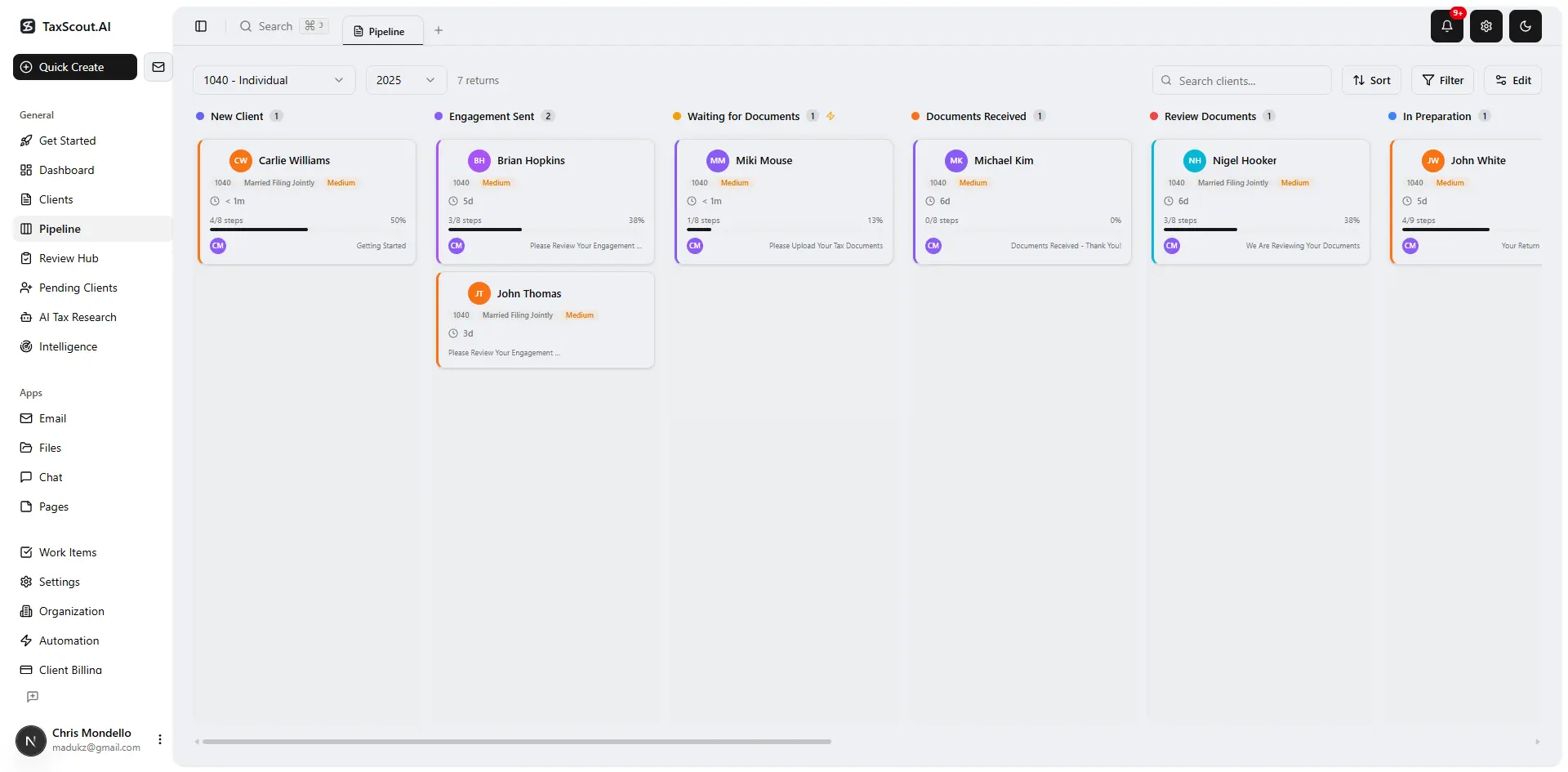
Track every return from intake to filed with drag-and-drop pipeline management
How AI Research Tools Accelerate PFIC Analysis
PFIC analysis is research-intensive. A single client engagement may require reviewing the IRC §1297 asset and income tests, interpreting applicable tax treaty provisions, locating PFIC Annual Information Statements, determining whether a fund qualifies as 'regularly traded' for MTM purposes, and drafting the technical explanation that supports each election on Form 8621. For a solo practitioner or a small firm, this work historically required hours of manual research across IRS.gov, the Cornell Legal Information Institute, Treasury guidance documents, and fund administrator websites.
TaxScout.ai's AI research agents are purpose-built for exactly this kind of multi-source legal and regulatory research. With nine specialized agents conducting real-time searches across IRS, Treasury, Cornell LII, and congressional sources simultaneously, a practitioner can retrieve the current Rev. Proc. 2020-27 requirements, check treaty provisions for a specific country pair, and locate the applicable interest rate tables for IRC §6621 interest charge calculations in a single research session — all with citations attached.
The platform's AI document extraction capability also supports PFIC practice by processing foreign brokerage statements, PFIC Annual Information Statements, and fund annual reports to extract relevant income and asset figures. The split-screen PDF viewer with click-to-source field highlighting allows a reviewer to verify extracted numbers directly against the source document — critical for a regime where errors in the per-year allocation of excess distributions carry both tax and malpractice exposure. Explore TaxScout pricing to see how the platform fits into your firm's budget.
Are hidden PFICs in your clients' foreign accounts keeping you up at night?
TaxScout.ai gives your firm the AI research power and document processing infrastructure to handle PFIC analysis, Form 8621 preparation, and international return management with confidence — at a flat monthly rate with no per-user fees.

Your clients see your brand — OTP login, document upload, and real-time status
Frequently Asked Questions
A passive foreign investment company (PFIC) is any non-U.S. corporation where 75% or more of gross income is passive, or 50% or more of assets produce passive income under IRC §1297. Foreign mutual funds, offshore ETFs, and many foreign holding companies qualify. CPAs identify them by reviewing foreign brokerage statements, foreign employer retirement plan documents, and fund annual reports to assess the income and asset composition tests. Many clients do not realize they hold PFICs, making a thorough intake questionnaire essential.
Keep reading
IRC 163(j) Interest Limitation: How CPAs Minimize the Impact on Heavily Leveraged Clients
Nov 7, 2026 · 1 min read
Meals and Entertainment Deductions: How CPAs Navigate the Post-TCJA Rules for Business Clients
Nov 5, 2026 · 1 min read
Basis Tracking for S Corp Shareholders: How CPAs Prevent Deduction Losses at Year-End
Nov 4, 2026 · 1 min read
Stay up to date
Get the latest tax tech insights delivered to your inbox.