Schedule K-3 Reporting: How CPAs Handle International Pass-Through Items for Domestic Partners
Schedule K-3 catches many CPA firms off guard when purely domestic partners start asking about foreign tax credits. This guide walks through when K-3 is required, how to document the domestic filing exception, what to do when a partner requests K-3 after the return is already filed, and how to…
Schedule K-3 reporting has become one of the most operationally disruptive compliance additions of the past several years for CPA firms serving partnerships and S-corporations. What started as a transparency initiative — giving partners granular detail on international tax items — quickly revealed a gap between how the IRS designed the schedules and how most domestic partners actually use them. The result: thousands of firms scrambling to issue, amend, or explain forms that many partners never anticipated receiving.
The confusion is not limited to exotic offshore funds. A standard real estate limited partnership with a single foreign bank account for a currency hedge, or an operating company with a handful of foreign vendors subject to withholding, can trigger full K-2 and K-3 obligations. Domestic partners who have never filed Form 1116 suddenly find their CPA asking questions about foreign source income and foreign taxes paid — items they assumed were the partnership's problem, not theirs. These seemingly minor international touches are precisely the scenarios where schedule k-3 reporting obligations catch domestic partners and their advisors off guard.
This guide walks through the CPA's full operational responsibility: determining when Schedule K-3 is required in the first place, identifying which specific partners can rely on the domestic filing exception to skip receipt of their individual K-3, handling late and amended K-3 issuances after a return is already filed, and communicating foreign tax credit implications clearly to clients who find the whole concept unfamiliar. Getting this workflow right protects the firm from preparer penalties and the partners from missed credits or IRS notices. Understanding the end-to-end workflow of schedule k-3 reporting is essential for CPAs who want to avoid costly errors and missed deadlines for their partnership clients.
What Schedule K-2 and K-3 Actually Require from Preparers
The IRS introduced Schedules K-2 and K-3 for tax years beginning in 2021, effective for Forms 1065, 1120-S, and 8865. The distinction between the two schedules is operationally important and frequently conflated in generic content: Schedule K-2 is the partnership-level form, reporting the entity's aggregate international tax items to the IRS. Schedule K-3 is the partner-level schedule — a separate document issued to each partner — that disaggregates those items so each partner can use them on their individual return. Since its introduction, schedule k-3 reporting has added significant compliance complexity for partnerships that previously had no meaningful international tax footprint.
A CPA preparing Form 1065 must complete K-2 if the partnership has any items relevant to the computation of international tax items under IRC Sections 901 through 965 — including foreign source income, foreign taxes paid or accrued, foreign tax credit limitations by basket, GILTI inclusions, and treaty-based return positions. K-3 must then be furnished to each partner who needs that information. The preparer's obligation for K-2 runs to the IRS; the obligation for K-3 runs directly to the partner. For firms evaluating their schedule k-3 reporting approach, this trade-off compounds over time.
The practical consequence: if a partner calls six months after filing and says they need their K-3 to claim a foreign tax credit, the firm cannot simply refer them to the K-2. The K-3 must be prepared and issued. This is a distinct preparer duty, and failing to furnish it on time can expose the firm to penalties under IRC Section 6722 for failure to furnish correct payee statements. Understanding both obligations separately is the first step to building a compliant workflow. For a broader look at penalty exposure and how to defend against IRS accuracy-related charges, see our post on the reasonable basis defense guide. Each of these factors directly shapes how schedule k-3 reporting plays out in practice.
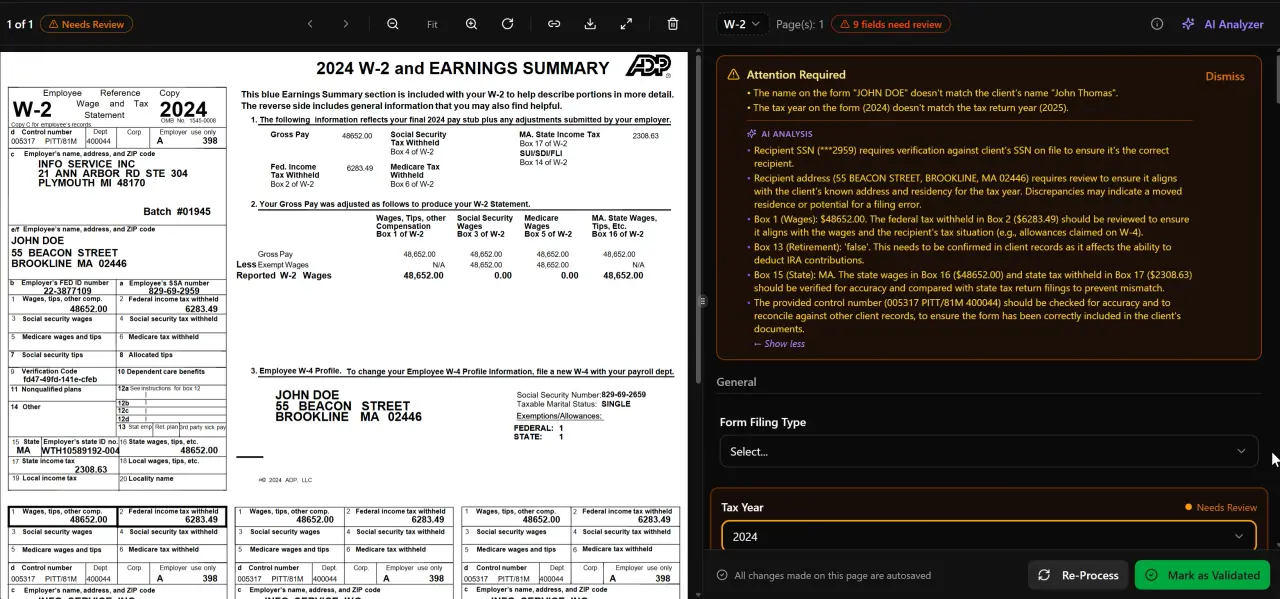
AI classifies, extracts, and validates every document automatically
When Schedule K-3 Is Required: Identifying Triggering Conditions
The most common misconception CPAs encounter is that K-3 only applies to partnerships with obvious foreign operations. In practice, the triggering conditions are broader. According to IRS instructions for Schedule K-2 and K-3, a partnership must complete the schedules if it has items of international tax relevance — a category that includes any foreign taxes paid by the entity (even on a small dividend from a foreign depositary), any income that is foreign source, any partner who is a foreign person, or any item that flows into the foreign tax credit limitation calculation on Form 1116. Understanding schedule k-3 reporting in this context is what separates firms that scale from those that stall.
Common triggering scenarios CPAs should watch for include: (1) partnerships holding foreign stocks or mutual funds that pay foreign dividends subject to withholding; (2) real estate partnerships with mortgages or accounts at foreign financial institutions; (3) operating entities making royalty or service payments to foreign vendors subject to Chapter 3 withholding; (4) any partnership with a non-U.S. partner, even a single one; and (5) entities with income subject to the GILTI provisions under IRC Section 951A at the partner level. This is precisely where a deliberate schedule k-3 reporting strategy pays off.
The intake and document review phase is the right time to identify these triggers, not at the time of filing. Building a checklist into the client's annual intake — asking specifically whether the entity paid any foreign taxes, received any foreign source income, or made payments to foreign persons — can surface K-3 obligations before they become late-filing problems. TaxScout's smart intake engine is modeled on IRS Form 13614-C and supports custom question sets that can embed these international flags directly into the client's annual organizer. Schedule k-3 reporting sits at the center of this decision — get it wrong and the rest unravels.
Tired of discovering K-3 obligations after the return is already filed?
TaxScout's AI intake engine surfaces international triggers before filing season ends — so your firm stays ahead of partner requests instead of scrambling to issue amended schedules. When firms revisit their schedule k-3 reporting priorities, the gaps usually surface here.
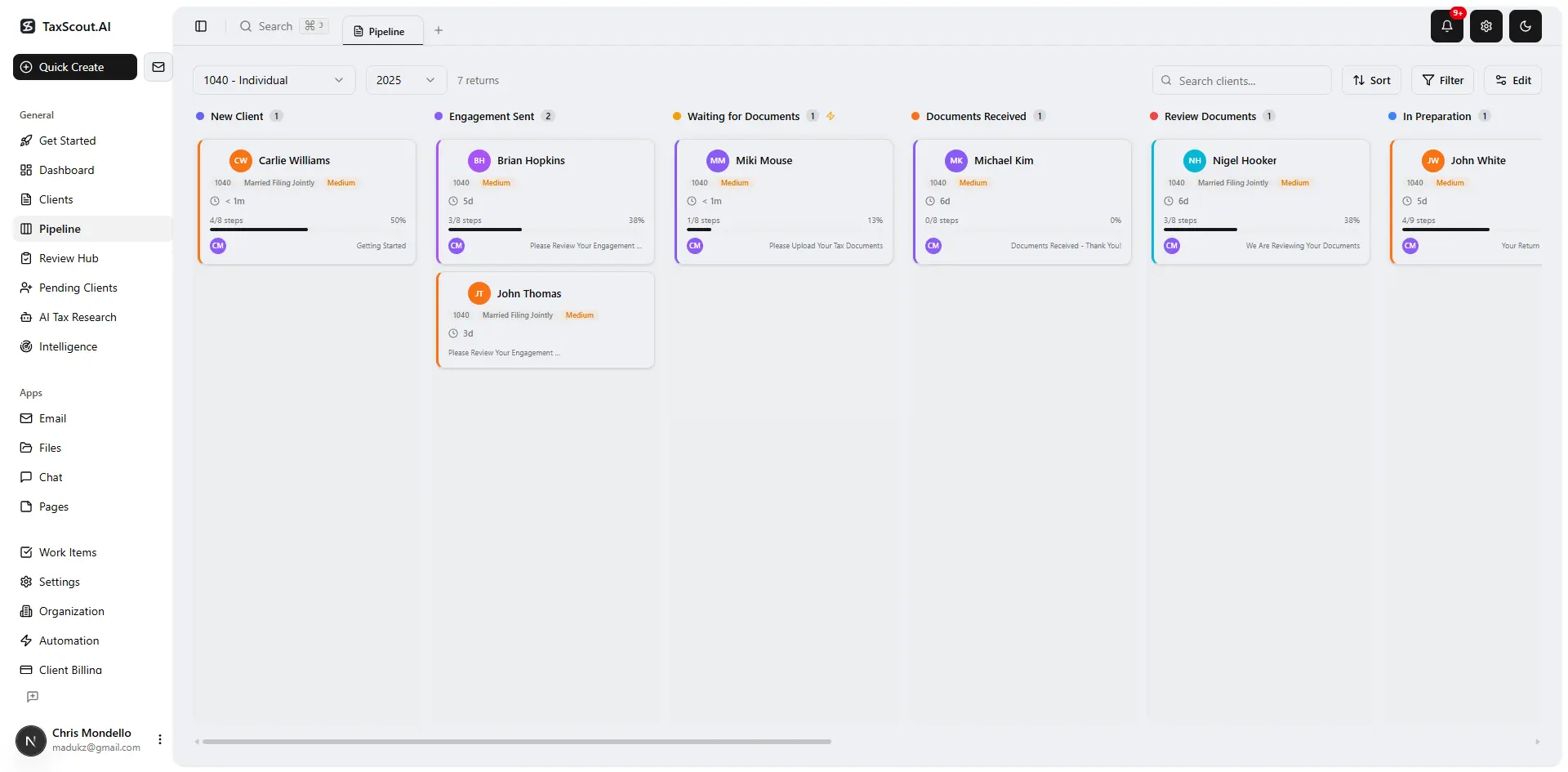
Track every return from intake to filed with drag-and-drop pipeline management
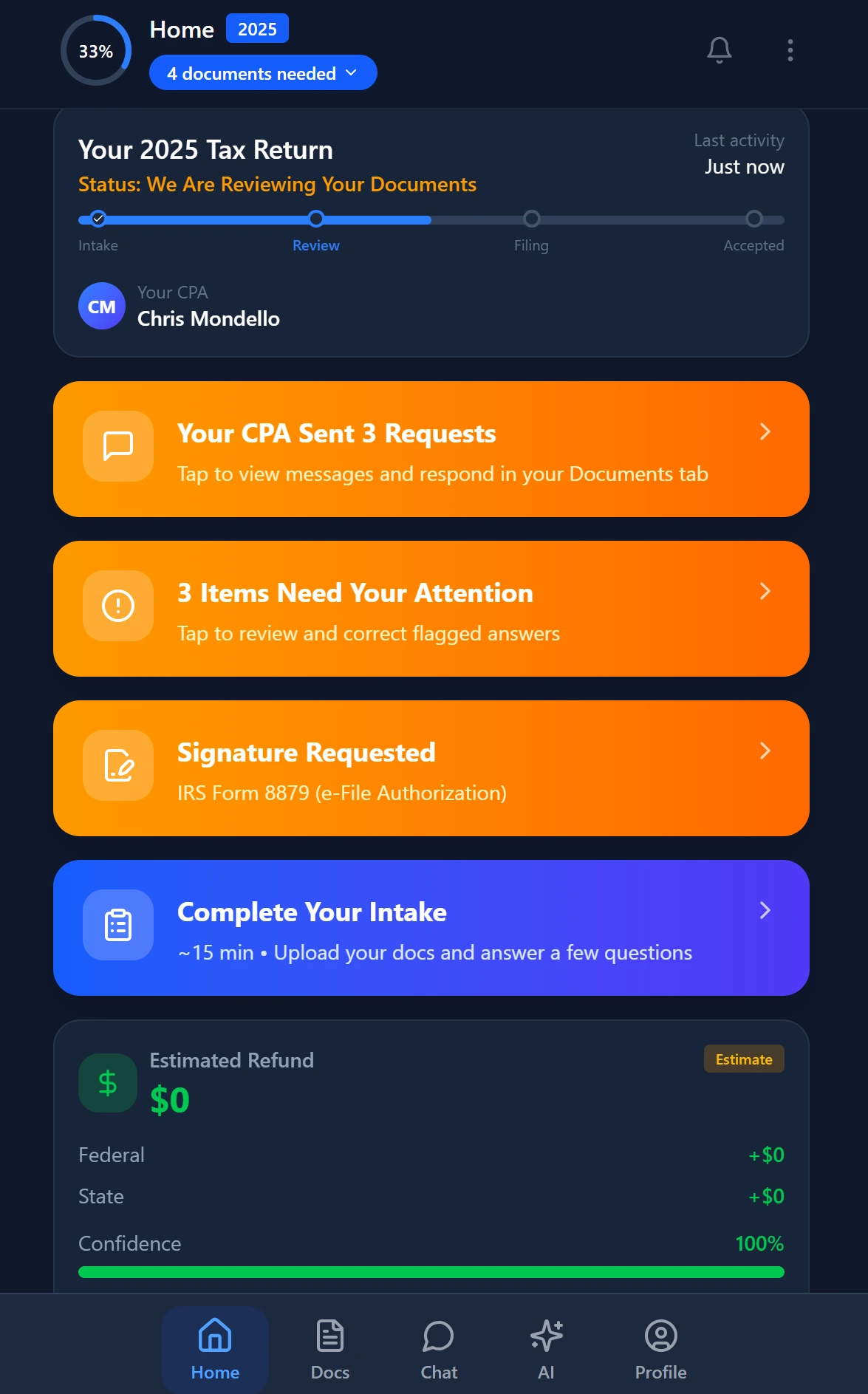
Smart intake auto-fills from uploaded documents and prior-year data
The Domestic Filing Exception: Documenting Partner Eligibility to Skip K-3
One of the most underexplored areas in Schedule K-3 reporting is the domestic filing exception — a set of conditions under which a partnership is not required to furnish a K-3 to a specific partner, even if the partnership is otherwise required to complete K-2. This exception gets almost no treatment in competitor content, yet it is operationally significant for firms that serve large partnerships with dozens of purely domestic, individual limited partners who will never claim a foreign tax credit. Properly applying the domestic filing exception is one of the highest-leverage decisions a CPA makes within the broader scope of schedule k-3 reporting.
Under IRS Notice 2023-55 and subsequent guidance, the domestic filing exception generally applies when all partners are U.S. persons, no partner has requested a K-3 by one month before the filing deadline, and the partnership has no foreign activity other than passive foreign source income in the passive category and foreign taxes of no more than $300 (or $600 for joint filers). When these conditions are met, the partnership can skip furnishing K-3 to those partners — but only if the partnership notifies partners of the exception in the Schedule K-1 instructions.
The CPA's documentation obligation here is often overlooked. The firm should maintain a written record for each tax year confirming: (a) which partners were determined eligible for the exception; (b) the basis for that determination (no foreign activity beyond the threshold, all U.S. persons, no prior-year K-3 requests); and (c) that the required notification was included in the K-1 package. Without that documentation, a partner who later claims they needed K-3 to file Form 1116 creates a preparer liability exposure with no workpaper trail to defend against it. The IRS instructions for the domestic filing exception set out the precise conditions — the firm's checklist should map directly to those conditions, not to a general sense that the partnership is 'mostly domestic.'
Notifying Partners About the Exception
The notification requirement is satisfied by including a specific statement in the K-1 instructions or cover letter explaining that the partnership is relying on the domestic filing exception and that the partner should notify the partnership if they need a K-3 for foreign tax credit purposes. The IRS has provided sample language in its published guidance. CPAs should treat this notification as a mandatory document deliverable in the K-1 package — not optional boilerplate — because a partner who receives no notification and later discovers they could have claimed a foreign tax credit may allege that the absence of K-3 caused a missed benefit.
From a workflow standpoint, the K-1 cover letter template in your firm's document system should have a conditional block that auto-inserts the domestic filing exception language whenever the partnership's K-2 indicates only passive category income below the threshold. This prevents the notification from being forgotten in high-volume tax season. For related timing and communication issues around K-1 distribution, our post on K-1 distribution timing covers how to set partner expectations before the filing deadline.
Handling Late and Amended K-3s After the Return Is Filed
One scenario that rarely appears in published CPA guidance is the partner who contacts the firm weeks or months after the partnership return was filed — sometimes after the partner's own 1040 deadline — requesting a K-3 that was never issued. This creates an amended-schedule obligation that must be managed carefully to avoid compounding the penalty exposure. Firms with a structured approach to schedule k-3 reporting are far better positioned to handle these requests quickly and defensibly when they arise.
The mechanics: if a K-3 was never furnished (either because the domestic filing exception was incorrectly applied or because the preparer did not recognize the triggering condition), the partnership must prepare and issue a corrected K-3 and may also need to file an amended Form 1065 with an updated K-2 if the partnership-level data was also incomplete. The IRS penalty framework under Treas. Reg. Section 301.6722-1 imposes up to $310 per failure to furnish a correct payee statement (as adjusted for inflation), with no cap for intentional disregard. However, the IRS has historically offered penalty relief for K-2/K-3 issues in the early transition years — CPAs should check current guidance for any active relief programs, and also reference our overview of late filing penalty relief for the broader abatement framework.
From the partner's perspective, receiving a late K-3 creates a downstream problem: their 1040 may already be filed without the foreign tax credit data, requiring an amended return to claim Form 1116 benefits. The CPA should proactively communicate this to the partner: the late K-3 is not the end of the process — it triggers an amended 1040 that the partner will also need assistance preparing. Firms that handle both the partnership return and the individual partner return are in the best position to coordinate this, but even firms that only prepare the partnership return have an obligation to notify partners promptly once a K-3 error is discovered.
Document management is critical in these situations. Every K-3 issuance — original and amended — should be logged with a timestamp, the method of delivery, and a copy retained in the client's file. TaxScout's file management features and PDF tools support versioned document storage and audit trails that allow firms to demonstrate exactly when each K-3 was prepared and transmitted, which is essential if a penalty notice arrives from the IRS later.

Click any extracted field to see its source highlighted on the original PDF
IRS K-3 Penalty Relief: What Has Been Available and What to Expect
The IRS recognized that the K-2/K-3 transition created significant compliance burdens and issued several rounds of penalty relief and transition guidance. Notice 2021-39 provided penalty relief for tax year 2021 returns that did not meet all K-2/K-3 requirements, provided the filer made a good-faith effort to comply. Subsequent notices extended and refined that relief as the IRS updated the instructions and forms.
By the 2023 and 2024 filing seasons, the transition relief had largely expired, and partnerships were expected to be in full compliance with schedule k-3 reporting requirements. However, the first-time penalty abatement procedures under IRM Section 20.1.1.3.6 remain available for partnerships with a clean prior compliance history, and reasonable cause abatement is available when the firm can demonstrate that the failure resulted from a good-faith misapplication of a complex new rule — particularly for the domestic filing exception, which involves factual judgments about partner status and foreign activity levels.
CPAs should not assume that the availability of penalty relief eliminates the obligation to file correctly going forward. The IRS has incorporated K-2/K-3 review into its examination priorities for partnership returns, and a missing or incomplete K-2 can serve as a roadmap for an examiner to identify other international compliance gaps. Building a repeatable, documented K-2/K-3 workflow is a firm-wide risk management measure, not just a matter of completing a box on the return. For other resources on partnership and international compliance, you can also explore other blog resources covering a range of CPA practice topics.
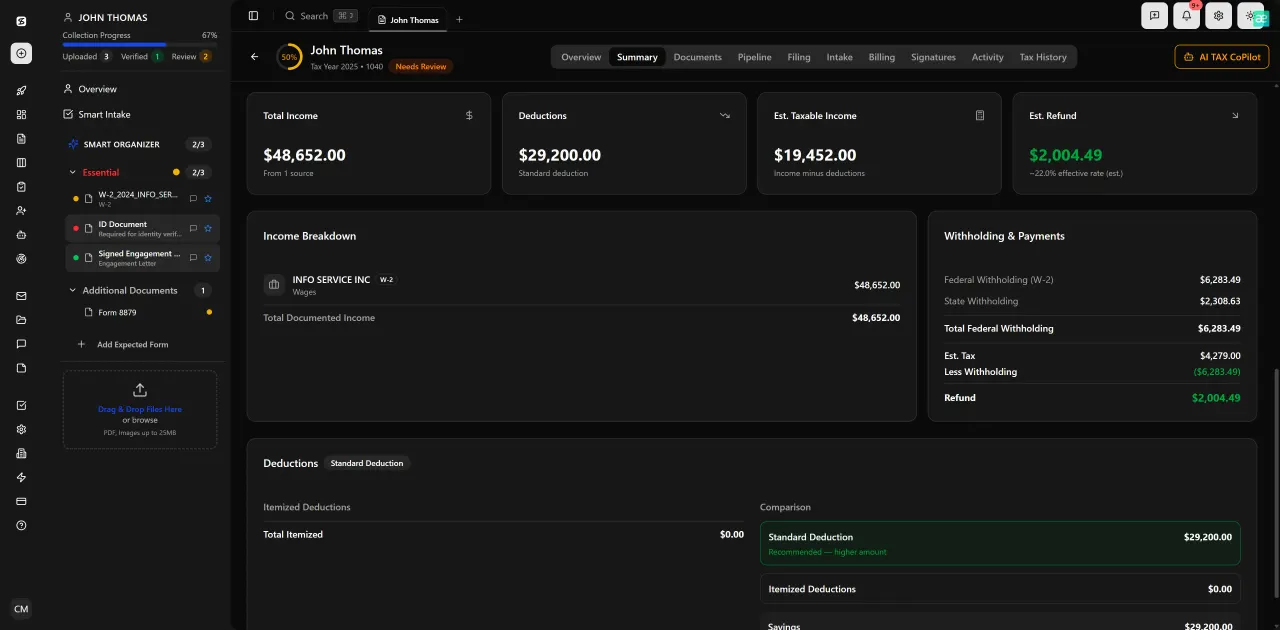
Review with AI assist — 9 agents answer questions with full client context
Explaining Foreign Tax Credit Implications to Domestic Partners
For many domestic individual partners in a limited partnership, receiving a Schedule K-3 is their first encounter with international tax concepts. The CPA's communication challenge is explaining why a pass-through foreign tax credit matters — and why the absence of K-3 data blocks them from claiming it — without overwhelming them with technical jargon.
The core concept to convey: when the partnership pays foreign taxes — even passively, on a dividend from a foreign stock — each partner is allocated a proportionate share of those taxes. That allocated share can be claimed as a direct credit on the partner's Form 1116, reducing their U.S. tax dollar for dollar, up to the limitation. Without K-3, the partner does not have the foreign source income categorization or the foreign taxes paid per-basket data required to compute the Form 1116 limitation correctly. Many partners simply skip the credit rather than request K-3 late, leaving money on the table. This is one reason why consistent schedule k-3 reporting practices benefit not just the partnership, but every individual partner downstream.
A practical communication approach: draft a short explanatory memo as part of the K-3 transmittal. The memo should explain (1) what the K-3 is and why they received it; (2) which line items are relevant to their return — typically Part II for foreign tax credit sourcing; (3) the estimated credit amount, if you can compute it from the data; and (4) whether their 1040 preparer needs to take any additional steps. If your firm also prepares the partner's 1040, flag the K-3 data in the return file immediately so it feeds into Form 1116 preparation. If a different firm handles the 1040, send the K-3 with a cover note explaining which amounts are creditable and in which basket — the passive limitation basket applies to most domestic limited partners receiving foreign dividends. The IRS Form 1116 instructions provide the basket definitions that should anchor your client-facing explanation.
The pass-through foreign tax credit calculation can also surface nuances: the high-tax kickout rule, the Section 904(d) basket allocation, and whether the partner's total foreign tax credit is below the $300/$600 de minimis threshold for the simplified election. CPAs should use TaxScout's AI research agents to verify current IRS guidance on these calculations — the 9 specialized agents search IRS, Treasury, Cornell, and SSA sources in real time, so the firm's guidance reflects the most current published positions rather than outdated reference materials. For more on managing international disclosure obligations, see our guide on amended FBAR procedures, which covers a related area where timely communication with partners prevents disproportionate penalties.
K-3 Obligation Scenarios: Required, Exception, or Amended
| Scenario | K-2 Required? | K-3 to Partners? | CPA Action |
|---|---|---|---|
| Partnership has no foreign activity of any kind | No | No | Document absence of triggering conditions in workpapers |
| Partnership has passive foreign dividends under $300 total foreign tax, all U.S. partners | Yes | Exception may apply | Notify partners in K-1 package; retain eligibility documentation |
| Partnership has foreign taxes over threshold or non-U.S. partner | Yes | Yes — all partners | Prepare and furnish K-3 by K-1 due date; retain delivery proof |
| Partner requests K-3 after original return filed | Amend if K-2 incomplete | Yes — issue corrected K-3 | Assess amended 1065 need; notify partner of 1040 amended return requirement |
| Domestic filing exception incorrectly applied | File corrected K-2 | Issue K-3 promptly | Evaluate penalty abatement; document good-faith effort |
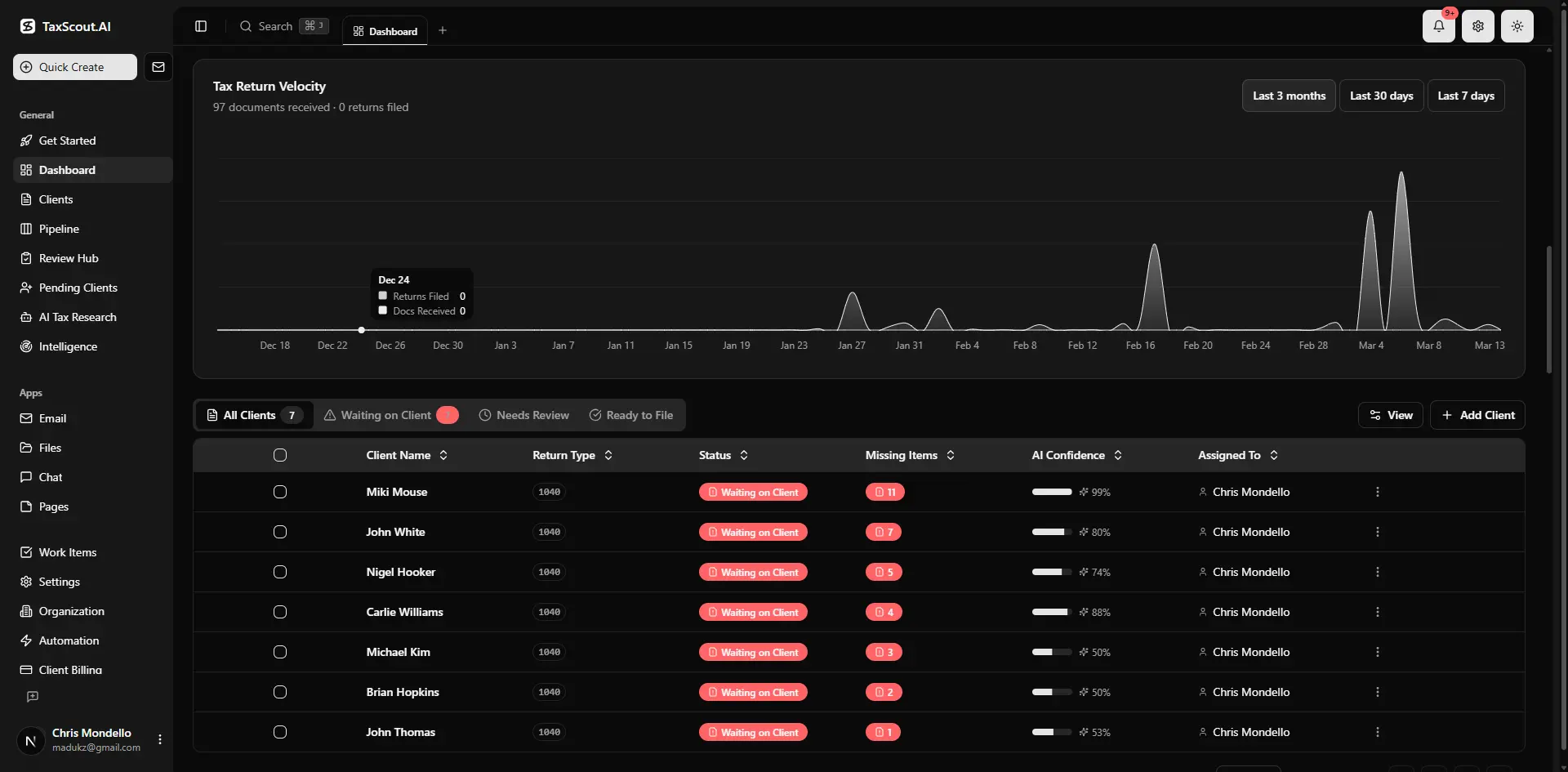
Real-time dashboard showing returns in progress, revenue, and upcoming deadlines

Every client gets organized documents, status tracking, and a complete history
Building a Repeatable K-3 Workflow Into Your Practice
The firms that handle Schedule K-3 reporting with the least friction have embedded the K-2/K-3 decision tree into their standard partnership return workflow, not treated it as an ad hoc judgment call at the end of preparation. A repeatable workflow has four phases: (1) intake screening for international triggers; (2) partner status review to identify who qualifies for the domestic filing exception; (3) K-3 preparation, delivery tracking, and domestic filing exception notification; and (4) post-filing monitoring for late partner requests.
Intake screening should happen at engagement acceptance or renewal, not at the return preparation stage. The engagement letter for partnership clients should include a representation that the client will notify the firm of any foreign account activity, foreign taxes paid, foreign vendor payments subject to withholding, and changes in partner status — including the addition of any foreign partner. This representation shifts some of the risk of a missed K-3 trigger onto the client and creates a documentation trail if the issue is later disputed. For more on how engagement structuring protects the firm, the IRS power of attorney guide covers related representation documentation practices.
Partner status review requires maintaining current records of each partner's citizenship, residency, and history of requesting K-3. A partner who requested K-3 in a prior year — even once — should be presumed to need it in subsequent years unless they affirmatively state otherwise. TaxScout's client management features support entity-level and partner-level data that can store this status year over year, reducing the research burden at filing time. The pipeline management system's 12 customizable stages can be configured to include a K-2/K-3 review checkpoint as a required step before any partnership return advances to the review stage — making it structurally impossible to skip the schedule k-3 reporting analysis during a busy filing season.
Post-filing monitoring means establishing a protocol for when a partner contact about K-3 arrives. Every firm should have a written procedure specifying: who handles the request, what the turnaround time is, whether an amended 1065 is needed, and how the resulting K-3 is delivered and logged. Without a procedure, these requests fall into the gap between the partnership engagement manager and the individual partner's 1040 preparer — and the cost of the scramble typically exceeds the cost of building the procedure in the first place. For pricing comparisons between platforms that support this kind of structured workflow management, see our pricing page for full feature details.
Still managing K-3 checklists in spreadsheets and hoping nothing falls through?
TaxScout gives your team a structured pipeline with required K-2/K-3 checkpoints, AI-assisted document review, and a client portal that logs every delivery — so your firm is protected if a penalty notice ever arrives.
Frequently Asked Questions
Yes, in many cases. If the partnership has any foreign source income, paid any foreign taxes, or made payments to foreign persons subject to withholding, it must complete Schedule K-2 regardless of whether all partners are U.S. persons. The domestic filing exception affects whether K-3 must be furnished to individual partners — it does not eliminate the partnership's K-2 filing obligation with the IRS.
Keep reading
AMT Planning for CPAs: How to Shield Business Clients From the Corporate Alternative Minimum Tax
Oct 19, 2026 · 1 min read
Uniform Capitalization Rules: How CPAs Apply UNICAP to Inventory and Self-Constructed Assets
Oct 17, 2026 · 1 min read
Non-Applicability of Section 357(c) to Consolidated Groups: What CPA Firms Must Do Now
Oct 17, 2026 · 1 min read
Stay up to date
Get the latest tax tech insights delivered to your inbox.