Estate Tax Planning for CPAs: Guiding Clients Under the $15 Million Exemption
P.L. 119-21 replaced the TCJA estate tax sunset with a permanent $15 million exemption for 2026. CPAs are typically the first advisor high-net-worth clients call. This guide covers how to identify which clients are still exposed, which planning vehicles apply, and how to price these engagements.
Estate tax planning for CPAs changed shape in 2025. The Tax Cuts and Jobs Act of 2017 temporarily doubled the federal estate and gift tax exemption, and that increase was scheduled to expire after December 31, 2025. P.L. 119-21, signed on July 4, 2025, replaced the sunset with a permanent basic exclusion amount of $15 million per person for 2026, indexed for inflation after that. A married couple using portability can shelter $30 million. The planning question is no longer how to beat a deadline, but which clients still exceed the exemption and how to keep future growth out of their estates.
The problem is that most clients won't call an estate attorney first. They'll call you. As their CPA, you already hold their income history, business valuations, retirement account balances, and real estate records. You're the one who knows their financial picture in the round. That makes estate tax planning an advisory service CPAs are uniquely positioned to lead — and uniquely exposed to malpractice risk if they handle it passively. This is precisely why estate tax planning for CPAs has become one of the most valuable—and expected—advisory services a firm can offer.
This guide covers the full operational workflow: how to screen your existing client list for estate tax exposure, which planning vehicles are worth understanding, how to structure and price estate planning advisory engagements, and how to coordinate efficiently with estate counsel while staying on the right side of the unauthorized practice of law rules. Think of it as a practical framework for estate tax planning for CPAs who want to move beyond compliance and into proactive client advisory work.
Understanding the Estate Exemption After P.L. 119-21
The Tax Cuts and Jobs Act doubled the basic exclusion amount for federal estate, gift, and generation-skipping transfer (GST) taxes beginning January 1, 2018. For 2025, the inflation-adjusted exemption is $13.99 million per individual, or roughly $27.98 million for a married couple using portability. Before P.L. 119-21, the exemption was scheduled to fall back to roughly $7 million per person in 2026. Instead, it rose to $15 million per person for 2026, indexed for inflation in later years, with no scheduled reversion. The same amount applies to lifetime gifts and to the generation-skipping transfer tax exemption. Understanding these exemption thresholds is the starting point for any effective estate tax planning for CPAs advising clients with significant accumulated wealth.
Clients who made large gifts in 2024 and 2025 to lock in the exemption before the expected sunset did not lose anything. The anti-clawback regulations in Treasury Decision 9884 protect gifts made under a higher exemption, and here the exemption went up rather than down. Recompute each of these clients' remaining exemption against the new $15 million amount; that recomputation is a concrete first deliverable in estate tax planning for CPAs.
Permanent does not mean fixed. Congress can still change the exemption in future legislation, and the 40% estate tax rate still applies above it. Prudent estate tax planning for CPAs means reviewing exposure for affected clients every year and documenting that review in writing.
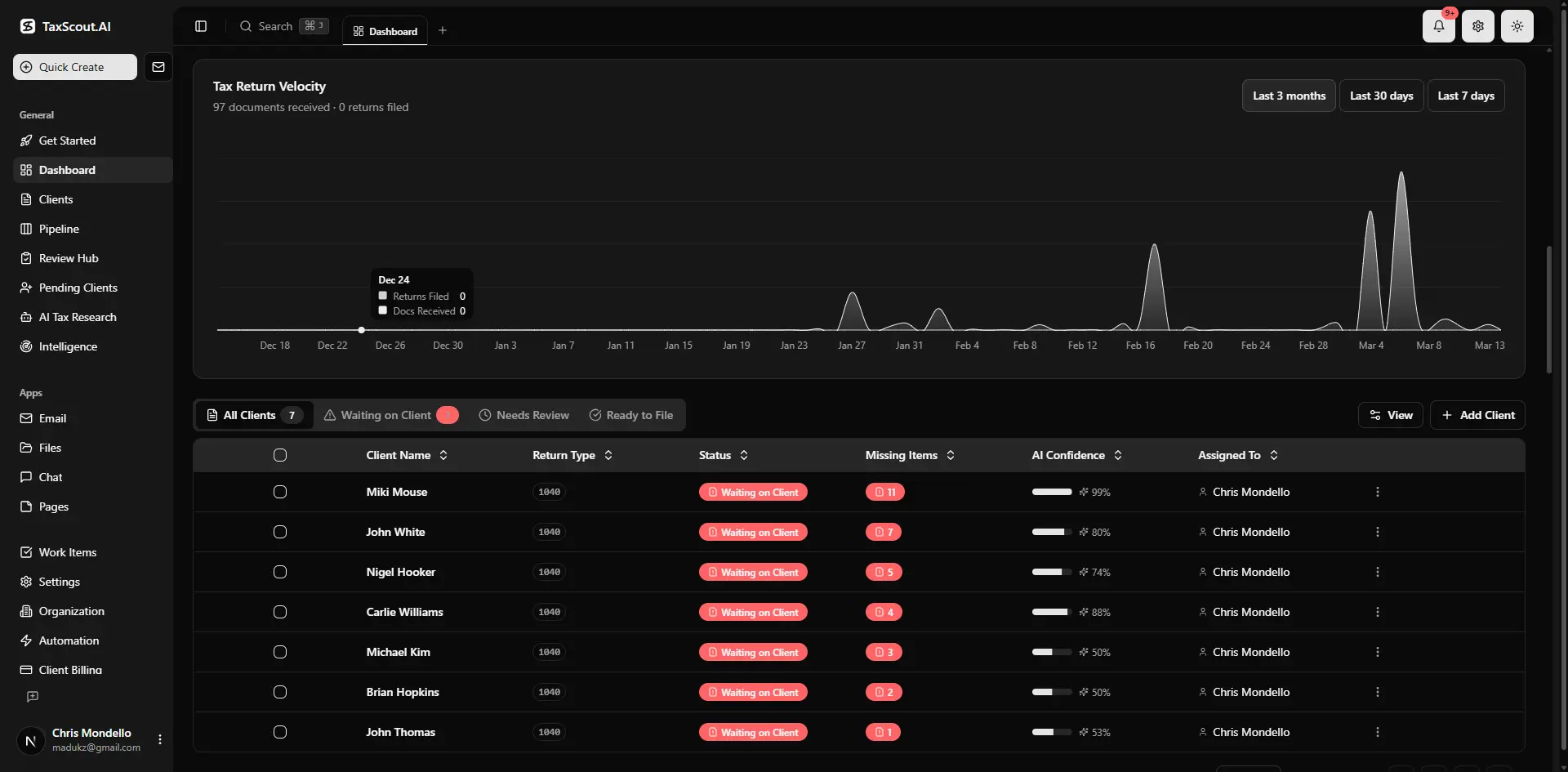
Real-time dashboard showing returns in progress, revenue, and upcoming deadlines
How to Identify Which Clients Are at Risk
Proactive estate planning starts with a systematic client screen. You don't need to review every file — you need a filter that surfaces the roughly 5–15% of your client base where estate tax exposure is realistic. The federal estate tax applies to taxable estates exceeding the exemption threshold; for most clients that threshold is high, but for business owners, real estate investors, and professionals with substantial retirement assets, it is reachable. Each of these factors directly shapes how estate tax planning for CPAs plays out in practice.
Run a net worth screen against your existing client data. Flag clients whose Schedule E income, K-1 distributions, business entity ownership, real estate holdings on Schedule A, or retirement account balances suggest aggregate wealth approaching $10 million, which captures clients whose estates may grow past the $15 million exemption. Add a flag for clients who have previously filed or been involved in a gift tax return (Form 709) or where a prior-year 1040 shows qualified opportunity zone investments, installment sales, or large capital gain events. Understanding estate tax planning for CPAs in this context is what separates firms that scale from those that stall.
Use your pipeline management tool to create a dedicated estate review stage. Tag high-net-worth clients and assign a due date of Q3 2025 to ensure engagement letters are signed and planning conversations happen before year-end gift-giving deadlines. TaxScout's client management module lets you filter clients by tags, assigned staff, and custom fields, making it straightforward to build a high-net-worth watchlist without manually combing through files. This is precisely where a deliberate estate tax planning for CPAs strategy pays off — firms that build this screen early consistently identify more planning opportunities than those that wait for clients to raise the issue first.
Don't forget surviving spouses. If you prepared a 1040 for a client who is widowed and you did NOT file a Form 706 estate return for the deceased spouse, there may be a missed portability election situation worth addressing — especially if the deceased spouse died after 2010 and the surviving spouse's estate is large enough to benefit. Estate tax planning for CPAs sits at the center of this decision — get it wrong and the rest unravels.
Struggling to identify which clients need estate planning conversations before the 2025 deadline? When firms revisit their estate tax planning for CPAs priorities, the gaps usually surface here.
TaxScout's client management and pipeline tools let you tag, filter, and track high-net-worth clients so no at-risk file slips through the cracks this year.
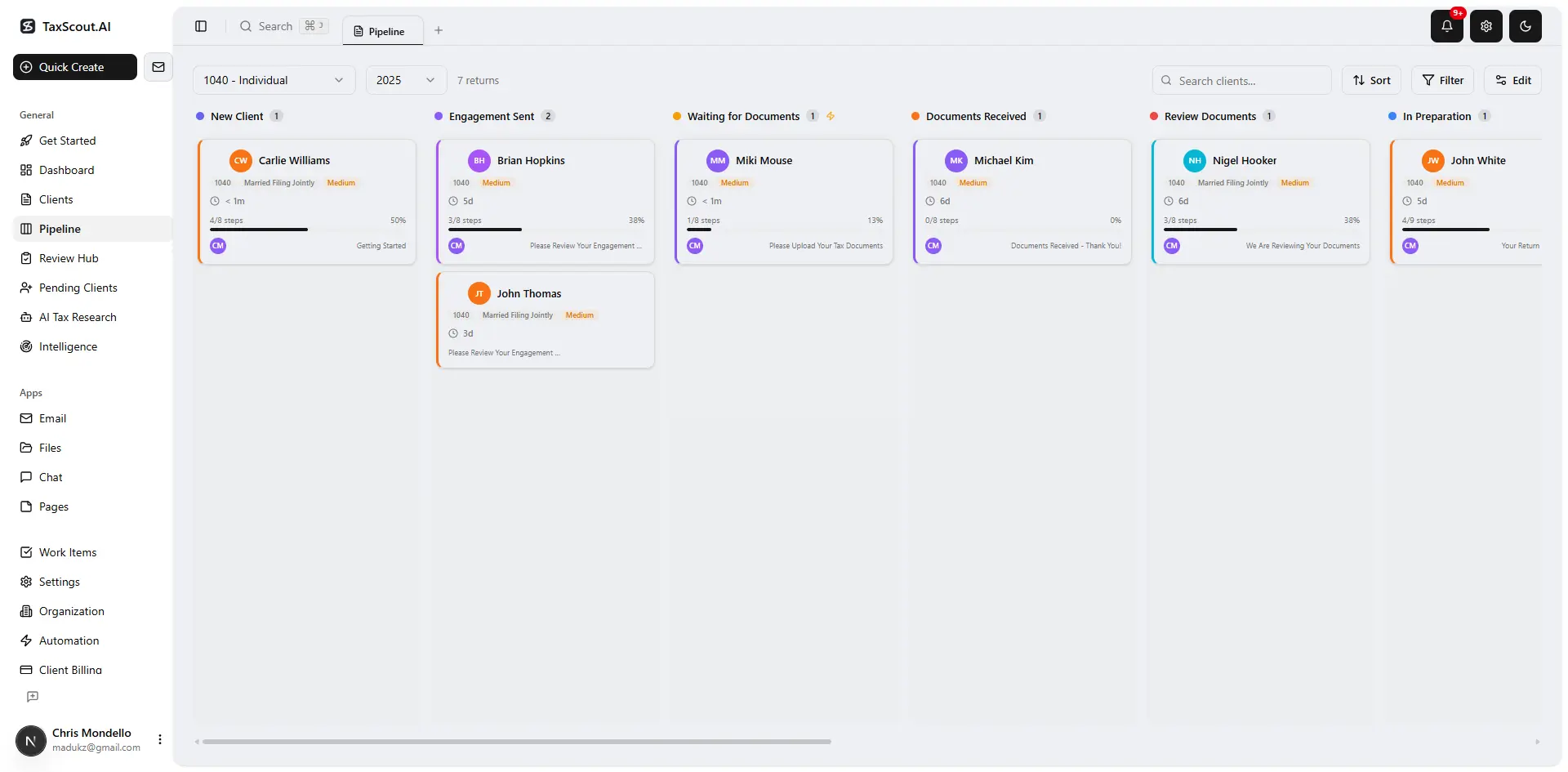
Track every return from intake to filed with drag-and-drop pipeline management
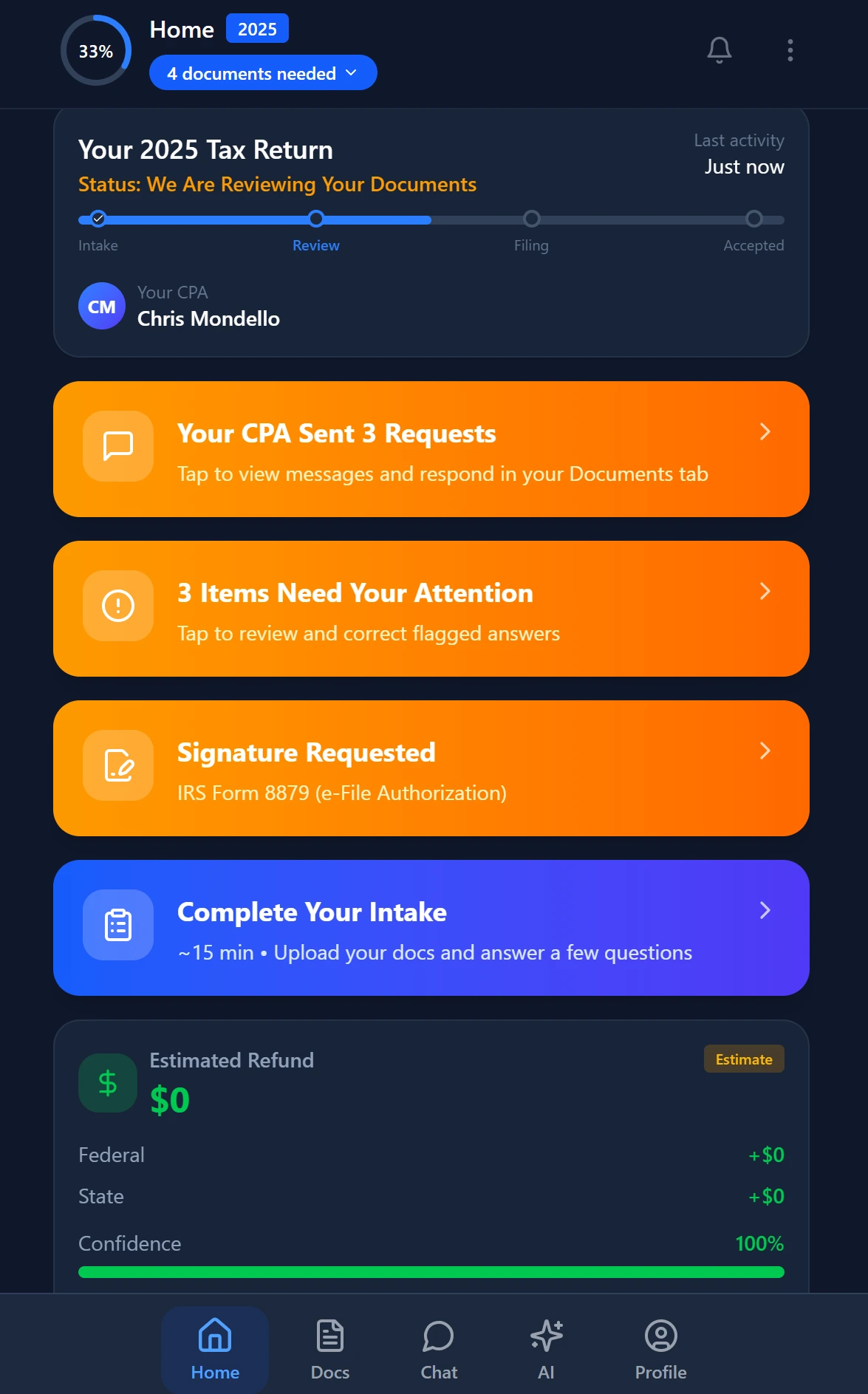
Smart intake auto-fills from uploaded documents and prior-year data
Key Estate Planning Vehicles CPAs Should Understand
You don't need a law degree to discuss planning vehicles intelligently with clients — but you do need enough fluency to identify the right strategy and brief the right attorney. Here are the structures most commonly relevant to clients above or approaching the exemption. Effective estate tax planning for CPAs depends on knowing which vehicle fits a given client's balance sheet before the first attorney meeting ever takes place.
Spousal Lifetime Access Trusts (SLATs): A SLAT allows one spouse to make a completed gift to an irrevocable trust for the benefit of the other spouse, using the grantor's available exemption. The grantor removes assets from their taxable estate while the beneficiary spouse retains access. CPAs need to understand the reciprocal trust doctrine risk and income tax implications — specifically, that SLATs are typically non-grantor trusts for income tax purposes, meaning trust income is taxed at compressed trust rates or to the beneficiary. Coordinate with counsel on drafting; your role is to model the income tax projections.
Irrevocable Life Insurance Trusts (ILITs): Life insurance proceeds included in an estate can push otherwise non-taxable estates over the threshold. An ILIT removes the policy from the insured's estate while keeping the proceeds income-tax-free. The CPA's role is reviewing existing 1040 and business return data to identify policies owned by the client personally and flagging them for counsel review.
Gift Tax Annual Exclusion: The 2025 annual gift tax exclusion is $19,000 per donor per recipient (indexed for inflation). This is separate from the lifetime exemption and requires no Form 709 filing when used correctly. For wealthy clients with multiple children and grandchildren, systematic annual exclusion gifting is a low-complexity planning tool CPAs can recommend and track without attorney involvement.
Portability and Form 706: When the first spouse in a married couple dies, the executor can elect to transfer the unused exemption to the surviving spouse by filing Form 706 within nine months of death (or 15 months with extension). Many CPAs assume no 706 is needed when the estate is below the filing threshold — but portability only transfers if the election is made. The IRS has allowed late portability elections via Revenue Procedure 2022-32 for estates that weren't required to file a full return, giving surviving spouses up to five years after the date of death to make the election. This is an actionable, often-missed service CPAs can identify and deliver.
Grantor Retained Annuity Trusts and Valuation Discount Strategies
GRATs (Grantor Retained Annuity Trusts) allow clients to transfer appreciation out of their estate at a reduced gift tax cost, using the IRS Section 7520 hurdle rate. In a low-rate environment, even a modestly outperforming asset can transfer significant wealth gift-tax-free. CPAs who understand discounted cash flow modeling are well-positioned to run preliminary GRAT projections before handing off to counsel for trust drafting.
Closely held business interests are often eligible for valuation discounts for lack of marketability and lack of control — frequently in the range of 20–40%. These discounts can dramatically reduce the taxable value of a gift or bequest, and recognizing them early is a core skill in estate tax planning for CPAs who serve business-owner clients. CPAs involved in business valuations or who prepare returns for family LLCs and S-corps should flag discount opportunities for clients approaching the exemption threshold. Review IRS guidance on estate and gift tax valuation before advising on specific discount amounts.
Estate Planning Workflow for CPA Firms
A repeatable estate planning advisory workflow has four stages: screen, engage, analyze, and refer-and-coordinate. Each stage has a defined output and a handoff point.
Screen: Use the net worth filter described above to build your high-net-worth watchlist in your practice management tool. Assign a staff member to pull Schedule E, K-1, and Schedule A data for flagged clients and build a one-page summary: estimated gross estate, known exemption usage (prior Form 709 filings), existing trust structures, and business interests. This summary becomes the input to the engagement conversation.
Engage: Send a proactive outreach message — not a generic newsletter, but a personalized note referencing the client's specific situation. 'Based on your 2025 return, your estate may exceed the $15 million federal exemption. I'd like to schedule a 30-minute call to review your current exposure and discuss options.' Use your communication hub to track opens and responses and follow up on a defined cadence.
Analyze: Before the client meeting, prepare a one-page estate tax projection showing estimated taxable estate against the $15 million exemption, both today and with projected growth, approximate tax impact at the 40% federal estate tax rate, and a short menu of planning strategies. Keep this document clearly labeled as a tax analysis, not legal advice. This is where the CPA's value is clearest — translating complex estate exposure into numbers the client understands — and it is also where estate tax planning for CPAs delivers the clearest return on the advisory investment.
Refer and coordinate: Once the client is engaged, refer to a trusted estate attorney for trust drafting, deed preparation, and entity restructuring. Your role shifts to tax modeling, income tax return preparation for new entities (grantor trusts, ILITs, family LLPs), coordination of appraisals for valuation discounts, and monitoring implementation timelines. Document every referral and every handoff in writing. For background on managing complex document workflows across these entities, see our guide on document management for CPA firms.
Keep your pipeline management board updated with each client's estate planning stage. A 12-stage customizable kanban lets you track every client from initial screen through completed gifting documentation without relying on email threads or sticky notes.

Every client gets organized documents, status tracking, and a complete history
How to Price Estate Planning Advisory Engagements
Estate planning advisory is not compliance work — it should not be priced on an hourly basis if you want to capture the full value you're delivering. A client who avoids $500,000 in federal estate tax because you flagged the portability election isn't paying for hours; they're paying for an outcome. Value-based pricing is the right framework here.
A common three-tier structure for estate planning advisory: (1) Estate Tax Exposure Review — flat fee of $750–$1,500 for the initial screen, projection, and written summary of options. No attorney involvement at this stage. (2) Estate Planning Coordination Engagement — flat fee of $2,500–$5,000 to manage the full advisory process: preparing income tax projections for proposed structures, coordinating with estate counsel, reviewing draft trust documents for income tax consistency, and tracking implementation through year-end. (3) Ongoing Estate and Gift Tax Compliance — annual retainer of $1,500–$3,000 for annual gift tracking, Form 709 preparation, trust income tax returns (Form 1041), and proactive reviews each Q4.
Be explicit in your engagement letters about scope boundaries. The CPA provides tax analysis, projections, and compliance services. Legal document drafting, trust formation, and deed preparation are explicitly excluded and referred to counsel. This protects you from unauthorized practice of law exposure and sets clear client expectations. For e-signature workflows on engagement letters, TaxScout's e-signatures module handles Form 8879, engagement letters, and ancillary documents through a single branded portal.
If flat-fee pricing is new to your firm, see our detailed walkthrough at flat fee billing for CPAs. It covers how to set prices, how to handle scope creep, and how to transition existing hourly clients to fixed-fee engagements — all directly applicable to estate advisory pricing.
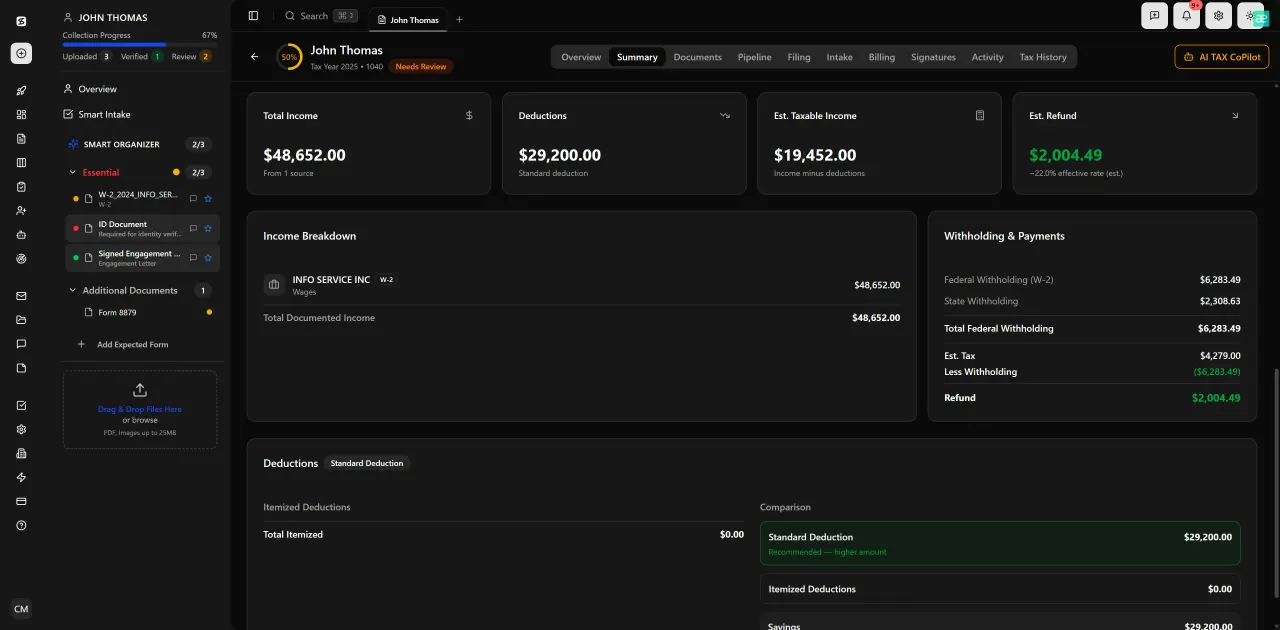
Review with AI assist — 9 agents answer questions with full client context
Coordinating with Estate Counsel Without Unauthorized Practice
The boundary between CPA tax advisory and legal practice is a persistent source of professional liability risk in estate planning engagements. Law.cornell.edu's overview of unauthorized practice of law makes clear that state definitions vary, but the core prohibition is consistent: CPAs may not draft legal instruments, give legal advice on property rights, or form attorney-client relationships.
What CPAs can and should do: prepare estate tax projections; model the income tax consequences of proposed trust structures; prepare gift tax returns (Form 709) and estate tax returns (Form 706); advise on income tax elections for trusts; prepare Form 1041 for trust income; identify missed planning opportunities like portability elections; and recommend clients seek legal counsel for implementation. What must go to the attorney: trust drafting, beneficiary designations, deed transfers, operating agreement amendments for family LLCs, and any advice about property rights.
Build a formal referral network. Identify two or three estate attorneys in your market who work with business owners and high-net-worth individuals, and establish a reciprocal referral relationship. Document the referral in writing — in both your file and the client's portal. Use a standard coordination protocol: you share the estate tax analysis and income tax projections; they share draft documents for your income tax review; implementation milestones are tracked in your project management system.
This collaboration model positions you as the lead advisor who coordinates the team — not a passive referral source. Clients who understand the value of that coordination are more likely to retain you on an ongoing basis. For additional perspective on managing high-complexity advisory engagements, see our resource on niche pricing strategy for CPAs.

Click any extracted field to see its source highlighted on the original PDF
Using Practice Management Tools to Execute the Estate Planning Workflow
The operational bottleneck in estate planning advisory isn't technical knowledge — it's execution. Screening dozens of clients, preparing personalized projections, managing attorney coordination, tracking gifting timelines, and delivering completed documentation before December 31 requires a workflow system, not a spreadsheet. This is where estate tax planning for CPAs moves from theory to practice — and where the right tools determine whether your firm captures the opportunity or loses it to a competitor who operates more efficiently.
TaxScout's AI research agents can accelerate the research phase — running real-time queries against IRS publications, Treasury regulations, and Cornell's Legal Information Institute to surface current exemption amounts, recent revenue procedures, and applicable form instructions. This is particularly useful when a client situation involves less-common structures like generation-skipping trusts or qualified personal residence trusts, where the rules shift frequently.
The client portal with OTP login gives clients a secure, branded place to upload existing estate planning documents — prior Form 706 or 709 returns, trust agreements, beneficiary designation forms — without relying on email attachments or unsecured file shares. This is essential for estate planning engagements where sensitive documents routinely include Social Security numbers, account values, and trust terms. TaxScout's AES-256-GCM encrypted SSN vault and 7-role RBAC ensure that access to these documents is restricted to the right people at every stage.
Use the pipeline kanban to track each estate planning client through stages: Screened → Engaged → Analysis In Progress → Attorney Referred → Implementation Monitoring → Completed and Filed. Set task due dates for key milestones: gifting deadline (December 31), Form 709 filing (April 15 of following year), and Form 1041 due dates for any new trusts. Browse other blog resources for additional workflow guides covering tax season management and advisory service delivery.
For firms using Drake, CCH Axcess, or Lacerte as their primary tax preparation platform, TaxScout works alongside your existing software — handling intake, document management, client communication, and workflow tracking while your tax software handles return preparation. This means you can add estate planning advisory services without replacing the tools your team already knows.

Your clients see your brand — OTP login, document upload, and real-time status
What CPAs Do vs. What Estate Attorneys Do in a Coordinated Estate Planning Engagement
| Task | CPA Role | Estate Attorney Role |
|---|---|---|
| Estate tax exposure analysis | Prepares projection using client financials | Reviews for legal accuracy if requested |
| Gift tax returns (Form 709) | Prepares and files | N/A |
| Estate tax return (Form 706) / portability | Prepares and files | N/A |
| Trust income tax returns (Form 1041) | Prepares and files | N/A |
| Income tax modeling for proposed structures | CPA models all scenarios | Reviews for legal consistency |
| Trust drafting (SLAT, ILIT, GRAT) | Reviews for income tax implications only | Drafts all legal instruments |
| Deed transfers and beneficiary designations | N/A | Prepares and executes |
| Entity restructuring (family LLC, FLP) | Income tax analysis and return prep | Drafts operating agreements and filings |
| Implementation timeline tracking | Manages via practice management system | Coordinates on legal milestones |
Documentation, Malpractice Protection, and Engagement Closure
Estate planning engagements carry elevated malpractice exposure because the stakes are high, the timeline is deadline-driven, and the scope boundary between CPA and legal advice is genuinely ambiguous at the edges. Protect yourself with documentation at every stage.
For every high-net-worth client you screen, create a dated file note recording what you reviewed, what you found, and what action was recommended. For clients who decline to act, send a written confirmation of the declination — ideally via email with a read receipt or through your client portal so there is a timestamped record that you raised the issue and they declined. This protects you if the client later claims they weren't informed of their exposure.
Your engagement letter for estate planning advisory should explicitly define: (1) the services included (projections, 709 preparation, Form 706 if applicable, trust income tax returns); (2) the services excluded (legal advice, document drafting, property transfer); (3) the specific tax years and entities covered; and (4) a clause confirming the client understands that implementation of recommended strategies requires separate legal counsel. Have clients sign through your e-signatures module so the executed letter is automatically stored in their client record.
At engagement close, prepare a summary memo documenting what planning was completed, what was gifted, how the exemption was used, and what follow-up actions remain (e.g., annual Form 709 filings, trust income tax return filings). This memo serves as both a client deliverable and your file documentation. For firms building out comprehensive advisory practices, this is also the document that demonstrates your value at renewal time and supports value-based pricing in future engagement negotiations. Done consistently, it becomes the foundation of a repeatable estate tax planning for CPAs service offering that clients return to year after year.
Ready to add estate planning advisory to your service menu?
TaxScout gives your firm the client screening, secure document management, AI research, and pipeline tracking to run estate planning engagements efficiently — without adding headcount.

Track firm performance with real-time analytics and client activity monitoring
Frequently Asked Questions
P.L. 119-21 set the federal basic exclusion amount at $15 million per person for 2026, indexed for inflation in later years, with no scheduled sunset. A married couple can shelter $30 million using portability. The same amount applies to lifetime gifts and to the generation-skipping transfer tax exemption, and the estate tax rate above it remains 40%.
Keep reading
Divorce Tax Planning for CPAs: How to Split Assets Without Triggering Unexpected Liability
Oct 25, 2026 · 1 min read
Ponzi Scheme Loss Deductions: How CPAs Claim Theft Losses for Defrauded Clients
Oct 24, 2026 · 1 min read
Premium Tax Credit Proposed Regulations: What CPA Firms Must Do Now
Oct 24, 2026 · 1 min read
Stay up to date
Get the latest tax tech insights delivered to your inbox.