Racial Nondiscrimination in Private Schools: What CPA Firms Must Do Now
The IRS published proposed regulations on September 4, 2026 that would revoke tax-exempt status for private schools that discriminate on the basis of race, color, or national or ethnic origin. CPA firms serving private school clients — and donors who take charitable deductions tied to those…
On September 4, 2026, the IRS published proposed regulations on racial nondiscrimination in private schools in the Federal Register. The rule would update existing Treasury regulations to make explicit that a private school engaging in racial discrimination — across admissions, scholarships, athletics, or any other educational policy — cannot qualify as an organization exempt from Federal income tax under section 501(c)(3).
This is not a sweeping new legal theory. The underlying principle traces back to the Supreme Court's 1983 decision in Bob Jones University v. United States, which established that racially discriminatory private schools operate against fundamental public policy and therefore do not qualify for tax exemption. What changed is that Treasury is now codifying that standard directly into the regulations, making the IRS's enforcement posture unambiguous and administratively reviewable. The doctrine of racial nondiscrimination in private schools has deep constitutional roots that predate any recent regulatory activity.
For CPA firms, the practical exposure is concentrated in a specific client segment: private schools you serve as nonprofit clients, donors who claim charitable contribution deductions to those schools, and any scholarship-granting organization connected to a school's admissions pipeline. If those clients are not already in compliance — or cannot document compliance — your firm needs to flag this now, before the comment period closes and a final rule takes effect. Understanding the compliance obligations around racial nondiscrimination in private schools is therefore essential for any CPA firm serving nonprofit educational clients.
What the Proposed Rule Actually Changes
Under current regulations, private schools must certify racial nondiscrimination as a condition of tax-exempt status — but the regulatory text has not kept pace with the doctrine articulated in case law and IRS guidance. The proposed rule closes that gap by inserting an explicit provision: a school that discriminates on the basis of race, color, or national or ethnic origin in the administration of its educational programs, admissions, scholarships, athletic activities, or other policies is not described in section 501(c)(3) and is therefore not exempt from Federal income tax. The proposed rule would codify clearer, more enforceable standards around racial nondiscrimination in private schools to close the gap between existing regulatory language and established legal doctrine.
The proposed regulation covers all private schools that claim exemption under section 501(c)(3) of the Internal Revenue Code, regardless of whether they are religiously affiliated or independent. The IRS has historically applied nondiscrimination requirements to both categories under the Bob Jones precedent, and the proposed rule does not carve out a religious exemption. For firms evaluating their racial nondiscrimination in private schools approach, this trade-off compounds over time.
Treasury is accepting public comments through the standard Federal Register notice-and-comment process. Until a final rule is published, existing law — including current certification requirements under Revenue Procedure 75-50 — remains in force. That means the compliance obligations your private school clients already carry have not technically changed yet, but the enforcement risk has increased materially. Each of these factors directly shapes how racial nondiscrimination in private schools plays out in practice.
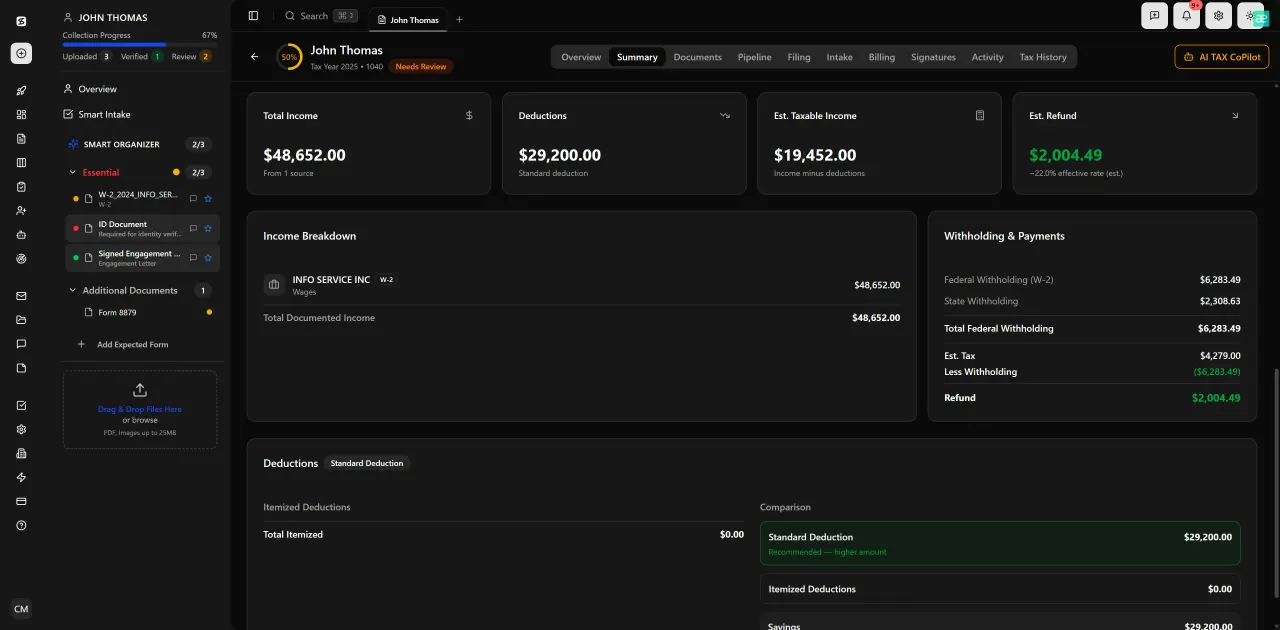
Review with AI assist — 9 agents answer questions with full client context
Which Client Segments and Filing Types Are Affected
Tired of manual workflows slowing your firm down? See how TaxScout handles this with AI-powered automation. → Book a 15-Min Demo Understanding racial nondiscrimination in private schools in this context is what separates firms that scale from those that stall.
This proposed rule touches several distinct client types across your practice. Understanding the filing-level exposure helps you prioritize outreach. This is precisely where a deliberate racial nondiscrimination in private schools strategy pays off.
Nonprofit private schools (Form 990 filers): Any private school you serve as an exempt organization client is directly in scope. Schools currently exempt under 501(c)(3) must maintain a nondiscrimination policy that is publicly disclosed and operationally enforced. If a school's governing documents, website, or enrollment data suggest discriminatory practices, its exemption is at risk under the proposed rule. Review Form 990, Part VI (governance), and ensure nondiscrimination policy language is current and accurate. Racial nondiscrimination in private schools sits at the center of this decision — get it wrong and the rest unravels.
Individual donors (Schedule A, Form 1040): Clients who claim charitable deductions for contributions to private schools need to know that if a school loses its exempt status — retroactively, in a worst-case scenario — those deductions could be disallowed. See our coverage of other regulatory changes affecting individuals for context on how IRS exempt-status changes ripple into individual returns. When firms revisit their racial nondiscrimination in private schools priorities, the gaps usually surface here.
Scholarship-granting organizations and donor-advised funds: Entities that fund scholarships administered by private schools carry indirect exposure. If the recipient school's exempt status is revoked, grants made from a DAF to that school could be treated as non-qualifying distributions. DAF sponsors and scholarship foundations should review their due-diligence procedures.
S-corps and partnerships with school-related fringe benefits: This scenario is narrower but real. If a closely held business provides tuition assistance tied to a specific private school as a nontaxable fringe benefit under section 132, and that school loses exempt status, the fringe benefit structure may need to be revisited. Check any fringe benefit agreements referencing named private schools.
Tracking regulatory changes across your entire client base manually?
TaxScout's AI research agents monitor IRS, Treasury, and Federal Register updates so you catch every rule change that affects your clients — before it becomes a problem.
What to Do This Week: A Firm Action Checklist
The comment period is open and no final rule has been issued, but waiting for finalization to begin compliance review is the wrong posture. Here is a prioritized checklist for the next five business days.
1. Identify all private school clients in your pipeline. Pull every active client tagged as a nonprofit or 501(c)(3) organization and filter for private K-12 and post-secondary schools. If your client management system does not have entity-type tags, this week is the time to add them.
2. Request or review current nondiscrimination policy documentation. Each private school client should have a written nondiscrimination policy that is (a) adopted by the governing board, (b) published on the school's website, and (c) included in admissions and enrollment materials. Revenue Procedure 75-50 has required this for decades — confirm it is current and not just boilerplate from 1990.
3. Cross-check Form 990 disclosures. On recent Form 990 filings, review Part VI, Section A, Question 6 (which asks about nondiscrimination policies for Form 1023 purposes) and any Schedule E attachments. Discrepancies between disclosed policies and operational practices are the exposure point.
4. Send a brief advisory memo to affected clients. You do not need to wait for a final rule to alert clients that proposed regulations increase enforcement risk. A one-page memo noting the Federal Register publication, the compliance standard, and the documentation steps you are taking together is defensible and appreciated. For context on how similar nondiscrimination rules are handled across benefit programs, see our post on employer contributions and nondiscrimination rules.
5. Flag donor clients with Schedule A deductions to private schools. Run a quick scan of prior-year returns for clients claiming charitable deductions to private schools. Note those schools for monitoring. No action is required today, but you want a list ready if any of those schools are named in IRS adverse determination letters after a final rule.
6. Consider filing a public comment if you serve this niche. The Federal Register notice-and-comment process is open to practitioners. If your firm has a concentration of private school clients, a comment addressing implementation timelines or documentation standards is appropriate. Comments can be submitted through Regulations.gov.
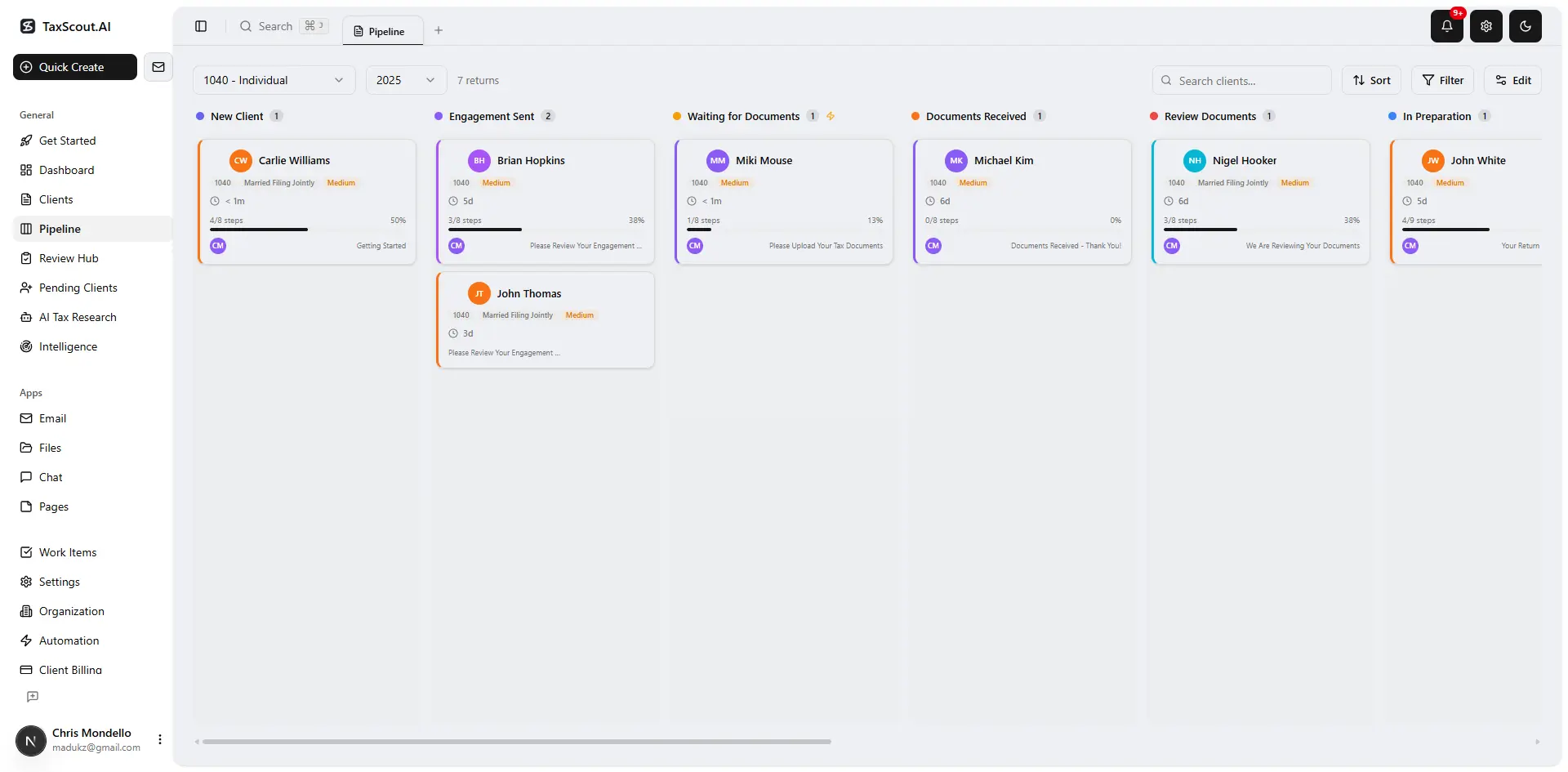
Track every return from intake to filed with drag-and-drop pipeline management
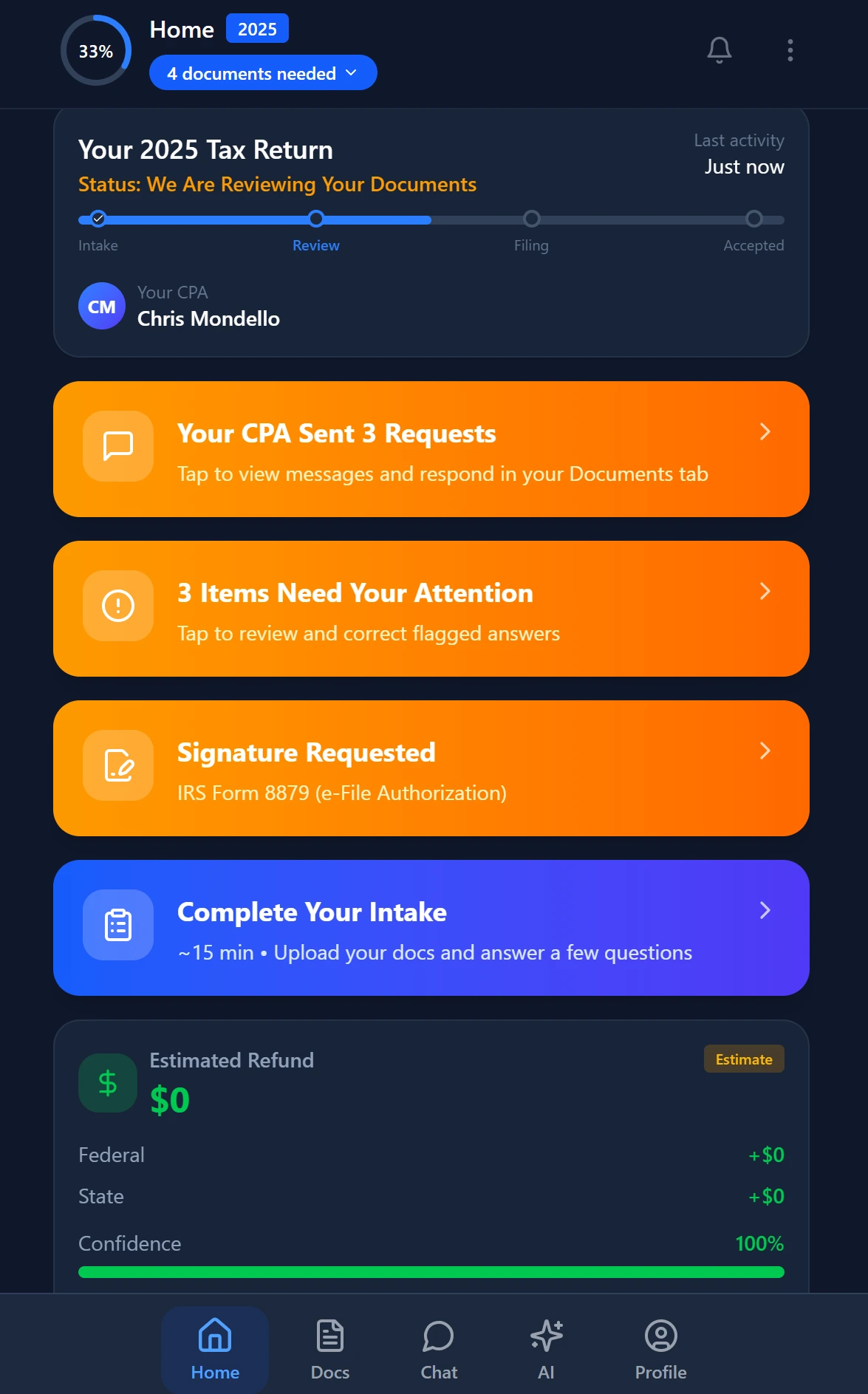
Smart intake auto-fills from uploaded documents and prior-year data
Compliance Documentation Your School Clients Need
Under Revenue Procedure 75-50, private schools seeking or maintaining 501(c)(3) status have long been required to maintain the following documentation. The proposed rule strengthens the regulatory basis for IRS enforcement of these requirements:
A racially nondiscriminatory policy statement in the school's charter, bylaws, or other governing instrument — or in a resolution of the governing body. Public disclosure of the nondiscrimination policy in all brochures, catalogues, and advertising materials, including the school's website. Annual certification of compliance, typically included with or adjacent to the Form 990 filing. Records showing that the school makes no racially discriminatory scholarships, loans, or other financial assistance, and that it does not sponsor any racially discriminatory programs.
If any of these elements are missing or outdated, the school is already out of compliance with existing requirements — and the proposed rule only raises the stakes. Help your clients treat this week's checklist as a compliance refresh, not a new burden. For a broader look at nonprofit compliance workflows, see our nonprofit audit preparation guide.
Staying current on regulatory updates like this one is part of the broader challenge of running a responsive CPA practice. You can find additional regulatory news and compliance briefs in our complete tax and practice news coverage.
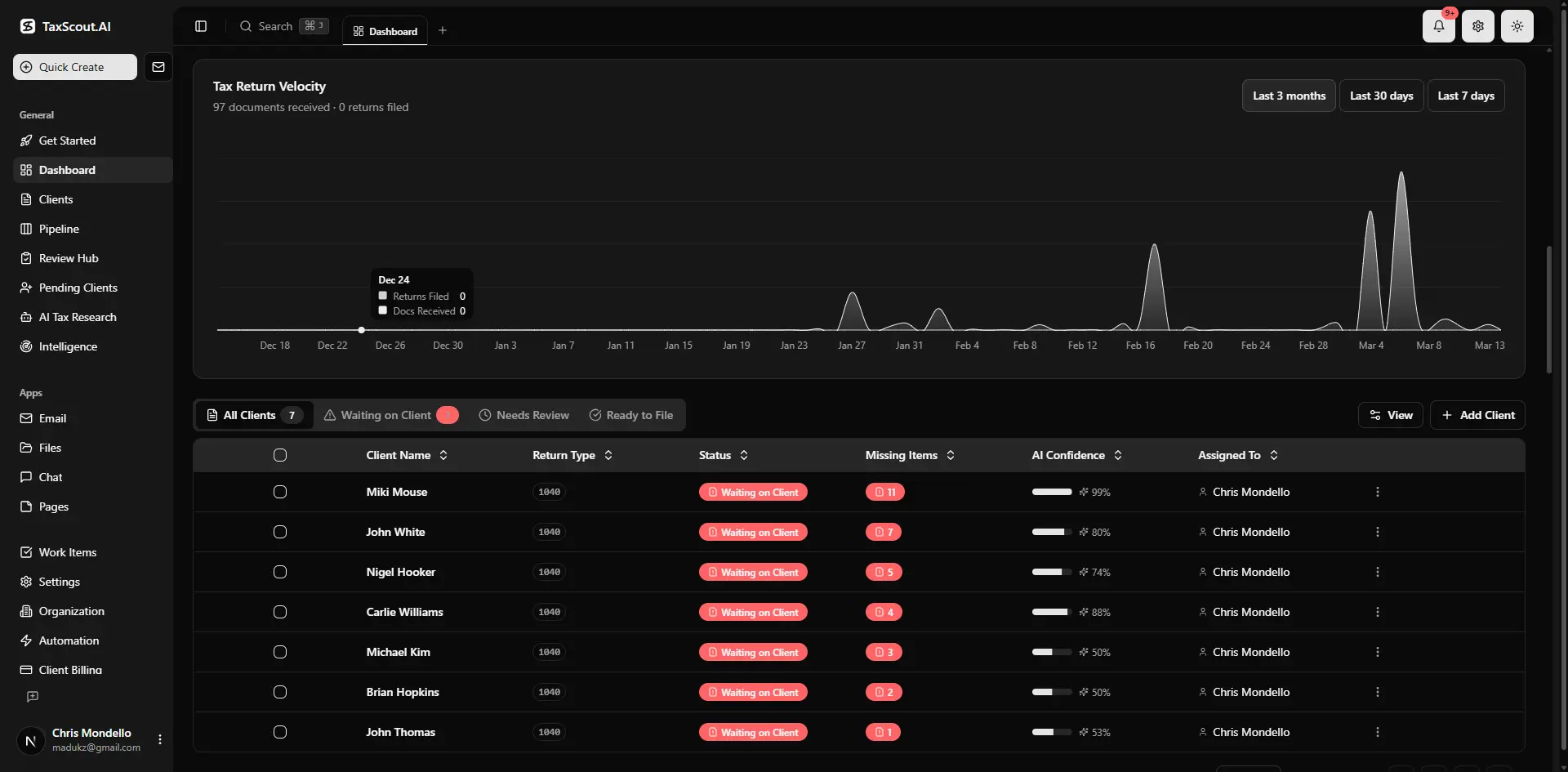
Real-time dashboard showing returns in progress, revenue, and upcoming deadlines
How TaxScout Helps Firms Monitor Regulatory Risk
Regulatory monitoring is one of the highest-leverage activities a CPA firm can automate. TaxScout's AI research agents continuously scan the IRS, Treasury, Cornell Law's legal information institute, and the Federal Register so that changes like this proposed rule surface in your workflow before clients ask about them.
For firms with nonprofit clients, the client management module lets you tag entities by type — 501(c)(3), S-corp, individual — and filter for affected segments when a new ruling drops. Combined with the AI intake engine and client portal, you can push document requests directly to school clients who need to upload updated policy documentation, then track receipt in the pipeline without manual follow-up.
If your firm is currently managing compliance reviews across multiple platforms and spreadsheets, this is a good moment to evaluate whether your tooling is keeping up. See how TaxScout compares to legacy platforms at /compare/taxdome-alternative.
Want to stop learning about regulatory changes from your clients instead of the other way around?
TaxScout gives CPA firms AI-powered regulatory intelligence, client-segment filtering, and automated document collection — all in one platform with no per-user fees.

Your clients see your brand — OTP login, document upload, and real-time status
Frequently Asked Questions
The proposed rule was published in the Federal Register on September 4, 2026. It is currently in the notice-and-comment period. No final effective date has been set. CPA firms should monitor the Federal Register for the final rule publication, which will include an effective date and any transition period.
Keep reading
Energy Tax Credits for CPAs: How to Claim IRA Incentives for Business Clients
Oct 23, 2026 · 1 min read
Partnership Guaranteed Payments: How CPAs Handle SE Tax and Deductibility
Oct 22, 2026 · 1 min read
Guidance Under Section 355 Concerning Device and Active Trade or Business Partial Withdrawal
Oct 22, 2026 · 1 min read
Stay up to date
Get the latest tax tech insights delivered to your inbox.