Transparency in Coverage Final Rules: What CPA Firms Must Do Now
Federal regulators published final Transparency in Coverage rules on October 6, 2026, amending price reporting requirements for non-grandfathered group health plans under ERISA, the Public Health Service Act, and the Internal Revenue Code. CPA firms serving S-corps, partnerships, and nonprofits…
Final rules on transparency in coverage landed in the Federal Register on October 6, 2026, tightening price-reporting obligations for non-grandfathered group health plans and the health insurance issuers that serve them. The changes amend regulations under three statutes simultaneously — the Public Health Service Act, the Employee Retirement Income Security Act of 1974 (ERISA), and the Internal Revenue Code — making this a cross-disciplinary issue that lands squarely in a CPA's advisory lane.
Most coverage will recap the Federal Register notice word-for-word. This brief skips the legalese and focuses on the operational questions your clients will be calling about: does this apply to them, what do they have to file or disclose, and what should they do before the effective date? Most coverage will recap the Federal Register notice word-for-word, but understanding how transparency in coverage requirements translate into day-to-day compliance tasks is what your clients actually need.
If your firm handles payroll, benefits administration consulting, or Form 5500 preparation for business clients, at least a subset of your book is affected. Read on for the short-form action list. If your firm handles payroll, benefits administration consulting, or Form 5500 preparation for business clients, the transparency in coverage rules mean at least a subset of your book is affected.
What the Final Rules Actually Change
The final rules amend the existing Transparency in Coverage framework — originally established under the Affordable Care Act — to update and in some cases expand the price-reporting obligations placed on non-grandfathered group health plans and health insurance issuers offering non-grandfathered group and individual health insurance coverage.
At the core: plan sponsors and issuers must make machine-readable files and, in applicable cases, cost-sharing tools available to participants in a format and cadence that meet the updated regulatory standards. The amendments touch the regulatory text under all three governing statutes, so a plan that is subject to ERISA and the Internal Revenue Code simultaneously faces overlapping compliance obligations — both of which must be satisfied. At the core of transparency in coverage: plan sponsors and issuers must make machine-readable files and, in applicable cases, cost-sharing tools available to participants in a format and cadence that meet the updated regulatory standards.
The primary source is the official Federal Register document published 2026-10-06. CPA firms advising on benefit plan compliance should download and retain this document as part of their client advisory files. For broader context on how these updates interact with existing IRS guidance on group health plans, review the IRS ACA employer resource page.
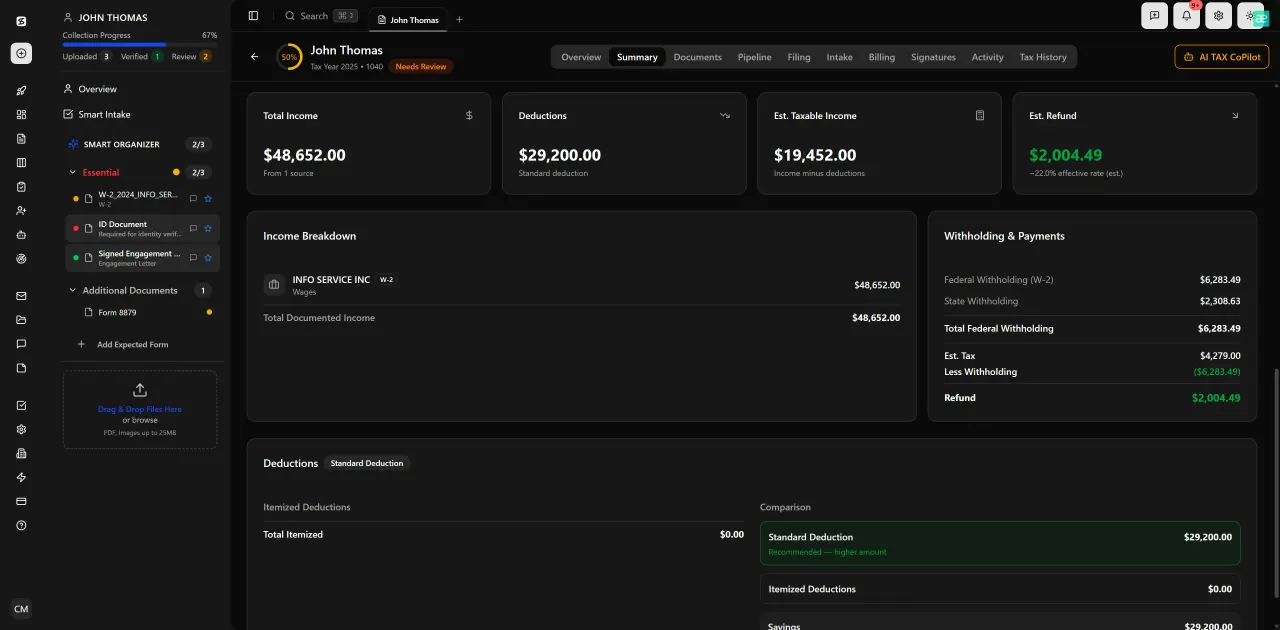
Review with AI assist — 9 agents answer questions with full client context
Who Is Affected and Which Entity Types
Tired of manual workflows slowing your firm down? See how TaxScout handles this with AI-powered automation. → Book a 15-Min Demo
The rules apply to sponsors and administrators of non-grandfathered group health plans. That phrase covers a large swath of employer-sponsored coverage. Here is how the affected population maps to the client types in a typical small or mid-size CPA firm:
S-corporations and C-corporations: Any closely held corporation that offers employer-sponsored health coverage and whose plan is not grandfathered under the ACA is directly subject to these rules. For S-corp owner-employees, the intersection with S-corp reasonable compensation advisory work makes this a natural add-on conversation.
Partnerships and LLCs taxed as partnerships: Partnerships that maintain group health coverage for partners or employees through a non-grandfathered plan fall under ERISA and the Internal Revenue Code provisions simultaneously. This is relevant to Form 1065 partnership return clients who carry fringe benefit deductions.
Nonprofits: Tax-exempt organizations are not exempt from the Transparency in Coverage rules. A 501(c)(3) or 501(c)(6) that sponsors a non-grandfathered group health plan must comply. Nonprofits subject to unrelated business taxable income rules may already have a compliance file with your firm — add this item to it.
Sole proprietors with employees: A Schedule C filer who employs even one W-2 worker and provides group health coverage through a non-grandfathered plan is in scope. Pure solo self-employed individuals purchasing individual coverage on the marketplace are separately affected on the issuer side, not the employer side.
Grandfathered plans — those that have not materially changed since March 23, 2010, and have maintained grandfathered status documentation — are explicitly excluded. If a client is unsure whether their plan is grandfathered, that determination needs to happen now, before the effective date.
Tracking regulatory deadlines across dozens of clients becoming unmanageable?
TaxScout's AI research agents monitor IRS, Treasury, and Federal Register updates in real time so you can brief clients before they call you.
What to Do This Week: Action List for CPA Firms
The following steps are sequenced for the week of publication. These are not legal opinions — advise clients to coordinate with their benefits counsel for plan-specific determinations.
1. Identify affected clients. Pull your client list and flag any entity — S-corp, C-corp, partnership, LLC, or nonprofit — that sponsors employer health coverage. Cross-reference against any Form 5500 or Schedule SB you have prepared in the last two filing cycles. Clients with active qualified plan audit engagements are a natural starting point.
2. Confirm grandfathered status. For each flagged client, request the plan's grandfathered status documentation from their HR or benefits administrator. If documentation does not exist or the plan has had material changes since 2010, treat the plan as non-grandfathered for compliance purposes.
3. Notify clients in writing this week. Send a brief advisory letter explaining the October 6, 2026 final rules and the compliance obligations they create. Keep it short: what changed, whether they are likely in scope, and what they need to discuss with their benefits attorney or TPA. For firms using a client portal, upload the advisory directly to each affected client's document folder so there is a timestamped record of notification.
4. Request machine-readable file documentation. Ask affected clients to confirm with their health insurance issuer or third-party administrator (TPA) that the required machine-readable files are being published or updated in compliance with the final rules. This is primarily the issuer's and TPA's responsibility, but the plan sponsor — your client — bears regulatory accountability under ERISA.
5. Flag the effective date in your pipeline. Add a compliance checkpoint in your firm's workflow for any client in scope. If you are using a pipeline management system, create a stage or task specifically for Transparency in Coverage sign-off before you finalize any benefit-related advisory work for these clients.
6. Document your advisory steps. Under professional liability standards, your engagement file should reflect that you identified the regulatory change, notified the client, and directed them to appropriate counsel. A brief note in the client file is sufficient — but the absence of that note is a liability gap.

Track every return from intake to filed with drag-and-drop pipeline management

Your clients see your brand — OTP login, document upload, and real-time status
Filing and Reporting Implications
The final rules do not create a new IRS form or a new tax filing. The compliance obligations are primarily operational — maintaining and publishing the correct machine-readable files and cost-sharing tools — rather than return-based. However, there are downstream tax and reporting touchpoints CPA firms should track.
Form 5500 filers: Plan sponsors that file Form 5500 for their health and welfare plans may need to update the plan's compliance representations. Work with the plan's ERISA counsel to confirm whether any schedule or attachment must reflect the new requirements in the upcoming filing cycle. The U.S. Department of Labor's ERISA resources remain the authoritative reference for Form 5500 obligations.
Internal Revenue Code Section 4980H: Large employers already subject to the ACA employer shared responsibility rules should confirm that their compliance posture under the new transparency requirements does not affect their shared responsibility calculations. The IRS employer shared responsibility overview is the relevant reference.
State conformity: Several states have adopted their own transparency-in-coverage rules that mirror or exceed the federal standards. Clients in California, New York, and Colorado in particular should verify state-level obligations separately. For a broader view of state-level tax and regulatory updates relevant to your clients, see other news resources published by our team.
For multistate employers, multistate payroll tax compliance issues and benefit plan obligations often surface together — flag these clients for a combined review. You can also reference Treasury's regulatory resources for updates on how these rules interact with the tax code.
Why This Lands in the CPA's Advisory Lane
Benefits compliance is technically the domain of ERISA counsel and TPAs, but in practice, small and mid-size business owners turn to their CPA first. They see the CPA as the hub of their compliance universe. When a rule touches the Internal Revenue Code — as this one explicitly does — it is unambiguously within the scope of a CPA's advisory responsibility to flag it.
Firms that proactively brief clients on the October 6, 2026 transparency in coverage final rules will strengthen advisory relationships and reduce the risk of a client claiming they were never informed. Firms that stay silent will find themselves in an uncomfortable conversation when a client's TPA or attorney raises the issue later.
If your firm is not yet systematically monitoring the Federal Register for regulatory changes that affect your clients, now is a good time to build that capability. TaxScout's AI research agents query live sources including the Federal Register, IRS, Treasury, and Cornell Law's LII in real time, surfacing the changes that matter to your specific client base before they become deadline surprises.
Transparency in Coverage: Entity Type Impact Summary
| Entity Type | In Scope? | Primary Obligation | CPA Action |
|---|---|---|---|
| S-Corporation | Yes, if non-grandfathered plan | Machine-readable file publication | Notify + request TPA confirmation |
| C-Corporation | Yes, if non-grandfathered plan | Machine-readable file publication | Notify + request TPA confirmation |
| Partnership / LLC | Yes, if non-grandfathered plan | ERISA + IRC dual compliance | Notify + flag on Form 5500 review |
| Nonprofit 501(c)(3/6) | Yes, if non-grandfathered plan | Machine-readable file publication | Add to benefits compliance file |
| Sole Proprietor (with employees) | Yes, if non-grandfathered plan | Plan sponsor accountability | Confirm with TPA; document advisory |
| Individual / Self-Employed (no employees) | No (issuer-side only) | None for plan sponsor | No action required |
Still managing compliance deadlines in spreadsheets and email threads?
TaxScout gives your firm a full practice management platform — AI document processing, client portal, pipeline tracking, and live regulatory research — for a flat monthly rate with no per-user fees.
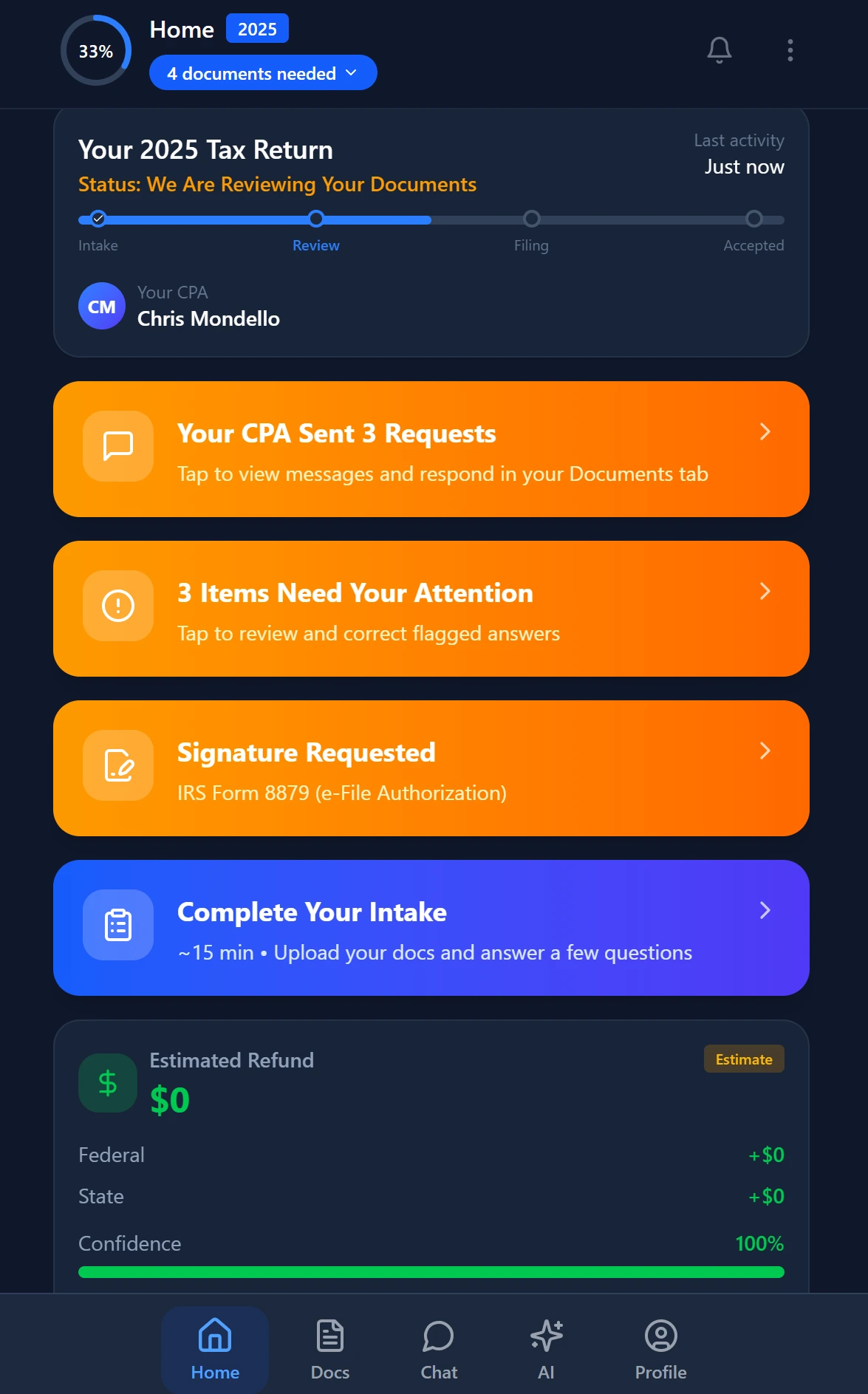
Smart intake auto-fills from uploaded documents and prior-year data
Frequently Asked Questions
Final rules published in the Federal Register on October 6, 2026 amend price-reporting requirements for non-grandfathered group health plans and health insurance issuers under the Public Health Service Act, ERISA, and the Internal Revenue Code. Plan sponsors must ensure machine-readable pricing files and cost-sharing tools meet updated standards.
Keep reading
Backdoor Roth IRA: How CPAs Execute the Strategy Without Triggering Pro-Rata Tax
Oct 12, 2026 · 1 min read
Amended FBAR Procedures: How CPAs Correct Foreign Account Errors Without Triggering Penalties
Oct 12, 2026 · 1 min read
Backdoor Roth IRA: How CPAs Execute the Strategy for High-Income Clients
Oct 12, 2026 · 1 min read
Stay up to date
Get the latest tax tech insights delivered to your inbox.