QSBS Exclusion: How CPAs Maximize Section 1202 Gains for Startup Investors
Section 1202 can shield up to $10 million — or more — of startup gains from federal tax, but the qualification rules are dense enough to trip up any generalist. This guide walks CPAs through the active business tests, origination traps, stacking strategies across spouses and trusts, state…
The QSBS exclusion under Section 1202 of the Internal Revenue Code is one of the most powerful tax benefits available to startup investors — yet it is also one of the most poorly documented at the time of sale. A client who held qualified small business stock for more than five years can exclude up to 100% of the gain, capped at $10 million or 10 times adjusted basis, from federal income tax entirely. For a founder or early-stage investor sitting on a $15 million exit, the difference between a defensible exclusion and a failed one can easily exceed $3 million in federal tax.
Most generalist tax practices treat Section 1202 as a checkbox: five-year hold, C-corp at issuance, done. In reality the statute layers qualification tests that must be satisfied at the time of original issuance, continuously during the holding period, and at the moment of sale. CPAs who skip any tier — active business tests, gross-asset thresholds, eligible trade-or-business categories, and stock acquisition mechanics — expose clients to full recapture of the excluded gain plus penalties and interest under audit. Missing even one of these layers can permanently disqualify a client from the QSBS exclusion, often discovered only after the sale has already closed.
This guide is written for CPAs who want to go beyond surface-level coverage. We walk through the complete qualification checklist, explain how to legally multiply the $10 million cap through stacking strategies, highlight the state conformity traps that blindside high-income clients in California and Pennsylvania, and outline the documentation package that survives an IRS examination. For additional tax planning resources from TaxScout, visit other blog resources covering advisory strategies across the full client lifecycle. Understanding how to properly structure and defend the QSBS exclusion can mean the difference between a client keeping millions in gains or surrendering them to federal tax.
Section 1202 Qualification Checklist Every CPA Must Run
Before claiming the QSBS exclusion, confirm each of the following requirements. A single failure at any point disqualifies the stock — there is no partial exclusion for near-misses.
The issuing entity must be a domestic C-corporation. Partnerships, LLCs taxed as partnerships, S-corporations, and foreign corporations are categorically ineligible. Many startups begin as LLCs and later convert to C-corps; stock issued before conversion does not qualify. CPAs should request the original articles of incorporation, the IRS CP-575 or SS-4 confirmation letter, and the entity's tax transcript to confirm C-corp status at issuance. Law.cornell.edu's annotated text of IRC § 1202 is a reliable primary reference for the full statutory language. CPAs should request the original articles of incorporation to confirm C-corp status at issuance, since stock issued prior to a proper conversion will fail the QSBS exclusion test entirely.
The gross asset test must be satisfied at issuance and immediately after. The corporation's aggregate gross assets — cash plus the adjusted basis of all other property — must not have exceeded $50 million immediately before or immediately after the taxpayer received the stock. This is a snapshot test, not a continuous one, but it is frequently missed on later funding rounds. If a Series B investor acquires shares after the company crossed the $50 million threshold, those shares are not QSBS even if an earlier tranche was. For firms evaluating their QSBS exclusion approach, this trade-off compounds over time.
The stock must be acquired at original issuance in exchange for money, property, or services. Secondary market purchases, transfers from another holder, and acquisitions via conversion of convertible notes issued after the gross-asset limit was breached all create origination traps. SAFEs and convertible notes convert into QSBS only if the underlying C-corp meets the gross-asset test at the date of conversion, not the date the note was signed. Each of these factors directly shapes how QSBS exclusion plays out in practice.
The active business requirement under Section 1202(e) must be met for substantially all of the holding period. At least 80% of the corporation's assets by value must be used in the active conduct of one or more qualified trades or businesses. This is the test most generalists overlook. The IRS's published guidance on Section 1202 confirms that passive asset holding, leasing, or finance activities can contaminate the 80% threshold even briefly. Understanding QSBS exclusion in this context is what separates firms that scale from those that stall.
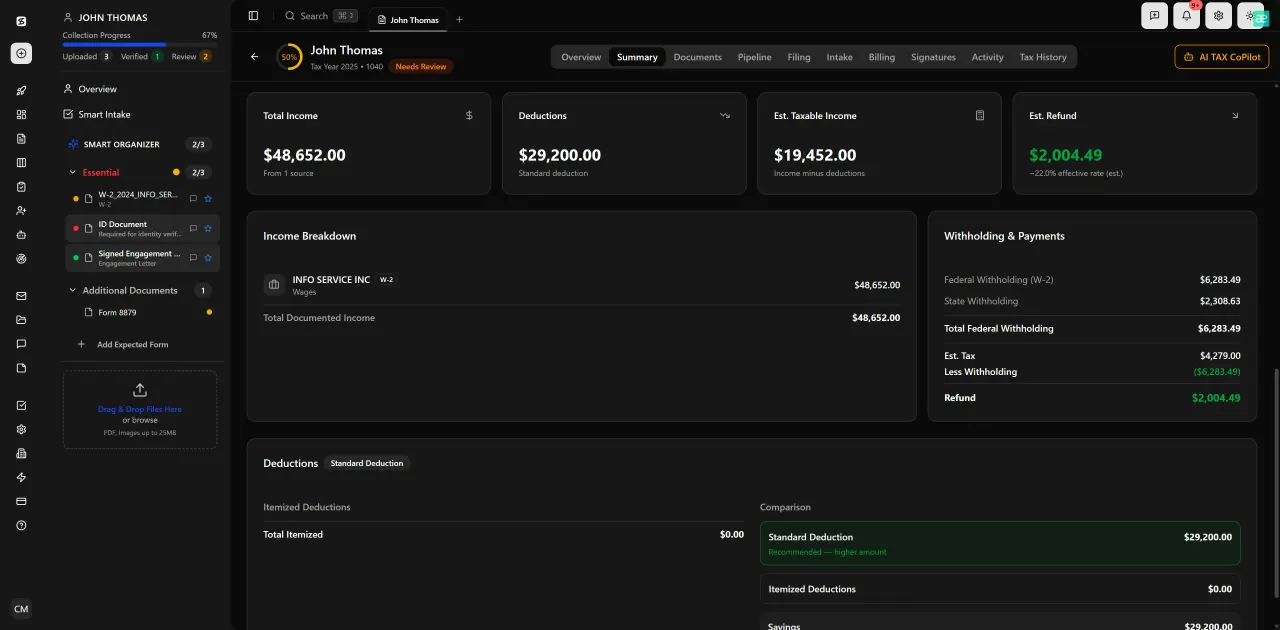
Review with AI assist — 9 agents answer questions with full client context
Active Business and Excluded Industry Tests Under Section 1202
Section 1202(e)(3) defines a qualified trade or business by exclusion. Several industries are explicitly ineligible regardless of how the company structures its operations: health, law, engineering, architecture, accounting, actuarial science, performing arts, consulting, athletics, financial services, brokerage services, and any trade or business where the principal asset is the reputation or skill of one or more of its employees. The last catch-all — reputation or skill — is intentionally broad and has swallowed many professional-services startups that believed they qualified. This is precisely where a deliberate QSBS exclusion strategy pays off.
Technology, retail, manufacturing, wholesale, and most SaaS businesses generally pass the excluded-industry screen, but CPAs should document why the company's primary revenue source clears the gate. A SaaS company that derives more than 20% of revenue from consulting contracts attached to software licenses may have a mixed-use issue. Obtain the company's audited or reviewed financials, segment disclosures, and board minutes addressing the business model for each year of the holding period. QSBS exclusion sits at the center of this decision — get it wrong and the rest unravels.
The 80% active-use test applies to asset value, not revenue. A startup that raised a large seed round and holds significant cash while ramping operations must demonstrate that the cash is being actively deployed in the qualified business. Treasury Regulation § 1.1202-2 provides that working capital maintained for current operating requirements is treated as used in the active business, but cash retained for future acquisitions or passive investment is not. Documenting board-approved working capital policies at each balance sheet date provides audit-ready support. When firms revisit their QSBS exclusion priorities, the gaps usually surface here.
For clients holding stock in portfolio companies across multiple investment vehicles, the features/ai-research-agents capability within TaxScout's platform can surface current IRS guidance, PLRs, and circuit court decisions on the active business and excluded-industry tests in real time — reducing the risk of relying on outdated secondary sources when the facts are close to the line.
Tired of tracking QSBS qualification details across scattered folders and email threads?
TaxScout's AI research agents and document management tools give CPA firms a single place to build and defend high-stakes exclusion workpapers.
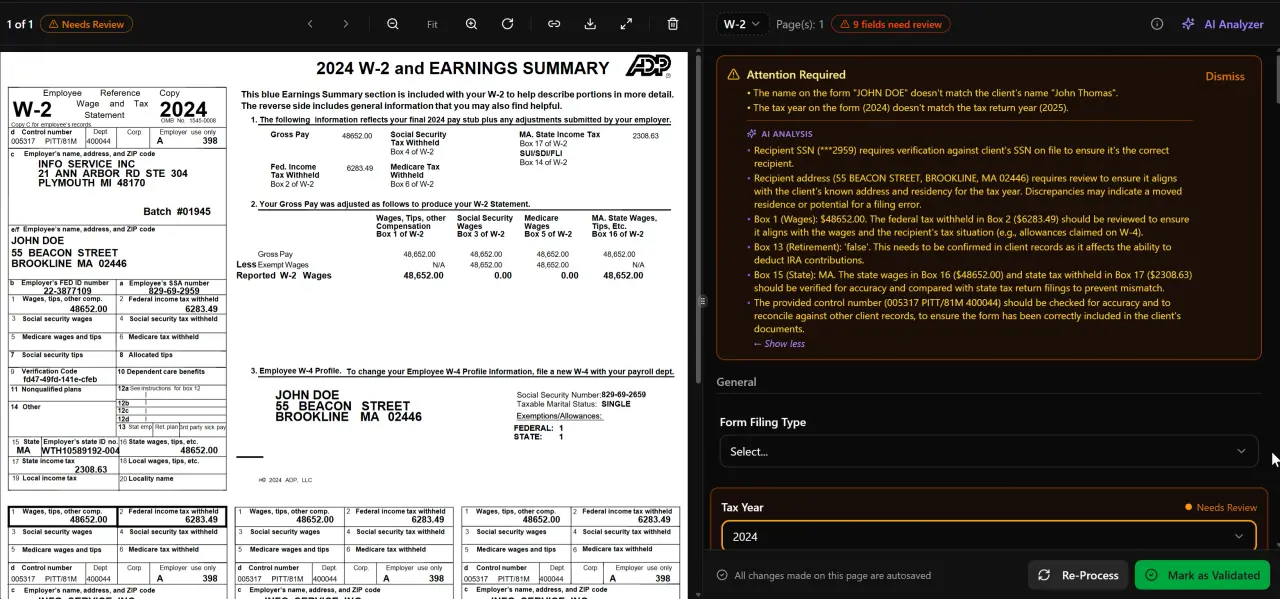
AI classifies, extracts, and validates every document automatically
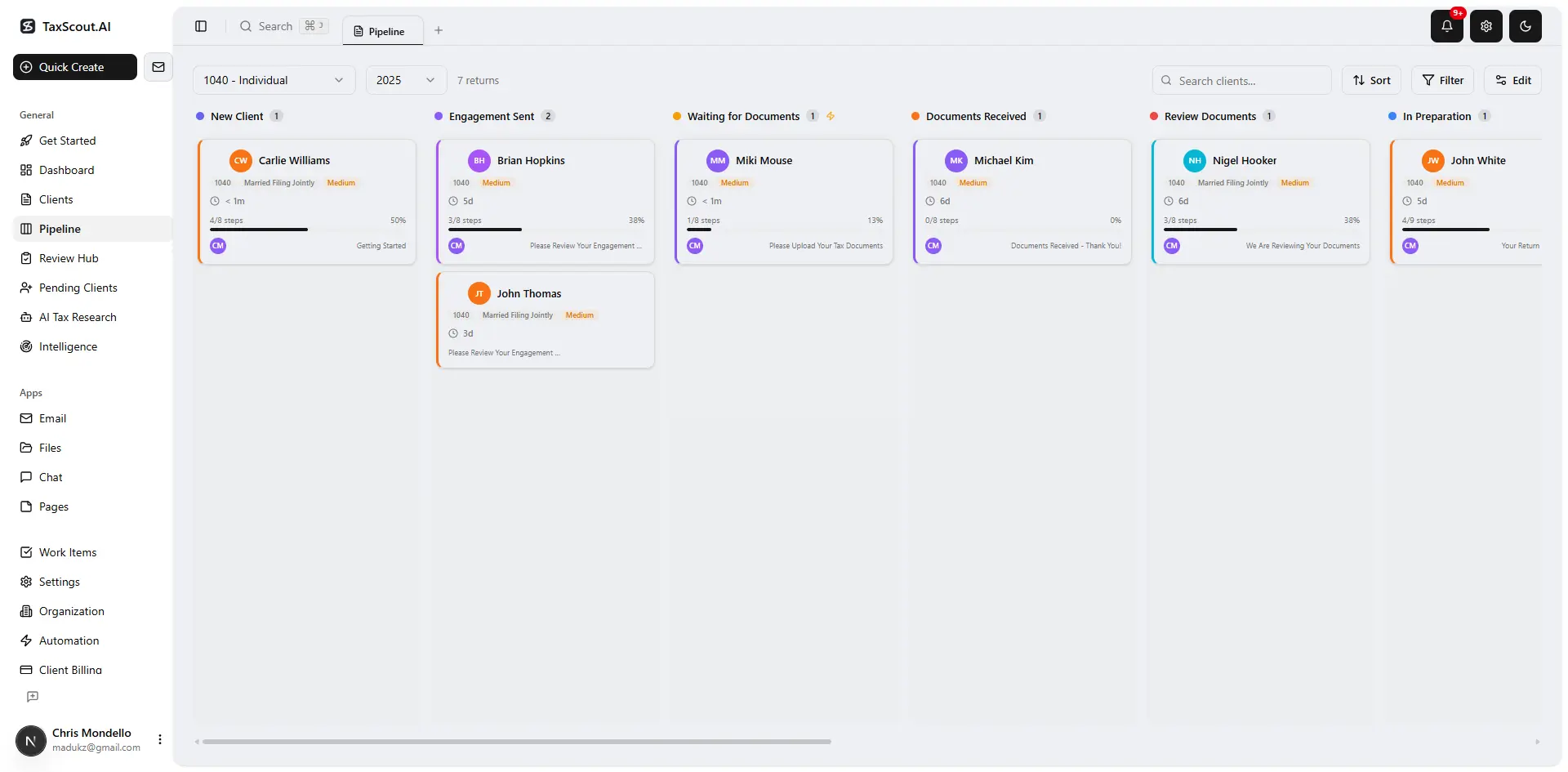
Track every return from intake to filed with drag-and-drop pipeline management
QSBS Stacking Strategy: Multiplying the 10 Million Dollar Exclusion Cap
The $10 million per-issuer exclusion cap under Section 1202(b)(1) is a per-taxpayer, per-issuer limit — not a household limit. This creates a legally sound QSBS stacking strategy when shares are properly allocated to separate taxpayers before sale. Founders and angel investors who understand this structure early can dramatically expand the total federal exclusion available at exit.
Spousal separate ownership. Each spouse on a joint return is treated as a separate taxpayer for purposes of the Section 1202 cap. If both spouses hold qualifying shares in their individual names — not community property and not jointly — each can exclude up to $10 million of gain from the same issuer. A married couple could therefore shelter up to $20 million of gain from a single C-corp, provided each spouse acquired the shares independently at original issuance and held them for the required five-year period. CPAs must verify that community property state rules do not automatically vest 50% of separately acquired shares in the non-purchasing spouse; in some states a postnuptial property agreement may be needed.
Trust structures. IRC § 1202(g) provides that a pass-through entity — including a partnership, S-corp, or a trust — can hold QSBS, and each eligible partner, shareholder, or beneficiary gets their own $10 million exclusion cap. Shares held in a grantor trust flow to the grantor. Shares held in a non-grantor trust where the trust itself is the taxpayer get a separate $10 million cap. An irrevocable non-grantor trust for each child of a founder — funded with QSBS at original issuance — can create additional exclusion headroom while also serving estate planning objectives. This intersects with annual gift exclusions and generation-skipping transfer tax planning; for clients with complex estate structures, coordinate with the estate attorney before any transfer.
Partnership and LLC layering. When QSBS is held through a partnership or multi-member LLC, each partner or member who is an eligible taxpayer receives their proportionate share of the exclusion up to their individual $10 million cap. A family limited partnership holding QSBS with five individual partners therefore has five separate caps available. Critically, the shares must have been QSBS when acquired by the partnership, not merely when distributed. Any mid-stream transfer of QSBS that does not qualify as an exempt transfer under Section 1202(h) breaks the holding period and restarts the five-year clock.
For a deeper look at how capital gain planning strategies interact, see our guide on Net Investment Income Tax: How CPAs Minimize Exposure for High-Income Clients, which addresses the 3.8% NIIT overlay that applies to gains not fully excluded under Section 1202.
State Conformity Traps: California and Pennsylvania Non-Conformity
Federal QSBS exclusion planning has a critical fault line at the state level. Several states have explicitly decoupled from Section 1202, meaning a client who owes zero federal tax on a $10 million gain may owe full state capital gains tax on the same amount. This is one of the highest-stakes state conformity issues in startup equity tax planning.
California does not conform to Section 1202. California Revenue and Taxation Code § 18152.5 effectively limits the California exclusion to 50% for stock issued before 2013 under its own QSBS regime, but the federal 100% exclusion available for stock acquired after September 27, 2010 is simply not recognized. A California resident with a $10 million QSBS gain that is 100% excluded federally still pays California's 13.3% top marginal rate on the full gain — a state tax bill of up to $1.33 million. CPAs advising California-based founders must factor this into the net benefit analysis and discuss residency change options well in advance of any anticipated liquidity event. The California Franchise Tax Board's conformity page documents the specific IRC sections California has not adopted.
Pennsylvania similarly does not recognize the Section 1202 exclusion under its personal income tax. Pennsylvania taxes net gains from the sale of property at a flat 3.07%, with no long-term capital gains preference and no IRC conformity for Section 1202. For a Pennsylvania resident, a $10 million excluded gain still produces approximately $307,000 in state income tax. Pennsylvania's Department of Revenue guidance confirms the state's standalone gain recognition rules.
Other partial or non-conforming states include Alabama, Mississippi, and New Jersey, which have various limitations. CPAs serving clients in multiple states should build a state-by-state conformity matrix as part of every QSBS engagement. The analysis should cover the client's state of residence at time of sale, any state where the issuer is domiciled, and states where the client files as a nonresident if the issuer has nexus. This is particularly important for clients with equity in venture-backed companies who may have relocated during the holding period — and for clients also navigating SALT issues covered in our SALT Deduction Cap Workarounds guide.
Residency timing relative to exit events is a recurring planning lever. A founder who moves from California to Nevada or Texas more than a year before a liquidity event may eliminate the California exposure entirely, but only if the move is genuine and the departure date precedes the accrual of the gain under California source rules. Document the move with utility bills, voter registration, vehicle registration, and employer notification to withstand a California FTB residency audit.
State Conformity to Section 1202 QSBS Exclusion — Key Jurisdictions
| State | Conforms to 100% Federal Exclusion? | Effective State Rate on QSBS Gain | Key Reference |
|---|---|---|---|
| California | No — decoupled entirely | Up to 13.3% on full gain | CA R&TC § 18152.5; FTB conformity page |
| Pennsylvania | No — standalone gain rules | 3.07% flat on full gain | PA DOR personal income tax guidance |
| New York | Partial / complex | Up to 10.9% — verify annually | NY Tax Law § 612; consult current guidance |
| Texas | N/A — no state income tax | 0% | Texas Constitution Art. 8 |
| Nevada | N/A — no state income tax | 0% | Nevada Revised Statutes |
| New Jersey | No | Up to 10.75% on full gain | NJ Division of Taxation guidance |
| Most other states | Yes — rolling or static IRC conformity | State capital gains rate on excluded amount = 0 | Verify state DOR conformity table annually |

Every client gets organized documents, status tracking, and a complete history
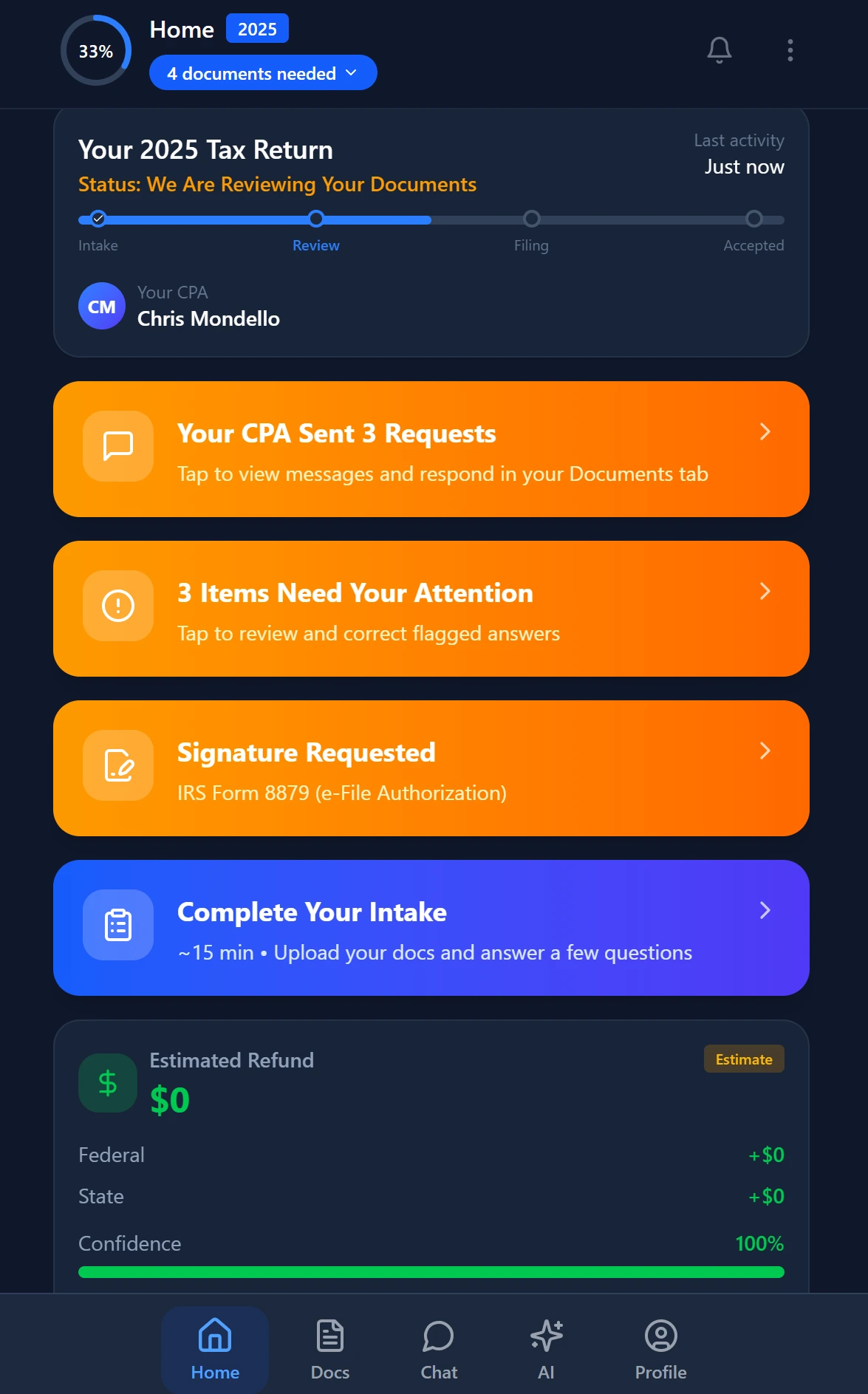
Smart intake auto-fills from uploaded documents and prior-year data
Audit Documentation Requirements for Section 1202 Exclusions
The IRS has increased scrutiny of Section 1202 exclusions as exit volumes from venture-backed companies have grown. Because the exclusion can eliminate millions of dollars of tax in a single transaction, revenue agents have specific authority to demand substantiation at every level of the qualification analysis. CPAs who cannot produce this documentation on demand face the real possibility that the entire exclusion is disallowed on procedural grounds — not substantive ones.
Original issuance documentation. This is the single most critical element. Obtain and retain: the stock purchase agreement showing acquisition directly from the corporation; the certificate of incorporation or charter confirming C-corp status at issuance; the stock certificate or electronic cap table entry dated at original issuance; and the board resolution authorizing the stock issuance. For convertible instruments, retain the original SAFE or note, the conversion notice, and the updated cap table entry reflecting conversion. If the client received shares in exchange for services, the Form 1099-NEC or W-2 reflecting income recognition is part of the package.
Gross asset certification. Request a representation letter from the corporation (or its CPA) certifying that aggregate gross assets did not exceed $50 million immediately before and immediately after each issuance date. For later rounds, a per-tranche analysis may be needed. Supporting schedules should include the balance sheet as of each issuance date and a reconciliation of gross assets to book value.
Holding period tracking. Section 1202 requires a five-year holding period from the date of acquisition. For clients who received shares over multiple tranches — common with vesting schedules — each tranche has its own acquisition date and five-year clock. Build a tranche-by-tranche holding period schedule. If any shares were forfeited and reissued, the new issuance date controls.
Active business and eligible industry records. Retain annual representations from the company confirming the 80% active-business test was met during each year of the holding period, along with relevant financial statements. For excluded-industry assessments, preserve any legal or tax opinions the company obtained. If the company changed its business model during the holding period, document the timeline carefully.
State-level documentation. For clients in non-conforming states, document the state filing position explicitly in the return workpaper. Note the state authority relied upon, the gain amount subject to state tax, and how the federal Schedule D exclusion was adjusted on the state return. This workpaper becomes the starting point for any state audit response. TaxScout's file management and PDF tools features allow CPA teams to organize multi-source documentation packages, apply Bates numbering for audit submission, and mask sensitive identifiers before production — all from within the same platform used to process the underlying return.
The IRS's Publication 550 and Chief Counsel Advice memoranda on Section 1202 are useful anchors for the workpaper narrative, as they reflect the Service's own interpretive posture.
Holding Period Continuity and Transfer Rules Under Section 1202(h)
Certain transfers of QSBS are permitted without breaking the holding period or disqualifying the exclusion. Section 1202(h) provides carryover treatment for transfers by gift, at death, and incident to divorce. A founder who gifts QSBS shares to a spousal trust or to adult children does not restart the five-year clock — the donee tacks the donor's holding period. This is central to the stacking strategy described above: the gifted shares retain QSBS status and the recipient gets their own $10 million cap, provided all underlying qualification tests were met when the original holder acquired the shares.
Transfers not covered by Section 1202(h) — including sales to third parties, contributions to entities at above-basis values, and certain corporate reorganization exchanges — can be disqualifying events. Qualified small business stock that is exchanged in a Section 368 reorganization for stock of a new corporation may or may not carry QSBS status in the successor depending on the type of reorganization and whether the successor separately qualifies. CPAs should treat any M&A event involving a QSBS holding as a potential holding-period disruption and seek written confirmation from deal counsel.
The interaction of QSBS with wash sale rules is rarely discussed but matters when a client realizes a small loss on one tranche of QSBS and repurchases shares in the same company within 30 days. Review Wash Sale Rules: How CPAs Protect Clients From Disallowed Loss Traps for the mechanics — while the wash sale rules under Section 1091 technically apply only to loss transactions, the disallowed loss basis adjustment can affect the QSBS cost basis used to compute the 10x-basis alternative cap.
Finally, note that Section 1202 gain excluded under the 100% exclusion is not subject to the alternative minimum tax for stock acquired after September 27, 2010. This was a key change from the pre-TCJA era, when 7% of the excluded QSBS gain was an AMT preference item. Confirming the acquisition date is on or after September 27, 2010 eliminates AMT as a consideration entirely for most startup investors, but CPAs should verify the date precisely for seed-round shares issued in 2009 and early 2010.
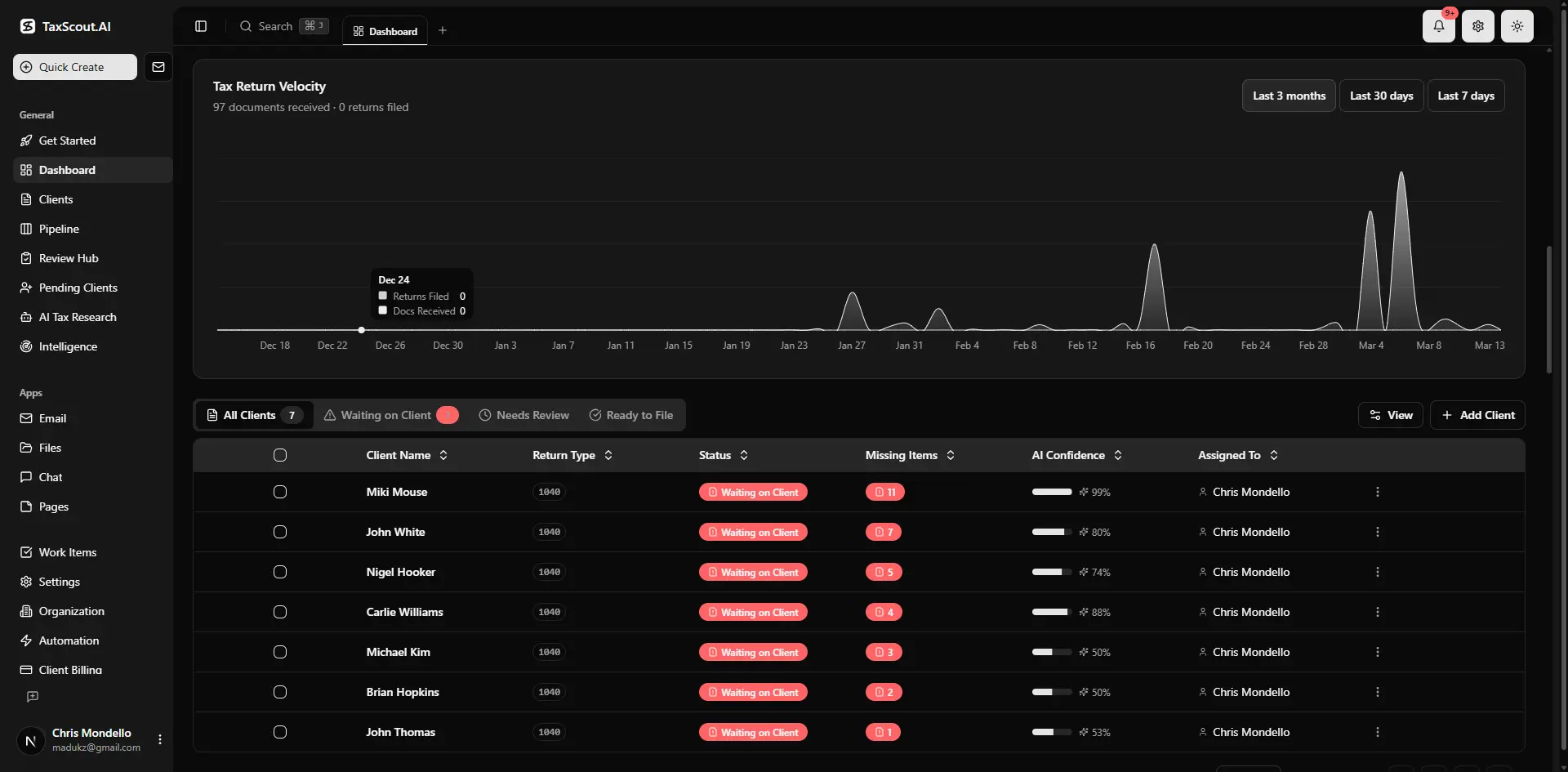
Real-time dashboard showing returns in progress, revenue, and upcoming deadlines

Click any extracted field to see its source highlighted on the original PDF
Integrating QSBS Planning Into Your CPA Firm Workflow
QSBS exclusion work is not a one-time transaction event — it is a multi-year engagement that begins at the time of stock acquisition and runs through the exit. CPAs who build systematic intake and tracking processes capture far more value for clients (and generate more recurring advisory revenue) than those who encounter the issue only at the return preparation stage.
At onboarding, use a structured intake process to flag startup equity holdings. TaxScout's AI intake engine, modeled on IRS Form 13614-C, includes gap-analysis layers that surface prior-year data and prompt advisors to ask about equity compensation, startup investments, and convertible instruments — the exact categories that generate QSBS questions. Once shares are identified, create a dedicated client-entity record with issuance dates, tranche detail, and a holding period tracker built into the engagement file.
Mid-engagement, use annual check-ins to verify that the issuer has not breached the active business test, changed its corporate form, undergone a disqualifying reorganization, or crossed into an excluded industry. These are best handled through a standardized annual representation request to the portfolio company. Store executed representations in the client's document vault using file management so they are immediately retrievable under audit.
At exit, assemble the complete documentation package before the return is filed — not after an IRS notice arrives. Use TaxScout's AI document extraction to process deal closing documents, stock purchase agreements, and cap table exports rapidly, then route extracted data through the firm's review workflow. For research questions on novel fact patterns — unusual entity structures, multi-state stacking scenarios, or AMT edge cases — the platform's AI research agents can search current IRS and Treasury guidance in real time, reducing the hours spent on manual research before you commit to a filing position.
Firms managing a growing roster of startup-investor clients may also benefit from reviewing our pricing page to see how TaxScout's flat-fee, unlimited-client model scales relative to per-seat alternatives — particularly for practices where advisory work is expanding faster than headcount.
Managing QSBS documentation across dozens of startup-investor clients shouldn't mean digging through email chains the week before an IRS notice deadline.
TaxScout gives CPA firms AI-powered document extraction, real-time tax research agents, and a secure client portal — all on one flat monthly fee with no per-user charges.
Frequently Asked Questions
The QSBS exclusion under IRC Section 1202 allows eligible taxpayers to exclude up to 100% of the gain from selling qualified small business stock held for more than five years, capped at $10 million or 10 times the adjusted basis of the stock. To qualify, the stock must be originally issued by a domestic C-corporation with gross assets not exceeding $50 million, acquired by the taxpayer directly from the corporation in exchange for money, property, or services, and held while the corporation continuously meets the active business and eligible-industry requirements.
Keep reading
Tangible Property Regulations: How CPAs Apply Capitalization vs Expensing Rules
Oct 15, 2026 · 1 min read
Section 1202 QSBS Exclusion: How CPAs Shelter Startup Gains for Founder Clients
Oct 15, 2026 · 1 min read
Backdoor Roth IRA: How CPAs Execute the Strategy Without Triggering Pro-Rata Tax
Oct 12, 2026 · 1 min read
Stay up to date
Get the latest tax tech insights delivered to your inbox.