Federal Scholarship Tax Credit: What CPA Firms Must Do Now
Treasury released temporary regulations on October 2, 2026 creating a new nonrefundable Federal Scholarship Tax Credit for qualified contributions to scholarship granting organizations starting in tax year 2027. The rules affect individual filers, S-corps, partnerships, and nonprofits in…
The Federal Scholarship Tax Credit arrived in the Federal Register on October 2, 2026 — and it immediately reshapes planning conversations for thousands of CPA firm clients. The temporary regulations establish a new nonrefundable federal tax credit for qualified contributions made to scholarship granting organizations (SGOs) in 2027 and later taxable years, funding elementary and secondary education scholarships. This is not a proposed rule: it is effective guidance that your clients can act on for the 2027 tax year.
The regulation affects a broader swath of entity types than most credit expansions: individual filers (Form 1040), S-corporation shareholders, partnership partners, and certain nonprofit contributors all have potential exposure depending on which states elect to participate. For firms with clients in multiple states, the compliance surface is asymmetric — eligibility turns on state-level election status, and that list will shift over the coming months. Understanding the full scope of the federal scholarship tax credit is essential, as it affects a broader swath of entity types than most credit expansions: individual filers (Form 1040), S-corporation shareholders, partnership partners, and certain nonprofit contributors all have potential exposure depending on which states elect to participate.
This brief cuts through the press-release noise to give you the operational impact: what changed, who among your clients is affected, and the specific actions your firm should complete this week. This brief cuts through the press-release noise to give you the operational impact of the federal scholarship tax credit: what changed, who among your clients is affected, and the specific actions your firm should complete this week.
What the Federal Register Rule Actually Says
The Federal Scholarship Tax Credit temporary regulations, published October 2, 2026 by the Department of the Treasury and IRS, implement the statutory credit framework for SGO contributions. The credit is nonrefundable, meaning it reduces federal tax liability dollar-for-dollar but does not generate a refund if it exceeds the tax owed. It applies to contributions made in taxable years beginning in 2027 and beyond.
Key structural points from the temporary regulations: States must affirmatively elect to participate; the IRS has established procedures for those elections. SGOs must meet specific qualification criteria, and the temporary rules define what counts as a 'qualified contribution.' The credit amount, carry-forward rules, and interaction with itemized deductions are all addressed — the latter being a critical planning variable for high-income 1040 clients who currently deduct charitable contributions on Schedule A. Key structural points from the temporary regulations governing the federal scholarship tax credit include the following: states must affirmatively elect to participate, the IRS has established procedures for those elections, SGOs must meet specific qualification criteria, and the temporary rules define what counts as a 'qualified contribution.'
Because these are temporary regulations (not proposed rules), they carry the force of law immediately. Under 26 CFR Part 1 temporary regulation authority, Treasury may issue binding guidance without the standard notice-and-comment period when there is a valid reason for immediate effectiveness. Expect companion proposed regulations to follow, which will open a comment window — but the operative rules for 2027 planning are the temporary ones published October 2. For firms evaluating their federal scholarship tax credit approach, this trade-off compounds over time.
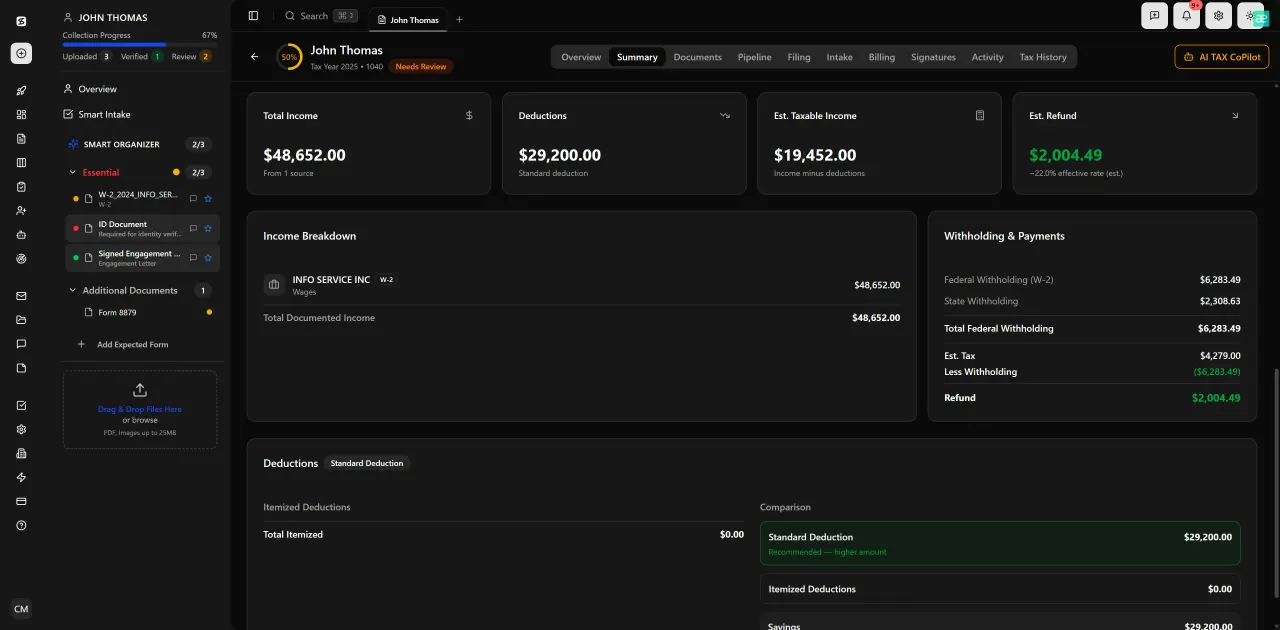
Review with AI assist — 9 agents answer questions with full client context
Which Client Segments and Filing Types Are Affected
Tired of manual workflows slowing your firm down? See how TaxScout handles this with AI-powered automation. → Book a 15-Min Demo Each of these factors directly shapes how federal scholarship tax credit plays out in practice.
Individual filers (Form 1040). Any client who makes a qualified contribution to an SGO in a participating state can claim the credit on their federal return. The interaction with the Schedule A charitable deduction requires analysis: if a client deducts the contribution and also claims the credit, a basis-reduction or disallowance rule likely applies — confirm the coordination provision in the regulation before advising. High-income clients already near the SALT cap or subject to the net investment income tax are prime candidates for a credit-versus-deduction trade-off analysis. Understanding federal scholarship tax credit in this context is what separates firms that scale from those that stall.
S-corporation shareholders. If an S-corp makes a qualified SGO contribution, the credit passes through to shareholders on Schedule K-1. This is analogous to the Section 48 investment tax credit passthrough structure. Firms that handle S-corp reasonable compensation planning for owner-employees will need to layer this credit into the annual projection model, particularly where shareholder basis is already thin. This is precisely where a deliberate federal scholarship tax credit strategy pays off.
Partnership and LLC partners. Partnerships that contribute to qualified SGOs will allocate the credit on Schedule K-1 (Form 1065). The allocation rules follow the partnership agreement, which may create planning opportunities — or disputes — in multi-member LLCs. Review Form 1065 partnership return workflows to confirm your firm's K-1 process can handle a new credit line without manual intervention. Federal scholarship tax credit sits at the center of this decision — get it wrong and the rest unravels.
Exempt organizations and nonprofits. Some nonprofit entities may operate as or contribute to SGOs directly. If a client nonprofit is seeking SGO designation, the temporary regulations specify qualification criteria that your firm should evaluate against the client's governing documents and state law. The IRS guidance on unrelated business taxable income may intersect if the nonprofit has mixed revenue streams.
Out-of-scope entity types. C-corporations are not the primary target of this credit structure, though the temporary rules may address corporate contributions — verify in the full regulatory text. Sole proprietors filing Schedule C are treated as individuals for this purpose, so the 1040 analysis applies.
Buried in temporary regulations and trying to figure out which clients this actually touches?
TaxScout's AI research agents surface the exact regulatory text and map it to your client list — so you spend 20 minutes on strategy, not 2 hours on document review.
State Election Status: The Variable That Determines Client Eligibility
The credit is only available to clients in states that have elected to participate in the program. The temporary regulations establish the procedures for state elections, but as of the October 2, 2026 publication date, the list of electing states had not been finalized. This creates an immediate research obligation for your firm: you cannot give a client a definitive answer on credit availability until you know their state's status.
Monitor the IRS newsroom and your state CPA society for election announcements. States with existing SGO programs or school choice legislation are the most likely early adopters. States that have historically resisted school choice initiatives are unlikely to elect in 2027. Build a simple tracker — even a shared spreadsheet — mapping each client's state of domicile to election status, and flag it for update when new announcements arrive.
For multi-state clients (common in partnerships and S-corps with nexus in multiple jurisdictions), the analysis layers: contributions attributed to an electing state may qualify while those in non-electing states do not. State conformity will also matter — states that do not conform to federal credit provisions could treat the contribution differently on the state return, creating a double-benefit or double-denial scenario depending on the state's own SGO credit regime.
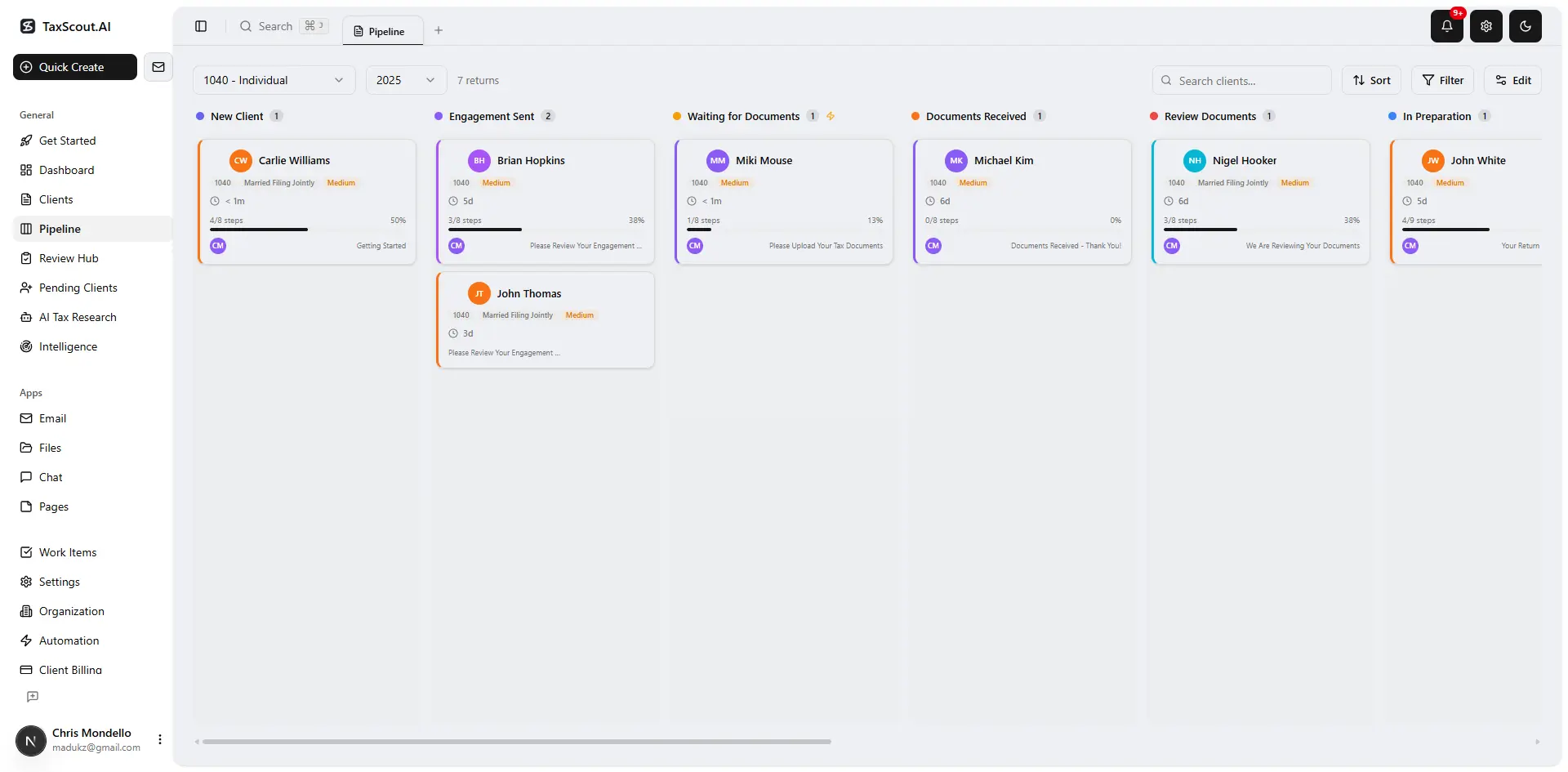
Track every return from intake to filed with drag-and-drop pipeline management
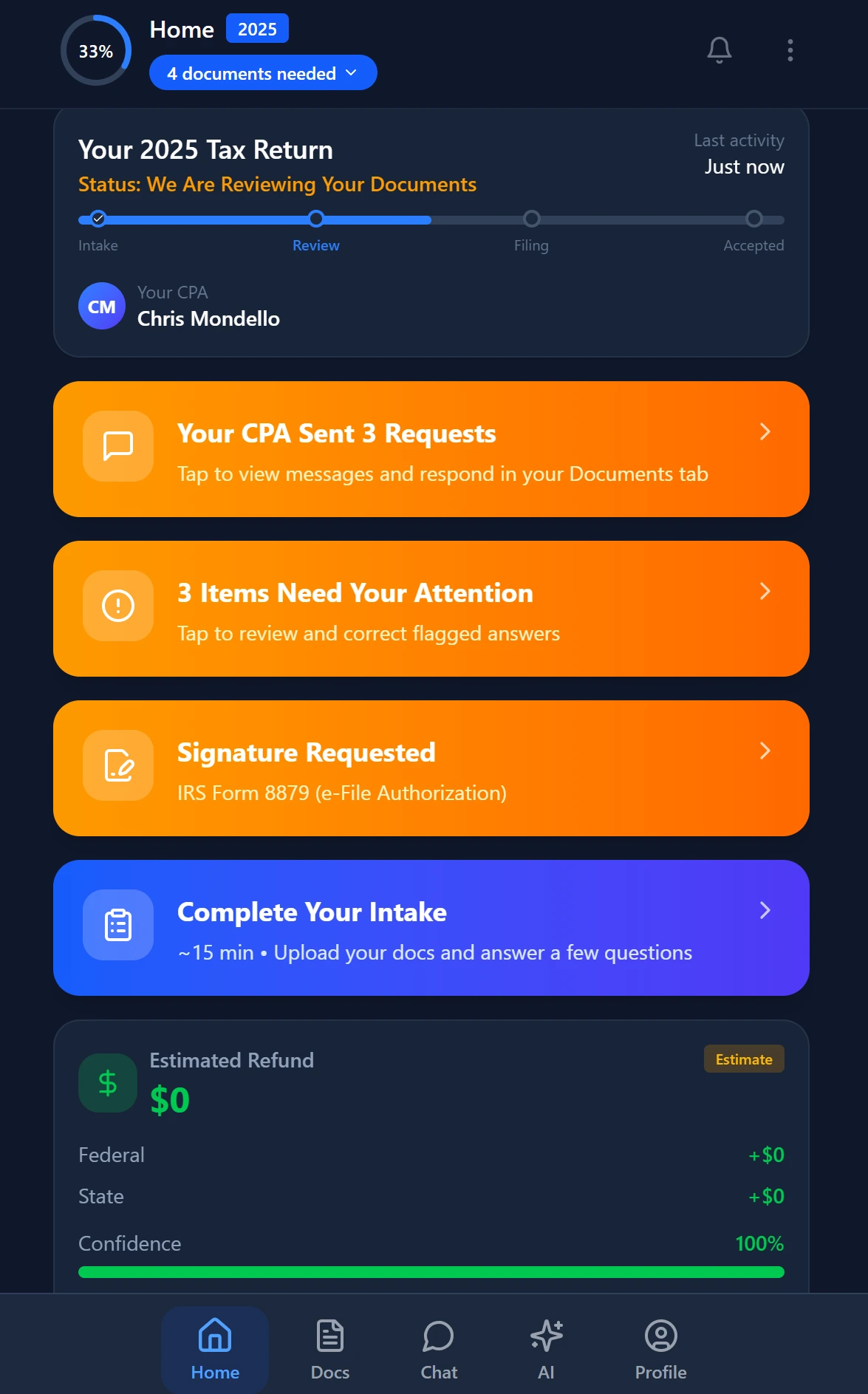
Smart intake auto-fills from uploaded documents and prior-year data
What to Do This Week: A Firm Action List
This is not a 'watch and wait' situation. The credit applies to contributions made in 2027, which means clients who want to maximize year-one benefit need to identify qualifying SGOs, confirm state election status, and budget contributions before January 1, 2027. That planning window opens now. Here is the prioritized action list for your firm this week:
1. Read the primary source. Pull the full temporary regulation text and circulate a two-paragraph summary to your team. Do not rely on secondary coverage — the coordination rules with Schedule A and the K-1 passthrough mechanics require reading the actual regulatory text, not a press summary.
2. Segment your client list. Flag clients in the following categories: (a) high-income 1040 filers with charitable giving history, (b) S-corp and partnership clients with entity-level giving programs, (c) nonprofit clients that may qualify as or contribute to SGOs, and (d) clients with K-12 children or strong school-choice values who may be motivated contributors. Your client management workflow should allow you to filter by entity type and state of domicile quickly.
3. Check your state's election status. Contact your state CPA society or check your state tax authority's website. The Journal of Accountancy and Treasury's newsroom will also publish election notices as they come in. Set a Google Alert for '[your state] scholarship granting organization election 2026.'
4. Update engagement letters and scope. If your standard engagement letter does not cover federal tax credit analysis for new credits, add a line item now. The credit is effective for 2027 returns, which you will prepare in 2028 — but the planning advice is billable in 2026 and 2027. Use your e-signatures workflow to push updated engagement letters to affected clients without disrupting your current pipeline.
5. Schedule client outreach. For your top 20 high-charitable-giving clients, queue a brief advisory note this week explaining the new credit, its conditionality on state election, and your firm's intent to analyze their specific situation in Q1 2027. Use your firm's communication hub to batch this outreach without manual email drafting.
6. Watch for companion proposed regulations. Temporary regulations are typically accompanied by proposed regulations that open a public comment period. The proposed rules may clarify ambiguous provisions — particularly the Schedule A coordination rule and the K-1 allocation methodology. Subscribe to IRS e-News for Tax Professionals to catch the companion release the day it publishes.
For a broader view of regulatory updates affecting your firm this season, see other news resources published by the TaxScout team.
How the Federal Scholarship Tax Credit Interacts with Existing Credits and Deductions
The most operationally complex aspect of this credit for 1040 clients is its interaction with the charitable contribution deduction on Schedule A. Federal tax law generally prohibits double-dipping: if a contribution generates a tax credit, the deductible amount is typically reduced by the credit value. The temporary regulations address this coordination, but your firm must confirm the exact reduction formula before running projections.
For clients subject to the alternative minimum tax or the Phase-out of itemized deductions, the credit structure may be more valuable than the deduction — a nonrefundable credit reduces tax liability dollar-for-dollar, while a deduction's value depends on the marginal rate. High-income clients in the 37% bracket may find the credit and deduction roughly equivalent, but clients in lower brackets benefit disproportionately from the credit structure.
For passthrough entities, the credit flows through to individual owners who then apply it against their personal tax. This means the S-corp or partnership does not receive a tax benefit directly — the entity's taxable income is not reduced. Owners in states with high personal income tax rates will need state-level analysis to assess the full economic benefit of an SGO contribution versus other charitable strategies. Cross-reference your 1040 review checklist workflows to ensure the new credit line is captured in your review process before 2027 filings begin.
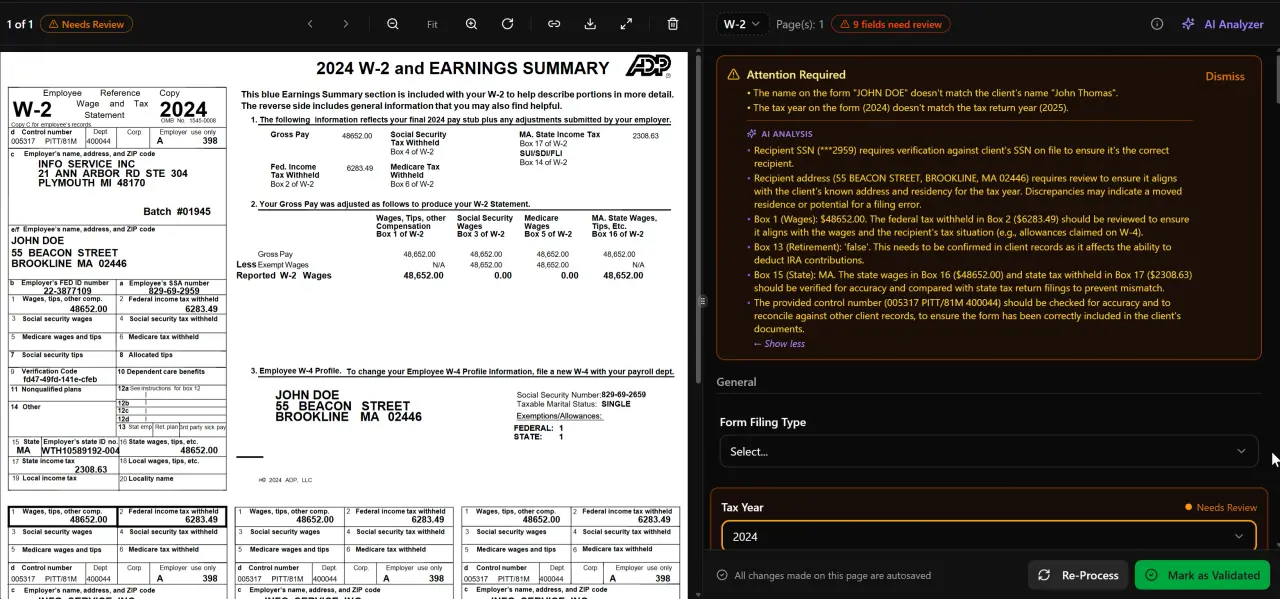
AI classifies, extracts, and validates every document automatically

Click any extracted field to see its source highlighted on the original PDF
Preparing Your Firm's Workflow for a New Credit Category
New credit categories create workflow risk: staff unfamiliar with the rules, intake processes that do not ask the right questions, and review checklists that do not include the new line item. For the Federal Scholarship Tax Credit, the risk window is narrow — contributions must be made in 2027 for the first eligible year, so your intake for 2027 returns needs to capture SGO contribution data starting in January 2028 at the latest.
Update your tax intake questionnaire now to include a question about SGO contributions. If your firm uses TaxScout's smart intake engine, this is a configuration change, not a rebuild — add the question to your custom intake flow so it appears for all 1040, S-corp, and partnership clients in participating states. Pair it with a document request for SGO acknowledgment letters, which will be required to substantiate the credit.
For document handling, SGO contribution acknowledgment letters will need to be captured, extracted, and cross-referenced against the credit claimed. Your AI document extraction workflow should be configured to recognize and classify these letters when they arrive. Flag this as a configuration task for your team before the 2027 tax year opens.
Finally, consider whether this credit creates an advisory services opportunity. Clients who are already high charitable givers — and who are in states that elect to participate — have a concrete financial incentive to redirect contributions toward qualifying SGOs. That conversation is a value-add advisory touchpoint, not a compliance task, and it belongs in your annual planning meeting agenda for 2027.
New regulations, new credit categories, and still managing client workflows across spreadsheets and email threads?
TaxScout gives CPA firms a single platform to track every client's compliance exposure, automate intake, and deliver advisory-quality research — starting at $49/month with no per-user fees.
Frequently Asked Questions
The temporary regulations published October 2, 2026 make the credit available for qualified contributions made in taxable years beginning in 2027 and later. Clients who want to claim the credit for tax year 2027 need to make qualifying contributions to approved scholarship granting organizations during calendar year 2027.
Keep reading
Multistate Payroll Tax Compliance: How CPAs Keep Distributed Clients Out of Trouble
Oct 4, 2026 · 1 min read
Multistate Payroll Tax Compliance: How CPAs Handle Remote Employees for Business Clients
Oct 4, 2026 · 1 min read
Hobby Loss Rules: How CPAs Protect Clients From IRS Section 183 Reclassification
Oct 4, 2026 · 1 min read
Stay up to date
Get the latest tax tech insights delivered to your inbox.