Backup Withholding on Third Party Network Transactions: What CPA Firms Must Do Now
The IRS published final regulations on August 10, 2026 updating backup withholding rules for third party settlement organizations. The rules reflect statutory changes that shift withholding obligations and create new compliance touchpoints for CPA firms serving gig workers, S-corps, partnerships…
On August 10, 2026, the IRS finalized regulations governing backup withholding on third party network transactions, published at Backup Withholding on Third Party Network Transactions, Federal Register 2026-16269. The rules are effective immediately and codify statutory changes that alter how third party settlement organizations (TPSOs) — think PayPal, Venmo Business, Etsy Payments, Airbnb, and similar platforms — must handle backup withholding on reportable payments.
For CPA firms, this is not a theoretical update. Clients who sell goods or services through digital payment networks, run short-term rentals, or operate gig-economy side businesses are directly in scope. The final rule changes the trigger conditions for backup withholding, updates the compliance obligations on TPSOs that transmit payer information to the IRS, and creates downstream consequences if TIN validation fails — consequences that land on your client's return. Understanding the updated rules around backup withholding on third party network transactions is essential for any CPA firm advising clients who operate in the digital economy.
This brief explains what changed, which client segments and entity types are affected, and gives you a concrete action list you can start on today. For a broader view of related 1099 reporting threshold changes, see our earlier coverage at IRS Proposes Higher 1099 Reporting Thresholds. This brief explains what changed, which client segments and entity types are affected by backup withholding on third party network transactions, and gives you a concrete action list you can start on today.
What the Final Regulations Actually Changed
The final regulations amend the existing backup withholding framework under IRC §3406 to reflect recent statutory amendments that specifically address TPSOs and their role as payors in third party network transactions. Prior rules had ambiguities around when a TPSO was obligated to apply the 24% backup withholding rate and how the TIN-matching failure cascade interacted with the TPSO's reporting on Form 1099-K. The final regulations amend the existing backup withholding framework under IRC §3406 to reflect recent statutory amendments, bringing much-needed clarity to the rules governing backup withholding on third party network transactions and the specific obligations of TPSOs as payors.
Under the finalized rules, TPSOs are now explicitly required to apply backup withholding when: (1) the payee fails to furnish a correct taxpayer identification number (TIN), (2) the IRS notifies the TPSO of a TIN/name mismatch via a 'B-notice,' or (3) the payee is identified as subject to backup withholding due to prior underreporting. The regulations also clarify that the TPSO cannot defer or batch backup withholding obligations — each settlement payment that crosses the withholding trigger must be withheld at the time of settlement. For firms evaluating their backup withholding on third party network transactions approach, this trade-off compounds over time.
Critically, the final rule aligns the backup withholding trigger with the new lower 1099-K reporting threshold that has been phased in under prior legislation. This means a significantly larger population of clients — not just high-volume sellers — will now appear on TPSO withholding records. Firms should review IRS guidance on information reporting thresholds at irs.gov alongside the August 2026 final rule. Each of these factors directly shapes how backup withholding on third party network transactions plays out in practice.
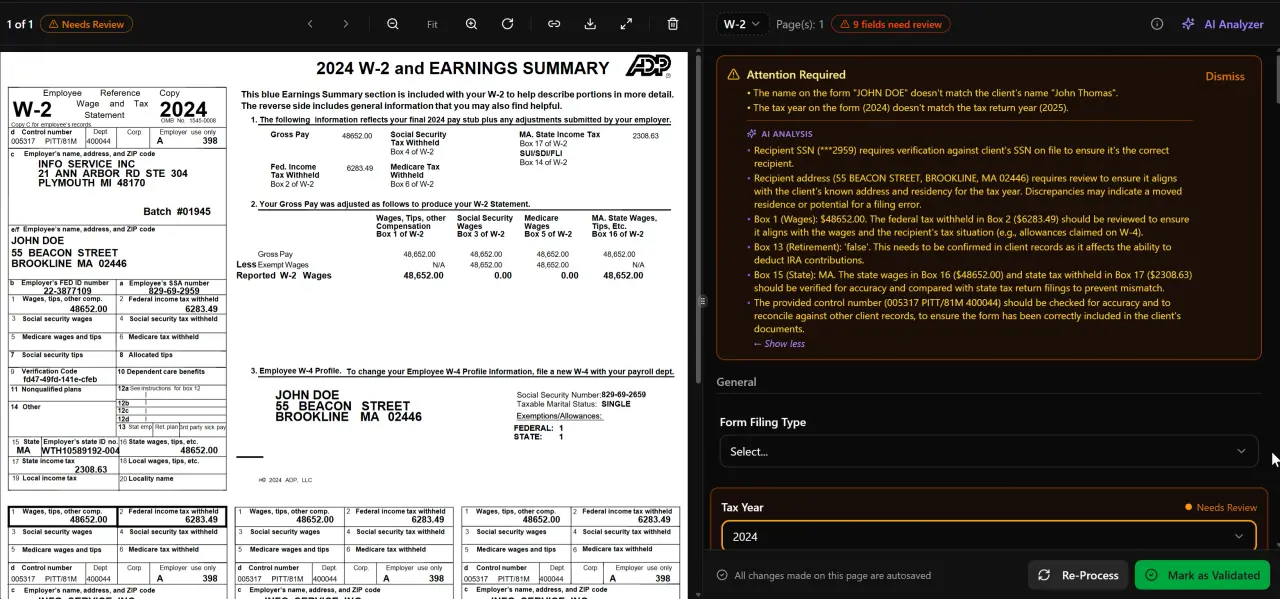
AI classifies, extracts, and validates every document automatically
Which Client Segments and Entity Types Are Affected
Tired of manual workflows slowing your firm down? See how TaxScout handles this with AI-powered automation. → Book a 15-Min Demo Understanding backup withholding on third party network transactions in this context is what separates firms that scale from those that stall.
The practical impact is broadest for sole proprietors and individual filers (Form 1040, Schedule C) who use digital payment platforms to collect income. If a client's TIN on file with a TPSO does not match IRS records, the TPSO will now withhold 24% from every subsequent payment until a corrected TIN is provided and validated. That withheld amount shows up as a credit on the client's Form 1040 — but only if it is properly reported and reconciled.
S-corporations and partnerships that process customer payments through digital networks face the same TIN-matching exposure. An S-corp that collects client payments via a marketplace or TPSO-operated processor must ensure its EIN on file with each platform matches the IRS master file exactly — including punctuation and name format. A mismatch triggers a B-notice, and the TPSO begins withholding immediately. Because S-corp income passes through to shareholders, a withholding discrepancy left unresolved can complicate both the 1120-S and underlying Schedule K-1 filings.
Nonprofits that collect donations or program fees through digital payment processors are not automatically exempt. If a nonprofit's Form W-9 on file with a TPSO is stale or the EIN was recently updated (after a merger or reorganization), it becomes subject to backup withholding until the TPSO receives a corrected W-9. Firms managing nonprofit clients — particularly those preparing Form 990 — should flag this as a review item. See our nonprofit audit preparation guide for context on how payment reconciliation issues surface during compliance reviews.
Gig workers, freelancers, and rental property owners who file Schedule E or Schedule C are the highest-frequency affected group. These clients often signed up for payment platforms years ago with personal information that may no longer match IRS records (name changes, address updates, or legacy EIN structures). For firms that serve multi-state clients, the backup withholding interaction with state-level withholding rules adds another layer — see state tax nexus compliance for related considerations.
Buried in client portal messages about B-notices and withheld payments?
TaxScout's AI research agents surface IRS regulatory updates, flag client TIN issues, and keep your whole team in sync — without the tab-switching.
Backup Withholding on Third Party Network Transactions: Action List for This Week
The following steps are prioritized for immediate execution. Each one maps to a concrete risk your firm can mitigate before the next TPSO payment cycle hits a client's account.
Step 1: Audit W-9s on file with every major TPSO. Contact clients who receive payments through digital platforms and confirm the name and EIN or SSN on their TPSO account exactly matches IRS records. IRS TIN matching is available free through the e-Services portal — use it before a B-notice forces the issue.
Step 2: Pull all pending B-notices. If a client has already received a first B-notice (CP2100 or CP2100A), the 15-business-day response window under Treas. Reg. §31.3406(d)-5 is running. Collect corrected W-9s, resubmit to the TPSO, and document the remediation.
Step 3: Update intake questionnaires for affected client types. Your onboarding process should now ask every Schedule C, S-corp, partnership, and nonprofit client whether they accept payments through any TPSO-operated network. TaxScout's smart intake engine can be updated to include this question across all new and returning client intakes.
Step 4: Reconcile withheld amounts against 1099-K data before filing. Backup withholding appears on Form 1099-K, Box 4. Ensure your tax software picks it up as a federal income tax payment credit. If you are using an AI extraction tool, verify it is reading Box 4 reliably — TaxScout's AI document extraction covers the 1099 series including 1099-K with confidence scoring and cross-document validation.
Step 5: Notify at-risk clients now. Send a brief client advisory — this week — to every individual and business client who uses PayPal, Venmo Business, Stripe, Square, Airbnb, Etsy, or similar platforms. Keep it short: explain the new rules, ask them to confirm their TIN, and direct them to upload a copy of their most recent TPSO account profile to your client portal. You can track these responses through your pipeline management board without losing visibility.
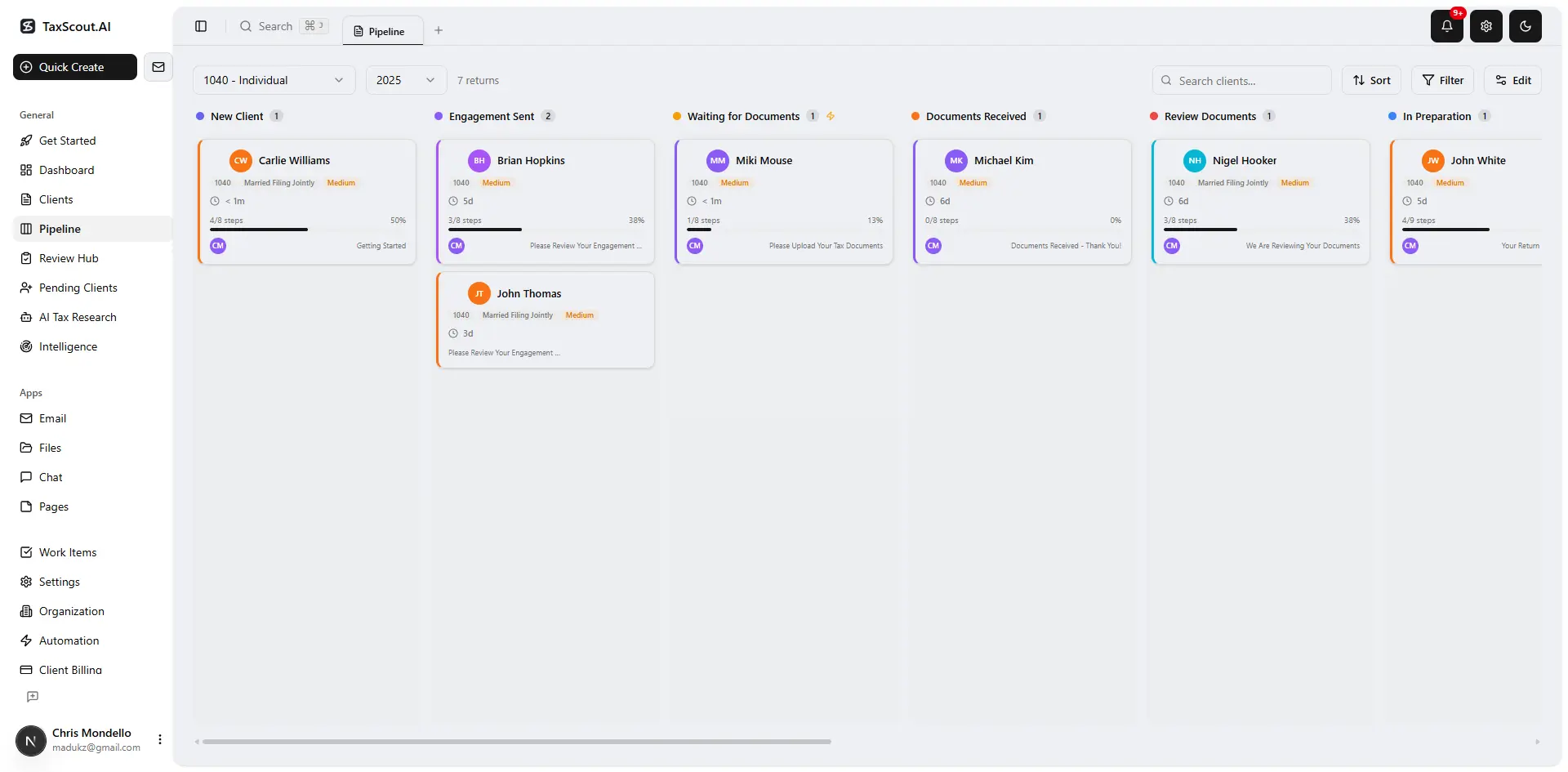
Track every return from intake to filed with drag-and-drop pipeline management

Your clients see your brand — OTP login, document upload, and real-time status
How This Intersects With Form 1099-K Reporting Rules
The August 2026 final rule does not exist in isolation. It builds on the phased reduction of the 1099-K reporting threshold that has been rolling out since the American Rescue Plan Act changes took effect. Under the current threshold trajectory, TPSOs must issue a 1099-K to any payee with more than $600 in annual aggregate payments — a threshold far below the prior $20,000/200-transaction floor.
The intersection matters for CPA firms because the backup withholding rules now apply to a much larger population of 1099-K filers. Historically, only high-volume sellers triggered TPSO compliance scrutiny. Now, a client who earns $800 selling handmade goods on Etsy is within scope. If that client's TIN is mismatched, the TPSO withholds 24% of every payment going forward until the issue is resolved.
For background on how 1099-NEC and 1099-MISC interact with gig and contractor income filing, see Understanding Form 1099-NEC vs 1099-MISC. For the broader regulatory context on information reporting, the Treasury's published guidance on tax information reporting provides additional statutory background.
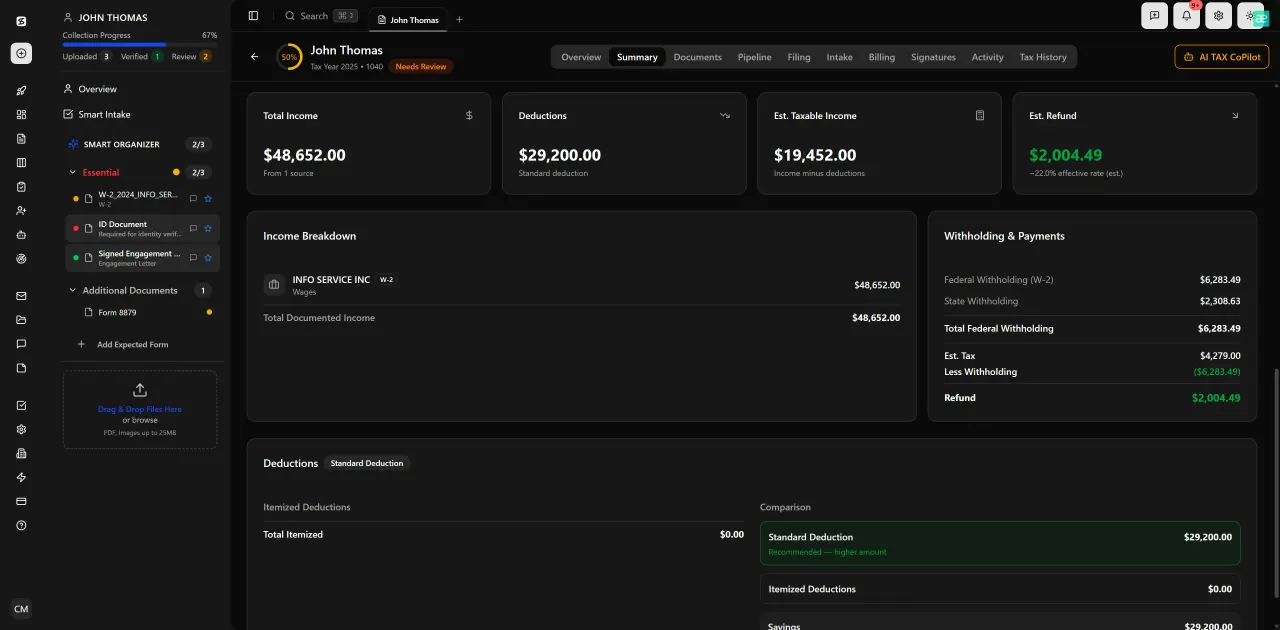
Review with AI assist — 9 agents answer questions with full client context
Primary Source and Where to Read the Final Rule
The primary source is the Federal Register final rule: Backup Withholding on Third Party Network Transactions, 91 FR 2026-16269 (Aug. 10, 2026). Read the full regulatory text before advising clients on specific withholding positions — this brief summarizes operational impact, not legal interpretation.
Additional statutory context for IRC §3406 is available at 26 U.S.C. § 3406 via Cornell Law School's Legal Information Institute. The IRS has also published updated instructions for Form 945, Annual Return of Withheld Federal Income Tax, which is where backup withholding amounts remitted by payors are reported.
Stay current with regulatory changes affecting your clients by following other news resources on our platform, where we track Federal Register announcements, IRS notices, and Treasury guidance with operational summaries written for CPA firm owners.
Want to track regulatory changes like this one without spending an hour reading the Federal Register?
TaxScout's AI research agents monitor IRS, Treasury, and Cornell sources in real time — so your firm stays ahead of every rule change that affects your clients.
Ready to see the difference? TaxScout gives your firm AI extraction, 5-layer validation, and complete practice management — on flat firm pricing with unlimited team members. → Book a 15-Min Demo — See It Live
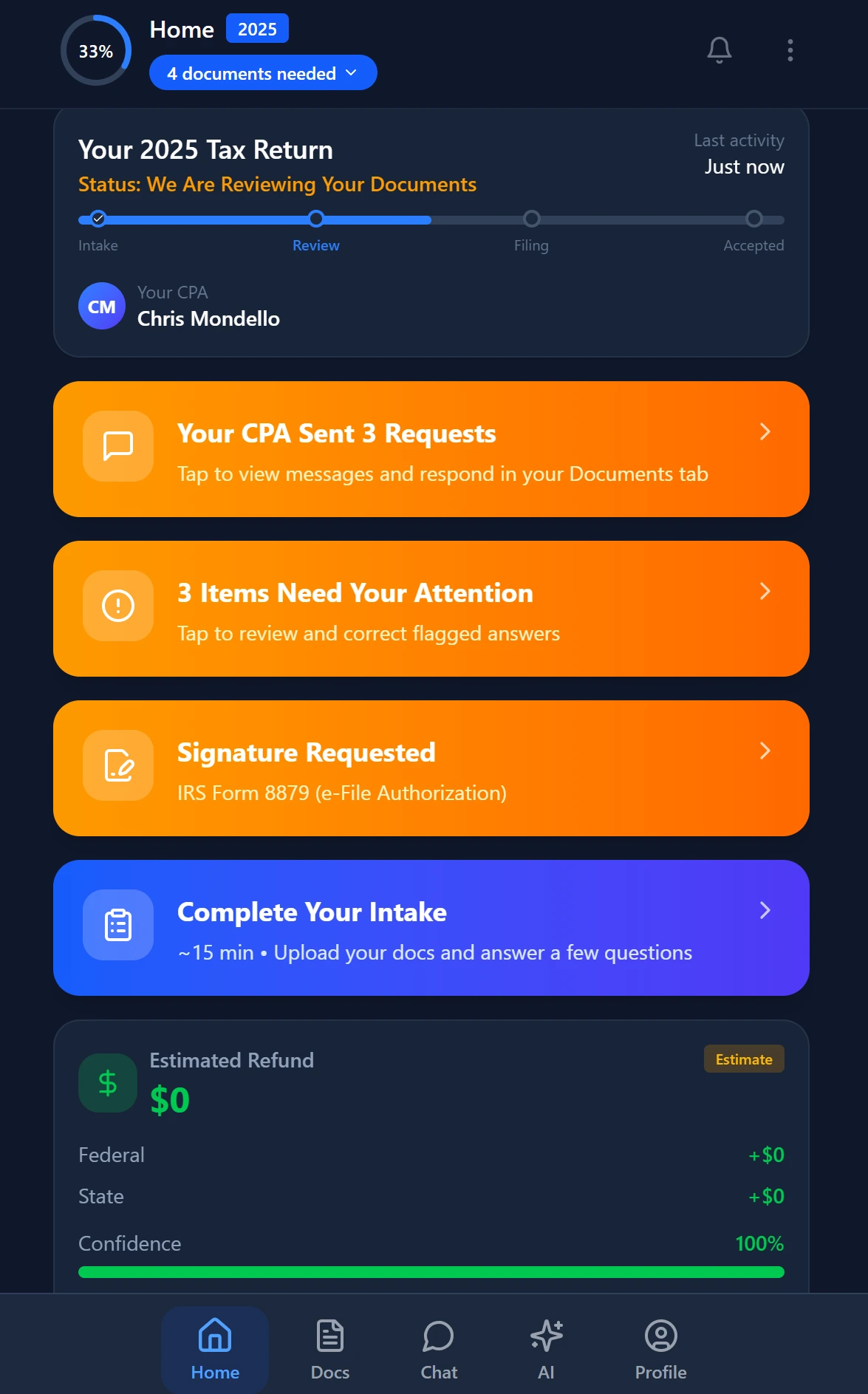
Smart intake auto-fills from uploaded documents and prior-year data
Stay up to date
Get the latest tax tech insights delivered to your inbox.