Information Reporting and Transfer for Valuable Consideration Rules: What CPA Firms Must Do Now
The IRS published final regulations on July 9, 2026 that extend information reporting and transfer for valuable consideration rules to Section 1035 exchanges of life insurance contracts. Small and mid-size CPA firms with individual and business clients holding life insurance policies need to act…
On July 9, 2026, the IRS and Treasury published final regulations that extend the information reporting and transfer for valuable consideration rules — rules originally created for reportable policy sales — to Section 1035 exchanges of life insurance contracts and certain other life insurance acquisitions. The full text is published at Information Reporting and Transfer for Valuable Consideration Rules for Section 1035 Exchanges of Life Insurance and Certain Other Life Insurance Contract Transactions in the Federal Register.
This is not a proposal — these are final regulations with immediate guidance implications. For most CPA firms, the practical question is short and urgent: do any of your individual, trust, S-corp, or partnership clients hold life insurance contracts that were exchanged, transferred, or acquired in a transaction that could now trigger a reporting obligation? The answer determines what your firm must do before the next filing cycle. Understanding information reporting and transfer for valuable consideration rules is now a core compliance responsibility for any firm advising clients with life insurance holdings.
Below is a plain-English breakdown of what changed, which client segments are affected, and a concrete action checklist you can hand to your staff today. The information reporting and transfer for valuable consideration requirements touch multiple client types, so your team needs a clear framework before diving into the details.
What the Final Regulations Actually Changed
Prior to these regulations, the transfer for valuable consideration rules under IRC Section 101(a)(2) limited the income-exclusion on life insurance death benefits when a policy was sold. The Tax Cuts and Jobs Act of 2017 added a separate layer: reportable policy sale information reporting requirements, which applied when a policy was acquired as part of a structured settlement or secondary market transaction. The final regulations significantly expanded the scope of information reporting and transfer for valuable consideration obligations beyond what many practitioners anticipated under prior law.
These final regulations now clarify and extend that framework in two key directions. First, they apply the transfer for valuable consideration analysis — and its associated information reporting — to Section 1035 exchanges where a taxpayer swaps one life insurance contract for another. Second, they address certain acquisitions of interests in life insurance contracts that fall outside the traditional 'sale' framework but could still affect the excludability of death benefits. For firms evaluating their information reporting and transfer for valuable consideration approach, this trade-off compounds over time.
The practical effect: a Section 1035 exchange that previously seemed to be a clean, nonrecognition transaction may now trigger an information reporting obligation if the exchange involves a transfer of a policy interest for valuable consideration. The regulations provide a nonrecognition exception, but it comes with conditions — and those conditions must be documented. Each of these factors directly shapes how information reporting and transfer for valuable consideration plays out in practice.
For the IRS guidance background on life insurance and modified endowment contracts, the relevant exclusion under Section 101 has long been a planning tool for estate and business succession clients. These regulations close a perceived gap that allowed some structured exchanges to avoid both gain recognition and reporting obligations simultaneously. Understanding information reporting and transfer for valuable consideration in this context is what separates firms that scale from those that stall.
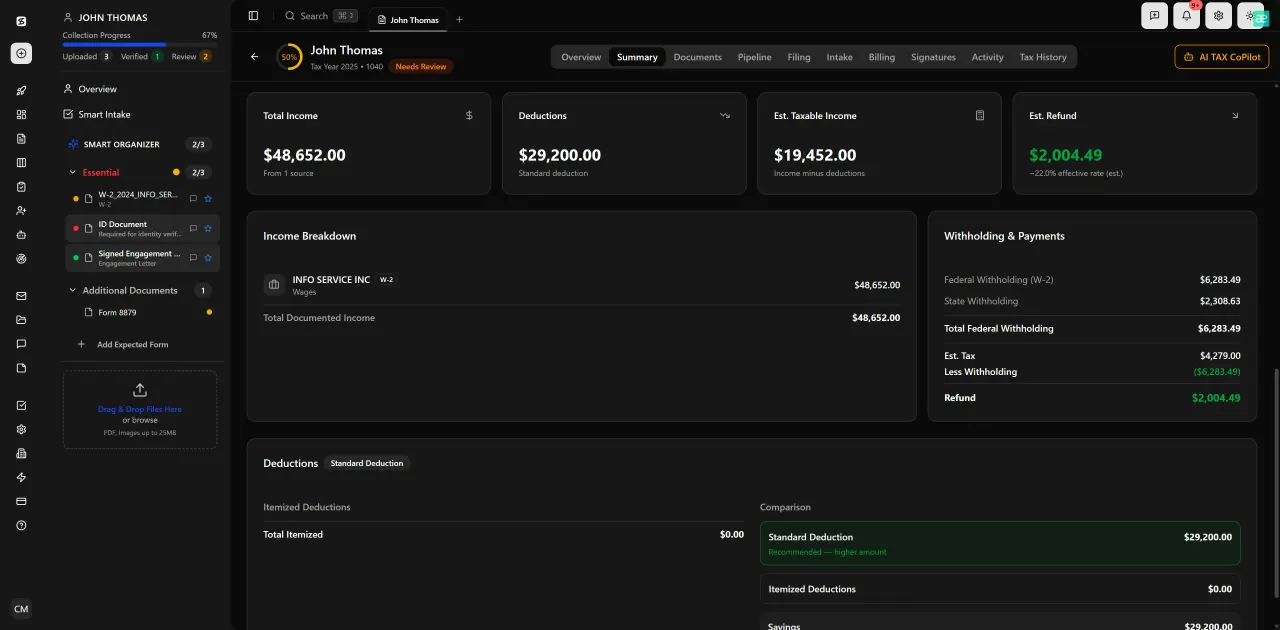
Review with AI assist — 9 agents answer questions with full client context
Spending hours manually scanning new IRS regulations to flag affected client files? This is precisely where a deliberate information reporting and transfer for valuable consideration strategy pays off.
TaxScout's AI Research Agents monitor IRS, Treasury, and Federal Register updates in real time — so your team gets actionable alerts, not more PDFs to read. Information reporting and transfer for valuable consideration sits at the center of this decision — get it wrong and the rest unravels.
→ See AI Research Agents in Action
Which Client Segments Are Affected
Not every client with a life insurance policy is implicated. The regulations are targeted, but the affected population is broader than it first appears. Here is a breakdown by entity type: When firms revisit their information reporting and transfer for valuable consideration priorities, the gaps usually surface here.
Individual filers (Form 1040): High-net-worth clients who have engaged in policy swaps, split-dollar arrangements, or business succession planning involving life insurance are the primary population. If any client exchanged a whole life or variable universal life policy in 2025 or 2026 as part of an estate plan or business restructuring, your firm needs to determine whether valuable consideration passed hands.
S-corporations and partnerships (Forms 1120-S and 1065): Key-person life insurance held at the entity level is common in closely held businesses. When ownership interests change — in a buyout, restructuring, or partner retirement — and the entity holds or transfers a life insurance contract, the new regulations may require the entity to file information returns. Review any pass-through entity client that changed ownership structure in the past 18 months.
Trusts (Form 1041): Irrevocable life insurance trusts (ILITs) and grantor trusts that hold policies and have experienced trustee changes, beneficiary changes, or policy exchanges are squarely in scope. Trustees may now have information reporting obligations that did not previously exist.
Nonprofits (Form 990): Charitable remainder trusts and nonprofits that accept gifts of life insurance policies should review whether any donation or transfer in 2025 or 2026 involved valuable consideration that would now require reporting under these regulations.
The Treasury Department's regulatory agenda has signaled continued focus on life insurance as a wealth transfer vehicle, so this is unlikely to be the last word on the subject.
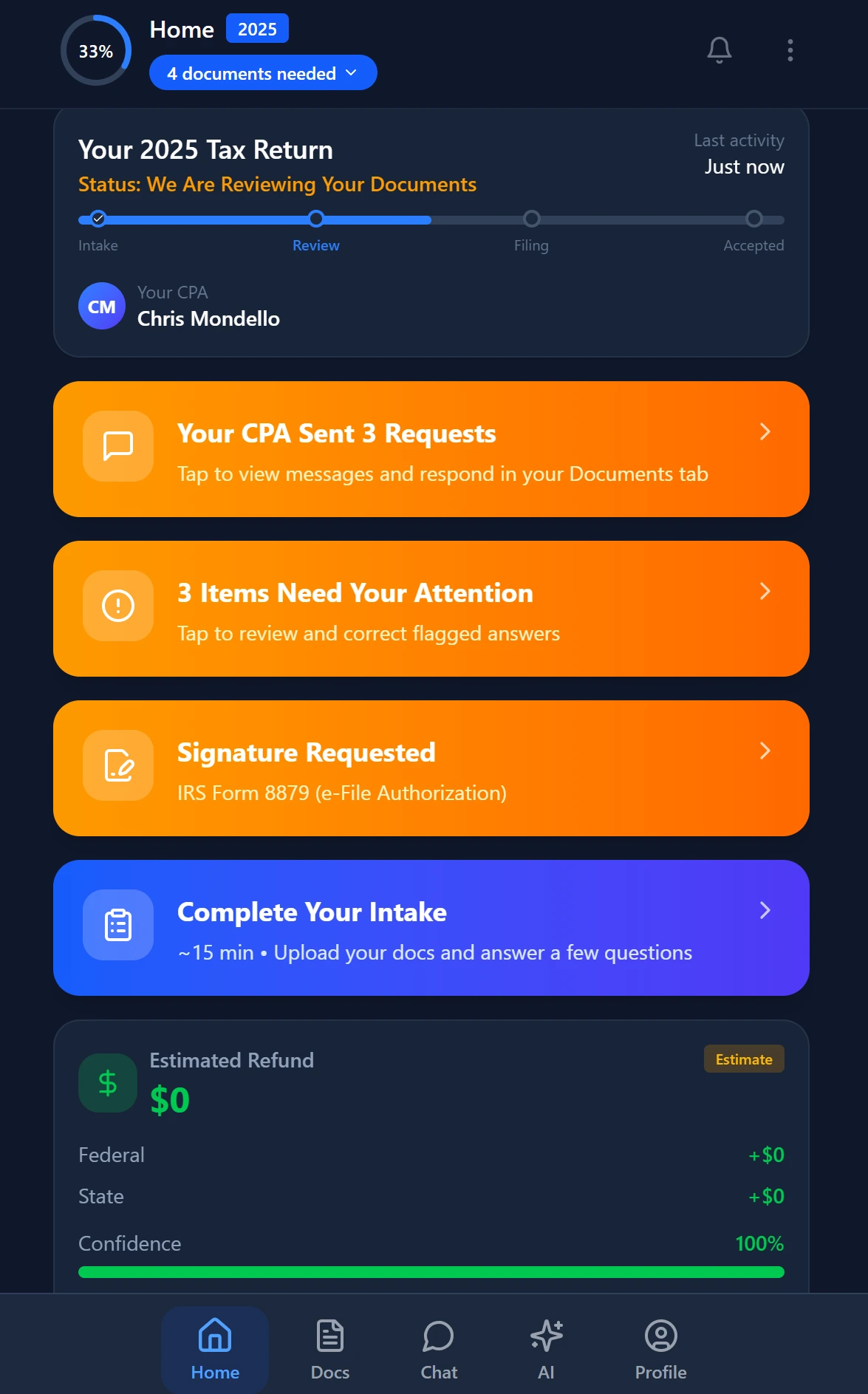
Smart intake auto-fills from uploaded documents and prior-year data
Information Reporting Obligations Under the Final Rules
The core reporting mechanism relies on existing 1099 infrastructure. Specifically, the regulations tie into the Form 1099-LS (reportable policy sale) and Form 1099-SB (seller's investment in life insurance contract) reporting framework. The final rules clarify when these forms must be filed in the Section 1035 exchange context.
When an exchange qualifies for nonrecognition under Section 1035 but valuable consideration is also present — for example, the assumption of a policy loan by the acquiring party — the transaction may now be treated as a partial reportable policy sale for information reporting purposes. The regulations provide that the nonrecognition treatment can still apply, but only if the reporting requirements are satisfied.
Deadlines: information returns generally follow the standard Form 1099 filing calendar. For transactions occurring in calendar year 2026, returns are due to recipients by January 31, 2027, and to the IRS by February 28, 2027 (paper) or March 31, 2027 (electronic). For prior-year transactions where the regulations apply retroactively under the transition rules, consult the regulation text directly — the Federal Register publication includes transition guidance.
For a broader look at how 1099 reporting thresholds and rules have been evolving this year, see our coverage of IRS proposed changes to 1099 reporting thresholds.
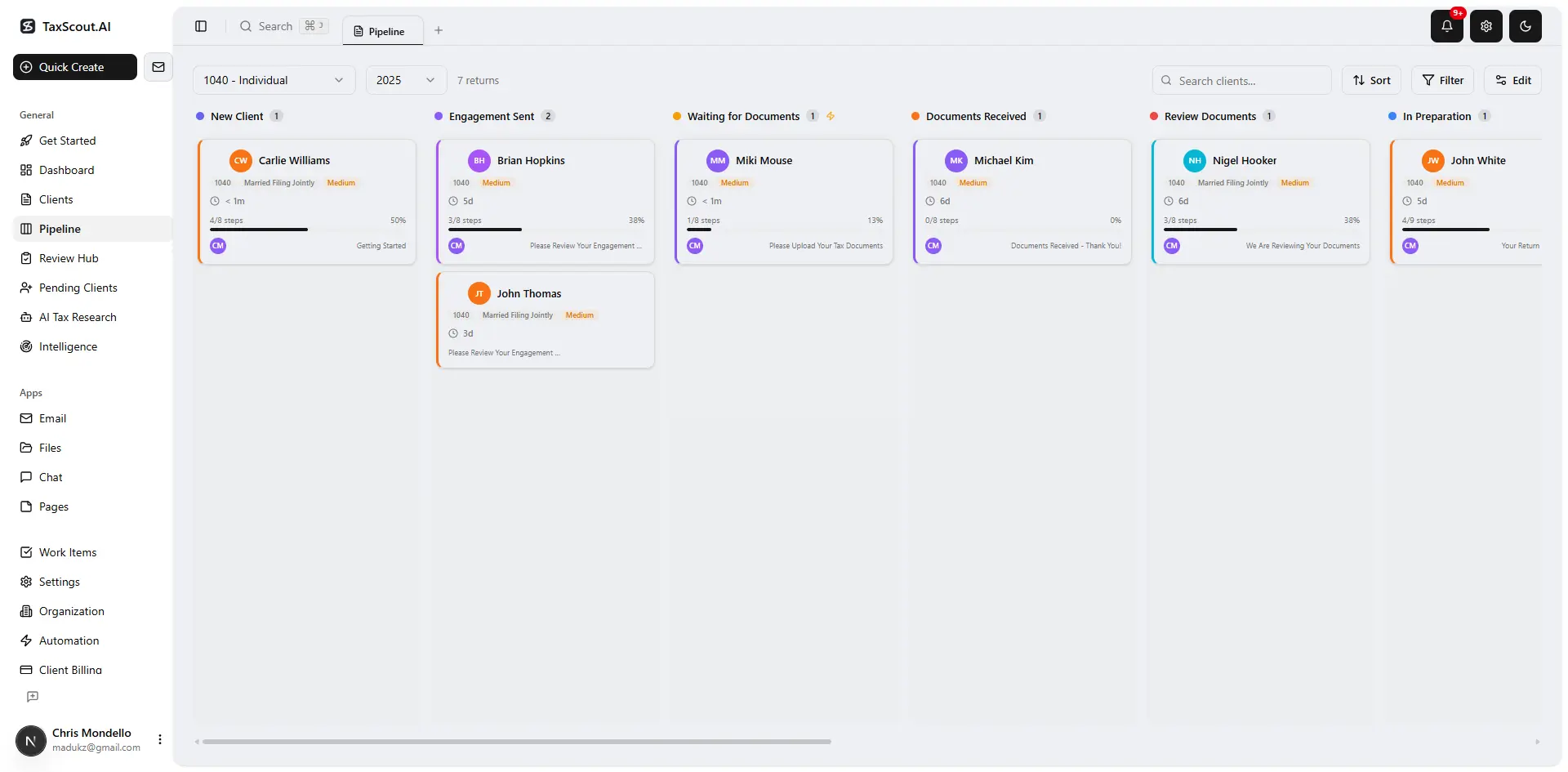
Track every return from intake to filed with drag-and-drop pipeline management
What to Do This Week: Action Checklist for CPA Firms
The following steps are sequenced for a small-to-mid-size CPA firm with 100-500 active clients. Delegate or assign ownership before end of week.
Step 1: Identify Potentially Affected Client Files
Pull a list of all clients who reported life insurance proceeds, policy loans, or surrender income on prior-year returns. Cross-reference against clients with entity restructurings, ownership changes, or estate plan updates in 2024-2026. Flag any client file that mentions a 1035 exchange, policy transfer, or split-dollar arrangement. This is a document-review task — if your firm uses AI document extraction, run a search across your document vault for relevant keywords now.
Step 2: Contact Insurance Carriers and Advisors
For each flagged client, contact the issuing insurance carrier or the client's insurance advisor to determine: (a) whether a 1035 exchange occurred in 2025 or 2026, (b) whether valuable consideration was involved (including loan assumptions, cash payments, or other benefits), and (c) whether the carrier has already filed or will file a Form 1099-LS or 1099-SB. Do not assume the carrier has handled it — these regulations are new, and carrier compliance programs may not be fully updated.
Step 3: Update Intake Questionnaires
Add explicit questions about life insurance policy exchanges and transfers to your client intake forms immediately. Your smart intake engine should now include: 'Did you exchange, transfer, or acquire any life insurance contract in 2025 or 2026?' and 'Were you a party to any transaction involving a life insurance policy where money, loan assumptions, or other benefits changed hands?' This protects your firm from liability if a client fails to disclose.
Step 4: Research the Nonrecognition Exception Requirements
If a client's 1035 exchange may have involved valuable consideration, use the IRS guidance on Section 1035 exchanges and the final regulation text to determine whether the nonrecognition exception applies. Document your analysis in the client file. TaxScout's AI Research Agents can run a real-time search across IRS, Treasury, and Cornell Law to pull the controlling authority for your specific fact pattern in minutes.
Step 5: Notify Affected Clients in Writing
For any client where a reporting obligation exists or is uncertain, send a written notice this week explaining the new rules, your firm's findings, and the next steps. This creates a paper trail and satisfies your professional due-diligence obligation. Use your firm's e-signature and communication tools to send and track acknowledgment. Document the notification in the client file.

Your clients see your brand — OTP login, document upload, and real-time status
Professional Liability Considerations
These regulations create a trap for unprepared firms. A CPA who prepares a Form 1040 or 1120-S without identifying a reportable policy sale — because the client described the transaction as a 'routine 1035 exchange' — could face preparer penalties under IRC Section 6695 if the required information return was not filed.
The IRS penalty framework for information return failures starts at $310 per return for 2026 for returns not filed on time, with higher penalties for intentional disregard. For a closely held business with multiple policy interests, aggregate penalties can be material.
Malpractice exposure is also real. Life insurance in estate and business succession planning is a high-value area where clients and their attorneys will scrutinize tax treatment closely. Proactive identification and disclosure is far less costly than a post-filing correction.
You can find related regulatory news and analysis alongside this article in our news coverage for CPA firms. For cybersecurity best practices when handling the sensitive insurance and financial data these reviews will surface, see our guide on cybersecurity essentials for accounting firms.
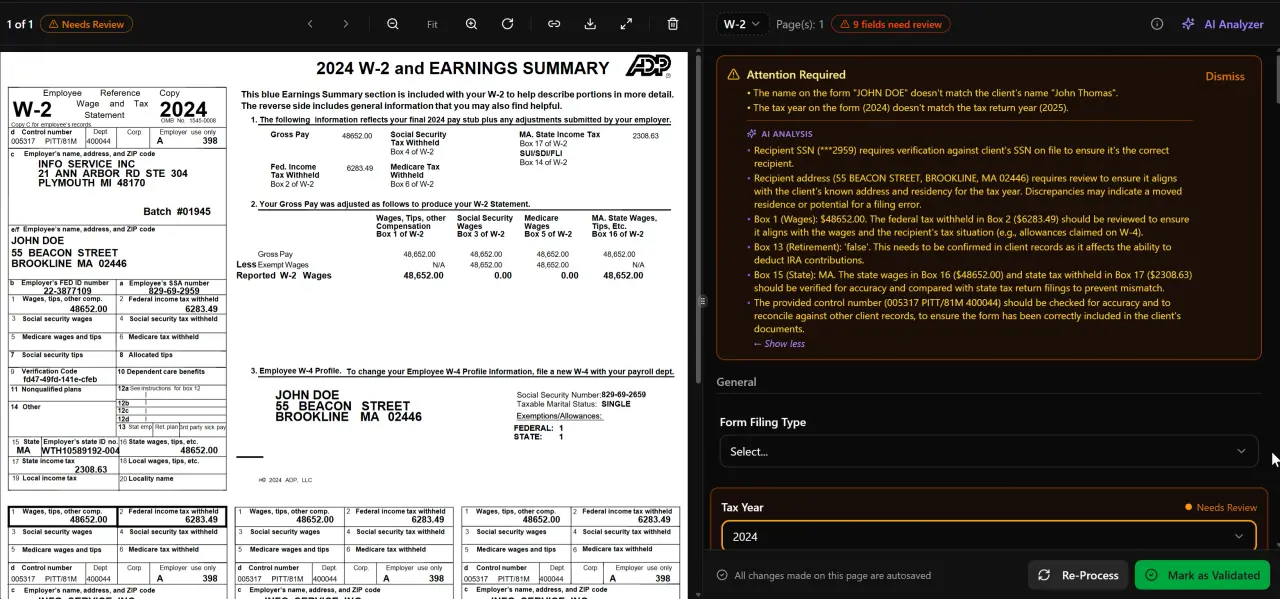
AI classifies, extracts, and validates every document automatically
Section 1035 Exchange: Before vs. After Final Regulations (July 9, 2026)
| Scenario | Pre-Regulation Treatment | Post-Regulation Treatment |
|---|---|---|
| Clean 1035 exchange, no valuable consideration | Nonrecognition, no reporting required | Nonrecognition still applies, minimal new reporting if no valuable consideration |
| 1035 exchange with loan assumption by acquirer | Often treated as clean exchange | Now potentially a reportable policy sale; Form 1099-LS may be required |
| Partnership buyout involving key-person policy transfer | Treated under general partnership rules | Transfer for valuable consideration analysis required; information reporting likely triggered |
| ILIT trustee change with policy inside the trust | No reporting obligation in most cases | May trigger acquisition reporting depending on whether consideration passed |
| Charitable gift of life insurance policy | Gift rules applied; no 1099-LS | Must now analyze whether valuable consideration existed; reporting possible |
How Practice Management Tools Help Firms Stay Compliant
The manual process of scanning client files, updating intake forms, and tracking regulatory changes is exactly where small CPA firms lose hours and miss items. A purpose-built practice management platform helps at every step of the compliance workflow described above.
TaxScout's pipeline management gives your team a single place to track every affected client through the identification, research, notification, and filing stages — with custom stages you define. The AI document extraction capability covers 180+ tax form types, including 1099-LS and 1099-SB forms, so incoming documents are automatically classified and surfaced to the right reviewer.
For research, the AI Research Agents search IRS, Treasury, Cornell Law, and SSA in real time, returning cited answers to specific fact-pattern questions — no separate subscription to a research service required. When you need to send client notifications and capture acknowledgment, the client portal with OTP login and integrated e-signatures handles it securely, with a full audit trail.
See TaxScout pricing — flat per-firm rates with no per-user fees mean adding team members to handle this compliance review does not increase your monthly cost.
Worried about missing a reportable policy sale buried in a client's 1035 exchange documents?
TaxScout's AI extraction, research agents, and pipeline management keep your firm ahead of complex IRS rule changes — without adding staff.

Click any extracted field to see its source highlighted on the original PDF
Frequently Asked Questions
The final regulations were published in the Federal Register on July 9, 2026. CPA firms should treat that date as the starting point for reviewing client files and updating intake processes. The regulations include transition guidance for prior-year transactions — review the full text at the Federal Register for specific effective dates by transaction type.
Keep reading
AMT Planning for CPAs: How to Shield Business Clients From the Corporate Alternative Minimum Tax
Oct 19, 2026 · 1 min read
Schedule K-3 Reporting: How CPAs Handle International Pass-Through Items for Domestic Partners
Oct 19, 2026 · 1 min read
Uniform Capitalization Rules: How CPAs Apply UNICAP to Inventory and Self-Constructed Assets
Oct 17, 2026 · 1 min read
Stay up to date
Get the latest tax tech insights delivered to your inbox.