Section 898(c) Transition Rule for Allocating Foreign Taxes: What CPA Firms Must Do Now
On August 31, 2026, the IRS published a correction to proposed regulations REG-115145-25 in the Federal Register, amending rules on the Section 898(c) transition rule for allocating foreign taxes and the Section 960(d)(4) foreign tax credit disallowance. CPA firms with clients holding interests in…
A correction to proposed regulations covering the Section 898(c) transition rule for allocating foreign taxes appeared in the Federal Register on August 31, 2026. The correction amends REG-115145-25, which was originally published on August 3, 2026, and addresses two discrete but connected international tax issues: how to allocate the foreign taxes of foreign corporations whose tax years are affected by the repeal of the one-month deferral election, and when foreign tax credits must be disallowed on certain distributions of previously taxed earnings and profits (PTEP) under Section 960(d)(4).
For most general-practice CPA firms, this lands quietly — but for any practice with clients who own controlled foreign corporations (CFCs), participate in pass-through entities holding CFC interests, or prepare Forms 5471 and 1118, the correction is not administrative housekeeping. It clarifies language that determines how foreign taxes are computed and whether credits survive a PTEP distribution. Getting the details wrong exposes clients to disallowed credits and potential underpayment penalties. The section 898(c) transition rule for allocating foreign taxes sits at the center of this correction, making it essential reading for any firm handling international tax compliance.
This brief cuts through the Federal Register language and tells you exactly which client segments are in scope, which return types are implicated, and what your team should do before the end of this week. Understanding the section 898(c) transition rule for allocating foreign taxes is the first step toward determining how broadly your client roster is affected.
What the Correction Actually Changes
The primary source is the Federal Register notice 2026-17764, published August 31, 2026. It identifies specific errors in the August 3 text of REG-115145-25 and substitutes corrected language. That notice addresses specific drafting errors in the original August 3 text related to the section 898(c) transition rule for allocating foreign taxes, and the corrections carry direct implications for how foreign tax credits are calculated and reported.
The substantive issues the underlying proposed regulations address are: (1) the transition rule under Section 898(c) that governs how foreign corporations with non-calendar tax years apportion their foreign taxes across U.S. tax years following the repeal of the one-month deferral election under prior law; and (2) the disallowance mechanism under Section 960(d)(4), which denies a foreign tax credit when a U.S. shareholder receives a distribution out of PTEP in a manner that would otherwise create a double benefit. For firms evaluating their section 898(c) transition rule for allocating foreign taxes approach, this trade-off compounds over time.
The correction itself is procedural — it fixes drafting errors rather than reversing policy direction — but corrected text governs. If your team already pulled the August 3 version and built a checklist around it, that checklist needs to reflect the August 31 corrected version. The IRS proposed regulations page at irs.gov and the Cornell Legal Information Institute remain authoritative references for the underlying statutory framework. Each of these factors directly shapes how section 898(c) transition rule for allocating foreign taxes plays out in practice.
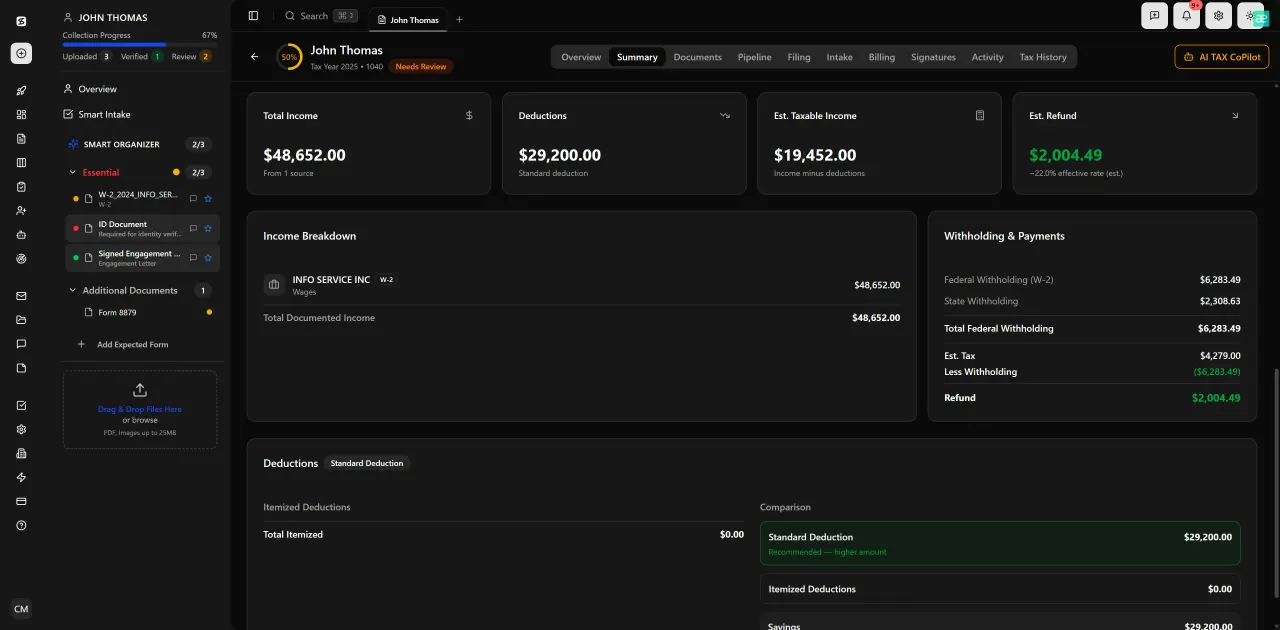
Review with AI assist — 9 agents answer questions with full client context
Which Client Segments and Filing Types Are Affected
Tired of manual workflows slowing your firm down? See how TaxScout handles this with AI-powered automation. → Book a 15-Min Demo Understanding section 898(c) transition rule for allocating foreign taxes in this context is what separates firms that scale from those that stall.
Not every client type is in scope. Here is the breakdown by entity and filing type: This is precisely where a deliberate section 898(c) transition rule for allocating foreign taxes strategy pays off.
C-corporations and their shareholders (Form 1120/5471/1118): This is the primary affected segment. U.S. corporate shareholders of CFCs that have non-calendar tax years affected by the one-month deferral repeal must correctly apply the Section 898(c) transition rule when computing creditable foreign taxes on Form 1118. The corrected regulations directly touch the mechanics of that computation. Section 898(c) transition rule for allocating foreign taxes sits at the center of this decision — get it wrong and the rest unravels.
Partnerships and S-corporations passing through CFC interests (Form 1065/1120-S, Schedule K-1): Pass-through entities that own CFC stock or hold interests through tiered structures must flow the corrected foreign tax information to partners and shareholders. Incorrect allocation at the entity level cascades to every individual K-1 recipient. Review any Schedule K-2/K-3 packages already prepared for affected fiscal-year clients. When firms revisit their section 898(c) transition rule for allocating foreign taxes priorities, the gaps usually surface here.
Individuals with direct CFC ownership (Form 1040, Part III of Form 5471): High-net-worth individuals who directly own 10% or more of a CFC and who file Form 5471 categories 4 or 5 may need to revisit the foreign tax credit computation on Form 1116 if the CFC has a non-calendar year and distributions of PTEP are in play.
Nonprofits with UBTI from CFC interests: Exempt organizations subject to unrelated business taxable income that flow through CFC structures are a smaller but real exposure group. The Section 960(d)(4) disallowance could affect their UBTI calculation if they receive PTEP distributions. For more on nonprofit compliance workflows, see our nonprofit audit preparation guide.
Clients with purely domestic operations, standard W-2 income, or pass-throughs that hold no foreign corporation interests are unaffected.
Tracking regulatory corrections across dozens of international clients eating up your week?
TaxScout's 9 AI Research Agents monitor IRS, Treasury, and Federal Register updates in real time — so your team surfaces issues like this correction before a return goes out the door.
→ See AI Research Agents in Action
What to Do This Week: A Five-Step Action List
Below is a concrete, prioritized list for CPA firm owners and international tax leads. This is not a legal summary — it is a workflow response.
Step 1: Pull the corrected text. Download the August 31 version of REG-115145-25 from the Federal Register notice 2026-17764 and replace any saved copies of the August 3 original in your document management system. Flag the corrected version as authoritative in your file management workflow.
Step 2: Identify affected clients. Run a query in your practice management system for all clients with active Form 5471 obligations, CFC ownership noted in prior-year returns, or K-2/K-3 filings that include foreign tax credit information. If a client has a CFC with a non-calendar tax year, they are highest priority.
Step 3: Review open or extended returns. For any 2025 returns still on extension that involve Forms 5471, 1118, or 1116 with PTEP distributions, compare your working papers against the corrected regulatory language. Pay particular attention to the transition rule computation and whether any PTEP distribution triggers the Section 960(d)(4) disallowance under the corrected text.
Step 4: Update your internal checklist and engagement scope. If the correction changes your analysis for any client, document the change, note the source (Federal Register 2026-17764, August 31, 2026), and determine whether an amended return or supplemental disclosure is warranted. Consult the Treasury guidance page and SSA/IRS coordination rules at ssa.gov as needed for related withholding treatment.
Step 5: Communicate proactively with affected clients. Send a brief message through your client portal explaining that a regulatory correction was issued and you are confirming its impact on their return. Proactive outreach on international issues builds trust and reduces malpractice exposure. For broader regulatory tracking, also see other news resources in our firm intelligence feed.
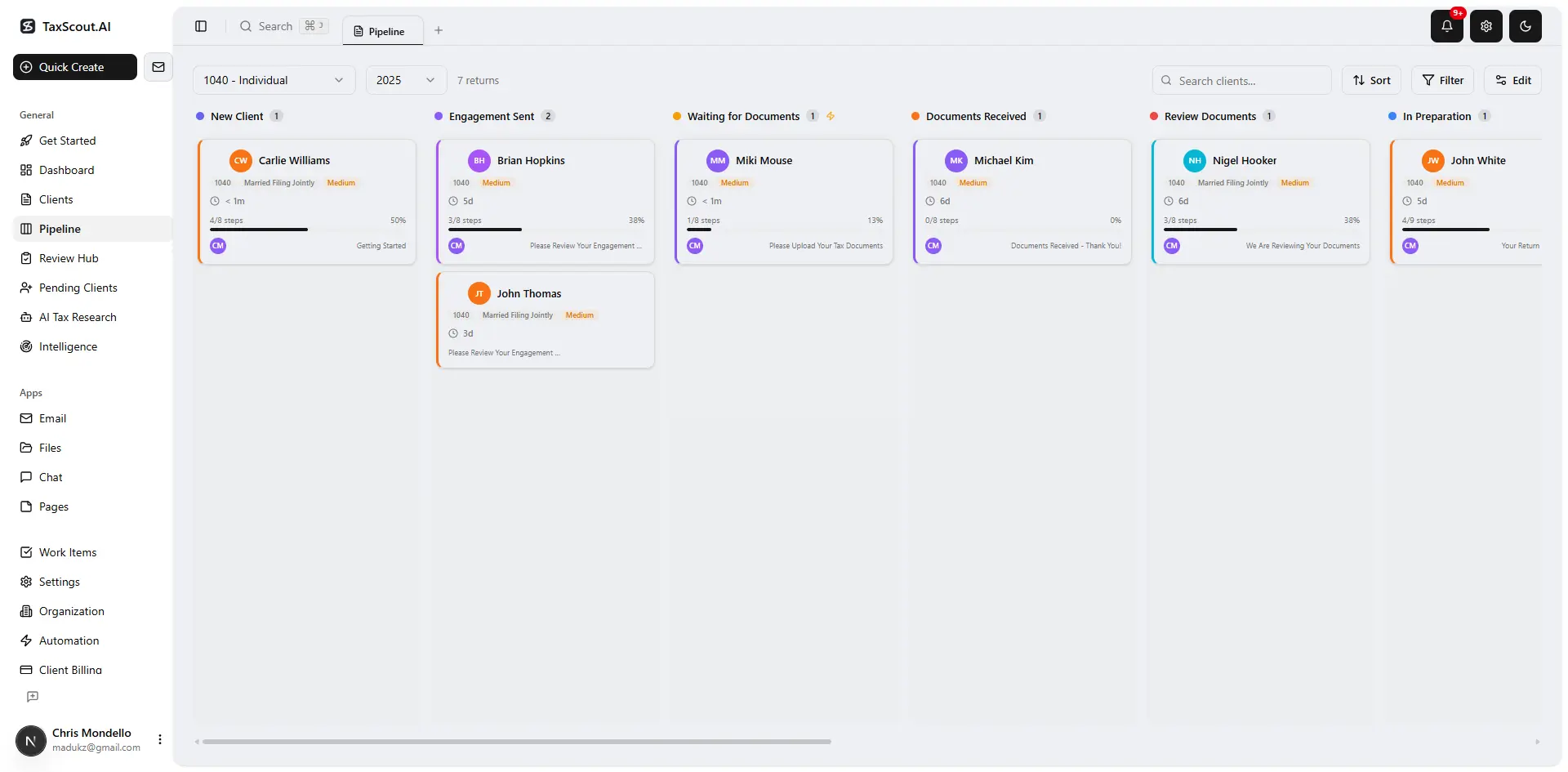
Track every return from intake to filed with drag-and-drop pipeline management

Smart intake auto-fills from uploaded documents and prior-year data
Why the One-Month Deferral Repeal Matters for Tax Year Allocation
Before the repeal, U.S. shareholders of CFCs with non-calendar tax years could elect under former Section 898 to treat the CFC's tax year as ending one month earlier, which simplified the inclusion timing for Subpart F income and GILTI. The repeal of that election forces practitioners to use a transition rule under Section 898(c) to allocate foreign taxes across the straddled tax year.
The transition rule is not a minor computational footnote. It determines the pool of creditable foreign taxes available on Form 1118 and the base against which the Section 960(d)(4) disallowance operates. An error in applying the transition rule — whether from relying on the uncorrected August 3 text or from misreading the allocation methodology — directly alters the foreign tax credit available to the U.S. shareholder.
The Bureau of Labor Statistics international business data and Treasury's international tax policy resources provide broader context on the scale of U.S. taxpayers with CFC exposure, underscoring why these corrections reach a significant slice of mid-market CPA clients even when the regulatory language seems narrow. Firms handling state tax nexus issues for growing clients should also note that multi-state clients with foreign subsidiaries face compounding complexity here.
How AI Research Tools Cut Review Time on Regulatory Corrections Like This
Manually tracking Federal Register corrections is one of the least productive hours in any CPA firm's week. A correction to a proposed regulation — not even a final rule — rarely makes headlines, yet the operational impact on open returns can be significant.
TaxScout's AI research agents index IRS, Treasury, Federal Register, and Cornell LII content in real time. When a correction like REG-115145-25 publishes, the research layer surfaces it automatically within the platform, allowing practitioners to query the corrected text directly against a client's filing history rather than reading the Federal Register manually each morning.
Combined with AI document extraction for Form 5471 supporting documents and the client-context memory that retains entity structures and prior-year foreign tax credit data, this workflow compresses the identification and review steps from several hours to a focused, targeted session. For a deeper look at how this works in practice, see our guide on AI document extraction for CPAs.
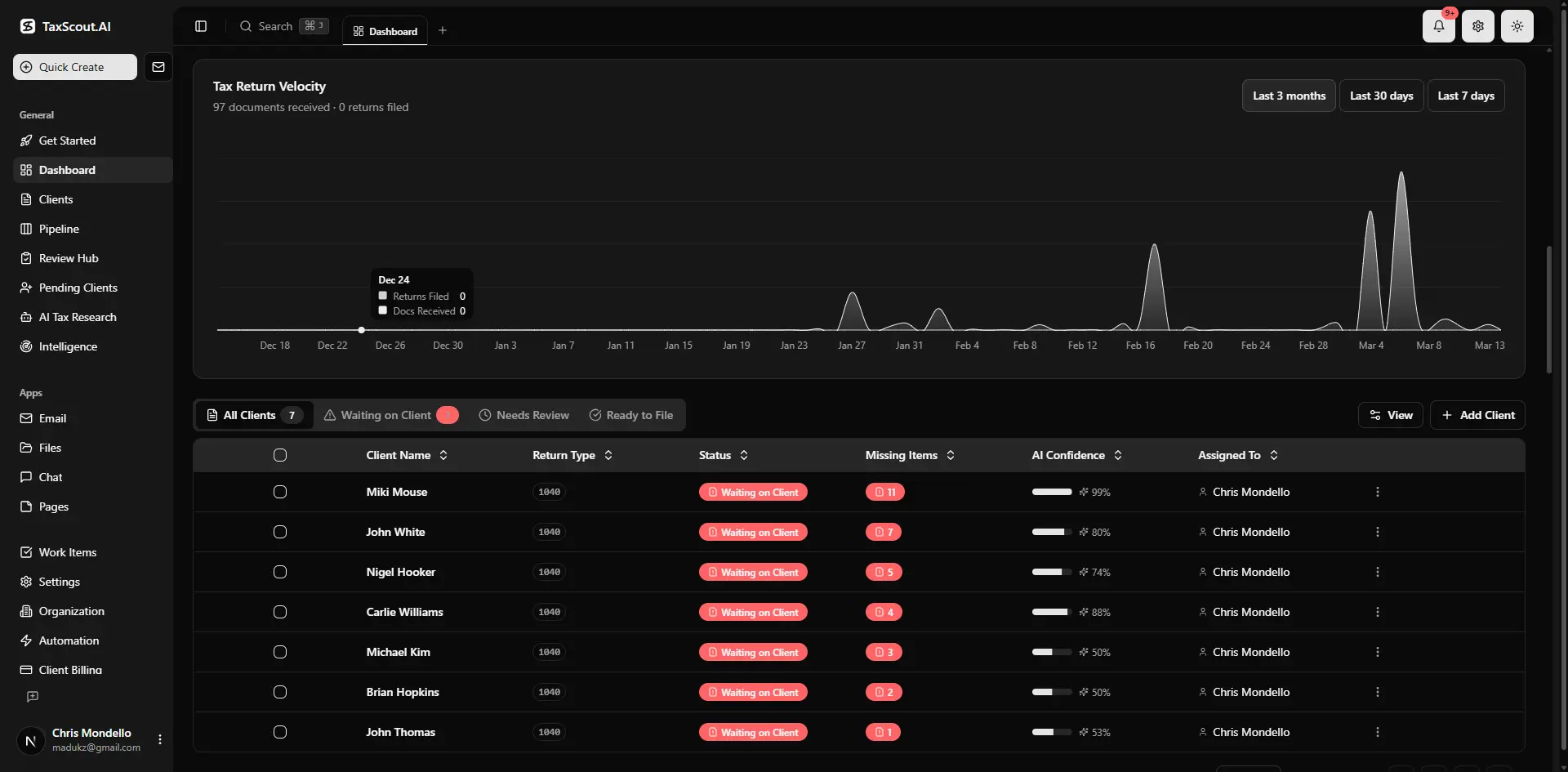
Real-time dashboard showing returns in progress, revenue, and upcoming deadlines
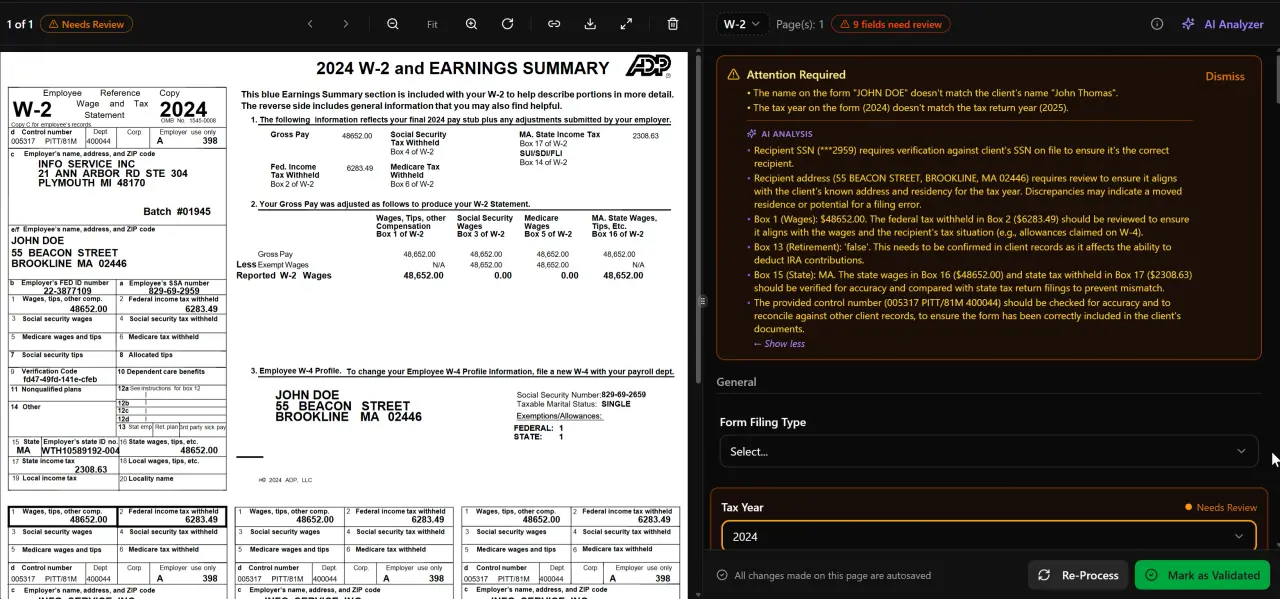
AI classifies, extracts, and validates every document automatically
Regulatory Timeline and Comment Period Status
REG-115145-25 remains a proposed regulation as of the August 31 correction date. The comment period for the underlying August 3 proposed regulations is ongoing — check the Federal Register docket for the current comment deadline. Proposed regulations can change before finalization, so firms should treat this as directionally authoritative but monitor the docket for further amendments or a final rule publication.
The correction published August 31, 2026 is effective immediately for purposes of the proposed regulatory text. Practitioners should not wait for finalization to review returns that are currently on extension and implicate the Section 898(c) transition rule or Section 960(d)(4) disallowance, because the proposed regulations represent IRS's current stated position and will likely govern returns filed before a final rule issues.
For related 2026 IRS deadline context, refer to IRS tax deadlines 2026 for CPAs to map the correction's timing against your extended return schedule.
Still manually scanning the Federal Register for regulatory corrections that affect your international clients?
TaxScout monitors IRS and Treasury publications automatically, flags changes to your pipeline, and lets your team query corrections against specific client files — all in one platform at a flat monthly rate with no per-user fees.
Frequently Asked Questions
The Section 898(c) transition rule governs how foreign taxes of a controlled foreign corporation (CFC) with a non-calendar tax year are allocated across U.S. tax years following the repeal of the one-month deferral election. It determines which pool of foreign taxes is creditable on Form 1118 for the straddled year and is a prerequisite calculation for applying the Section 960(d)(4) foreign tax credit disallowance on PTEP distributions.
Keep reading
Tangible Property Regulations: How CPAs Apply Capitalization vs Expensing Rules
Oct 15, 2026 · 1 min read
QSBS Exclusion: How CPAs Maximize Section 1202 Gains for Startup Investors
Oct 15, 2026 · 1 min read
Section 1202 QSBS Exclusion: How CPAs Shelter Startup Gains for Founder Clients
Oct 15, 2026 · 1 min read
Stay up to date
Get the latest tax tech insights delivered to your inbox.