Hobby Loss Rules: How CPAs Protect Clients From IRS Section 183 Disallowance
When a client reports losses from an equestrian operation, a side-hustle Etsy store, or a small farm, the IRS may recharacterize those deductions under Section 183 — eliminating them entirely. This playbook gives CPAs the documentation cadence, nine-factor analysis, and engagement structure to…
Hobby loss rules sit at the intersection of tax law, human psychology, and litigation risk — and most CPAs encounter them long before a client ever receives an IRS notice. The moment a side-hustle horse breeder, a weekend sculptor, or a part-time lavender farmer appears on your client roster, Section 183 of the Internal Revenue Code begins silently accumulating relevance. A single disallowance can reverse years of Schedule C deductions, trigger accuracy-related penalties, and — if the pattern repeats — expose you to preparer liability.
Despite the stakes, most published guidance treats hobby loss rules as a paragraph tucked inside broader Schedule C overviews. CPAs searching for a standalone operational workflow — covering the nine IRS factors, the Section 183(e) deferral election, the documentation cadence, and the engagement-pricing question — typically find nothing. This guide fills that gap.
What follows is a practitioner playbook you can use from the initial client interview through the completed return, structured around the IRS's own analytical framework and the procedural tools Congress gave taxpayers to survive a Section 183 challenge without resorting to Tax Court. Understanding the hobby loss rules is essential context before diving into this playbook, as every strategic decision flows directly from how Section 183 is structured and enforced.
What Section 183 Actually Does and Why It Matters Now
Under Section 183 of the Internal Revenue Code, the IRS may recharacterize a profit-generating activity as a 'hobby' if it determines the taxpayer did not enter into or continue the activity primarily for profit. The practical effect is severe: deductions are limited to the gross income produced by the activity, and no net loss may flow through to reduce other taxable income. Before the Tax Cuts and Jobs Act of 2017, excess hobby expenses could at least be deducted as miscellaneous itemized deductions subject to the 2% AGI floor. Since 2018, that floor was suspended, meaning disallowed hobby losses produce zero tax benefit — they simply vanish. The hobby loss rules exist precisely to prevent taxpayers from indefinitely subsidizing personal activities with deductions that offset other income.
The IRS has always pursued Section 183 cases, but enforcement intensity has increased as the gig economy expands the population of Schedule C filers reporting recurring losses. Treasury Regulation 1.183-2 articulates nine non-exclusive factors the Service weighs in making the hobby determination, and no single factor is controlling. This makes documentation strategy, not just filing accuracy, the central competency for CPAs serving this client segment. With audit rates on Schedule C losses climbing, CPAs who master the hobby loss rules are increasingly valuable to clients navigating the gig economy's blurred line between side hustle and personal pursuit.
Practitioners who understand hobby loss rules as a documentation and engagement-design problem — not merely a return-preparation question — protect clients proactively rather than reactively. For a broader look at how CPAs can build year-round planning systems for Schedule C clients, see our sole proprietor tax strategy guide.
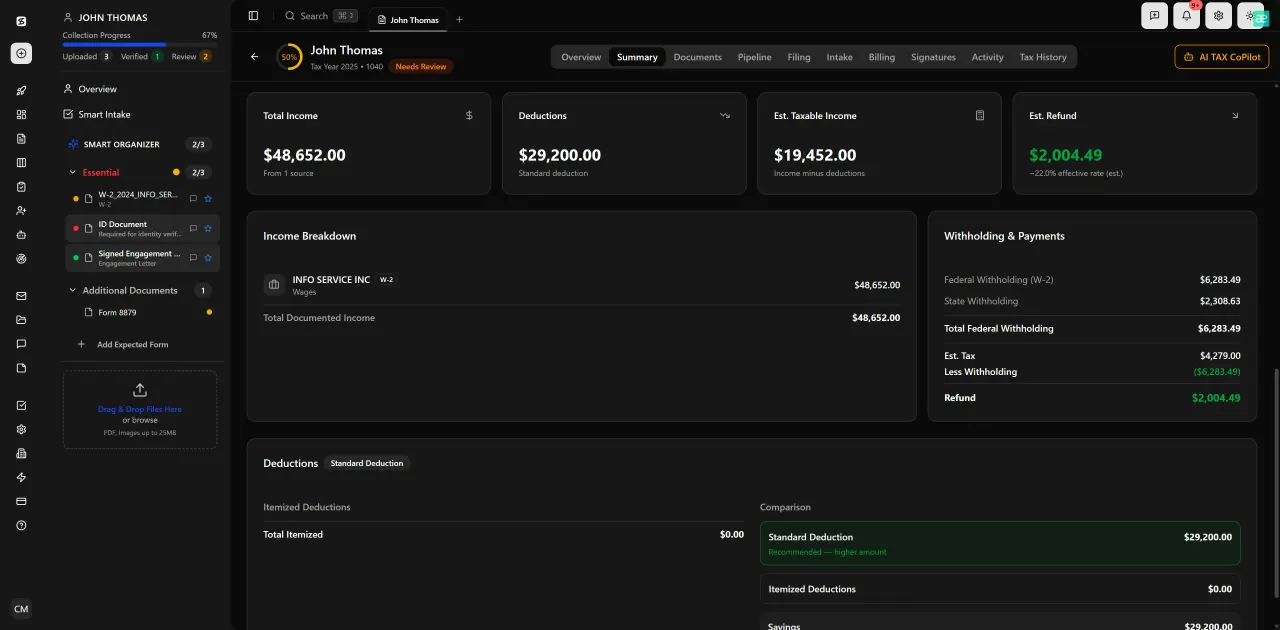
Review with AI assist — 9 agents answer questions with full client context
The Nine IRS Factors: A CPA Scoring Framework
Tired of manual workflows slowing your firm down? See how TaxScout handles this with AI-powered automation. → Book a 15-Min Demo For firms evaluating their hobby loss rules approach, this trade-off compounds over time.
Treasury Regulation 1.183-2(b) identifies nine factors that govern the hobby vs business IRS determination. Treating them as a scored checklist — rather than a narrative recitation — lets you communicate risk to clients and prioritize corrective action before a return is filed. Each of these factors directly shapes how hobby loss rules plays out in practice.
The IRS Publication 535 summarizes these factors, but the regulation itself provides interpretive detail that matters in audit. Here is how each factor translates to a practitioner task: Understanding hobby loss rules in this context is what separates firms that scale from those that stall.
Factors 1-3: Businesslike Conduct, Expertise, and Time Invested
Factor 1 asks whether the taxpayer carries on the activity in a businesslike manner — maintaining complete books, a separate business bank account, and written business plans. Factor 2 examines whether the taxpayer (or their advisors) has the expertise needed to conduct the activity profitably. Factor 3 considers the time and effort the taxpayer personally invests. For equestrian clients, an early-season memo documenting a consultation with a trainer, a bloodstock agent, or a farm management expert directly addresses Factors 1 through 3 simultaneously. Clients who keep personal and business finances in a single account score poorly on Factor 1 almost automatically — correcting this before year-end is a tangible, documentable improvement. This is precisely where a deliberate hobby loss rules strategy pays off.
Factors 4-6: Asset Appreciation, Success in Similar Activities, and Income History
Factor 4 is powerful for real-property-adjacent activities: even if an operation runs losses, expected appreciation of the underlying land or breeding stock can support profit motive. Artists and photographers often overlook this — documenting the increase in a portfolio's market value or an art inventory appraisal strengthens this factor materially. Factor 5 asks whether the taxpayer has turned a profit in similar activities in the past, which is relevant for clients pivoting from one creative or agricultural business to another. Factor 6 — the history of income or losses — is where the 3-of-5 year safe harbor lives, discussed in detail below. Hobby loss rules sits at the center of this decision — get it wrong and the rest unravels.
Factors 7-9: Occasional Profits, Financial Status, and Personal Pleasure
Factor 7 examines whether the amounts of occasional profits, if any, are large relative to the investment and losses. A client who reports ten consecutive loss years but a single year with a $200,000 profit on a horse sale may score well here. Factor 8 is the financial-status factor: a taxpayer with substantial W-2 income or investment income who absorbs activity losses benefits from the tax shelter more, which the IRS treats as circumstantially suspicious. This is the factor most commonly cited in Tax Court decisions against high-income hobby-loss claimants. Factor 9 — whether the activity involves personal pleasure or recreation — applies directly to equestrian clients, artists, and sport fishermen. The IRS does not treat pleasure as disqualifying, but documented profit-oriented decisions (breeding for resale, entering paid competitions, selling commissions) counterbalance it. When firms revisit their hobby loss rules priorities, the gaps usually surface here.
Tired of manually cross-referencing nine IRS factors across dozens of client files?
TaxScout's AI research agents search IRS, Treasury, and Cornell legal databases in real time — so your hobby-loss memos are built on current citations, not memory.
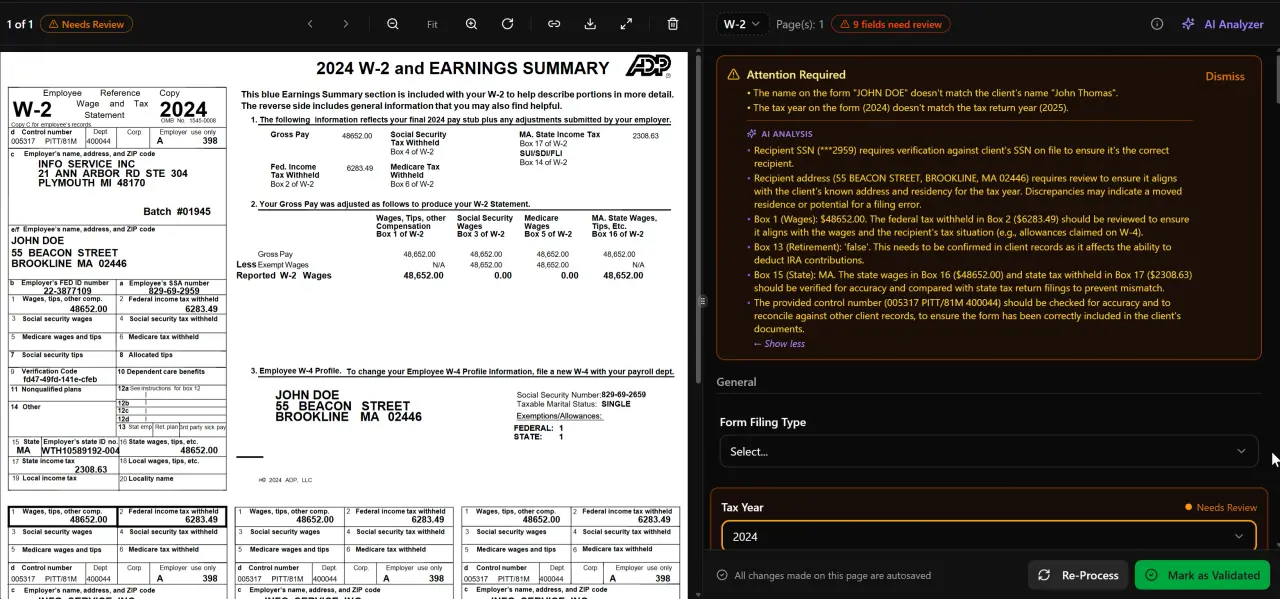
AI classifies, extracts, and validates every document automatically
The 3-of-5 Year Safe Harbor and the Section 183(e) Deferral Election
Section 183(d) provides a rebuttable presumption of profit motive if an activity shows a profit in at least 3 of the 5 consecutive tax years ending with the current year (2 of 7 years for horse activities involving breeding, training, showing, or racing). This is often called the 'safe harbor,' and it shifts the burden of proof to the IRS to demonstrate the activity is not for profit. For clients in their first or second year of operations, the safe harbor is not yet available — and that is exactly when documentation risk is highest.
What almost no published content addresses is Section 183(e), which allows a taxpayer to elect to defer the IRS's ability to make a Section 183 determination until the 5-year (or 7-year) period has elapsed. The election is made on Form 5213, Election to Postpone Determination as to Whether the Presumption Applies That an Activity Is Engaged in for Profit. Filing Form 5213 extends the statute of limitations for all years in the election period — a meaningful cost — but it also prevents the IRS from making a final hobby determination before the client has had a full opportunity to accumulate profit years.
The election must be filed no later than 3 years after the due date of the return for the first year of the activity. For a client who begins an equestrian operation in 2024, the election deadline for the first-year return is April 15, 2028 (with extensions). Practitioners should calendar this date during onboarding. The decision to file Form 5213 involves a cost-benefit analysis: it buys time but extends IRS examination reach across every year in the election period. For clients with strong profit-motive narratives and improving financials, it is often the right tool. For clients who are unlikely to hit 3 profitable years regardless, it may not be worth the extended exposure.

Click any extracted field to see its source highlighted on the original PDF
Documentation Cadence: What to Collect and When
The most effective hobby-loss defense is a contemporaneous documentation cadence built before the IRS asks any questions. CPAs who wait until a client receives an audit notice are already working with stale evidence — courts and agents consistently discount reconstructed records. The cadence below maps to the nine IRS factors and creates a defensible file at each annual cycle.
At engagement start, collect or create: a written business plan (even a one-page summary of revenue strategy), evidence of industry research or professional consultations, and a separate business bank account statement showing the activity is financially segregated. Use your client portal to request these documents through a structured intake flow so nothing falls through the cracks.
Quarterly, request: profit-and-loss statements from the client's bookkeeper or accounting software, records of any sales or consignment income (critical for artists and craftspeople), and documentation of time invested — a simple calendar log or project tracking export is sufficient. For horse operations, breeding records, training invoices, and show entry confirmations are directly responsive to Factors 1, 2, and 3.
Annually, before preparing the return, prepare a one-to-two-page written memorandum analyzing the nine factors against that year's evidence. This memo becomes a workpaper in your file, demonstrates due diligence, and is invaluable if the return is later examined. The 1040 review checklist is a natural companion document — the hobby-loss memo should be flagged as a required step in the review workflow for any Schedule C client with recurring losses.
For clients approaching the end of their 5-year window without hitting three profitable years, a mid-year planning meeting to discuss restructuring options — entity conversion, activity consolidation, or a genuine change in business strategy — is both a client-service opportunity and a risk-management action. See other blog resources for related planning guides across the advisory services spectrum.
Specific Client Segments: Equestrian, Artist, and Farm Considerations
The IRS has litigated hobby loss rules in every imaginable context, but three client segments generate the most practitioner questions: equestrian operations, visual and performing artists, and small farms. Each has segment-specific documentation opportunities that go beyond the generic nine-factor analysis.
For equestrian clients, the 2-of-7 year rule (rather than 3-of-5) applies when the activity involves horse breeding, training, showing, or racing. This extended window is an explicit congressional acknowledgment that horse operations have longer profit cycles. Practitioners should verify the activity qualifies — a client who merely boards horses for personal use does not qualify for the extended period. The IRS's Audit Technique Guide for Horse Activities is a required read for any CPA serving this segment.
For artists and creative professionals, the Tax Court has repeatedly held that the commercialization of an art practice is central to profit motive — pricing work for sale, maintaining a gallery relationship, licensing images, and submitting to juried shows all support Factors 1 through 3. Artists who display work only at community events or give pieces away as gifts have a harder argument. Documenting any sales revenue, however modest, and any efforts to increase it is essential.
For small farm clients, the IRS Farm Audit Technique Guide highlights that farms with significant non-farm income are high-examination priorities. Conservation easements, USDA payment programs, and cost-share arrangements all provide independent evidence of profit-oriented agricultural activity. Connecting a farm client's hobby-loss file to any USDA program payments via www.fsa.usda.gov records is a straightforward documentation step that many CPAs overlook.
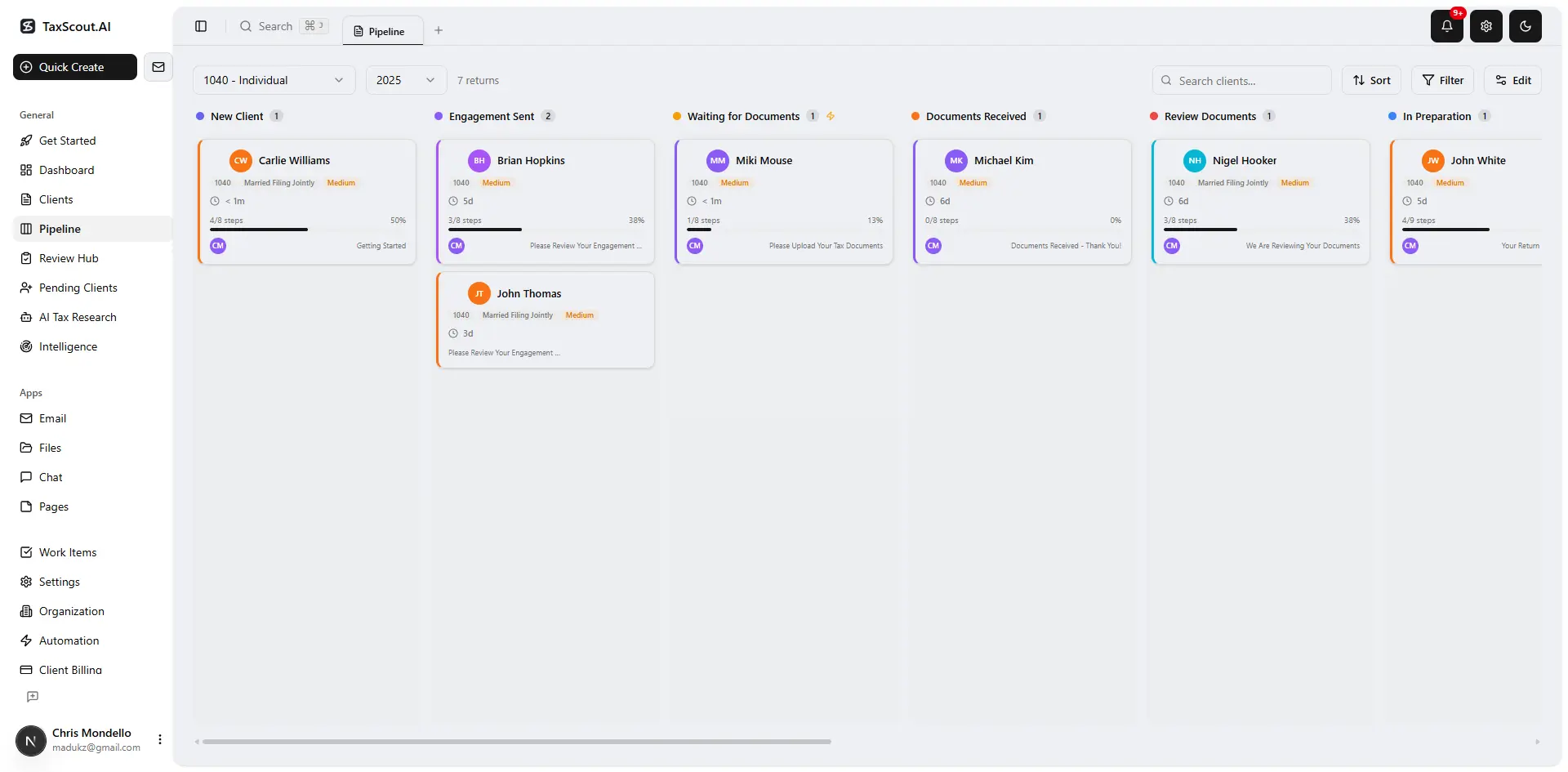
Track every return from intake to filed with drag-and-drop pipeline management
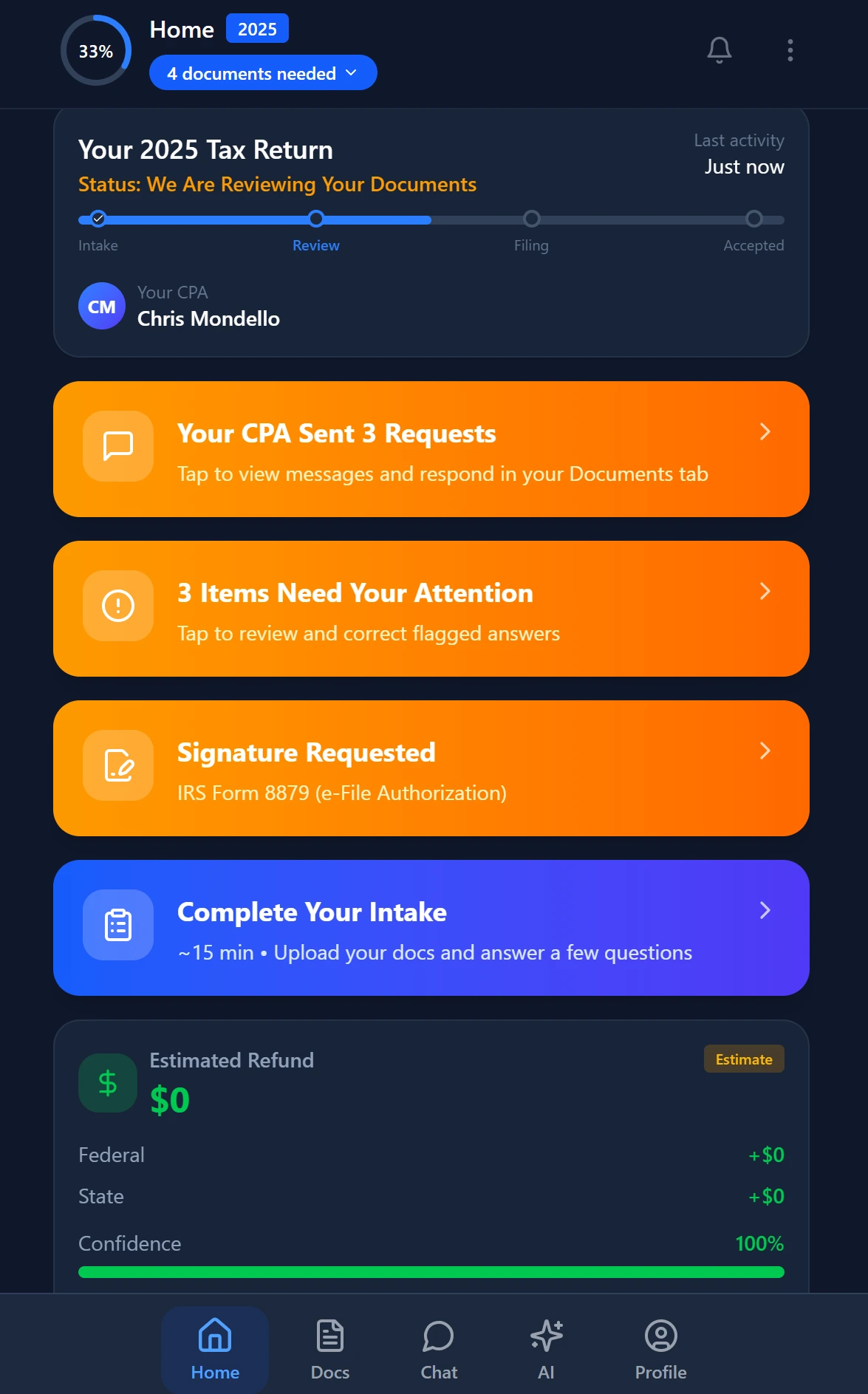
Smart intake auto-fills from uploaded documents and prior-year data
Pricing and Structuring the Hobby-Loss Review Engagement
One area completely absent from competitor content is how to price a hobby-loss review as a standalone engagement. Most CPAs either absorb the analysis into the base return fee (underpricing significantly) or avoid the issue entirely (creating silent liability). Neither approach serves the firm or the client.
A defensible hobby-loss engagement has three phases: initial risk assessment (1-2 hours), annual documentation memo and workpaper file (1-2 hours per year), and any representation or advisory work if the IRS opens an examination. Each phase should be priced and scoped separately in the engagement letter — bundling all three into a flat return fee makes the scope ambiguous and the economics unworkable.
For the initial risk assessment, a flat fee of $300-$600 is appropriate for most clients. This covers the nine-factor interview, a written risk summary, and recommendations for the documentation cadence. The annual memo is $150-$350 depending on complexity. If the client is also discussing entity selection (converting to an LLC or S corp to signal businesslike intent), or if you are also performing a nexus analysis for a multi-state craft or equestrian operation, bundling those services at a modest discount creates an advisory package with clear value. Review our guide on engagement profitability analysis for a framework on pricing these multi-service engagements.
The engagement letter for a hobby-loss client should explicitly state that you are not responsible for examination outcomes if the client fails to maintain the documentation you have requested, and it should include a separate scope section for any Form 5213 election work. These scoping decisions are easier to execute when your firm's pipeline tracks each client's stage and outstanding deliverables — TaxScout's pipeline management gives you the 12-stage kanban view to monitor exactly where each hobby-loss engagement stands at any given moment.
Hobby-Loss Engagement Checklist: Annual Documentation by Client Segment
| Documentation Item | Equestrian | Artist / Creative | Small Farm |
|---|---|---|---|
| Written business plan (updated annually) | Required | Required | Required |
| Separate business bank account | Required | Required | Required |
| Industry expert consultation records | Trainer / bloodstock agent | Gallery / licensing agent | Agronomist / USDA advisor |
| Revenue records (sales, fees, prizes) | Show winnings, foal sales | Commission sales, licensing | Crop/livestock sales, USDA payments |
| Time-investment log | Training calendar, show entries | Project log, gallery submissions | Field activity log |
| Asset appreciation documentation | Breeding stock appraisal | Portfolio market valuation | Land appraisal / FSA records |
| Form 5213 election (if applicable) | 2-of-7 year rule applies | 3-of-5 year rule applies | 3-of-5 year rule applies |
| Nine-factor memo in workpaper file | Annual | Annual | Annual |
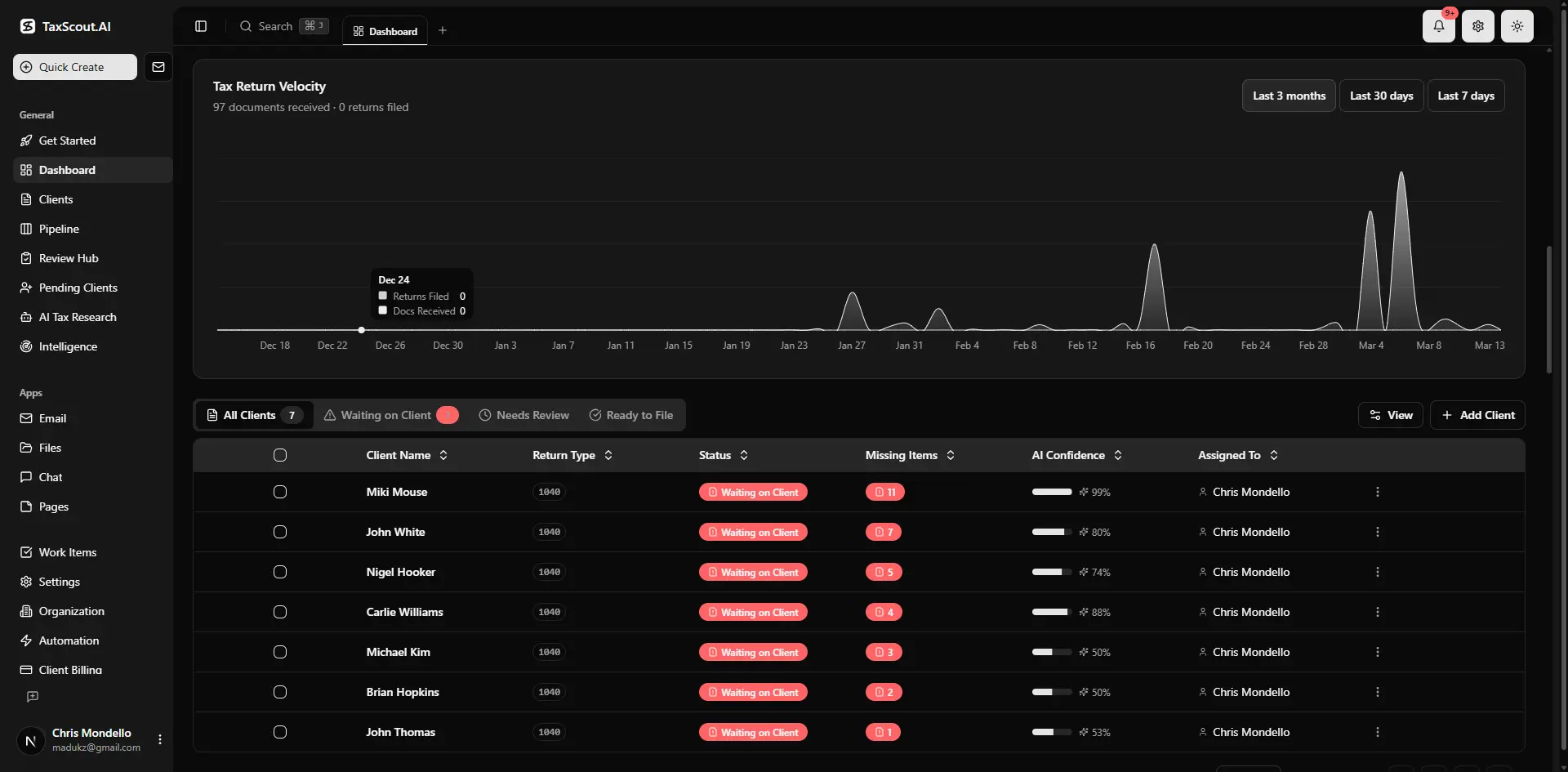
Real-time dashboard showing returns in progress, revenue, and upcoming deadlines
How AI Research Tools Accelerate the Nine-Factor Analysis
Preparing a defensible hobby-loss memo historically required pulling Treasury Regulation 1.183-2, searching Tax Court decisions for analogous fact patterns, and checking for any recent IRS guidance — a process that could take two or more hours even for an experienced practitioner. AI-native research tools compress that workflow substantially.
TaxScout's AI research agents perform real-time searches across IRS publications, Treasury regulations, Cornell Law's USC database, and congressional records to surface relevant authority on demand. For a hobby-loss memo, you can query the current state of the Section 183 case law for horse activities, confirm the Form 5213 election deadline rules, or retrieve the text of the applicable audit technique guide — all within a single session, with source citations you can paste directly into your workpaper.
The AI document extraction layer handles the intake side: Schedule C source documents, prior-year returns, and supporting records are processed through a 5-layer validation pipeline that includes cross-document validation, so inconsistencies between reported income and bank records are flagged before review rather than discovered during an audit. For clients with recurring hobby-loss risk, pairing the AI extraction output with the nine-factor memo creates a complete, auditor-ready file without the manual assembly time.
Ready to build a defensible hobby-loss workflow across your entire client roster?
TaxScout gives CPAs AI research agents, structured client intake, and pipeline tracking — all at a flat price with no per-user fees.

Every client gets organized documents, status tracking, and a complete history
Frequently Asked Questions
Section 183 of the Internal Revenue Code limits deductions from activities not engaged in for profit to the gross income produced by that activity. If the IRS determines a client's activity is a hobby rather than a business, any net loss is disallowed and — after the TCJA suspended miscellaneous itemized deductions — produces zero tax benefit. The IRS applies a nine-factor test under Treasury Regulation 1.183-2 to make this determination, with no single factor being dispositive.
Keep reading
Multistate Payroll Tax Compliance: How CPAs Keep Distributed Clients Out of Trouble
Oct 4, 2026 · 1 min read
Multistate Payroll Tax Compliance: How CPAs Handle Remote Employees for Business Clients
Oct 4, 2026 · 1 min read
Federal Scholarship Tax Credit: What CPA Firms Must Do Now
Oct 4, 2026 · 1 min read
Stay up to date
Get the latest tax tech insights delivered to your inbox.