Employer Contributions to Trump Accounts and Nondiscrimination Rules Explained for CPAs
On August 11, 2026, the IRS published proposed regulations governing employer contributions to Trump accounts and nondiscrimination rules for dependent care assistance programs. This news brief extracts the operational impact for small and mid-size CPA firms and lists what to do this week across…
The IRS dropped proposed regulations on employer contributions to Trump accounts and nondiscrimination rules for dependent care assistance programs on August 11, 2026, published at Employer Contributions to Trump Accounts and Nondiscrimination Rules for Dependent Care Assistance Programs. This is not a finalized rule yet, but the proposed guidance is detailed enough that firms should begin assessing client exposure immediately.
The regulations would govern how employers structure contributions to Trump accounts — a new account type introduced under the One Big Beautiful Bill Act — and impose nondiscrimination testing requirements on those contributions alongside updated rules for dependent care assistance programs (DCAPs). Any employer maintaining a Trump account plan or a DCAP is directly in scope. The core framework around employer contributions to Trump accounts and nondiscrimination requirements forms the backbone of the proposed rule.
For CPA firms, this proposed rule touches W-2 reporting, plan document compliance, and potentially the nondiscrimination tests you already run on cafeteria plans and DCAPs. The comment period and public hearing timeline mean there is a narrow window to flag issues for affected clients before final regulations take effect. Understanding employer contributions to Trump accounts and nondiscrimination testing will be essential for CPAs advising clients through plan document updates and compliance reviews.
What the Proposed Rule Actually Changes
Trump accounts are tax-advantaged savings vehicles for children, funded in part by employer contributions. The proposed regulations clarify the mechanics of employer contributions — including contribution limits, timing rules, and the nondiscrimination framework that prevents plans from disproportionately benefiting highly compensated employees (HCEs). The interplay between employer contributions to Trump accounts and nondiscrimination rules is central to ensuring these plans do not unfairly favor highly compensated employees.
On the dependent care side, the IRS is updating nondiscrimination rules under IRC Section 129 to align with the Trump account framework. Employers who sponsor DCAPs will need to run a revised set of tests: the 55-percent average benefits test, the eligibility test, and the concentration test. The proposed rule adds guidance on how Trump account contributions interact with the DCAP benefit cap when both programs exist at the same employer. For firms evaluating their employer contributions to trump accounts and nondiscrimination approach, this trade-off compounds over time.
The proposed regulations also provide a public hearing notice. According to the Federal Register filing, written comments must be submitted before the stated deadline and a hearing will follow. Firms with clients who have strong opinions on the testing methodology should begin drafting comments now. Each of these factors directly shapes how employer contributions to trump accounts and nondiscrimination plays out in practice.
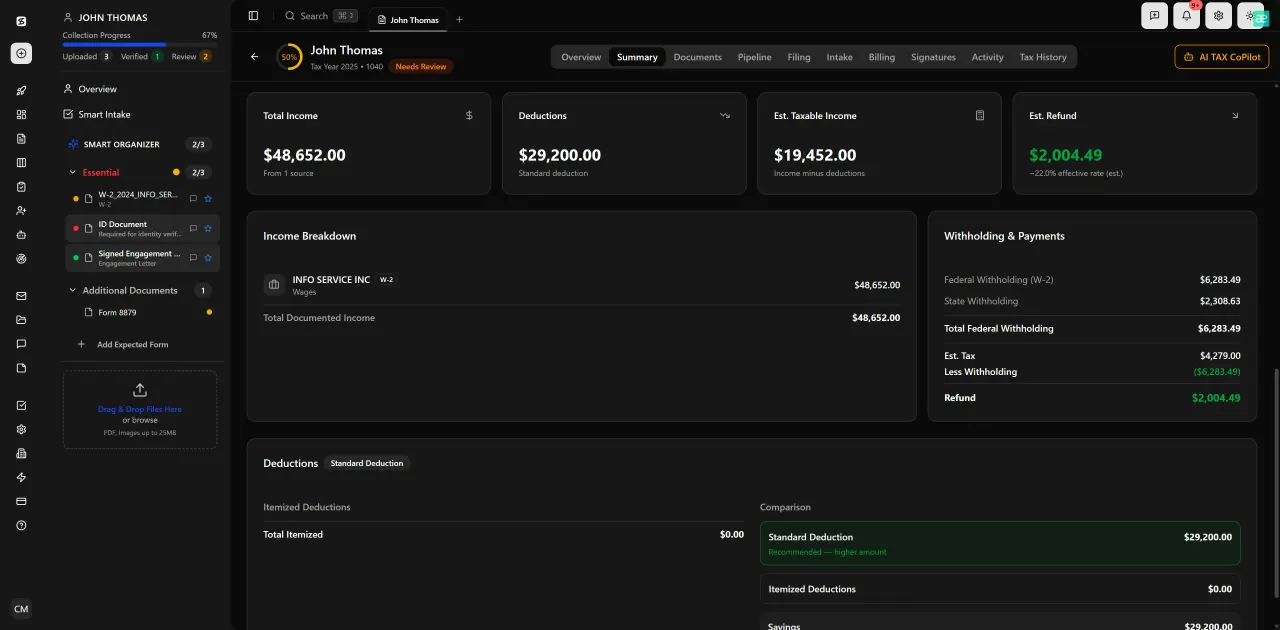
Review with AI assist — 9 agents answer questions with full client context
Which Client Segments and Entity Types Are Affected
Tired of manual workflows slowing your firm down? See how TaxScout handles this with AI-powered automation. → Book a 15-Min Demo Understanding employer contributions to trump accounts and nondiscrimination in this context is what separates firms that scale from those that stall.
1040 filers with W-2 income: Employees whose employers adopt Trump account plans will see new box coding on Form W-2. Until the IRS releases updated W-2 instructions, confirm that your payroll clients are not making any mid-year contribution elections that will create reconciliation problems at year-end.
S-corporations and partnerships: Pass-through entities that provide fringe benefits must evaluate whether a Trump account plan triggers additional nondiscrimination testing. S-corp shareholders who are more-than-2-percent owners are already excluded from certain fringe benefits; the proposed rule does not appear to carve out a Trump account exception, which means owner-employees at S-corps need separate analysis. For partnership clients, the IRS partner compensation rules interact with any employer-funded account in ways the proposed regulations do not fully resolve yet.
C-corporations and larger employers: This is the primary target audience of the proposed rule. If any C-corp client currently sponsors a DCAP and is considering adding a Trump account plan, the interaction of the two nondiscrimination tests creates a compliance surface that warrants a plan document review before open enrollment season.
Nonprofits: Tax-exempt employers under IRC Section 501(c)(3) are not exempt from DCAP nondiscrimination rules. Nonprofits that offer dependent care benefits should review whether the updated testing methodology changes their results. Our nonprofit audit preparation guide covers related compliance workflows that apply here.
Payroll service clients: If your firm manages payroll for any employer, the proposed regulations will eventually produce new payroll codes and W-2 reporting requirements. Flag this for your payroll calendar now so year-end processing does not become a scramble.
Tired of tracking proposed IRS rules across dozens of client files with no centralized system?
TaxScout's AI research agents monitor IRS, Treasury, and Federal Register updates and surface the client-specific impact — so your team acts on what matters, not on everything.
Employer Contributions to Trump Accounts and Nondiscrimination: What to Do This Week
This is a proposed rule, not a final one. But the operational window before comments close and final regulations drop is short. Here is a concrete action list for CPA firm owners:
1. Identify affected employer clients. Pull your client list and flag any employer that (a) currently sponsors a DCAP, (b) is evaluating adding a Trump account plan, or (c) has more than 25 employees where HCE concentration is likely. This is a segmentation task your team can complete in a day using your pipeline management workflow.
2. Review existing DCAP plan documents. The proposed rule modifies the nondiscrimination testing methodology. Any employer whose DCAP plan document references specific test parameters may need a document amendment before final regulations take effect. Contact your benefits attorney for affected clients now, not at year-end.
3. Flag S-corp owner-employees for separate analysis. The more-than-2-percent shareholder exclusion from fringe benefits is well-established, but the Trump account rules have not yet addressed this population explicitly. Document your analysis and recommendation in the client file.
4. Watch the comment deadline. The Federal Register notice contains the official comment and hearing dates. Calendar the comment deadline and the hearing date. If any of your larger employer clients want to submit comments on the testing methodology, they need to act before the deadline.
5. Update your engagement letters for new scope. Advising on Trump account plan compliance and updated DCAP nondiscrimination testing is a new service line. If this work was not contemplated in your current engagement letters, update them before you begin. Our e-signatures feature makes it straightforward to push amended engagement letters to clients for signature without a phone call.
6. Brief your team. Send an internal note summarizing the rule and the affected client segments. Team awareness prevents a client from receiving inconsistent advice during this comment period. For additional recent IRS regulatory coverage, see our post on IRS proposed higher 1099 reporting thresholds for a comparable workflow example.
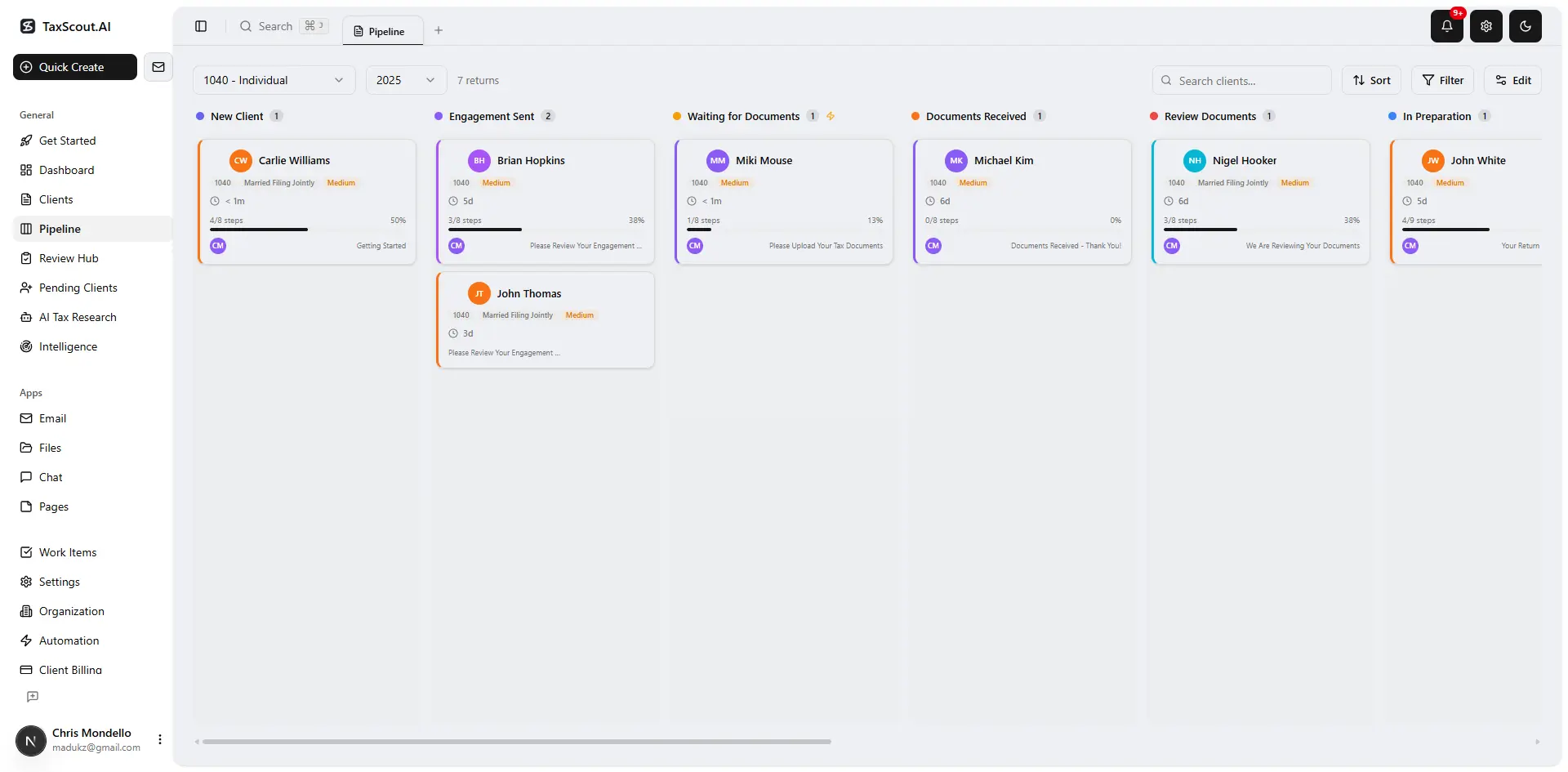
Track every return from intake to filed with drag-and-drop pipeline management

Click any extracted field to see its source highlighted on the original PDF
Key Nondiscrimination Testing Concepts CPA Firms Must Understand
The dependent care nondiscrimination rules under IRC Section 129 have three primary tests. The 55-percent average benefits test requires that non-highly-compensated employees receive at least 55 percent of the average benefit provided to HCEs. The eligibility test requires that the plan benefit a nondiscriminatory class of employees. The concentration test limits the benefits paid to the top five owner-shareholders.
The proposed regulations appear to add a fourth dimension: how Trump account employer contributions are counted when determining whether the DCAP passes these tests. If employer Trump account contributions and DCAP contributions are aggregated for testing purposes, employers near the concentration test threshold may find themselves in noncompliance without any change to their existing DCAP design.
The SSA's wage base and compensation definitions intersect here as well — HCE status under IRC Section 414(q) uses prior-year compensation thresholds, and the compensation figures used for Trump account eligibility are not yet fully harmonized in the proposed rule. This is an area where the comment process matters.
How Practice Management Tools Reduce Compliance Risk on New Regulations
Proposed regulations like this one create a two-phase compliance burden: first, the research and client communication phase before final rules drop; second, the implementation phase once the rule is final. Firms that handle both phases in a single workflow environment have a structural advantage.
TaxScout's AI research agents are designed for exactly this situation — nine specialized agents with real-time search across IRS.gov, Treasury, Cornell's Legal Information Institute, and Federal Register sources. When a regulation like this one drops, you can query the agents for the exact IRC sections, pull prior guidance on DCAP testing, and build a client communication in minutes rather than hours.
The client portal with branded intake makes it straightforward to collect updated benefit plan information from employer clients as part of your annual organizer cycle — important for the new Trump account data points that will eventually appear on W-2s. For firms tracking IRS deadlines across a large client base, centralizing this compliance work is the difference between being proactive and being reactive.
You can also follow other news resources on TaxScout for ongoing coverage of IRS and Treasury regulatory developments that affect CPA firm operations.
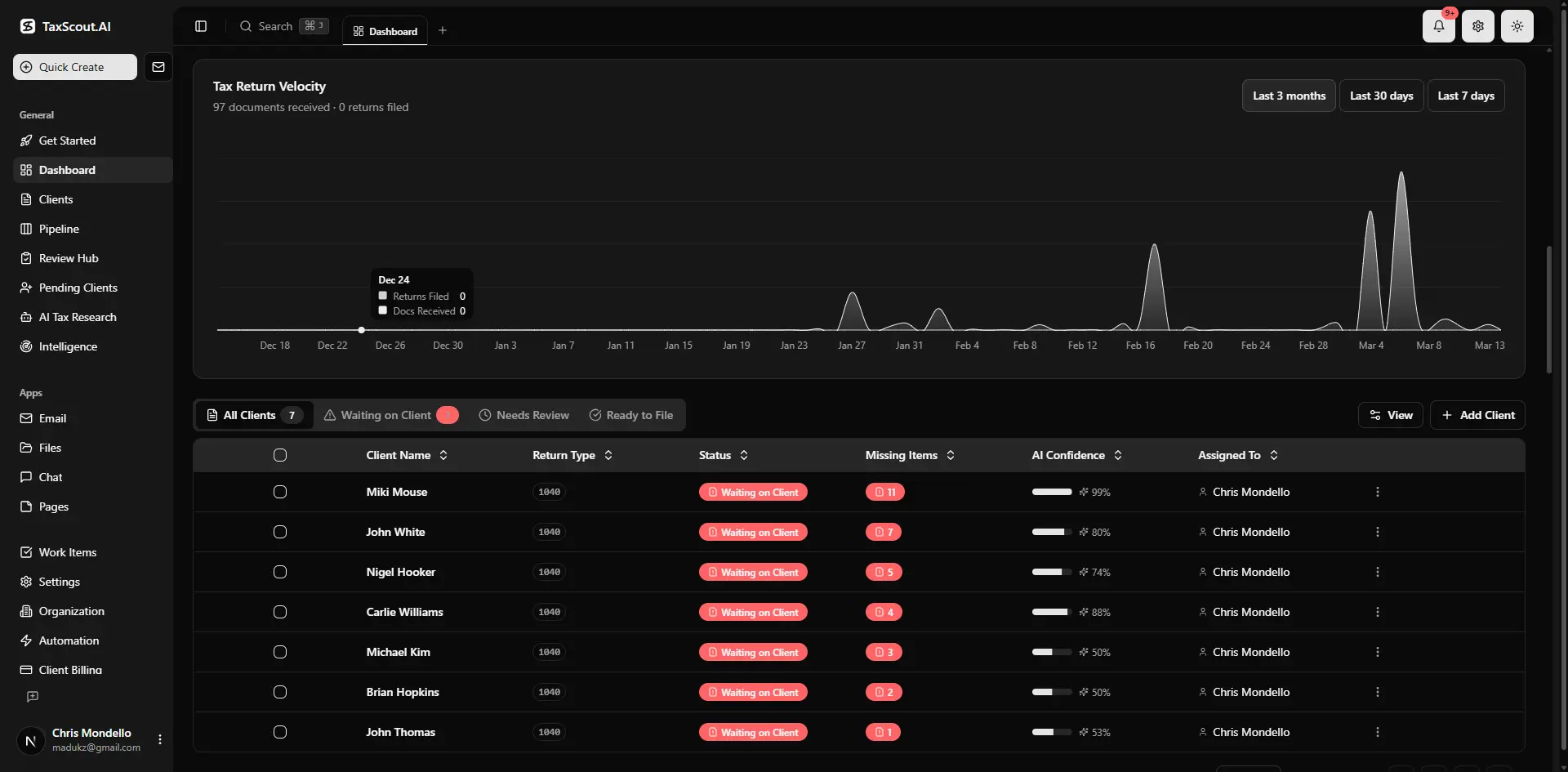
Real-time dashboard showing returns in progress, revenue, and upcoming deadlines
Want to stop researching proposed IRS regulations from scratch every time a new rule drops?
TaxScout gives your firm AI research agents, a client portal, and pipeline management built for CPA compliance workflows — flat pricing, unlimited team members.

Every client gets organized documents, status tracking, and a complete history
Primary Source and Next Steps
The full proposed rule is available at the Federal Register: Employer Contributions to Trump Accounts and Nondiscrimination Rules for Dependent Care Assistance Programs. Published August 11, 2026, document number 2026-16314.
This is proposed guidance — it is not yet effective. CPA firms should treat the comment period as the action window: identify affected clients, review plan documents, and brief employer clients on the potential testing changes before open enrollment season. Final regulations may differ materially from the proposed rule, so avoid making irrevocable plan amendments until the final rule is published in the Federal Register.
For firms that want to explore TaxScout's regulatory intelligence tools in the context of their own client base, a live demo is the fastest way to assess fit.
Ready to see the difference? TaxScout gives your firm AI extraction, 5-layer validation, and complete practice management — on flat firm pricing with unlimited team members. → Book a 15-Min Demo — See It Live
Frequently Asked Questions
Trump accounts are tax-advantaged savings vehicles for children introduced under recent federal legislation. Employers can make contributions to these accounts on behalf of eligible employees. The IRS proposed regulations published August 11, 2026 provide the first detailed guidance on how employer contributions must be structured, contribution timing, and the nondiscrimination rules that prevent plans from disproportionately benefiting highly compensated employees.
Keep reading
Backdoor Roth IRA: How CPAs Execute the Strategy Without Triggering Pro-Rata Tax
Oct 12, 2026 · 1 min read
Amended FBAR Procedures: How CPAs Correct Foreign Account Errors Without Triggering Penalties
Oct 12, 2026 · 1 min read
Transparency in Coverage Final Rules: What CPA Firms Must Do Now
Oct 12, 2026 · 1 min read
Stay up to date
Get the latest tax tech insights delivered to your inbox.