Depreciation Recapture Tax: How CPAs Minimize Client Liability on Asset Sales
Depreciation recapture tax is one of the most underestimated liabilities CPAs face when clients sell assets. After years of bonus depreciation, Section 179, and cost segregation deductions, the recapture exposure can easily dwarf the original tax savings. This guide walks through how to spot…
Depreciation recapture tax is one of the most underestimated liabilities in CPA advisory work. Clients spend years claiming deductions — bonus depreciation at 80% or 60%, Section 179 expensing on equipment, aggressive cost segregation on commercial buildings — and rarely think about what happens when they sell. You think about it for them, usually at the worst possible moment: after a letter of intent has been signed and the deal is already moving toward closing. Understanding depreciation recapture tax early in the client relationship — not just at the point of sale — is what separates proactive CPA advisory from reactive tax preparation.
The mechanics of recapture under IRC Sections 1245 and 1250 are well-established, yet almost no competitor content treats them as a standalone planning discipline. Recapture shows up as a footnote in 1031 exchange articles or a brief caveat in cost segregation studies, but there is no systematic guide for how CPAs should identify exposure, model the tax cost, and present client-ready options before the sale is done. This article fills that gap. Yet the depreciation recapture tax exposure embedded in those deductions can quietly dwarf the original tax savings when an asset is eventually sold.
Whether you are advising a manufacturing client selling a fleet of equipment, a real estate investor exiting a cost-segregated apartment complex, or a small business owner selling the building that houses their practice, the workflow is the same: spot the recapture exposure early, quantify it precisely, and model at least two or three strategies to reduce or defer the hit. The sections below walk through exactly how to do that. In each of these scenarios, depreciation recapture tax represents a calculable, and often reducible, liability that rewards CPAs who build it into their planning process from day one.
How Depreciation Recapture Tax Works: The Statutory Framework
The IRS depreciation recapture rules under Sections 1245 and 1250 of the Internal Revenue Code share a common principle: deductions taken in prior years that reduced ordinary income are partially or fully taxed as ordinary income on disposition, rather than receiving capital gains treatment. The distinction between the two sections turns on the type of property. For firms evaluating their depreciation recapture tax approach, this trade-off compounds over time.
Section 1245 recapture applies to most personal property — equipment, machinery, vehicles, furniture, and certain intangibles. It is the simpler and harsher rule: all accumulated depreciation (including bonus depreciation and Section 179 deductions) is recaptured as ordinary income up to the amount of gain realized. If a client bought a CNC machine for $200,000, fully expensed it under Section 179, and sells it three years later for $80,000, the entire $80,000 gain is ordinary income. There is no capital gain component until the proceeds exceed original cost. Each of these factors directly shapes how depreciation recapture tax plays out in practice.
Section 1250 recapture applies to real property. Under current law it recaptures only the excess of accelerated depreciation over straight-line depreciation as ordinary income — which for most property placed in service after 1986 (when ACRS gave way to MACRS straight-line for real property) means the actual recapture is often zero at the Section 1250 level. However, this creates a dangerous misconception: clients and even some practitioners assume there is no recapture problem on real estate. The unrecaptured Section 1250 gain rule under Section 1(h) closes that gap with a 25% maximum rate applied to the total accumulated straight-line depreciation, not just the excess. For heavily depreciated real estate, this is frequently the largest single tax cost in the transaction. Understanding depreciation recapture tax in this context is what separates firms that scale from those that stall.
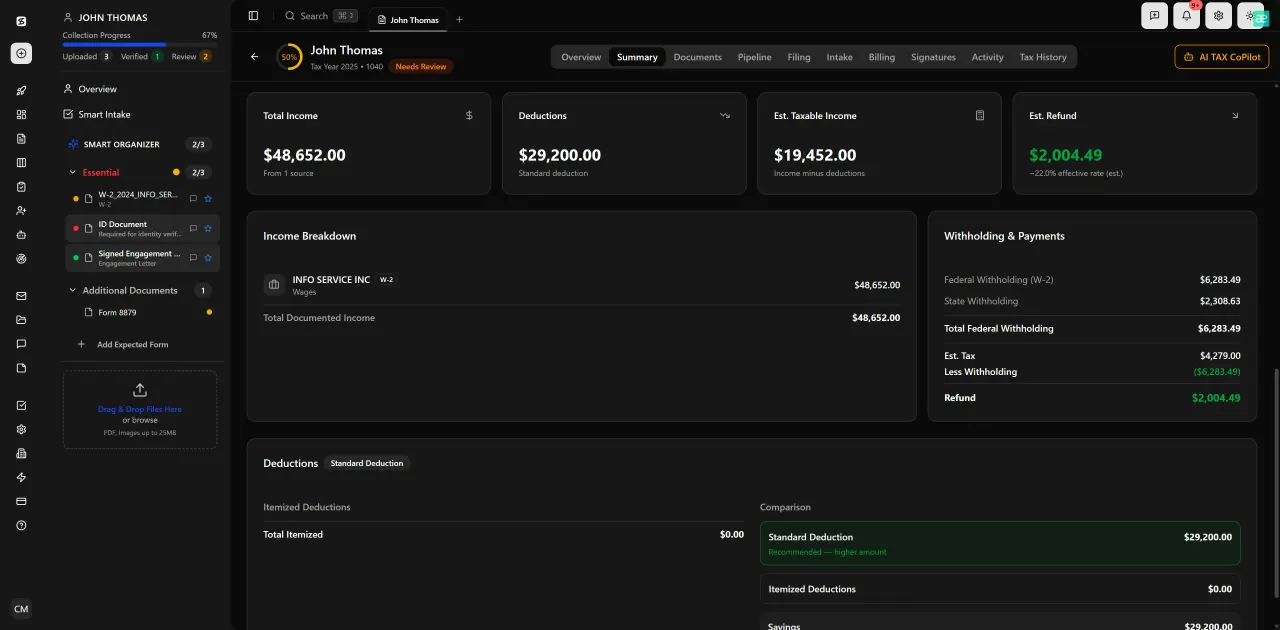
Review with AI assist — 9 agents answer questions with full client context
The 25% Unrecaptured Section 1250 Gain Trap on Real Estate
The unrecaptured Section 1250 gain rate is misunderstood at every level of the client conversation. A real estate investor who has owned a commercial building for 15 years, claimed $400,000 in straight-line depreciation (and an additional $150,000 through cost segregation on personal and land improvement components), intuitively expects to pay long-term capital gains rates on most of the gain. The reality is more expensive. This is precisely where a deliberate depreciation recapture tax strategy pays off.
On the real property component, all $400,000 of accumulated MACRS straight-line depreciation is subject to the 25% unrecaptured Section 1250 rate — not the 0%/15%/20% long-term capital gains rate. The $150,000 claimed on cost-segregated 5-year and 15-year personal property and land improvements falls under Section 1245 and is taxed as ordinary income up to that amount of gain. For a client in the 37% bracket, this means an effective blended rate on the depreciation recovery that can easily exceed 30%, before state tax. Depreciation recapture tax sits at the center of this decision — get it wrong and the rest unravels.
The cost segregation bonus depreciation compounding effect is especially acute for clients who took 80% or 60% bonus depreciation on reclassified property components in recent tax years. That accelerated deduction came off ordinary income at the top marginal rate; it now comes back as ordinary income on sale — at the same marginal rate. The net tax benefit from the aggressive depreciation strategy narrows significantly once you model the recapture. Clients who aggressively front-loaded deductions without a hold-period plan may find the net present value of that strategy was much smaller than projected. For a deeper look at how cost segregation intersects with recapture planning, see our guide on cost segregation studies for CPAs. When firms revisit their depreciation recapture tax priorities, the gaps usually surface here.
State tax compounds this further. Several high-tax states conform to federal depreciation but do not recognize Section 1250's favorable treatment, effectively taxing the full gain as ordinary income. CPAs serving clients in California should review the California Franchise Tax Board's depreciation conformity rules and cross-reference them against our California Tax Changes 2026 summary for current-year planning.
Tired of discovering recapture exposure after a client has already signed the purchase agreement?
TaxScout's AI research agents and client-context memory let you model asset sale scenarios during planning — not at closing.
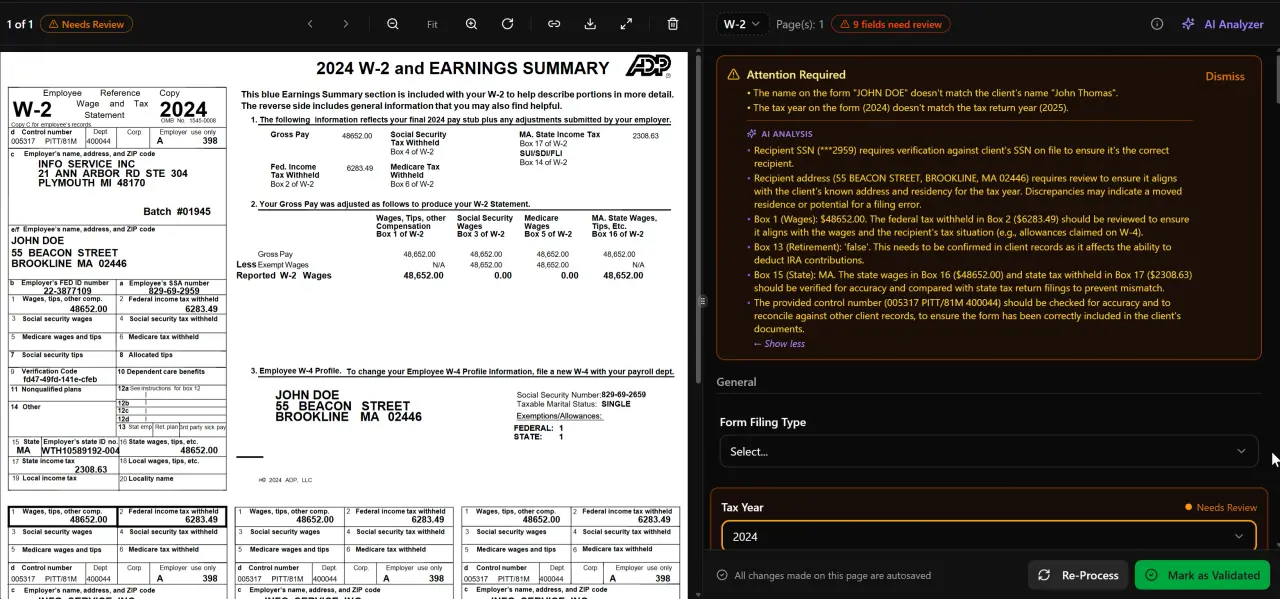
AI classifies, extracts, and validates every document automatically

Your clients see your brand — OTP login, document upload, and real-time status
Spotting Recapture Exposure Before the Sale: A CPA Workflow
Proactive recapture planning requires embedding an asset disposition review into the annual client meeting workflow — not waiting for a client to call with a signed LOI. The following steps form a repeatable process for identifying at-risk situations early.
Start with the depreciation schedule. Pull the current Form 4562 and any prior-year asset detail reports from your tax software. Look for three signals: (1) assets approaching full depreciation with a market value that likely exceeds book value, indicating latent Section 1245 exposure; (2) real property with accumulated MACRS depreciation exceeding 15% of current estimated value, triggering a material unrecaptured Section 1250 gain analysis; and (3) any cost segregation study performed in the past 10 years, which almost always means bonus depreciation was taken on reclassified components now subject to Section 1245 on sale. Flagging these signals early is the first step toward a defensible depreciation recapture tax position before the deal closes.
Next, estimate adjusted basis and tentative gain. For business equipment, adjusted basis is cost minus all depreciation claimed (including Section 179 and bonus). For real estate, adjusted basis is cost plus capital improvements minus all depreciation allowed or allowable — including depreciation the client failed to claim. The IRS regulations under Section 1016 require basis reduction for depreciation allowable even if not taken, a trap that catches both clients and preparers who missed deductions in prior years.
Once you have a tentative gain, allocate it across three buckets: ordinary income recapture (Section 1245 and actual Section 1250 excess), unrecaptured Section 1250 gain at 25%, and residual long-term capital gain. Apply the client's projected marginal rates and state tax to each bucket separately. This is the model you bring to the pre-sale planning conversation. Using TaxScout's AI research agents to cross-check the applicable IRS Publication 537 installment sale rules and current Section 1031 guidance adds a layer of research confidence you can document in the client file.
Section 1245 Recapture on Equipment Sales: What Changes With Bonus Depreciation Phase-Down
The Tax Cuts and Jobs Act introduced 100% bonus depreciation for qualified property, which phased down to 80% in 2023, 60% in 2024, and 40% in 2025 under the TCJA sunset schedule. CPAs advising clients who took 80% or 60% bonus on equipment purchases in 2023 and 2024 now face a growing wave of Section 1245 recapture exposure as those assets are sold or traded before the end of their MACRS recovery periods. For many of these clients, the depreciation recapture tax bill arriving at sale will be the first time they truly reckon with the cost of front-loaded expensing.
The mechanics are straightforward but the client communication is not. A client who purchased $500,000 of manufacturing equipment in 2023, claimed $400,000 (80%) as bonus depreciation plus $25,000 of regular MACRS on the remaining basis, now has an adjusted basis of $75,000. If the equipment sells for $180,000, the entire $105,000 gain is Section 1245 ordinary income. The client's expectation — that selling business equipment for less than purchase price means a modest tax bill — is wrong. The tax is on the gain over adjusted basis, not over original cost.
For clients planning equipment upgrades or fleet replacements, the recapture modeling should happen before the trade-in or sale is executed. In many cases, structuring the transaction as a like-kind exchange under Section 1031 (now limited to real property at the federal level under TCJA) is no longer available for personal property — but installment sale treatment under Section 453 may still spread the ordinary income across multiple years and reduce the current-year effective rate. Review the TCJA sunset implications for any multi-year planning strategy that relied on 100% bonus expensing.

Every client gets organized documents, status tracking, and a complete history
Deferral and Reduction Strategies: Options to Present Before Closing
Once you have quantified the recapture exposure, the planning conversation moves to four primary strategies. Each has conditions, costs, and tradeoffs that belong in the client advisory memo.
Installment sale treatment under Section 453 is the most accessible deferral tool for both equipment and real estate. Rather than receiving the full sale price in year one, the client receives payments over multiple years. Ordinary income recapture under Sections 1245 and 1250 is recognized in the year of sale regardless — a mandatory front-loading rule that many practitioners overlook. However, the residual capital gain and unrecaptured Section 1250 gain can be spread across the payment schedule, reducing the current-year tax spike. The interest element on deferred payments is ordinary income, and the applicable federal rate from IRS Revenue Rulings applies to impute interest if the stated rate is below market. Installment sale treatment is particularly useful when the client will be in a lower bracket in future years or anticipates significant capital loss carryforwards. Even with these advantages, the depreciation recapture tax component due in year one deserves its own line in the client's cash flow plan.
Section 1031 like-kind exchange remains the gold standard for deferring recapture on real property. All gain — including unrecaptured Section 1250 gain and any Section 1250 ordinary income recapture — is deferred if the exchange rules are satisfied: the replacement property must be identified within 45 days and acquired within 180 days of the relinquished property closing. The deferred recapture carries forward into the replacement property's basis, meaning it is not eliminated, only postponed. For clients with a genuine long-term hold strategy or estate planning intentions (stepped-up basis at death eliminates the deferred recapture permanently), the 1031 is often the right answer. Confirm the exchange mechanics against Treasury Regulation 1.1031 to ensure your client's transaction qualifies.
Qualified Opportunity Zone investments under Section 1400Z-2 allow a client to defer capital gain (but not ordinary income recapture) by reinvesting realized gain into a Qualified Opportunity Fund within 180 days. The deferral runs until December 31, 2026 under current law (or earlier sale), at which point the deferred gain is recognized. Gain on the QOF investment itself may be excluded if the fund is held 10 years. Because ordinary income recapture is excluded from the deferral mechanism, QOZ treatment is most effective when the recapture component is small relative to total gain — typical of long-held real estate with modest accumulated depreciation relative to appreciation. Clients should understand upfront that their remaining depreciation recapture tax exposure will still be due when the deferral period ends.
Charitable remainder trusts and structured gifting represent a fourth lane for clients with philanthropic intent and concentrated appreciated assets. A client who transfers a fully depreciated commercial building to a charitable remainder unitrust avoids immediate recognition of gain, takes a partial charitable deduction, and receives an income stream for life. The trust recognizes and pays tax on gain as distributions are made, but the client-level recapture is eliminated. This strategy requires collaboration with an estate planning attorney and should be modeled alongside the client's broader succession plan. You can find related planning content across other blog resources on advisory topics.
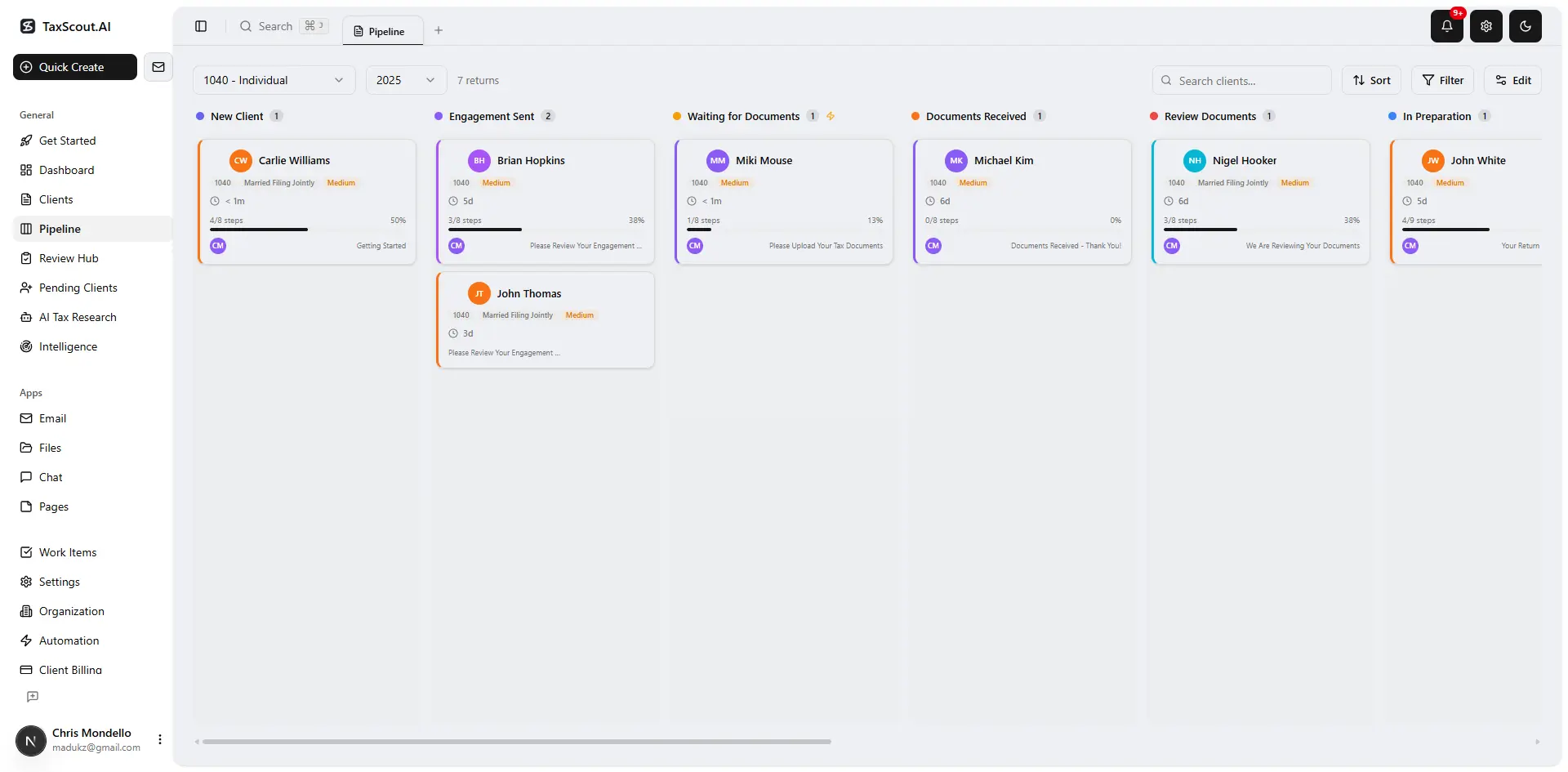
Track every return from intake to filed with drag-and-drop pipeline management
Recapture Deferral Strategy Comparison for CPAs
| Strategy | Recapture Deferred? | Best For | Key Limitation |
|---|---|---|---|
| Installment Sale (Sec. 453) | Partial — capital gain only; recapture due in year 1 | Moderate gain, multi-year cash flow | Mandatory recapture front-loading; interest income on deferred payments |
| 1031 Like-Kind Exchange | Yes — all gain including recapture | Real property; long-term hold or estate plan | Personal property excluded post-TCJA; strict 45/180-day timeline |
| Qualified Opportunity Zone | Capital gain only — not ordinary income recapture | Large appreciation over recapture component | Deferred gain recognized by Dec 31, 2026 or earlier exit |
| Charitable Remainder Trust | Client-level recapture eliminated | Philanthropic clients with concentrated assets | Irrevocable transfer; requires estate attorney coordination |
Building the Client Advisory Memo: Communicating Recapture in Plain Language
The technical accuracy of your recapture model means nothing if the client does not understand why the tax bill looks the way it does. The advisory memo should translate the statutory mechanics into a simple narrative: 'The IRS views the depreciation deductions you claimed in prior years as a loan. When you sell the asset, the depreciation recapture tax comes due — but instead of repaying it at capital gains rates, a portion is repaid at your ordinary income rate.'
Structure the memo in three sections. First, a summary table showing estimated sale proceeds, adjusted basis, total gain, and the allocation across recapture, unrecaptured Section 1250 gain, and long-term capital gain. Second, a side-by-side comparison of at least two strategies — for example, outright sale versus installment sale, or outright sale versus 1031 exchange — showing estimated federal and state tax for each, net after-tax proceeds, and the key conditions required. Third, a decision timeline flagging the dates that matter: the 45-day identification window if a 1031 is under consideration, the year-end deadline for recognizing gain in a lower-bracket year, or the QOF investment deadline.
Use the TaxScout client portal to deliver the memo securely and collect e-signature acknowledgment on the advisory disclosure. The pipeline management workflow can hold an 'Asset Sale Planning' stage with checklist items for each strategy option, ensuring nothing is missed between the initial modeling conversation and the closing date. For document-intensive transactions — especially 1031 exchanges that require exchange agreement review — the AI document extraction workflow accelerates review of closing statements, exchange agreements, and replacement property contracts.
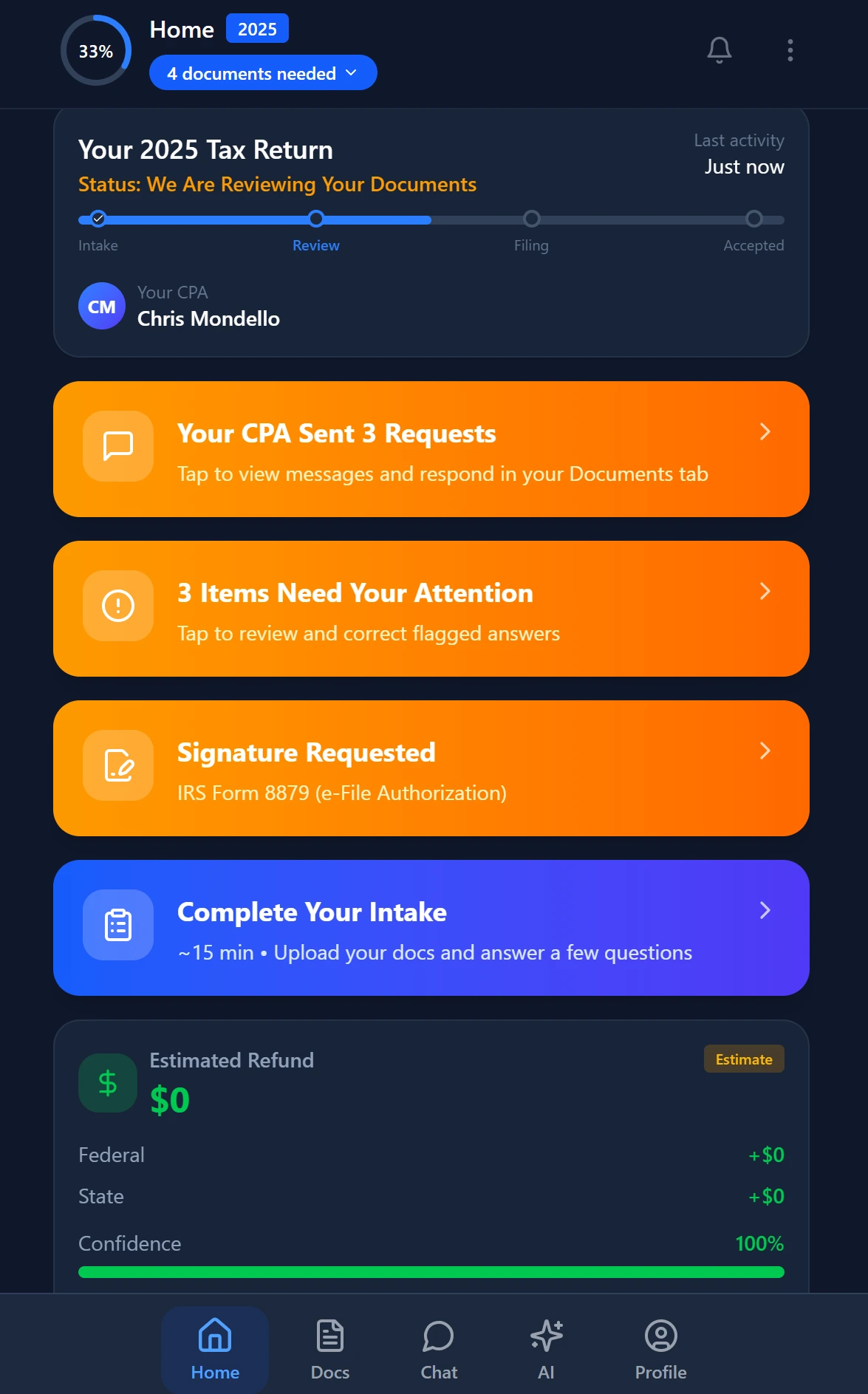
Smart intake auto-fills from uploaded documents and prior-year data
How TaxScout Supports Recapture Planning Workflows
Depreciation recapture analysis is not a once-a-year task — it surfaces in mid-year calls, due diligence reviews, and post-filing planning sessions. Having the client's prior-year return data, depreciation schedules, and entity structure available in a single workspace reduces the time from 'client just called about a sale' to 'memo is ready for review' from hours to minutes.
TaxScout's client-context AI memory retains entity structures, filing history, and prior return data, so when a client mentions a pending asset sale, you are not rebuilding the depreciation schedule from scratch. The AI research agents can search current IRS Publications, Treasury regulations, and Cornell Law's CFR archive for the latest Section 1245 and 1250 guidance in real time, with source citations you can include in the client file. The 9 specialized agents cover tax law, IRS procedural guidance, and related compliance areas — reducing the risk that a last-minute regulatory change affects the strategy recommendation without your knowledge.
For firms managing multiple clients with active disposition planning, the pipeline management kanban with 12 customizable stages provides a real-time view of every deal in flight — from initial modeling through strategy selection through closing. No deal falls through the cracks because someone forgot to check the 45-day exchange identification deadline. Explore TaxScout's pricing to see how the platform scales to firms of any size without per-user fees.
Ready to build a recapture planning workflow your clients will actually value?
TaxScout gives you the AI research, document review, and client communication tools to turn every asset sale into a proactive advisory engagement.

Click any extracted field to see its source highlighted on the original PDF
Frequently Asked Questions
Depreciation recapture tax requires taxpayers to recognize as ordinary income (or at a 25% rate for real estate) the deductions previously taken for depreciation when a depreciable asset is sold at a gain. It applies to business equipment under Section 1245 and to real property under Section 1250, including the unrecaptured Section 1250 gain rules that tax accumulated straight-line depreciation on real estate at a maximum 25% federal rate.
Keep reading
Backdoor Roth IRA: How CPAs Execute the Strategy Without Triggering Pro-Rata Tax
Oct 12, 2026 · 1 min read
Amended FBAR Procedures: How CPAs Correct Foreign Account Errors Without Triggering Penalties
Oct 12, 2026 · 1 min read
Backdoor Roth IRA: How CPAs Execute the Strategy for High-Income Clients
Oct 12, 2026 · 1 min read
Stay up to date
Get the latest tax tech insights delivered to your inbox.