Client Billing Disputes: How CPAs Resolve Fee Conflicts Without Losing the Relationship
Most CPA content covers pricing and collections but skips the critical middle layer: what to do when a client actually disputes an invoice. This guide walks through response scripts, escalation paths, and documentation practices that protect your revenue without destroying the client relationship.
Client billing disputes arrive at the worst possible moment — usually after a complex return season, often by email, and almost always with some emotional charge behind them. The client isn't questioning your competence, they're questioning your value, and those are very different problems requiring very different responses.
Most published content on CPA firm revenue either covers how to set prices or how to collect overdue invoices. The gap between those two topics — what you say and do when a client pushes back on an invoice they received two days ago — is almost entirely unaddressed. There are no scripts, no escalation flowcharts, no guidance on when to hold firm versus when a credit is the right business decision. Yet client billing disputes are among the most common and costly relationship friction points CPA firms face.
This guide fills that gap. You'll find response frameworks, a tiered escalation policy you can adapt for your firm, the legal documentation practices that protect you afterward, and advice on how practice management infrastructure can reduce disputes before they start. Whether you're dealing with client billing disputes for the first time or looking to build a repeatable resolution process, every section is designed to be immediately actionable.
Why Client Billing Disputes Happen in CPA Firms
Before you can resolve a billing dispute, it helps to understand what actually triggers them. Disputes in accounting firms cluster around a small number of recurring causes, and most of them originate upstream — long before the invoice lands. Recognizing these patterns is the first step toward preventing client billing disputes from escalating into something that damages the relationship or the firm's revenue.
The most common trigger is scope ambiguity. When an engagement letter describes services in broad strokes ("preparation of your federal and state income tax returns"), clients naturally underestimate what complexity looks like in practice. A Schedule E with four rental properties, K-1s from three partnerships, and a mid-year entity conversion will cost more than a simple 1040 — but if the client didn't understand that going in, the invoice feels like a surprise. For firms evaluating their client billing disputes approach, this trade-off compounds over time.
The second trigger is communication gaps during the work. If a client never heard from you during the engagement, they have no mental model of the effort involved. An invoice arriving out of nowhere for $2,400 reads as arbitrary. Clients who received mid-project updates, even brief ones, accept higher invoices far more readily because they watched the work happen. Each of these factors directly shapes how client billing disputes plays out in practice.
Third is pricing model mismatch. Firms that still bill hourly expose themselves to disputes because the client can always question how long something should have taken. Flat-fee and value-based models shift the conversation from hours to outcomes, reducing the attack surface for disputes substantially. Our broader overview of CPA firm pricing models covers the tradeoffs in detail. Understanding client billing disputes in this context is what separates firms that scale from those that stall.
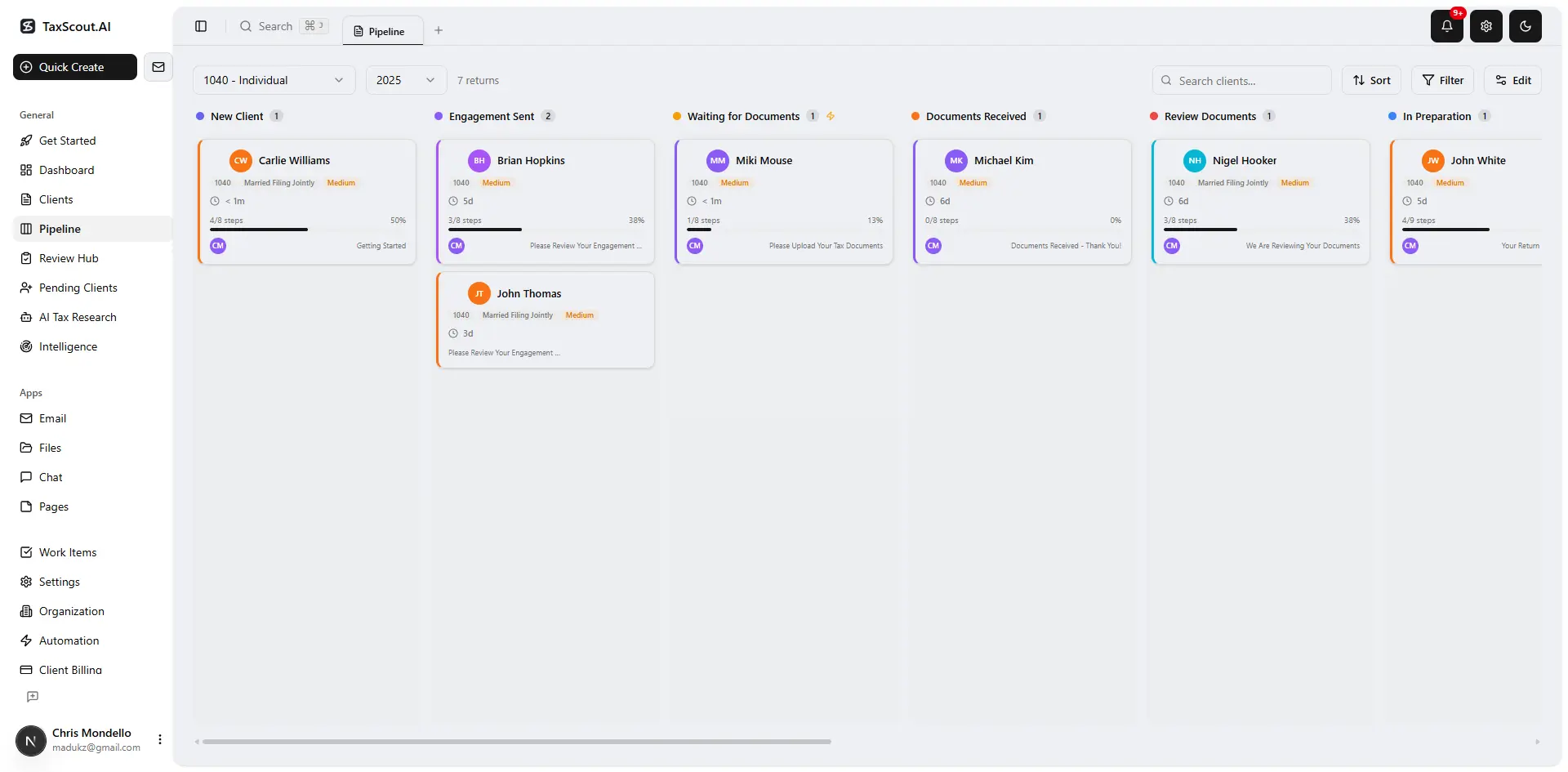
Track every return from intake to filed with drag-and-drop pipeline management
The First Response: What to Say in the First 24 Hours
When a client disputes an invoice, your first response sets the tone for everything that follows. The instinct to defend immediately — to explain why every line item was justified — is understandable but usually counterproductive. Clients in dispute mode aren't ready to receive information; they need to feel heard first. This is precisely where a deliberate client billing disputes strategy pays off.
A response that works in almost every scenario follows this structure: acknowledge the concern, affirm the relationship, state that you'll review, and give a timeline. Here is a template you can adapt: "Thank you for reaching out about the invoice. I want to make sure we're completely aligned on the work we completed and the value it delivered. Let me pull the file and review the scope against what we discussed in your engagement letter. I'll come back to you by [specific date] with a full breakdown. Your trust in this firm matters to me, and I want to make sure we handle this the right way." Client billing disputes sits at the center of this decision — get it wrong and the rest unravels.
What this response does: it buys you time to assess the dispute on the merits rather than responding reactively, it signals that you take the client seriously, and it invokes the engagement letter as the reference document — which shifts the frame to a contractual one without sounding adversarial. Notice it does not apologize for the fee, discount anything, or promise a resolution. Those decisions come after you've reviewed the facts. When firms revisit their client billing disputes priorities, the gaps usually surface here.
Speed matters. Research from the American Bar Association on fee dispute resolution shows that disputes that go unacknowledged for more than 48 hours escalate significantly more often than those that receive a prompt, professional response. The same pattern holds in accounting.
Tired of billing disputes catching you off guard?
TaxScout's invoicing tools, e-signature engagement letters, and client portal give you a documented paper trail for every engagement — so when a dispute arises, you have the evidence to resolve it fast.
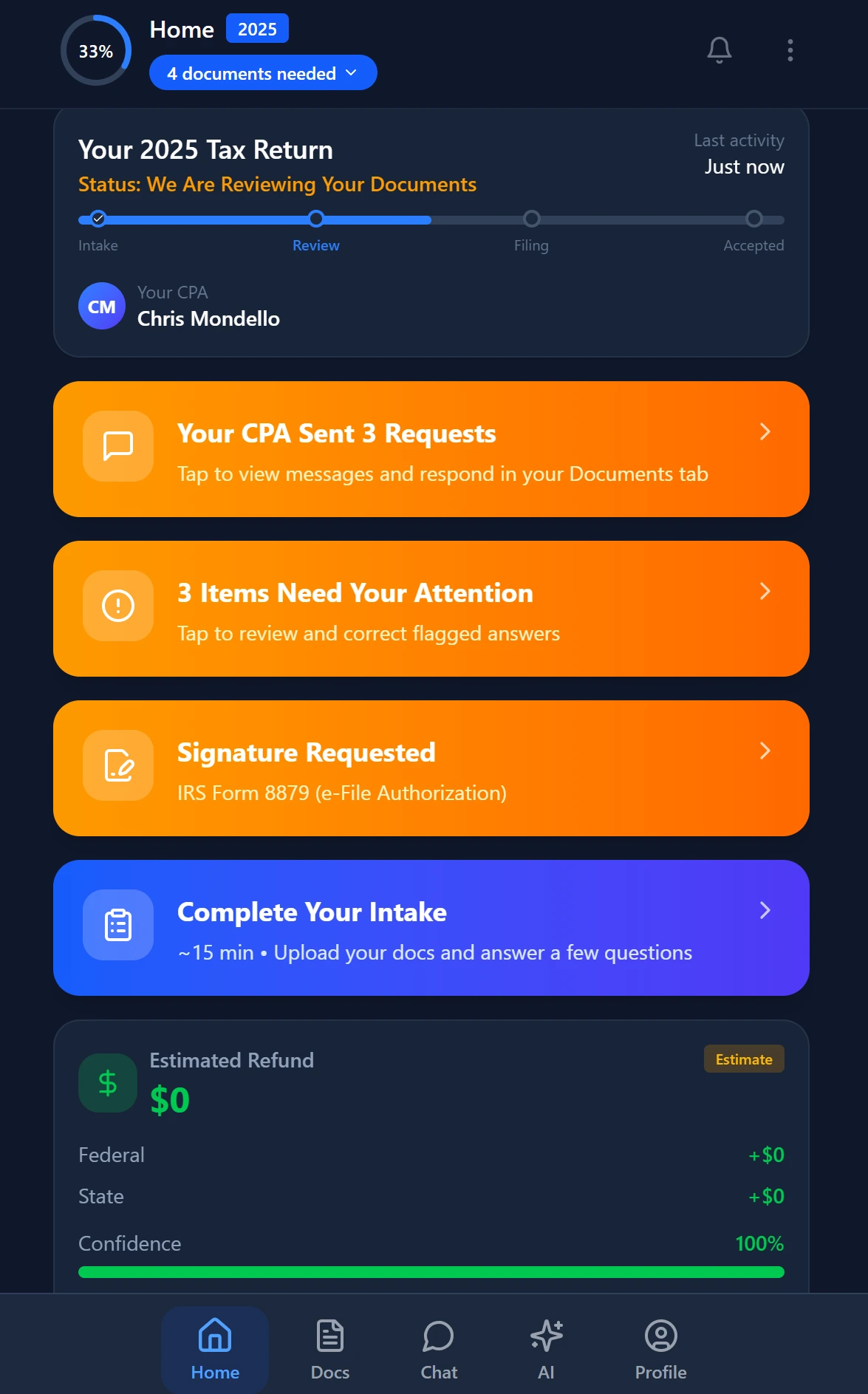
Smart intake auto-fills from uploaded documents and prior-year data
When to Stand Firm and When to Offer a Credit
The hardest judgment call in CPA fee dispute resolution is deciding whether to hold your position or extend a goodwill credit. Neither answer is always right. The decision turns on four factors: the merits of the dispute, the lifetime value of the client, the firm precedent the decision sets, and the documentation supporting your original fee.
Stand firm when: (1) the engagement letter clearly described the services and the fee or billing basis; (2) the out-of-scope work was discussed and authorized in writing before you performed it; (3) the client's objection is based on a misunderstanding you can clarify with facts; or (4) granting a credit here would create an expectation that you negotiate every invoice. Many clients who dispute once and lose gracefully become your most loyal long-term clients, because the interaction demonstrated that you are consistent and professional.
Offer a credit or adjustment when: (1) the scope communication was genuinely unclear and a reasonable client could have expected a lower fee; (2) the invoice contains a billing error you can confirm; (3) the client relationship has significant long-term revenue and the disputed amount is relatively small; or (4) you made an out-of-scope judgment call without informing the client first. A credit in these cases is not weakness — it is a signal that your firm operates with integrity. Per guidance from the AICPA Code of Professional Conduct, CPAs have an obligation to communicate the basis of their fees and to handle billing disputes transparently.
Document your decision either way. Whether you hold the original fee or issue a credit, send a written summary that explains the outcome and its basis. This closes the dispute formally and creates a record you can reference if the issue resurfaces.

Your clients see your brand — OTP login, document upload, and real-time status
A Three-Tier Escalation Policy for Invoice Disputes
Ad hoc dispute handling is one of the clearest signals of an immature firm operations model. Every firm handling more than a handful of clients per year should have a written CPA invoice escalation policy — a tiered framework that defines who handles disputes at each stage and what resolution authority they hold. Here is a policy structure that works for solo and multi-partner firms alike.
Tier 1 — Staff or preparer level. Disputes involving invoices under a firm-defined threshold (commonly $250–$500) can be resolved by the assigned preparer with a credit up to that threshold, no partner approval required. This prevents small disputes from consuming partner time and resolves the majority of friction before it escalates. The preparer documents the resolution and flags it for the partner's monthly review.
Tier 2 — Manager or partner review. Disputes above the Tier 1 threshold, or any dispute where the client has escalated their tone or threatened a chargeback, move to the manager or responsible partner. This person reviews the engagement letter, time records or work log, any documented scope changes, and the client's stated objection. They have authority to stand firm, offer a partial credit, or escalate further.
Tier 3 — Formal dispute resolution. If a client disputes an invoice of significant size and is unwilling to accept the firm's Tier 2 response, the firm invokes its formal dispute resolution clause (which should appear in your standard engagement letter). Most state CPA societies provide fee dispute resolution resources and some offer mediation programs. Consult your state board — for example, the California Board of Accountancy maintains consumer complaint and dispute guidance that applies to licensed CPAs practicing in the state.
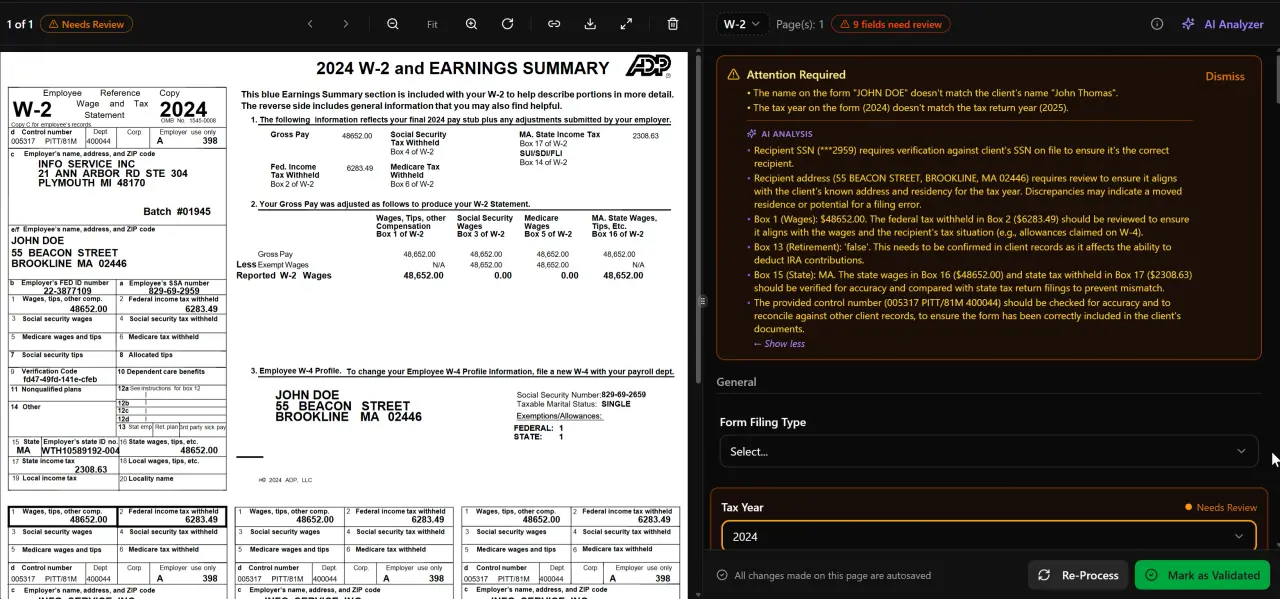
AI classifies, extracts, and validates every document automatically
Documenting Dispute Outcomes to Protect the Firm
Every resolved billing dispute should produce a written record stored in the client file. This is not bureaucratic overkill — it is essential risk management. If a client later claims they overpaid, disputes a chargeback with their bank, or files a complaint with the state board, your documentation is your defense.
At minimum, the dispute record should include: the original invoice number and amount, the date and channel of the client's objection, a summary of the client's stated reason for disputing, the firm's internal assessment (who reviewed it, what they reviewed), the resolution decision and its rationale, and any credit memo or revised invoice issued. If you adjusted the fee, a credit memo should be generated and signed off — not just a verbal agreement.
The resolution letter or email to the client should be retained in the same file. Many CPAs send a brief letter that confirms the resolution and thanks the client for bringing the matter to their attention. This letter also provides an opportunity to reference any engagement letter update that will prevent the same misunderstanding on the next engagement. See the write-down and write-off billing glossary entries for the technical billing treatment of these adjustments in your practice management records.
For firms using electronic engagement letters and invoicing, the documentation chain is easier to maintain — every signature, timestamp, and payment event is already logged. TaxScout's e-signatures and invoicing tools create this audit trail automatically, which means the records exist whether or not a dispute eventually arises.
Updating Engagement Letters After a Dispute
The most valuable outcome of any billing dispute is the process improvement it reveals. Every dispute is evidence of a gap — in your engagement letter language, your mid-project communication cadence, your scope change authorization process, or your fee-setting methodology. Treating disputes as signals rather than one-off friction events is what separates high-performing firms from reactive ones.
After resolving a dispute, review the engagement letter language that governed the engagement. Was the scope defined with enough specificity? Did it include a change-order clause that required written authorization for out-of-scope work? Did it describe the billing basis clearly, including what happens when complexity exceeds initial estimates? Treasury regulations and the IRS Circular 230 do not dictate engagement letter language, but they do establish standards of practice that CPAs are expected to meet — and a clear, well-drafted engagement letter is a foundational element of that standard.
Update your standard engagement letter template each time a dispute reveals a gap. If multiple clients have disputed the same type of fee, that is a strong signal the language is ambiguous for that service line. A well-written engagement letter is your first and most effective dispute-prevention tool — and it costs nothing to improve it after each season. For additional operational improvements, the post-tax season review framework is a good place to embed this letter review into your annual workflow.
For broader templates and best practices across your firm's practice management operations, see other blog resources covering workflow, billing, and client communication.

Every client gets organized documents, status tracking, and a complete history
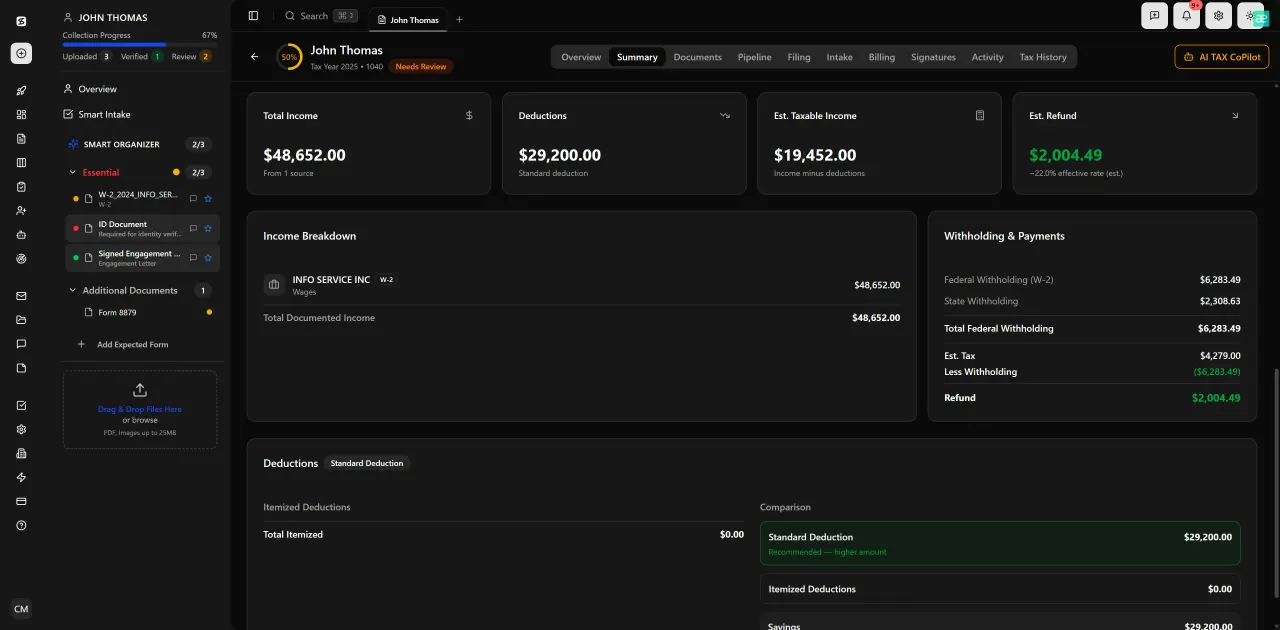
Review with AI assist — 9 agents answer questions with full client context
How Practice Management Tools Reduce Billing Disputes
The firms that experience the fewest client billing disputes are not necessarily the ones with the best interpersonal skills — they are the ones with the clearest systems. Practice management infrastructure that creates a documented, transparent record of every client interaction removes the ambiguity that disputes feed on.
Specifically, disputes decrease when: (1) engagement letters are signed electronically before work begins, creating a timestamped record of what the client agreed to; (2) scope changes are documented and countersigned through a change-order workflow rather than handled verbally; (3) invoices are sent through a portal where the client can see a description of work, not just a dollar amount; and (4) invoice delivery is tracked so you know when the client opened it, removing the "I never got it" response.
TaxScout's client portal supports all of these workflows in a single platform. Clients receive branded portal access, view and sign engagement letters via e-signatures, and receive invoices through Stripe Connect Express — with each step logged automatically. The pipeline management board with 12 customizable stages lets you track where every engagement stands, so nothing moves to invoicing without the prior steps being complete. When a dispute arises, the audit trail is already built.
Per-user pricing from competitors like TaxDome and Canopy can create pressure to cut corners on documentation workflows as firms grow, because adding a staff member increases the platform cost. TaxScout charges a flat rate with unlimited team members, so there is no financial disincentive to giving every person on your team full access to the systems that prevent disputes.
How CPA practice management platforms support billing dispute prevention
| Feature | TaxScout | TaxDome | Canopy |
|---|---|---|---|
| E-signature engagement letters | Included (all plans) | Add-on / limited | Available |
| Client portal with invoice delivery | Included | Included | Included |
| Stripe-connected invoicing with audit trail | Included | Included | Included |
| Unlimited team members (flat price) | Yes — no per-seat fee | No — ~$100/user/month | No — ~$45/user/month per module |
| AI document processing to validate scope | 5-layer extraction pipeline | Not available | Not available |
| Smart intake with change documentation | Included | Not available | Smart Intake $11/client extra |
Scripts for Common Billing Dispute Scenarios
Having a policy is one thing; knowing what to say in the moment is another. Below are response frameworks for three common billing dispute scenarios that CPAs face.
Scenario 1: Client claims the fee was higher than expected. Response: "I understand the invoice was more than you anticipated. Let me walk you through exactly what was included. [Describe scope items.] All of this was covered under Section [X] of your engagement letter, which you signed on [date]. The scope expanded from a standard return because [specific reason]. I'm happy to review this with you on a call — I want to make sure you see the full picture of what was involved." If the scope was clear and authorized, hold the fee and provide documentation. If the scope was ambiguous, a partial credit may be appropriate.
Scenario 2: Client claims they were double-billed or that a specific line item is wrong. Response: "Thank you for flagging this — billing accuracy matters to us. Let me pull the invoice and the underlying work record to verify. I'll come back to you within one business day with a confirmed breakdown. If there is an error, we will correct it immediately." If there is an error, fix it without defensiveness and issue a credit memo. If there is no error, explain the basis of each line item with reference to the work performed.
Scenario 3: Client threatens a chargeback or social media review. This scenario requires a calm but firm response that redirects to your dispute resolution process: "I take your concern seriously and I want to resolve this professionally. I'd like to schedule a call to walk through the invoice together before we take any further steps. A chargeback or public review doesn't give us the opportunity to actually address what happened — a direct conversation does. Can we connect on [date/time]?" Document this interaction in full, involve a partner, and do not make concessions under threat. The SSA's guidelines on professional dispute resolution and most state CPA society ethics guidance make clear that yielding to pressure rather than merit undermines the profession's standards.
Want fewer billing disputes and a cleaner audit trail when they do happen?
TaxScout gives your firm e-signed engagement letters, automated invoicing, and a full client portal — all at a flat monthly rate with no per-user fees.

Click any extracted field to see its source highlighted on the original PDF
Frequently Asked Questions
Acknowledge the concern promptly (within 24 hours), affirm the relationship, and state that you will review the engagement against the signed engagement letter before providing a breakdown. Avoid apologizing for the fee or discounting anything before you have assessed the dispute on the merits.
Keep reading
Engagement Profitability Analysis: How CPAs Find Which Clients Actually Make Money
Sep 14, 2026 · 1 min read
Tax Preparation Fees in 2026: What CPAs Charge and How to Price Competitively
Sep 1, 2026 · 1 min read
Billable Hours Recovery for CPA Firms: How AI Captures What You're Missing
Aug 19, 2026 · 1 min read
Stay up to date
Get the latest tax tech insights delivered to your inbox.