Automatic Enrollment Requirements Under Section 414A: What CPA Firms Must Do Now
The IRS published final regulations on November 18, 2026 implementing the automatic enrollment requirements under Section 414A, a SECURE 2.0 Act mandate affecting most new and existing 401(k) and 403(b) plans. CPA firms with small business, S-corp, and partnership clients must act immediately to…
On November 18, 2026, the IRS and Treasury published final regulations on automatic enrollment requirements under Section 414A in the Federal Register. The rules finalize guidance implementing the SECURE 2.0 Act of 2022 mandate that certain cash or deferred arrangements (CODAs) and salary reduction agreements must be structured as eligible automatic contribution arrangements (EACAs) meeting specific contribution and notice requirements.
This is not a proposed rule or an advance notice — it is a final regulation with immediate operational consequences for a broad swath of retirement plans. CPA firms whose client rosters include closely held businesses, S-corps, partnerships, and nonprofits with 403(b) plans need to triage their exposure now. The window before the next plan year is narrow. CPA firms whose client rosters include closely held businesses, S-corps, partnerships, and nonprofits with 403(b) plans need to triage their exposure now, as the automatic enrollment requirements under section 414a apply broadly across plan types.
This brief cuts through the Federal Register language to give CPA firm owners the entity-level impact map and a concrete action list for this week. For broader regulatory news affecting your practice, see other news resources. This brief cuts through the Federal Register language to give CPA firm owners a clear understanding of the automatic enrollment requirements under section 414a, an entity-level impact map, and a concrete action list for this week.
What the Final Rule Actually Changes
Before SECURE 2.0, automatic enrollment was optional for most plan sponsors. The SECURE 2.0 Act of 2022 changed that calculus. For plan years beginning after December 31, 2024, most newly established 401(k) and 403(b) plans are required to include an eligible automatic contribution arrangement. The Section 414A final regulations issued November 18, 2026 now provide the definitive compliance framework plan sponsors must follow. The automatic enrollment requirements under section 414a codify this mandate, establishing the specific design and operational standards that newly established plans must satisfy beginning with plan years after December 31, 2024.
The core requirements under the finalized rules: (1) initial automatic deferral rate of at least 3% but no more than 10% of compensation; (2) automatic annual escalation of 1 percentage point per year until the deferral rate reaches at least 10% (but no more than 15%); (3) a 90-day permissive withdrawal window for participants who do not wish to participate; and (4) annual notice to employees before each plan year. These are EACA requirements — plans that already operated as EACAs under prior law will need to verify their documents conform to the final rule's specific parameters rather than relying on pre-SECURE 2.0 guidance. For firms evaluating their automatic enrollment requirements under section 414a approach, this trade-off compounds over time.
Critically, the final regulations also address the interaction between the automatic enrollment mandate and the Internal Revenue Code's nondiscrimination testing rules, confirming that EACA status can still be used to extend the correction period for excess contributions from 2.5 months to 6 months after plan year-end — a planning point that matters for small plan sponsors. Each of these factors directly shapes how automatic enrollment requirements under section 414a plays out in practice.
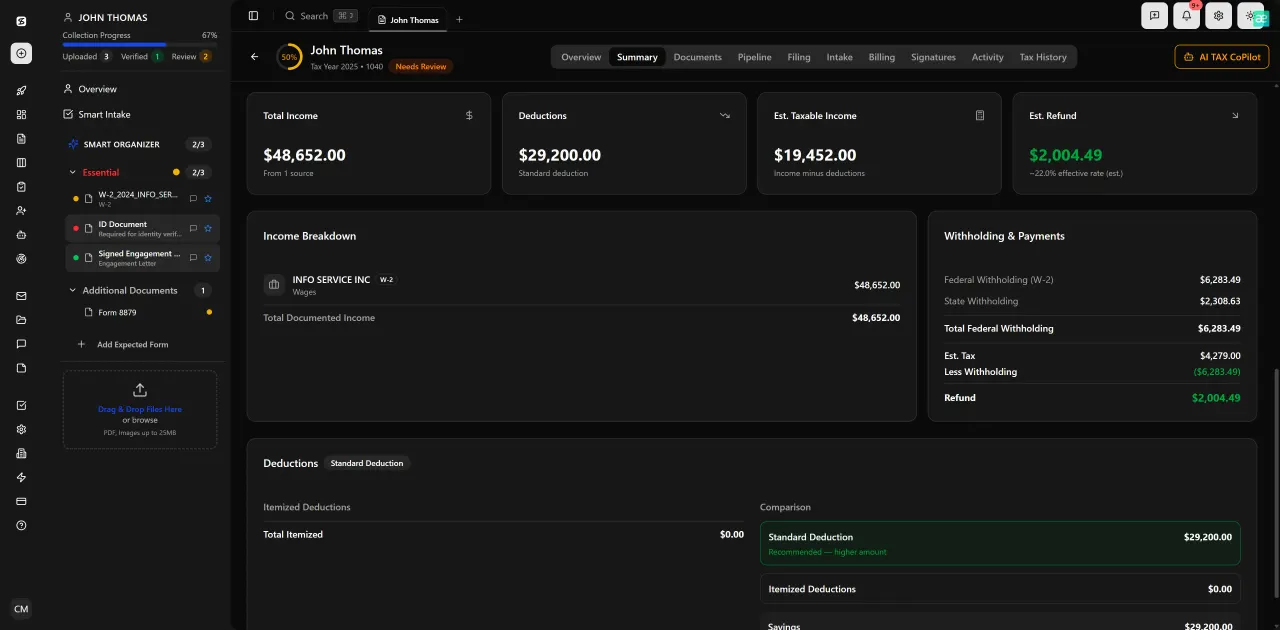
Review with AI assist — AI agents answer questions with full client context
Which Client Segments Are Affected
Tired of manual workflows slowing your firm down? See how TaxScout handles this with AI-powered automation. → Book a 15-Min Demo Understanding automatic enrollment requirements under section 414a in this context is what separates firms that scale from those that stall.
Not every client needs immediate action. Here is the entity-level breakdown CPA firms should use to triage their book: This is precisely where a deliberate automatic enrollment requirements under section 414a strategy pays off.
New 401(k) and 403(b) plans established after December 29, 2022 are subject to the automatic enrollment mandate for plan years beginning after December 31, 2024. If your small business or S-corp client launched a new 401(k) in 2023 or later and has not yet implemented automatic enrollment, they are potentially out of compliance right now.
Existing plans established on or before December 29, 2022 are generally grandfathered from the automatic enrollment mandate, but only if the plan has not been subject to certain merger or acquisition events that could strip grandfathered status. Review any client who changed ownership structure, merged entities, or added a new plan document since 2022.
S-corps and partnerships are common plan sponsors in a mid-size CPA firm's book. Many of these clients use third-party administrators (TPAs) but rely on their CPA for high-level compliance awareness. The Section 414A final regulations are a TPA issue operationally, but the initial trigger — identifying whether a client's plan is subject to the mandate — typically falls on the advisor relationship.
Nonprofits with 403(b) plans are covered. Churches and governmental plans remain exempt under the statute, but the typical nonprofit client with a standard 403(b) is not. If you handle Form 990 and payroll tax work for nonprofit clients, add a 403(b) plan-document review to your engagement scope.
Solo 401(k) plans for self-employed clients — including sole proprietors and single-member S-corps with no non-owner employees — are excluded from the automatic enrollment mandate because there are no non-highly compensated employees to whom the requirement applies. See the solo 401(k) glossary entry for a quick refresher on eligibility rules before advising these clients.
1040 clients with side businesses who recently established a SIMPLE IRA or solo 401(k) are mostly outside the scope of the mandate, but verify: if the business grew and added W-2 employees, the plan type and structure may have changed without a formal document update.
Tracking regulatory changes across dozens of client entities eating up your week?
TaxScout.ai's AI research agents surface IRS and Treasury updates — like the Section 414A final rule — mapped to your client list automatically.
What to Do This Week: A Firm-Level Action List
The following steps are sequenced for a CPA firm owner or practice manager to execute this week — not a comprehensive legal checklist, but the minimum viable triage before the next plan year opens.
1. Pull your client list and filter for active 401(k) and 403(b) plan sponsors. Most practice management systems let you tag clients by entity type and service line. If you use pipeline management with client tagging, run that filter now. Flag any client whose plan was established after December 29, 2022.
2. Contact the TPA for each flagged plan this week. The TPA holds the plan document and is responsible for the amendment, but they need the CPA to initiate the conversation in many small-plan relationships. Ask directly: has the plan been amended to comply with Section 414A? Has the automatic enrollment notice been drafted for the upcoming plan year?
3. Verify grandfathered status for pre-2023 plans. For clients with legacy plans, confirm no triggering M&A event occurred. The IRS retirement plans guidance page is not the right citation here — review the Federal Register preamble directly at the Section 414A final rule for the grandfathering exception language.
4. Update engagement letters for any clients where you are adding plan-compliance advisory scope. If you are expanding beyond tax prep into retirement plan compliance discussions as a result of this rule, document it. The e-signatures feature in TaxScout supports engagement letter delivery and countersignature without chasing clients by email.
5. Flag nonprofit clients with 403(b) plans for a separate outreach. Many nonprofit executive directors do not realize their 403(b) is now subject to the mandate. A short client advisory memo — not a full legal opinion — is appropriate. See the accounting automation guide for ideas on templating these outreach workflows.
6. Document your review in the client file. Whether the client is affected, grandfathered, or exempt, note your determination and the basis for it. This protects the firm from professional liability questions later. Firms using AI document extraction can attach plan-document scans directly to the client record for reference.
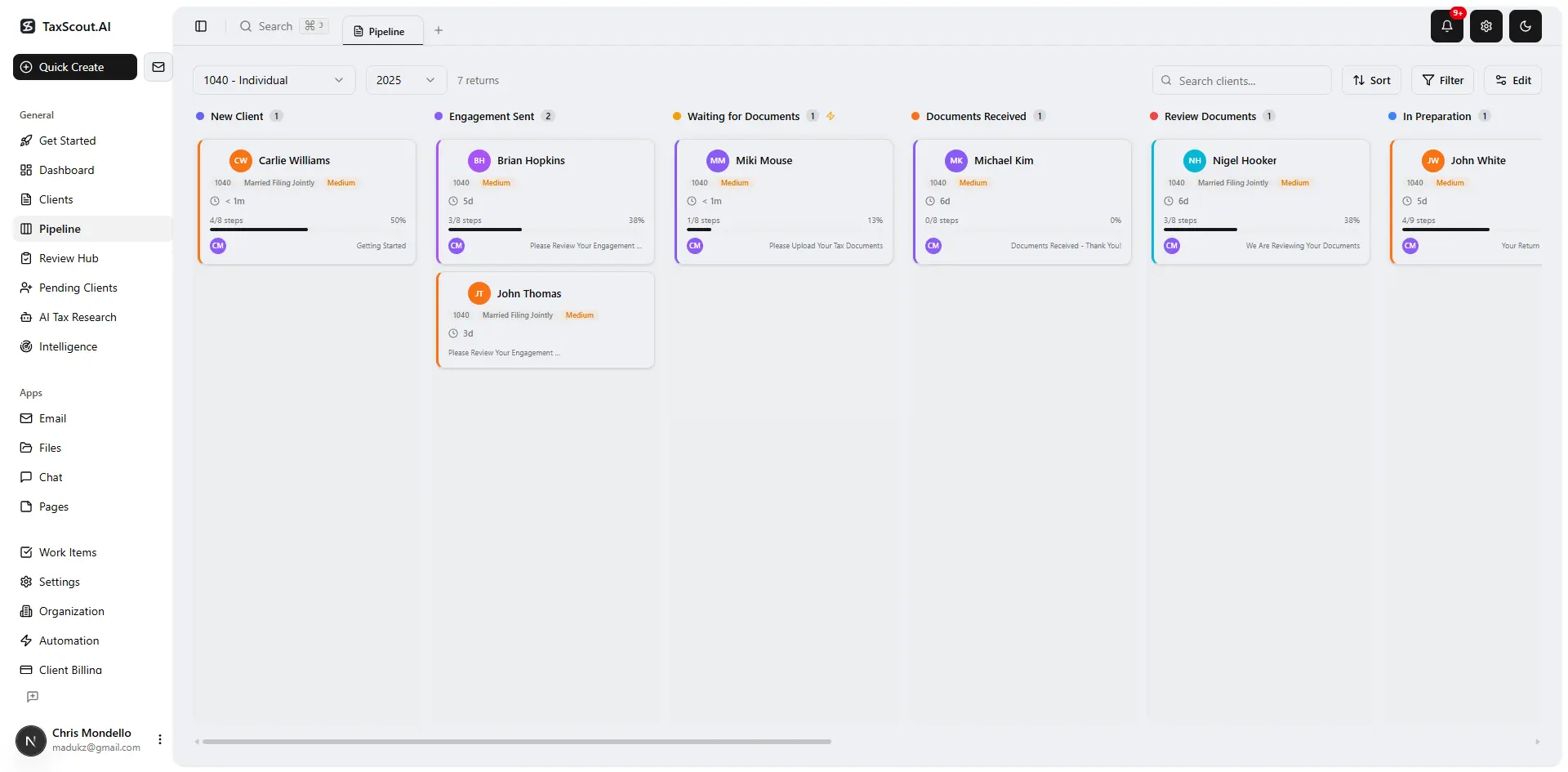
Track every return from intake to filed with drag-and-drop pipeline management
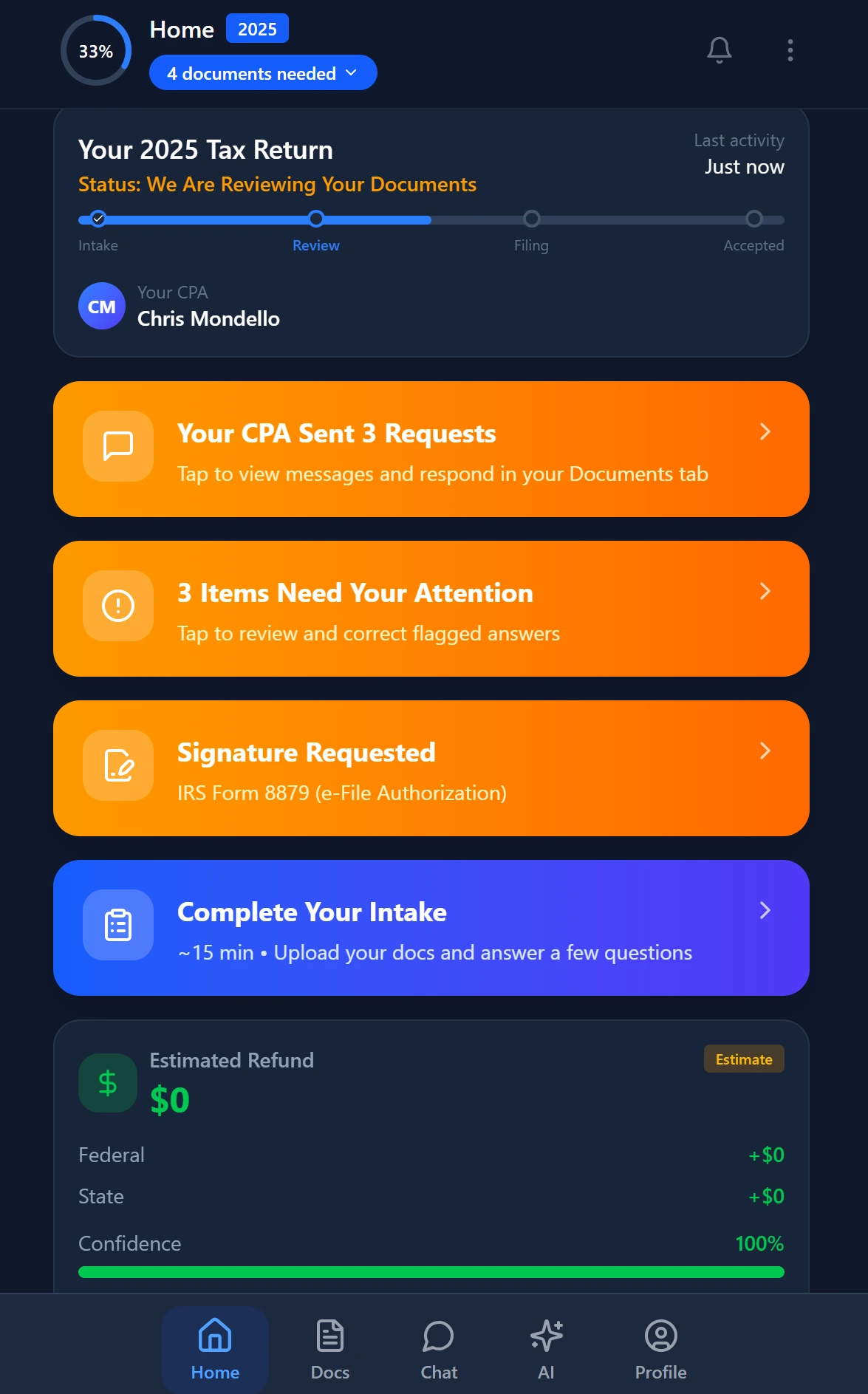
Smart intake auto-fills from uploaded documents and prior-year data
Key Deadlines and Transition Relief
The automatic enrollment mandate applies to plan years beginning after December 31, 2024, which means calendar-year plans were technically subject to the requirement starting January 1, 2025. The November 18, 2026 final regulations replace interim guidance and may include transition relief provisions — firms should read the preamble carefully for any correction or remediation windows the IRS has provided for plans that did not timely comply.
The Department of Labor also has jurisdiction over automatic enrollment notice requirements under ERISA. DOL and IRS have coordinated on SECURE 2.0 implementation, but the final Section 414A regulations address the tax-qualification side. Plans may need both IRS and DOL compliance reviewed, particularly for the participant notice timing.
For firms that are also tracking the broader SECURE 2.0 implementation calendar — including changes to required minimum distribution rules and catch-up contribution limits — the Section 414A final rule is one of several pending regulatory items. The IRS Advisory Council meeting notes from earlier this year flagged SECURE 2.0 guidance as a priority area, which this publication confirms.
Automatic Enrollment Requirements Under Section 414A: Primary Source
The definitive reference for this rule is the Federal Register publication itself. CPA firms should bookmark and distribute this link internally: Automatic Enrollment Requirements Under Section 414A, published November 18, 2026, Federal Register document 2026-23530.
The IRS retirement plans landing page will also be updated to reflect the final rule and should be the first stop for clients asking for a plain-language summary. For the statutory authority, Section 101 of the SECURE 2.0 Act of 2022 amended the Internal Revenue Code to add Section 414A — the full text is available via law.cornell.edu.
If your firm has not yet developed a systematic approach to surfacing and actioning regulatory updates like this one, the AI adoption guide for CPA firms outlines how practices are building that capability without adding headcount.
Spending hours each week manually tracking IRS final rules across your client base?
TaxScout.ai puts AI research agents and a full client management layer in one flat-fee platform — no per-user fees, unlimited team members.

Click any extracted field to see its source highlighted on the original PDF
Frequently Asked Questions
Most 401(k) and 403(b) plans established after December 29, 2022 must include an eligible automatic contribution arrangement (EACA) for plan years beginning after December 31, 2024. Plans established on or before December 29, 2022 are generally grandfathered, though merger or acquisition events can eliminate grandfathered status. Church plans and governmental plans are exempt under the statute.
Keep reading
Non-Applicability of Section 357(c) to Consolidated Groups: What CPA Firms Must Do Now
Oct 17, 2026 · 1 min read
Transparency in Coverage Final Rules: What CPA Firms Must Do Now
Oct 12, 2026 · 1 min read
IRS Releases Tax Inflation Adjustments for Tax Year 2027: What CPA Firms Must Do Now
Nov 11, 2026 · 1 min read
Stay up to date
Get the latest tax tech insights delivered to your inbox.