CPA Firm Referral Network: How to Build Relationships With Financial Advisors That Actually Send Clients
Most solo and small-firm CPAs have had the same frustrating experience: a financial advisor promises to send clients, nothing comes through, and you're left wondering what went wrong. Building a CPA firm referral network that actually produces revenue requires more than goodwill — it requires a…
If you've owned a CPA firm for more than a few years, you've probably had at least one version of this conversation: a CFP at a local wealth management shop tells you they've been looking for a 'good CPA to refer clients to,' you have a great lunch, exchange cards, and then — nothing. Six months later you realize that CFP has sent exactly zero clients your way, and you're not entirely sure why. This pattern is so common it has its own thread on r/taxpros, where a 15-year firm owner recently noted that barely any referrals had materialized despite years of networking. The problem isn't your likability. It's that you haven't built a true CPA firm referral network — you've built a social calendar. Building a reliable cpa firm referral network requires far more intentionality than most practitioners realize when they're just starting out.
A real referral network is a system, not a set of relationships. It has defined partners, clear mutual value, regular touchpoints, and accountability mechanisms that make referrals a habit rather than an afterthought. The CPAs who reliably grow through referrals aren't necessarily more charismatic than you — they've just turned business development into a repeatable process the same way they've turned tax prep into one. The most successful cpa firm referral network operators treat partner relationships like client relationships — with structure, follow-through, and clear expectations on both sides.
This guide walks through that process step by step: how to qualify the right referral partners, how to structure agreements so both sides actually send work, how to stay top-of-mind without being annoying, and how your practice management platform can do a surprising amount of the heavy lifting. Whether you're a solo practitioner or running a firm of five to ten, the framework applies. Whether you're starting from scratch or trying to revive stalled partnerships, building a functional cpa firm referral network is one of the highest-leverage growth investments you can make.
Why Most CPA Referral Efforts Fail Before They Start
The core failure mode is structural, not personal. Most CPAs approach referral networking the same way they approach a chamber of commerce mixer: show up, be pleasant, hope something sticks. That approach produces exactly the warm-but-empty relationship described above — two professionals who like each other but have no mechanism for actually exchanging business. For firms evaluating their cpa firm referral network approach, this trade-off compounds over time.
There are three specific structural gaps that kill most CPA networking strategies before they generate a single client. First, there's no explicit reciprocity agreement. A financial advisor who sends you a client is doing you a favor unless you've made it clear you'll reciprocate with introductions of your own. Favors run dry; mutual benefit compounds. Second, there's no defined scope of the referral relationship — both parties have vague ideas about what kinds of clients they'd send, which means the mental effort of making a referral is high and the likelihood drops. Third, there's no follow-up infrastructure. After that first lunch, most CPAs send one thank-you email and move on. Without a system for regular, value-added contact, the relationship cools within 90 days. Each of these factors directly shapes how a cpa firm referral network plays out in practice, and firms that recognize these gaps early are far better positioned to close them before they lose momentum.
Understanding these gaps is the starting point for fixing them. The accounting firm referral program guide on this site covers the inbound side of referrals from existing clients — this article focuses specifically on the professional-to-professional network that most CPAs find harder to build but more lucrative once it's running. Understanding cpa firm referral network in this context is what separates firms that scale from those that stall.
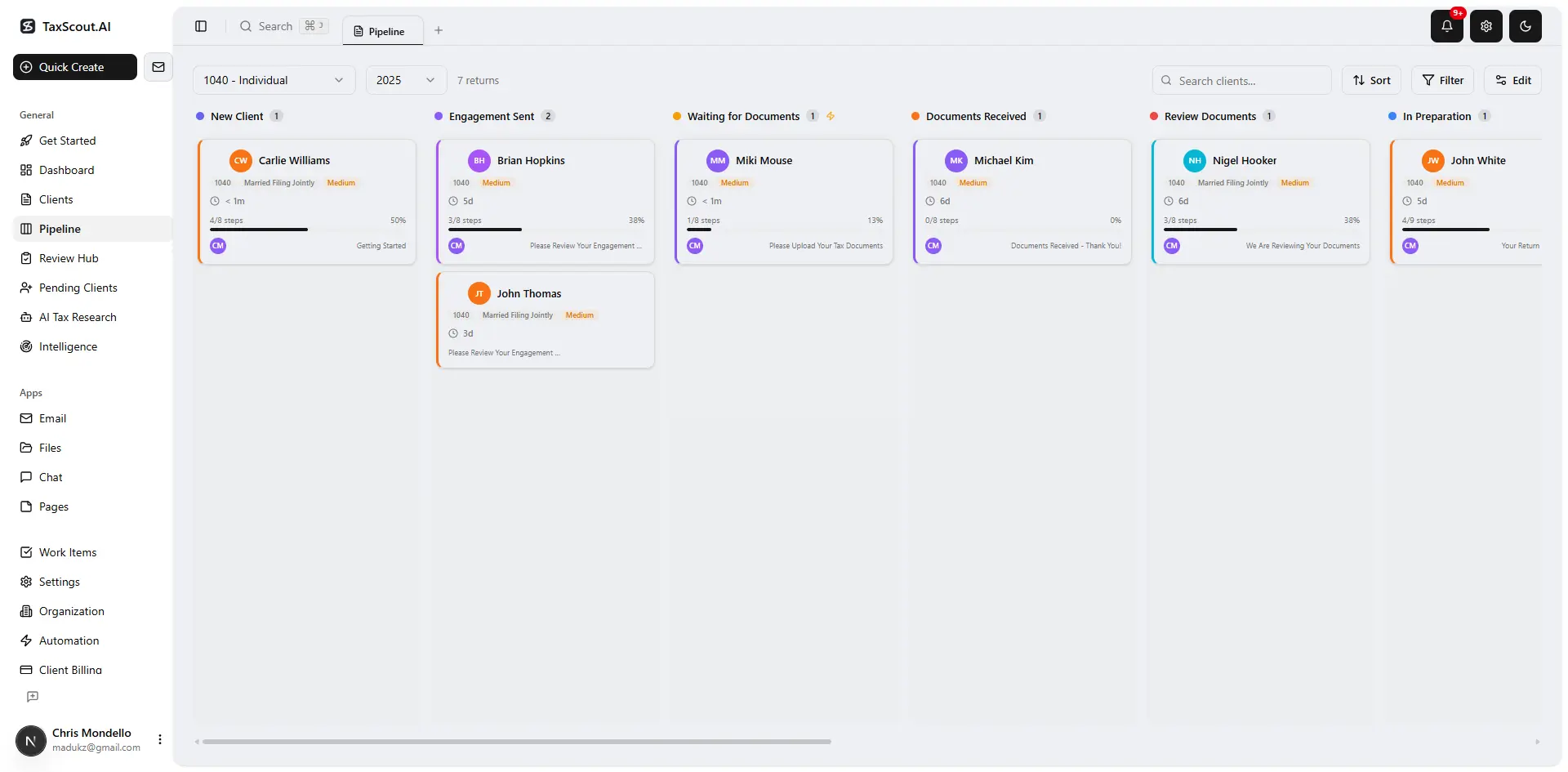
Track every return from intake to filed with drag-and-drop pipeline management
Identifying the Right Referral Partners for Your Firm
Not every CFP, attorney, or financial professional makes a good referral partner. The ones who do share three characteristics: they serve the same client demographic you want, they do not compete with your highest-value services, and they have a financial incentive to keep their clients' tax situations clean and well-managed. This is precisely where a deliberate cpa firm referral network strategy pays off — the wrong partners waste time, while the right ones compound your growth year over year.
For most solo and small-firm CPAs, the highest-yield partner categories are Certified Financial Planners, estate planning attorneys, business transaction attorneys, insurance agents who specialize in business owners, and commercial mortgage brokers. Each of these professionals regularly encounters clients with complex tax situations who need a CPA — and each of them looks better to their own clients when they can provide a warm handoff to a competent one. A well-structured cpa firm referral network sits at the center of this decision — get it wrong and the rest unravels.
The CFP Board's public search tool lets you identify CFPs in your area by specialty. The American Bar Association's lawyer locator helps you find estate and business attorneys. Don't start with a list of 50. Start with five to eight partners you can actually invest in over the next 12 months — depth beats breadth in professional referral networks. When firms revisit their cpa firm referral network priorities, the gaps usually surface here.
Equally important: audit your current client base before you go recruiting partners. Look at your most profitable, easiest-to-work-with clients and ask yourself who referred them or who else in their financial life they trust. That backward mapping almost always surfaces one or two professional relationships that are already warm and just need activation.
Tired of managing referral follow-ups in your inbox alongside 400 other emails?
TaxScout's communication hub and pipeline management give you the infrastructure to track every referral partner relationship without dropping the ball — starting at $49/month, unlimited clients.

Click any extracted field to see its source highlighted on the original PDF
Step 1: Structure a Mutual Value Agreement Before the Second Meeting
The first meeting with a potential referral partner is discovery — you're learning about their practice, their client profile, and whether there's alignment. The second meeting is where most CPAs squander their momentum by keeping things vague. Instead, come prepared with a simple one-page mutual value agreement. This doesn't need to be a legal contract (and in most states, fee-splitting arrangements between CPAs and non-CPAs are prohibited under AICPA and state board ethics rules — so avoid any cash referral fee structure). What you want is a written mutual understanding of: what types of clients each party will refer, what a warm handoff looks like operationally, how you'll communicate about referred prospects, and a cadence for quarterly check-ins. Formalizing this early is one of the most effective ways to turn a cpa firm referral network from a vague concept into a functioning system with real accountability on both sides.
The act of writing this down does two things. It signals professionalism — you're treating this as a business relationship, not a casual favor exchange. And it creates a reference point that both parties can return to when the referral pipeline goes quiet, which it will at some point.
On the reciprocity side, be specific about what you can offer. If you work with business owners, you can offer introductions to clients who need wealth management, estate planning, buy-sell agreement review, or business financing. Map out which of your existing clients might benefit from your partner's services and identify two or three you could introduce in the next 60 days. Showing up to that second meeting with actual referrals in hand — not promises — is the single fastest way to establish that you're a serious partner.

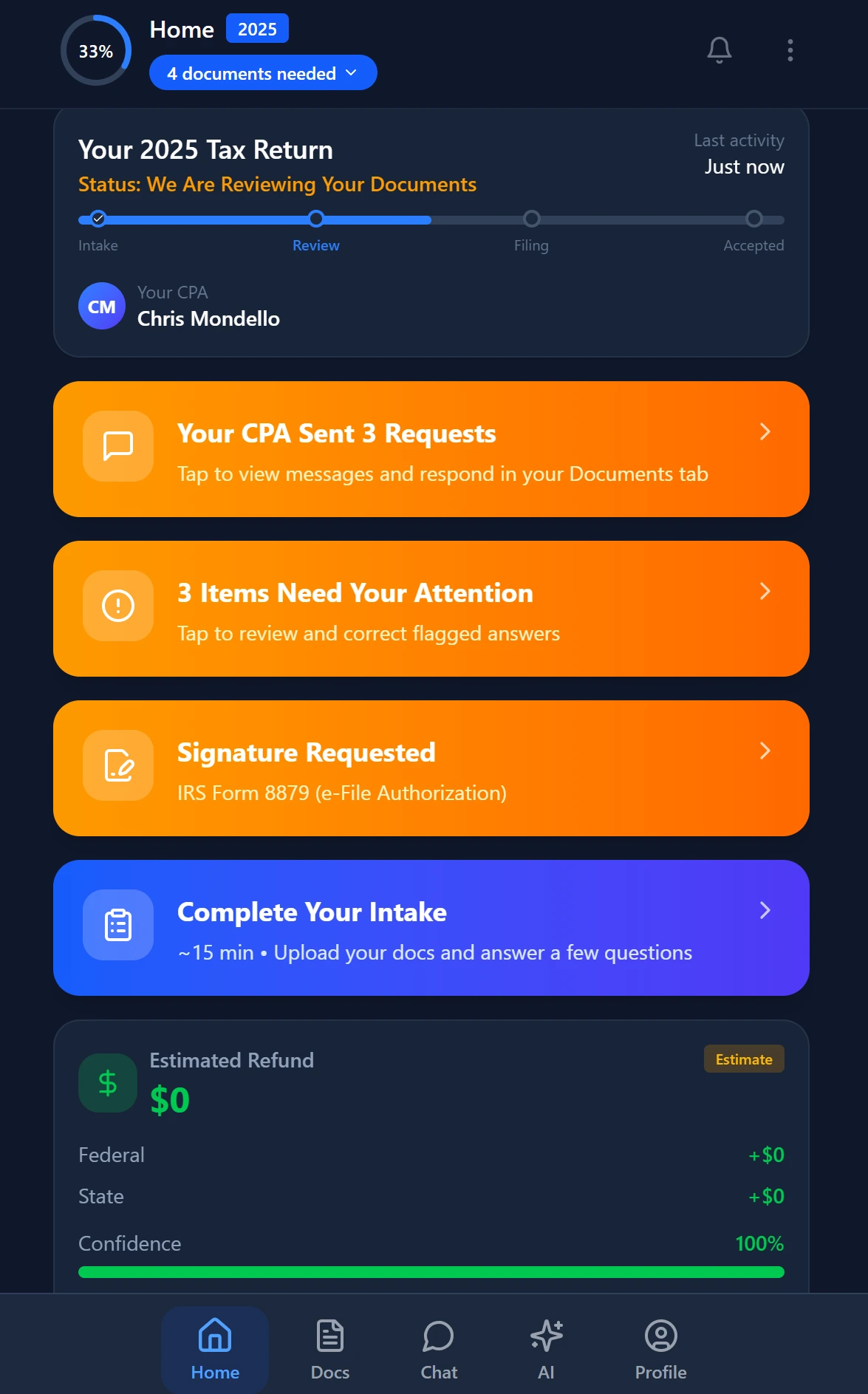
Your clients see your brand — OTP login, document upload, and real-time status
Step 2: Create a Referral Experience That Makes Partners Look Good
Here's something most CPAs overlook: a financial advisor who refers a client to you is putting their own reputation on the line. If your intake process is clunky — paperwork arrives late, you take a week to respond, the client has no idea what to expect — that reflects badly on the advisor who sent them. The quality of your client onboarding is a direct input to your referral partner's willingness to send the next client. In a healthy cpa firm referral network, every touchpoint in the client experience either reinforces or erodes the trust your partners have placed in you.
This is where practice management technology earns its keep. A branded client portal with frictionless onboarding — like the OTP-based portal in TaxScout, which eliminates the password hassle clients typically fumble — sends an immediate signal of professionalism that your referral partner hears about in positive terms. The client portal becomes a selling point you can actually demonstrate to referral partners: 'Here's what your client will see the moment I send them an invitation link.'
Equally important is your intake process. TaxScout's smart intake engine, modeled on IRS Form 13614-C, uses a four-layer prefill system — pulling from prior-year returns, uploaded documents, and AI gap analysis — so referred clients aren't bombarded with redundant questions. A new client who tells their advisor 'that was the smoothest tax onboarding I've ever had' is your best referral marketing. One who says 'they kept asking me for the same documents twice' is probably your last from that partner.
For a deeper look at how document collection and management support this experience, see document management for CPA firms.
Smart intake auto-fills from uploaded documents and prior-year data
Step 3: Build a Stay-Top-of-Mind System That Runs Without You
The single biggest predictor of referral volume from a professional partner is recency — how recently they thought of you. This is not a character flaw in your referral partners; it's how memory works under conditions of competing demands. A CFP managing 120 client relationships isn't going to remember to refer to you unless something keeps you present in their mental landscape.
The most effective stay-top-of-mind system for CPAs is a combination of value-based touchpoints and event-triggered outreach. Value-based touchpoints are things you send or share that genuinely help your referral partner do their job better: a one-page summary of a tax law change that affects their clients' retirement plans, a note about a new IRS reporting threshold that changes the advice they should be giving, or a brief explanation of how a recent state tax change affects the clients you share. These don't need to be long — a three-paragraph email summary with a source link is enough. Firms that maintain this kind of consistent outreach find it's the single most underrated driver of a productive cpa firm referral network over the long run.
Event-triggered outreach is simpler: when you take on a referred client, send the referring partner a brief note confirming you've connected and that things are going well. When that client's tax situation involves planning opportunities (Roth conversions, business structure changes, S-corporation elections), loop the advisor back in. That collaborative loop is what transforms a one-time referral into an ongoing stream — the advisor sees that referring to you makes them look good and adds value to their own client relationships.
TaxScout's pipeline management lets you tag referred clients by source and track their progress through your 12-stage workflow. That visibility means you never forget to send the follow-up note that keeps the relationship warm. You can also browse other blog resources on firm operations and growth strategies for additional frameworks.
Step 4: Qualify Partners by Referral Volume, Not Just Relationship Quality
After 12 months, every referral relationship deserves an honest assessment. Some partners will have sent two or three clients who turned into long-term engagements. Others will have sent nobody despite genuine goodwill. The question isn't whether you like them — it's whether the relationship is producing mutual value at a rate that justifies continued investment.
A simple tracking approach: maintain a spreadsheet or pipeline column that logs every referral by source, the engagement value of the resulting client, and any reciprocal referrals you've made. Review this quarterly. Partners who are producing get more of your time: invitations to co-host a client workshop, guest posts on each other's newsletters, or introductions to other professionals in your network. Partners who haven't produced after two or three genuine reciprocal referrals from you may simply not be the right fit — and that's useful information that lets you redirect your business development time.
According to Bureau of Labor Statistics data on professional services employment, the average accountant works in a market with substantial competition. In that environment, a CPA firm referral network that generates even three to five qualified new clients per year per active partner can meaningfully change a solo firm's growth trajectory — especially when those clients have complex returns that command higher fees.
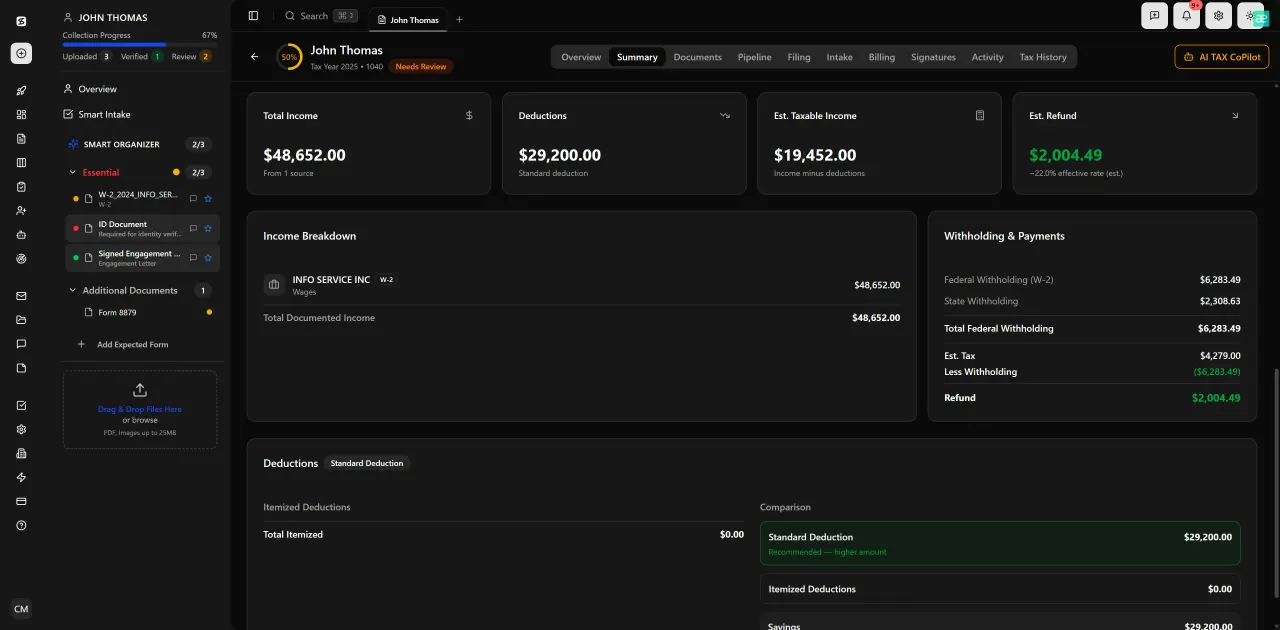
Review with AI assist — 9 agents answer questions with full client context

Every client gets organized documents, status tracking, and a complete history
Step 5: Use Your Firm Technology as a Referral Differentiator
One underused tactic in professional referral marketing is demonstrating your technology to potential partners. Most CPAs treat their practice management software as a back-office tool. But a 10-minute screen share showing a financial advisor how TaxScout's split-screen PDF viewer highlights every extracted field from a client's documents — with a confidence score and source citation — communicates something no business card can: that you run a precise, modern, well-organized practice.
Advisors who have previously referred clients to CPAs who lost documents, missed deadlines, or provided vague answers to planning questions are actively looking for a CPA who has their process locked down. The AI research agents that pull real-time IRS, Treasury, and legislative guidance are particularly compelling to estate planning attorneys who want a CPA that can answer a complex question quickly rather than promising to 'look into it and get back to you next week.' When a partner can see your systems in action, it builds the kind of confidence that sustains a cpa firm referral network through slow seasons and busy ones alike.
You can also use your referral program infrastructure deliberately. TaxScout's referral program feature and client portal let you create a professional intake experience that you can walk partners through before they ever send a client. When a CFP knows exactly what their client will experience — a branded portal invitation, a simple OTP login, an intake questionnaire that auto-fills from prior documents — they're far more likely to make the referral with confidence.
Pricing is another differentiator worth naming explicitly. TaxScout's flat-fee structure — $149/month for up to 10 seats and 500 returns, no per-user fees — means your overhead stays predictable as your referral network grows, unlike per-seat platforms like TaxDome ($100/user/month for a 10-person firm) or Canopy ($45/user/month per module). See the full pricing breakdown to understand how this affects your margin as referral volume scales.
Practice management cost comparison for a growing CPA firm with an active referral network (10-person firm, 500 returns/year)
| Platform | Monthly Cost (10 seats) | AI Document Extraction | Client Portal | Unlimited Clients |
|---|---|---|---|---|
| TaxScout Prep Pro | $149/mo flat | Yes — 180+ form types | Yes — branded, OTP login | Yes |
| TaxDome | ~$500/mo | No | Yes | Yes |
| Canopy | ~$660/mo + $11/client for Smart Intake | No | Yes | No |
| Karbon | ~$590/mo | No | No | Yes |
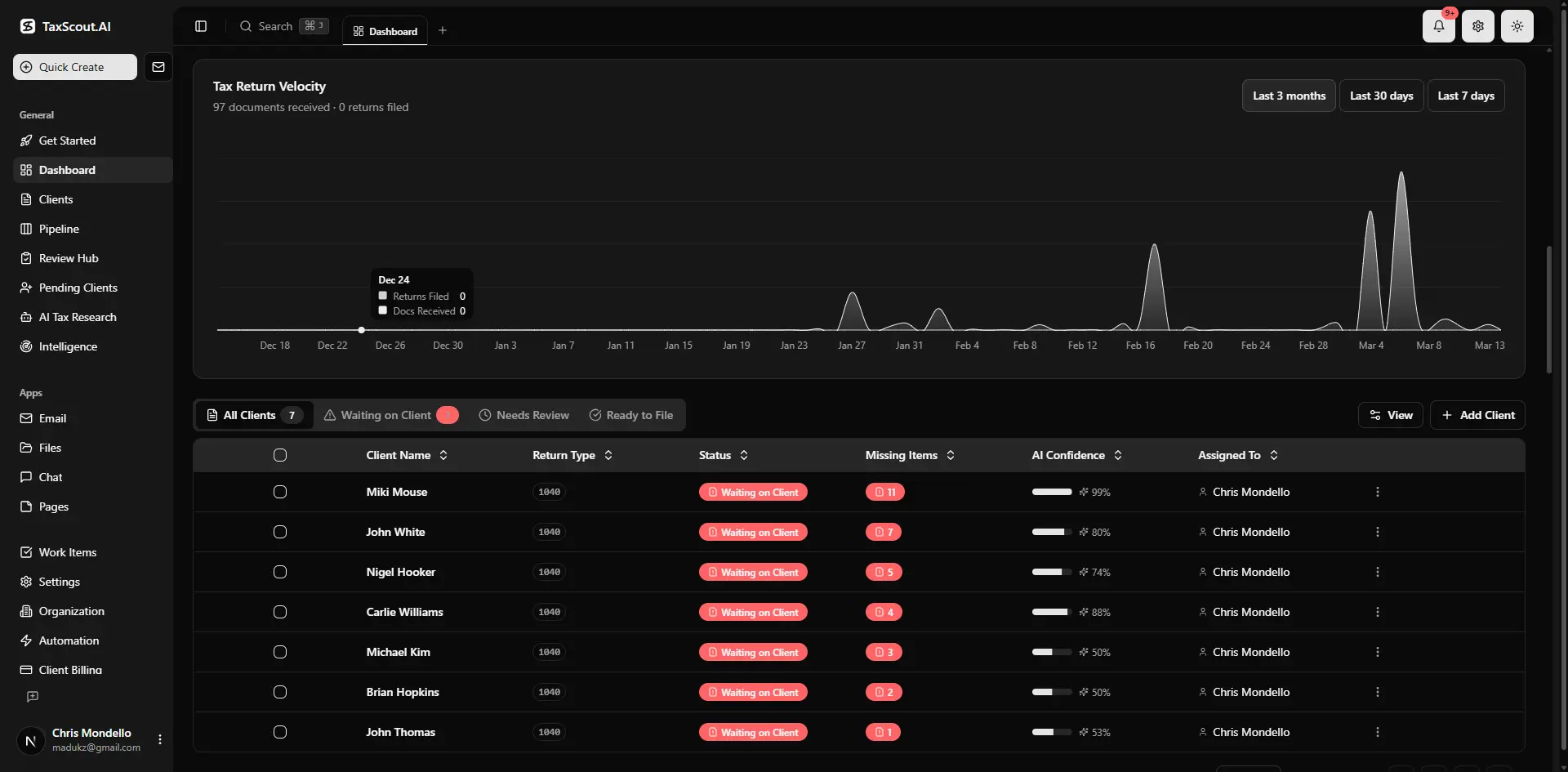
Real-time dashboard showing returns in progress, revenue, and upcoming deadlines
Attorney CPA Referral Partnerships: A Special Case Worth Your Attention
Among all professional referral sources, estate planning and business transaction attorneys deserve a dedicated strategy. The reason is deal flow: a single business sale that an M&A attorney facilitates can generate a CPA engagement worth $5,000 to $30,000 in tax planning and transaction structuring work. Estate planning attorneys regularly encounter clients with IRAs, required minimum distributions, pass-through entities, and multi-generational transfer structures — all situations that generate recurring CPA work.
The challenge with attorney partnerships is that attorneys are professionally cautious about referrals. They will not send a client to a CPA unless they're confident that CPA won't embarrass them. The way to earn that confidence is through demonstrated competence, not charm. Show your work: share a sanitized case study of a business owner you helped through a transaction, or offer to co-present a lunch-and-learn for the attorney's existing clients on tax considerations in estate planning. The IRS estate tax threshold documentation and Treasury guidance on valuation are useful reference points for positioning your expertise in these conversations. Attorneys who trust you will become some of the most consistent contributors to your cpa firm referral network, often generating higher-value engagements than any other partner category.
One tactical note: many estate planning attorneys are hesitant to refer because they've had bad experiences with CPAs who gave conflicting advice or failed to communicate with the attorney during a client engagement. Explicitly addressing this in your mutual value agreement — committing to copy the referring attorney on major planning recommendations for shared clients — removes a significant barrier. It's a small operational commitment that pays large relationship dividends.
For the legal compliance side of your own firm's client agreements, make sure your engagement letters are current and your e-signature workflow is in order — referred clients should sign before any work begins, which is a professionalism signal attorneys in particular will notice and appreciate.
Ready to turn your referral network into a system instead of a wish list?
TaxScout gives solo and small-firm CPAs the pipeline management, branded client portal, and AI-powered intake that make referred clients say 'wow' — all for one flat monthly fee with no per-user costs.

Track firm performance with real-time analytics and client activity monitoring
Frequently Asked Questions
In most states, CPAs are prohibited from paying or receiving referral fees for client introductions under state CPA board ethics rules and AICPA guidelines. The appropriate structure is a mutual referral relationship with no cash exchange — both parties agree to introduce clients to one another when appropriate. Always check your specific state board's rules before entering any compensation arrangement involving client referrals.
Keep reading
Business Valuation for CPAs: How to Price a Client Company Without Hiring an Appraiser
Sep 18, 2026 · 1 min read
Equity Partner Compensation: How CPA Firms Structure Pay for Owners
Sep 18, 2026 · 1 min read
Accountant Shortage Solutions: How CPA Firms Survive the Talent Crisis Without Overpaying
Sep 18, 2026 · 1 min read
Stay up to date
Get the latest tax tech insights delivered to your inbox.