Allocation and Apportionment of Deductions to Foreign Source Income: New IRS Proposed Rules
The IRS published proposed regulations on September 11, 2026 that overhaul how deductions are allocated and apportioned to foreign source Section 951A category income and deduction eligible income. Small and mid-size CPA firms with clients operating abroad through foreign or domestic corporations face the most immediate impact. Here is a concise action brief for the week of publication.
New proposed regulations on the allocation and apportionment of deductions to foreign source income landed in the Federal Register on September 11, 2026. The rules, published under document number 2026-18645, target how deductions are allocated and apportioned specifically to Section 951A category income — commonly called GILTI — and to deduction eligible income (DEI) for purposes of the foreign-derived intangible income (FDII) deduction. Read the full text at the official Federal Register notice. New proposed regulations on the allocation and apportionment of deductions to foreign source income represent the most significant overhaul of these rules in nearly a decade.
The practical effect: domestic corporations that hold shares in controlled foreign corporations (CFCs) must revisit how they apportion deductions between U.S.-source and foreign-source baskets. The IRS is accepting written comments until the deadline published in the notice, meaning CPA firms have a narrow window to flag client-specific concerns and to adjust return strategies before these rules finalize. Understanding the allocation and apportionment of deductions to foreign source income baskets is now essential for any practitioner advising domestic corporations with CFC holdings.
Most press coverage has simply republished the agency's summary. This brief focuses on operational impact — which client files land on your desk, and what your team should do before the week is out. Rather than rehashing agency summaries, this brief zeroes in on how the allocation and apportionment of deductions to foreign source income changes will alter the workflows hitting your desk this quarter.
What the Proposed Regulations Actually Change
Under current Treasury regulations on foreign tax credits, deductions are allocated and apportioned to foreign-source income baskets using either the asset method or the gross-income method. The September 2026 proposal clarifies — and in some cases restricts — how that math works specifically when a taxpayer's foreign-source income falls into the Section 951A (GILTI) basket. For firms evaluating their allocation and apportionment of deductions to foreign source approach, this trade-off compounds over time.
Key mechanical shifts in the proposal include: (1) tighter rules on which expenses may be treated as definitely related to DEI versus allocable to other income classes; (2) updated guidance on research and experimental expenditure apportionment after the Section 174 capitalization changes; and (3) conforming amendments that align GILTI basket apportionment with post-TCJA gross-income calculations. Cornell Law's 26 U.S.C. § 951A overview explains the statutory base these regulations sit on. Each of these factors directly shapes how allocation and apportionment of deductions to foreign source plays out in practice.
The IRS notes that the proposed changes would affect taxpayers that operate in foreign countries through foreign corporations and domestic corporations that claim the FDII deduction under Section 250. That covers a wider client base than many practitioners assume — it is not limited to Fortune 500 multinationals. Understanding allocation and apportionment of deductions to foreign source in this context is what separates firms that scale from those that stall.
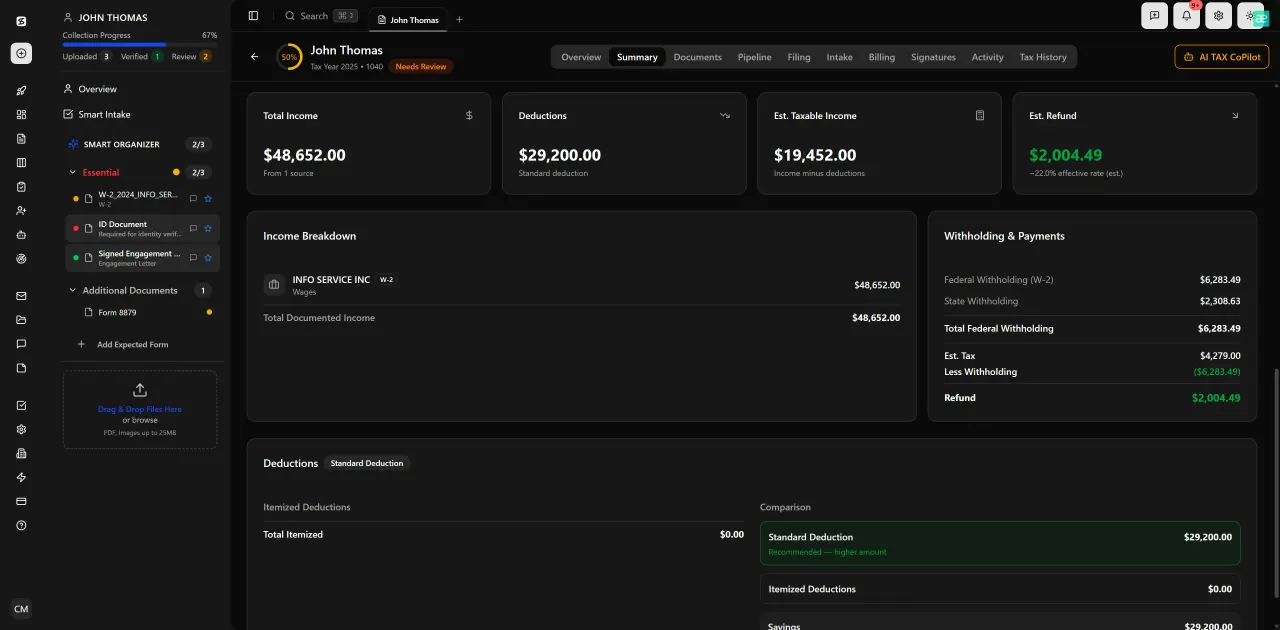 Review with AI assist — 9 agents answer questions with full client context
Which Client Types and Filing Categories Are Affected
Tired of manual workflows slowing your firm down? See how TaxScout handles this with AI-powered automation. → Book a 15-Min Demo This is precisely where a deliberate allocation and apportionment of deductions to foreign source strategy pays off.
Not every client file is implicated. The following categories deserve immediate triage this week: Allocation and apportionment of deductions to foreign source sits at the center of this decision — get it wrong and the rest unravels.
C corporations filing Form 1120 with CFC ownership: These entities are ground zero. If a client owns 10% or more of a foreign corporation's stock, GILTI inclusions flow to Form 1120, Schedule J. The new apportionment rules directly affect the foreign tax credit calculation on Form 1118 and the Section 250 deduction computation.
S corporations and partnerships with foreign subsidiaries or tiered structures: GILTI can pass through to owners via Schedule K-1. Where an S-corp or partnership holds a CFC, the proposed rules may alter how deductions reduce GILTI inclusions at the shareholder level. Review any Schedule K-1 for Line 17 (foreign transactions) entries.
Individual Form 1040 filers with Form 5471 obligations: High-net-worth individuals who are U.S. shareholders of CFCs also face GILTI inclusions. If they claim foreign tax credits, the apportionment of deductions to the Section 951A basket affects their Form 1116 limitation calculations.
Nonprofit organizations with UBTI from foreign subsidiaries: Unrelated business taxable income rules can interact with GILTI for tax-exempt entities that hold CFC interests. While the impact is narrower, nonprofits with foreign investment structures warrant a quick review — see also our nonprofit audit preparation guide for a broader compliance checklist.
Purely domestic clients — sole proprietors, domestic-only S-corps, W-2 households — are not affected by these regulations.
Managing a growing stack of international return files with no centralized research workflow?
TaxScout's 9 AI Research Agents monitor IRS, Treasury, and Cornell Law in real time — so your team flags regulatory changes like this before they affect a return.
What to Do This Week: A Firm Action List
Do not wait for the regulations to finalize. Proposed rules affect planning now, and comments close on a rolling deadline. Here is a concrete action list for CPA firm owners:
1. Pull your CFC client roster today. Search your practice management system for any client with a Form 5471, Form 8992 (GILTI calculation), or Form 1118 in the prior tax year. These are your affected files. If you track workflow in a pipeline management tool, tag them now.
2. Flag open extensions. Any C corporation on extension whose return involves a Section 250 FDII deduction or foreign tax credit should be held for partner-level review before the return is finalized. The proposed apportionment changes — even as proposals — can inform a more defensible position on the current-year return.
3. Read the primary source, not a summary. Download the full text from the Federal Register notice and send it to any staff preparing Form 1118 or Form 8992. A single read-through of the preamble clarifies the IRS's intent more than any third-party summary.
4. Consider filing a comment. Proposed regulations are not final law. If a proposed rule creates a hardship or unintended consequence for a client class you serve — especially closely held C corporations with modest CFC holdings — the comment process is your statutory right. The IRS guidance on submitting comments explains how.
5. Update your client communication templates. For affected clients, send a brief advisory letter this week. Keep it factual: regulations are proposed, IRS is taking comments, and you are monitoring developments. Use your firm's client portal to distribute the memo efficiently without creating an email trail that is hard to audit later.
6. Log a reminder for the comment deadline. Set a calendar event for the comment close date (published in the Federal Register notice). If comments yield significant changes before finalization, your affected client files need a second look.
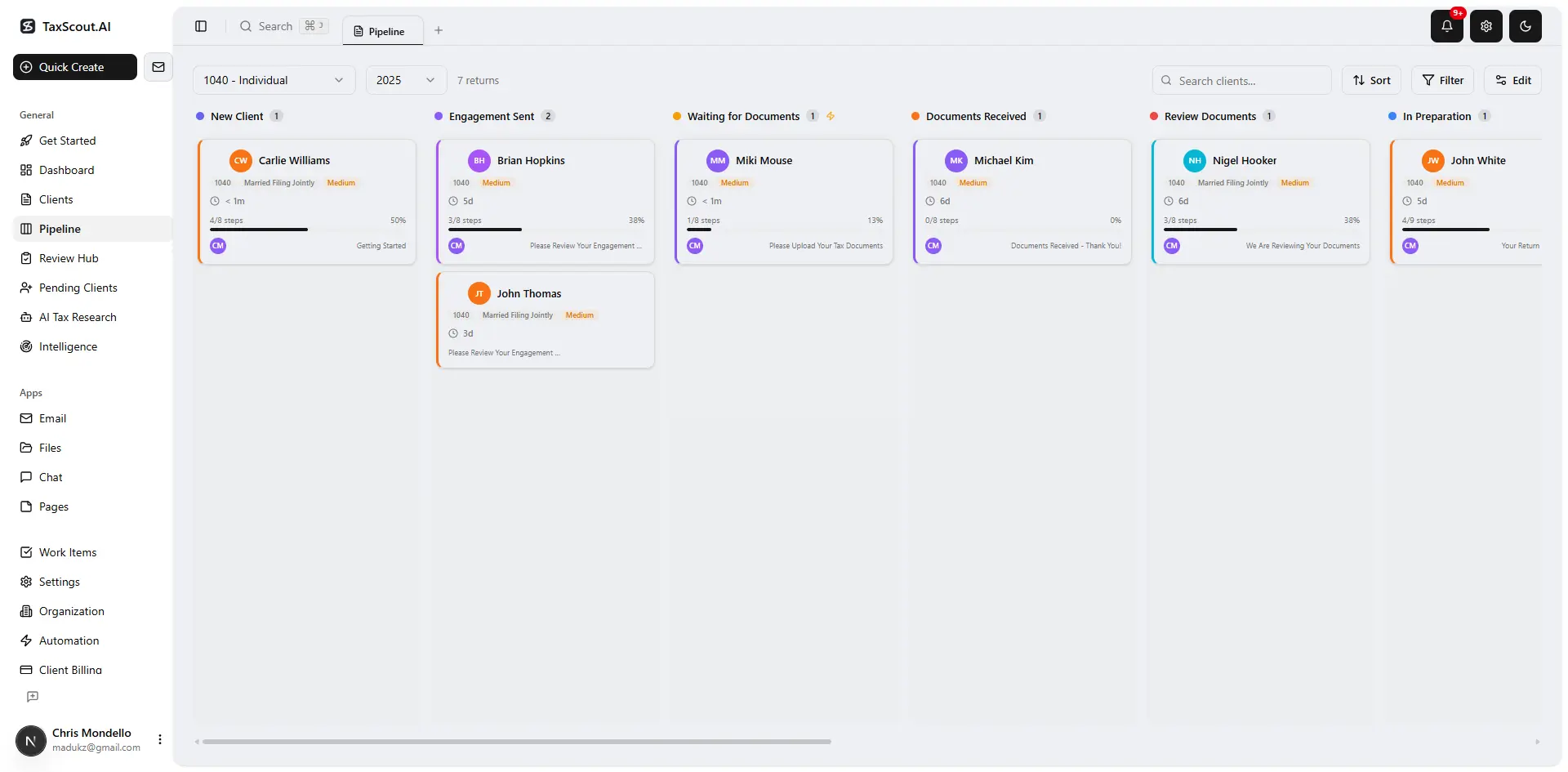 Track every return from intake to filed with drag-and-drop pipeline management
 Smart intake auto-fills from uploaded documents and prior-year data
GILTI and FDII Mechanics: A Quick Refresher for Staff Reviewers
The allocation and apportionment of deductions to foreign source income in the GILTI context works through a two-step basket analysis. First, the taxpayer identifies which expenses are definitely related to GILTI-category gross income. Second, remaining expenses are apportioned ratably using either the asset method or the gross-income method — but the proposal adds constraints on how certain R&D and interest expenses are treated in that second step.
For FDII purposes, DEI is gross income minus deductions properly allocable to that income. Under the proposal, the IRS would tighten what counts as 'properly allocable,' meaning some deductions currently reducing DEI — and thus boosting the FDII deduction — may need to be reallocated to the GILTI basket or the general limitation basket. The result: FDII deductions could shrink for some clients while their foreign tax credit limitation changes simultaneously.
The SSA wage base and international payroll interaction is a separate issue, but practitioners handling expat payroll for CFCs should note that wage-related expense allocations also feed into this apportionment framework.
For a broader view of how mid-season regulatory changes affect return workflows, see Tax Software Updates Mid-Season: How CPA Firms Stay Productive Without Downtime.
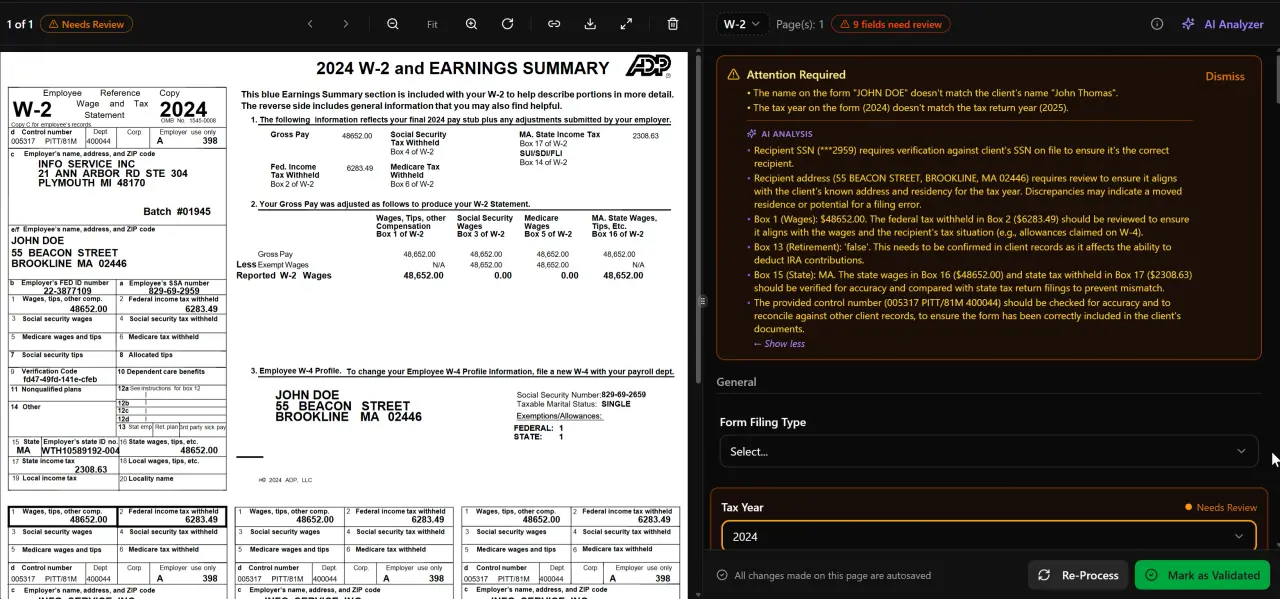 AI classifies, extracts, and validates every document automatically
How CPA Firms Can Monitor Regulations Like This Automatically
One operational gap exposed by a notice like this: most small CPA firms had no automated alert for the September 11, 2026 Federal Register publication. By the time the news filters through LinkedIn or a trade newsletter, the comment window is already partially consumed.
TaxScout's AI Research Agents are purpose-built for this gap. The platform runs nine specialized agents that continuously monitor IRS.gov, Treasury, Cornell Law, and congressional records — surfacing relevant regulatory developments and linking them directly to client context inside your workflow. When a proposed rule drops that touches GILTI or FDII, your team sees it the day it publishes, not the week after.
Pairing that intelligence layer with AI document extraction means the same platform that alerts you to the regulation can automatically classify incoming Form 5471 and Form 8992 packets as they arrive from clients — reducing the manual triage described in Step 1 of the action list above. You can track all other news resources on regulatory developments in our news hub.
For firms still deciding between platforms, see how TaxScout compares on research and document workflow capabilities versus incumbent tools.
Still piecing together international compliance alerts from email newsletters and late-breaking tweets?
TaxScout monitors IRS and Treasury publications daily and surfaces what matters for your client roster — flat pricing, unlimited team members, no per-seat fees.
 Click any extracted field to see its source highlighted on the original PDF
Frequently Asked Questions
The regulations are proposed as of September 11, 2026 and are not yet effective. They will become effective only after the IRS reviews public comments and publishes a final rule in the Federal Register. CPA firms should monitor the docket and consider filing comments before the stated deadline in the notice.
Keep reading
Information Reporting Regarding Qualified Opportunity Zones: What CPA Firms Must Do Now
Sep 14, 2026 · 9 min read
1040 Review Checklist: How CPAs Catch Errors Before E-File
Sep 14, 2026 · 12 min read
Preparer Tax Identification Number: How CPAs Register, Renew, and Protect Their PTIN
Sep 14, 2026 · 15 min read
Stay up to date
Get the latest tax tech insights delivered to your inbox.