Superfund Tax on Chemical Substances: NBR Petition CPA Firms Must Track
The Federal Register published a notice on September 9, 2026 announcing a petition to add acrylonitrile-butadiene rubber (NBR) to the IRS list of Superfund taxable substances. CPA firms serving chemical manufacturers, distributors, and industrial supply clients need to flag this now before the…
A new Superfund tax on chemical substances petition dropped in the Federal Register on September 9, 2026 — and if your firm serves any client that imports, manufactures, or distributes acrylonitrile-butadiene rubber (NBR), this notice belongs on your radar this week. The filing requests that NBR be added to the IRS list of substances taxable under IRC §4671, which governs excise taxes on imported chemical substances that use taxable feedstocks.
The petition covers a specific polymer formula: (C₄H₆)ₓ-(C₃H₃N)ᵧ-(C₂₅H₄₄OS₂)ₐ with x=3,344.33, y=1,335.09, a=2.98. If the IRS grants the petition, importers of NBR would owe excise tax calculated on the weight of the taxable chemicals used to produce the substance. That flows directly into your clients' cost structures, cash flow projections, and potentially their estimated tax payments. Understanding how the superfund tax on chemical substances applies to polymer-derived substances like NBR is essential for calculating your client's potential excise tax liability.
Priority for most CPA firms is low-to-moderate, but acting now — during the comment period — is far cheaper than scrambling after a final rule. Here is a tight brief on what changed, which clients are affected, and the three things you should do before the week is out. The superfund tax on chemical substances has been catching importers off guard since its reinstatement, making early client outreach during comment periods a key competitive advantage for proactive CPA firms.
What the Federal Register Notice Actually Says
The official notice (Document No. 2026-18268) is a notice of filing, not a final rule. Under the Superfund excise tax framework reinstated by the Infrastructure Investment and Jobs Act of 2021 and effective since July 1, 2022, any person may petition Treasury to add or remove a substance from the taxable list. This notice signals that Treasury received such a petition for NBR and is opening a public comment period. The superfund tax on chemical substances framework gives the IRS authority to expand the taxable substances list through exactly this kind of petition-and-comment process, which is why tracking notices like this one matters.
The tax itself is imposed under IRC §4671 on the importer of any taxable substance. The rate is determined by the amount of taxable chemicals used to manufacture the substance, expressed as a dollar amount per ton. Treasury maintains the list of taxable substances at 26 CFR §52.4672-1, and adding NBR would expand that list. For firms evaluating their superfund tax on chemical substances approach, this trade-off compounds over time.
Comments are solicited as part of the process. Firms whose clients have standing — importers of NBR, domestic producers competing with NBR imports, or downstream industrial buyers — may want to submit a comment or at minimum preserve the record for future penalty-abatement arguments. Each of these factors directly shapes how superfund tax on chemical substances plays out in practice.
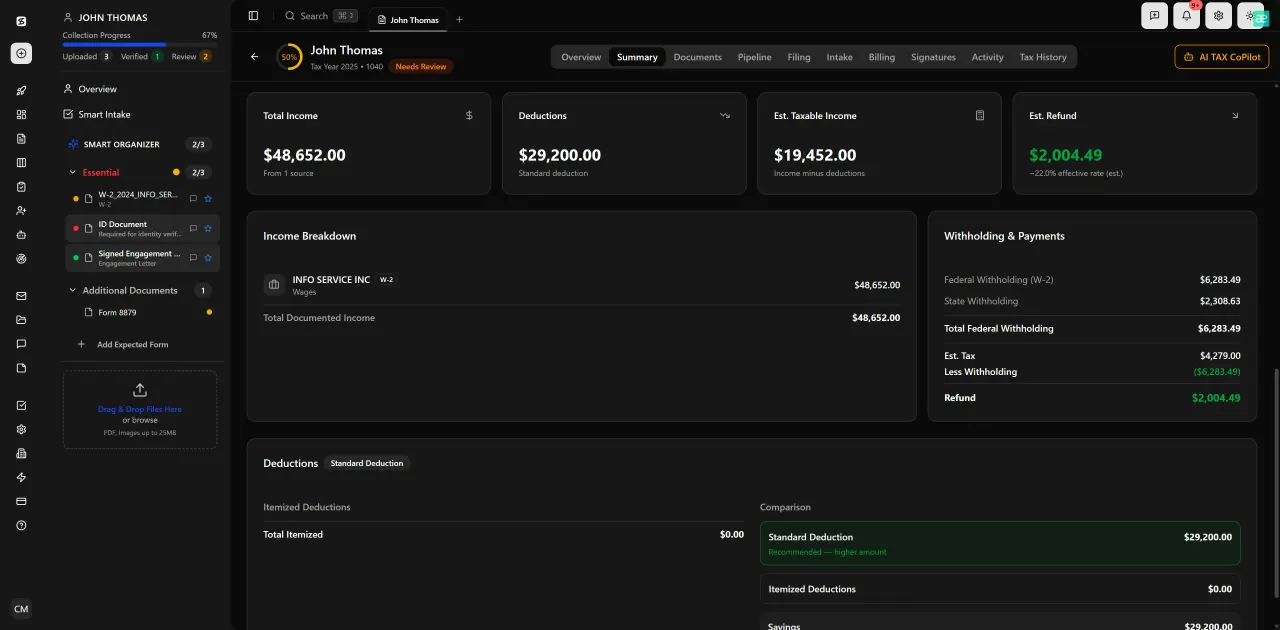
Review with AI assist — 9 agents answer questions with full client context
Which Client Segments Are Affected
Tired of manual workflows slowing your firm down? See how TaxScout handles this with AI-powered automation. → Book a 15-Min Demo Understanding superfund tax on chemical substances in this context is what separates firms that scale from those that stall.
This notice is narrower than a typical tax-law change, but it is not trivial for certain industries. Here is how to think about your client roster by entity type: This is precisely where a deliberate superfund tax on chemical substances strategy pays off.
C-corps and S-corps in manufacturing or distribution — NBR is used in automotive seals, industrial hoses, oil-resistant gloves, and fuel system components. Clients in these sectors who import finished NBR or NBR-based components may face a new line-item excise tax. S-corps pass this cost through to individual shareholders, which can affect estimated quarterly payments and 1040 Schedule E income. Superfund tax on chemical substances sits at the center of this decision — get it wrong and the rest unravels.
Partnerships and LLCs — Private-equity-backed manufacturing roll-ups often held in partnership structures that import specialty elastomers should be reviewed. A new excise tax on NBR imports would flow through on Schedule K-1 as an additional cost, affecting partners' basis calculations. When firms revisit their superfund tax on chemical substances priorities, the gaps usually surface here.
Sole proprietors and 1040 filers — Small importers or traders operating as sole proprietors who import NBR compounds for resale are the least common but still possible affected population. Their excise tax liability would appear on IRS Form 720, filed quarterly.
Nonprofits — Unlikely to be directly affected unless a 501(c)(3) operates a manufacturing program using NBR, which is rare. However, nonprofits with UBTI derived from manufacturing partnerships should be reviewed.
For context on how your firm tracks multi-jurisdictional regulatory changes like this one, see other news resources covering recent IRS and Treasury rulemaking that affects client segments across your book.
Buried in Federal Register updates while client files pile up?
TaxScout's AI research agents monitor IRS, Treasury, and Federal Register changes and surface the ones that matter for your specific client roster — no manual scanning required.
→ See AI Research Agents in Action
What to Do This Week: Action List for CPA Firms
The comment window is time-bound, and the operational preparation window is even shorter. Here is a prioritized action list:
1. Screen your client list for NBR exposure. Pull any client tagged as manufacturer, importer, distributor, or automotive/industrial supplier. Filter for clients who file Form 720 quarterly — they are your most immediate exposure. If you use a client management system, this search should take under five minutes.
2. Confirm current Form 720 filing status. Clients already filing Form 720 for other chemical excise taxes (e.g., petroleum products, certain vaccines) have an existing process. For them, adding NBR is an incremental line item. Clients who have never filed Form 720 will need a new compliance workflow established before any final rule takes effect.
3. Send a proactive client alert this week. You do not need to wait for a final rule to add value. A two-paragraph email noting the petition and asking clients to confirm whether they import or distribute NBR costs you 20 minutes and positions your firm as the expert. Use your client communication hub or email integration to send a segmented message to industrial/manufacturing clients only.
4. Consider filing a comment. If a client has meaningful NBR import volume, filing a public comment through regulations.gov is a legitimate advisory service. Comments can address the proposed tax rate methodology, timing, or economic impact. This is billable and differentiates your firm from competitors who only react after a rule is final.
5. Update your engagement scope if needed. If Form 720 compliance was not in your current engagement letter, now is the time to scope it in. See our overview of e-signatures for engagement letters so you can turn around an updated scope quickly without a paper chase.
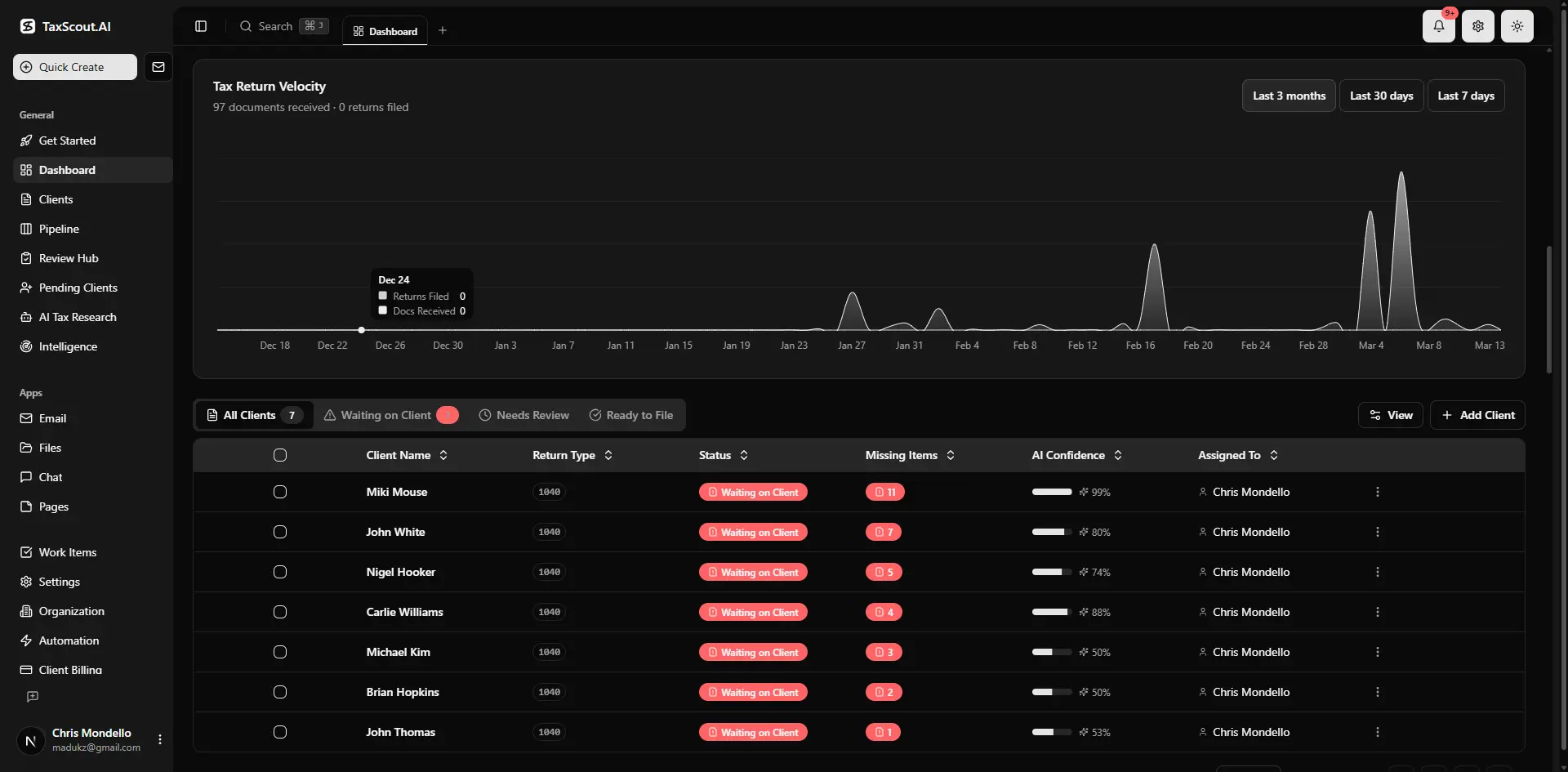
Real-time dashboard showing returns in progress, revenue, and upcoming deadlines
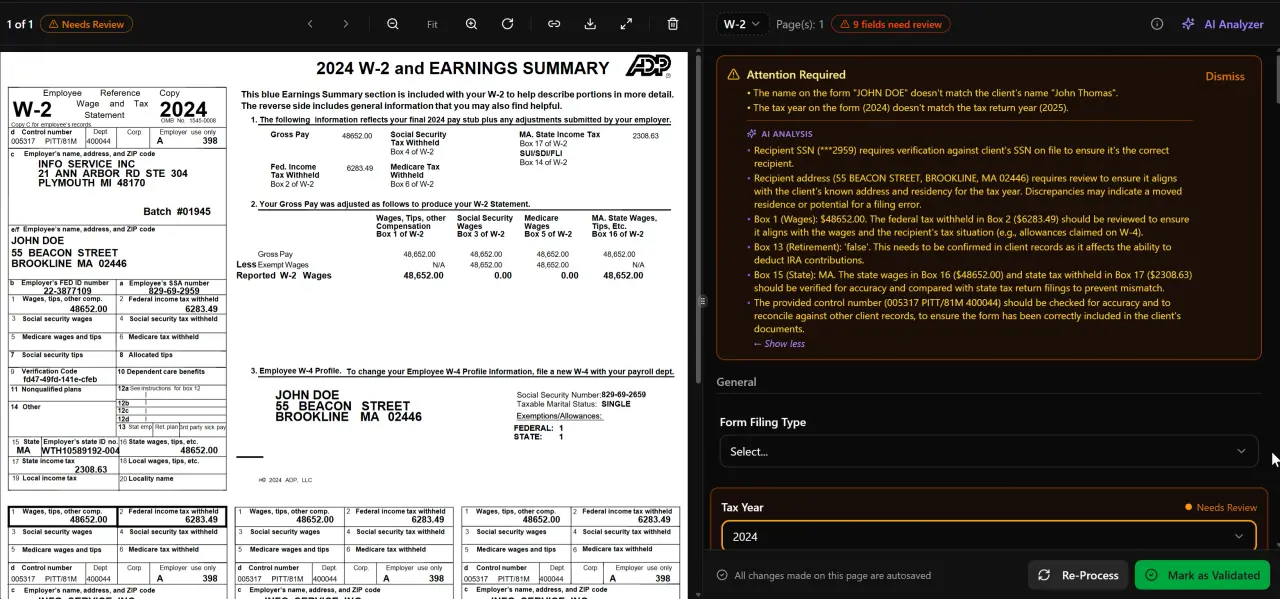
AI classifies, extracts, and validates every document automatically
How the Superfund Excise Tax Calculation Works
For clients new to this area, a brief orientation helps. The Superfund chemical excise tax under IRC §4661 and §4671 works on two levels. Section 4661 taxes domestic manufacturers and importers of 42 listed chemicals (butadiene and acrylonitrile are both on this list). Section 4671 extends the reach to taxable substances — products manufactured using those chemicals — to prevent the tax from being circumvented by simply importing finished goods rather than raw chemicals.
If NBR is added to the §4671 list, the tax rate per ton of imported NBR will be calculated based on the weight fraction of butadiene and acrylonitrile in the polymer, multiplied by the applicable §4661 rates for each feedstock. The Treasury/IRS guidance on taxable substances provides the methodology. For clients doing preliminary cost modeling, butadiene is taxed at $9.74 per ton and acrylonitrile at $9.74 per ton as of current rates — though these figures are subject to Treasury adjustment.
The practical implication: a client importing several hundred tons of NBR annually could face tens of thousands of dollars in new annual excise tax liability. That is material enough to warrant a client advisory call, not just a newsletter footnote. For firms tracking multiple chemical or excise tax developments, pairing this with your regulatory intelligence workflow ensures nothing falls through the cracks.
Filing and Documentation Requirements to Prepare Now
Even before a final rule, smart preparation reduces scramble risk. Here is what documentation to gather or advise clients to gather:
Import records for NBR — Customs entries (CBP Form 7501) establish the volume and value of imports. These are the foundation of any Form 720 excise tax calculation and any potential refund or credit claim.
Material Safety Data Sheets (MSDS) or technical data sheets confirming the polymer composition — The specific formula (x=3,344.33, y=1,335.09, a=2.98) in the petition matters because excise tax applicability is formula-specific. A client importing a different NBR variant may or may not be covered depending on how Treasury defines the scope in any final rule.
Supplier contracts and cost-pass-through clauses — Many supply contracts include excise tax pass-through language. Reviewing these now determines whether the client absorbs the cost or passes it downstream, which affects taxable income modeling.
For firms that handle significant document-intensive excise tax work, AI document extraction can accelerate processing of CBP entries, MSDS records, and supplier invoices rather than relying on manual review. See our full breakdown in AI document extraction for CPAs for the technical approach.

Click any extracted field to see its source highlighted on the original PDF
Low Priority Does Not Mean No Priority
The priority signal on this notice is rated low at the firm-wide level because NBR importers represent a narrow slice of most CPA firm client rosters. But for any firm with even one affected client, the calculus flips: a missed excise tax filing or an under-accrued liability on a manufacturing client's books is a professional liability issue, not just a planning miss.
The IRS Form 720 quarterly deadline schedule means that if NBR is added to the taxable list before year-end, the first affected quarter could arrive before most firms have finished their annual planning cycle. Starting the client conversation now is the appropriate risk management move.
For firms building out their tax calendar and deadline tracking, the IRS deadlines guide for 2026 is a useful companion resource to keep Form 720 due dates visible alongside the more commonly tracked 1040 and entity deadlines.
Still relying on manual Federal Register scans to catch regulatory changes before they hit your clients?
TaxScout's 9 AI research agents watch IRS, Treasury, Cornell Law, and SSA in real time and surface the actionable items for your specific client base — so your firm responds before the deadline, not after.
Frequently Asked Questions
The Superfund excise tax is imposed under IRC §4661 on 42 listed taxable chemicals and under IRC §4671 on imported taxable substances manufactured using those chemicals. It was reinstated effective July 1, 2022 by the Infrastructure Investment and Jobs Act of 2021. The tax is reported on IRS Form 720 and filed quarterly.
Keep reading
Energy Tax Credits for CPAs: How to Claim IRA Incentives for Business Clients
Oct 23, 2026 · 1 min read
Partnership Guaranteed Payments: How CPAs Handle SE Tax and Deductibility
Oct 22, 2026 · 1 min read
Guidance Under Section 355 Concerning Device and Active Trade or Business Partial Withdrawal
Oct 22, 2026 · 1 min read
Stay up to date
Get the latest tax tech insights delivered to your inbox.