Guidance on Eligible Investments for Trump Accounts: What CPA Firms Must Do Now
The IRS released proposed regulations on August 21, 2026 defining eligible investments for Trump Accounts—the new minor-beneficiary savings vehicles created under recent tax legislation. The rules restrict allowable assets until the beneficiary turns 18 and affect trustees, account administrators…
On August 21, 2026, the IRS published proposed regulations providing guidance on eligible investments for Trump Accounts—formally titled Guidance on Eligible Investments for Trump Accounts in the Federal Register (RIN 2026-17123). The regulations define which assets trustees may hold inside these accounts before the first calendar year in which the account beneficiary turns 18, and they are proposed—not yet final—but CPAs should act now to identify affected clients and update intake and advisory workflows.
Trump Accounts are a new class of tax-advantaged savings vehicle established for minor beneficiaries. Like Roth IRAs, they carry strict rules about permissible holdings. The proposed regulations tighten those rules during the pre-age-18 accumulation phase, limiting trustees to a defined universe of eligible investments. Firms that administer employer-sponsored programs or advise individual clients who have opened or plan to open these accounts need to flag this guidance immediately. The recently released guidance on eligible investments for Trump Accounts makes clear that trustees must carefully vet every holding against the approved list before accepting contributions.
This brief cuts through the Federal Register language to give CPA firm owners the operational summary: what changed, which client segments are affected, and a concrete action list for the current week. Before diving in, it is worth noting that the guidance on eligible investments for Trump Accounts applies immediately to newly opened accounts, making prompt review essential for CPA firms onboarding minor clients.
What the Proposed Regulations Actually Change
The core change is definitional. The proposed regulations establish that Trump Account funds may only be invested in a specific set of eligible investments from the time the account is opened until December 31 of the year before the beneficiary reaches age 18. The IRS has not finalized the exhaustive list, but the proposed rule signals that eligible investments will be broadly limited to diversified, publicly traded instruments—think broad-market index funds and U.S. government securities—while excluding individual equities, alternative assets, crypto, and self-directed options during this phase. CPAs who have already reviewed the guidance on eligible investments for Trump Accounts will recognize that this definitional shift is the most consequential compliance hurdle firms must address before advising trustees.
The regulations also place affirmative obligations on trustees to ensure that account assets conform to the eligible investment definition at all times during the restricted period. A trustee that holds a non-eligible asset—even inadvertently through a fund reclassification—could trigger adverse tax consequences for the beneficiary. This is the part most likely to generate client questions and potential liability exposure for practitioners who helped establish these accounts. For firms evaluating their guidance on eligible investments for trump accounts approach, this trade-off compounds over time.
Because the regulations are proposed, there is a comment period before finalization. The IRS and Treasury have invited public comments, which means the final rule could shift. However, practitioners should treat the proposed framework as operative guidance for planning purposes now, consistent with how Treasury guidance is typically applied before finalization in new account categories. Each of these factors directly shapes how guidance on eligible investments for trump accounts plays out in practice.
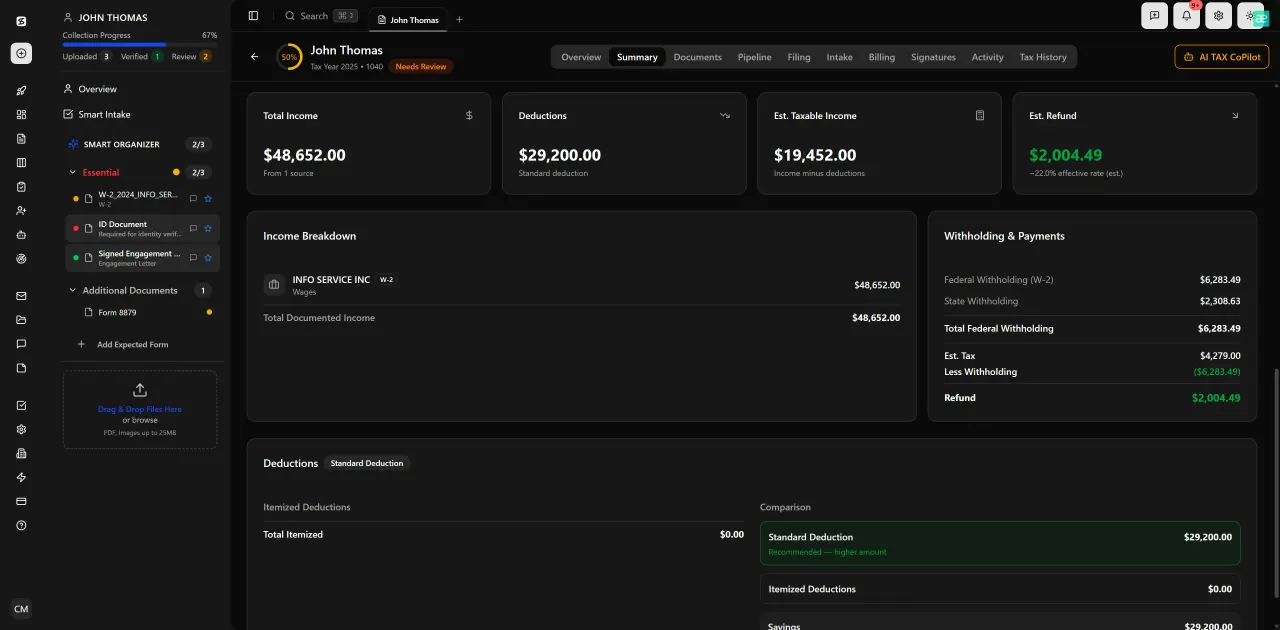
Review with AI assist — 9 agents answer questions with full client context
Which Client Segments and Filing Types Are Affected
Tired of manual workflows slowing your firm down? See how TaxScout handles this with AI-powered automation. → Book a 15-Min Demo Understanding guidance on eligible investments for trump accounts in this context is what separates firms that scale from those that stall.
The proposed regulations affect three primary client segments CPA firms serve:
Individual filers (Form 1040): Any client who has opened a Trump Account for a minor child—or whose employer has contributed to one on the child's behalf—needs to confirm that the account's current holdings qualify as eligible investments under the proposed rule. This is primarily a 1040 compliance and advisory issue for the 2026 filing year and beyond.
Employers and plan administrators (Forms W-2, 5500 adjacency): As covered in our earlier brief on employer contributions to Trump Accounts and nondiscrimination rules, some employers are contributing to Trump Accounts as a benefit. Those employers and their plan administrators now have a trustee-level obligation to ensure contributed funds flow only into eligible investments. This touches payroll, benefits administration, and potentially Form W-2 reporting if non-compliance triggers income inclusion.
S-corporations and partnerships: Owner-operators of pass-through entities who set up Trump Accounts for their minor children as part of a broader wealth-transfer or compensation strategy should review whether entity-level transactions—such as a contribution funded by a K-1 distribution—have resulted in any non-eligible asset being held in the account.
Nonprofits: Nonprofit employers offering Trump Accounts as a staff benefit fall under the same trustee-obligation framework as for-profit employers. The IRS publication library does not yet include a dedicated nonprofit guidance document, but the proposed regulations apply broadly to all trustees regardless of the employer's tax-exempt status.
The proposed rule does not directly alter Form 1040 line items or create new schedules for 2026. The exposure is in the underlying asset compliance and potential corrective distributions if non-eligible investments are discovered.
Buried in proposed-reg PDFs when you should be advising clients?
TaxScout's AI Research Agents monitor IRS and Treasury publications in real time, so your team gets a plain-language operational summary—not a 40-page Federal Register printout.
→ See AI Research Agents in Action
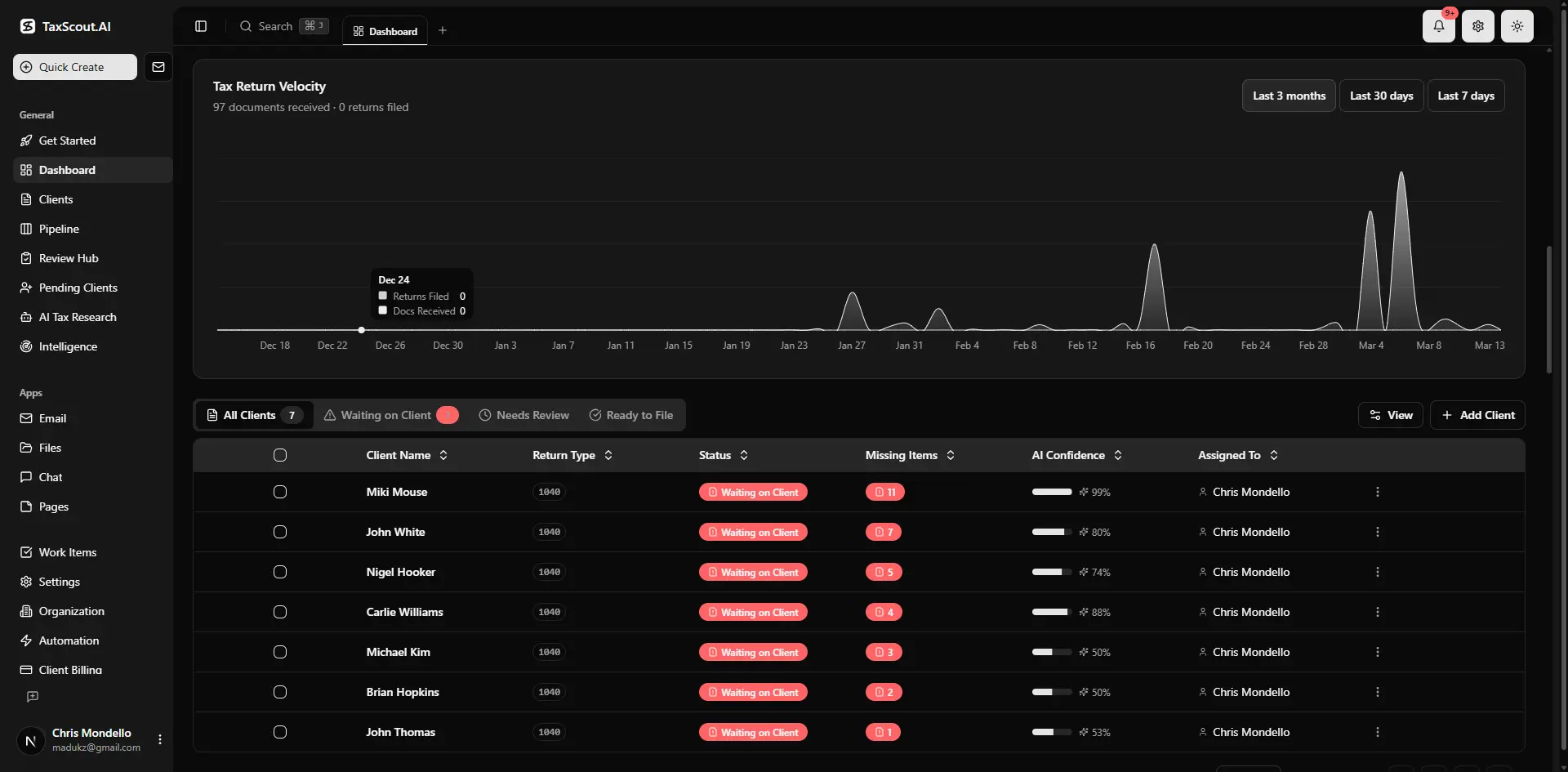
Real-time dashboard showing returns in progress, revenue, and upcoming deadlines
What to Do This Week: A CPA Firm Action List
The following steps are sequenced for a solo or small-team firm that has a one-to-two-week action window before the comment period generates additional guidance churn.
1. Identify exposed clients. Pull your client list and flag any individual (1040) client who mentioned opening a Trump Account during 2025 or 2026 intake, any employer client offering Trump Accounts as a benefit, and any trust or estate client where a minor beneficiary is named. Your client management system should make this a quick filter if your intake data is clean.
2. Contact trustees and account administrators. Send a brief advisory note to affected clients explaining that the IRS has issued proposed guidance on eligible investments and that they should confirm current holdings with their account custodian. Document that communication. E-signatures on a brief engagement-letter addendum can memorialize the advisory relationship and limit liability.
3. Review the primary source directly. Read the full proposed regulation at Guidance on Eligible Investments for Trump Accounts on the Federal Register. Pay particular attention to the definition section and any safe harbors for trustees that relied on pre-regulation custodian defaults.
4. Flag the comment deadline. Proposed regulations have a public comment window—typically 60 days from publication. Set a calendar reminder for mid-October 2026 to check whether Treasury has published any clarifying FAQs or a final rule. The IRS Newsroom and law.cornell.edu's CFR tracker are the fastest ways to monitor finalization.
5. Update your intake questionnaire. If your 2026 tax intake does not yet ask about Trump Account ownership or trustee status, add it now. The AI intake feature in TaxScout can surface this question automatically based on prior-year data and client profile flags, reducing the chance any affected client slips through.
6. Brief your team. Share a one-paragraph summary of this guidance with every staff member who handles individual returns or benefits-related payroll work. Point them to this brief and to other news resources on emerging IRS guidance affecting the 2026 filing season.

Click any extracted field to see its source highlighted on the original PDF
Practical Notes on Trustee Compliance and Documentation
One nuance the proposed regulations introduce is a distinction between the trustee's obligation and the account beneficiary's awareness. Minor beneficiaries cannot self-direct investments, so the entire compliance burden sits with the trustee—often a parent or employer. CPAs who help clients establish Trump Accounts as part of a tax plan should document in their workpapers that eligible investment guidance was communicated and that the trustee acknowledged responsibility.
If a client's current custodian does not yet have a formal eligible-investment compliance framework, this is a good time to recommend they request written confirmation from the custodian that all holdings satisfy the proposed definition. That written confirmation provides a reasonable-reliance defense if the rule is later finalized with a different asset list and a corrective-action window is provided.
For firms tracking regulatory changes across dozens of clients, regulatory intelligence tools that monitor Federal Register publications automatically are no longer optional—they are a practical necessity during a legislative cycle that has introduced multiple new account types and associated guidance within a single filing year. See also our recent coverage of IRS proposed higher 1099 reporting thresholds for a parallel example of proposed-rule impact on CPA workflows.
Firms should also cross-reference IRS guidance on withholding obligations if employer contributions to Trump Accounts create any ambiguity about whether the contribution is a taxable wage—this remains an open question under the proposed regulations and may require a follow-up advisory once final rules are published.
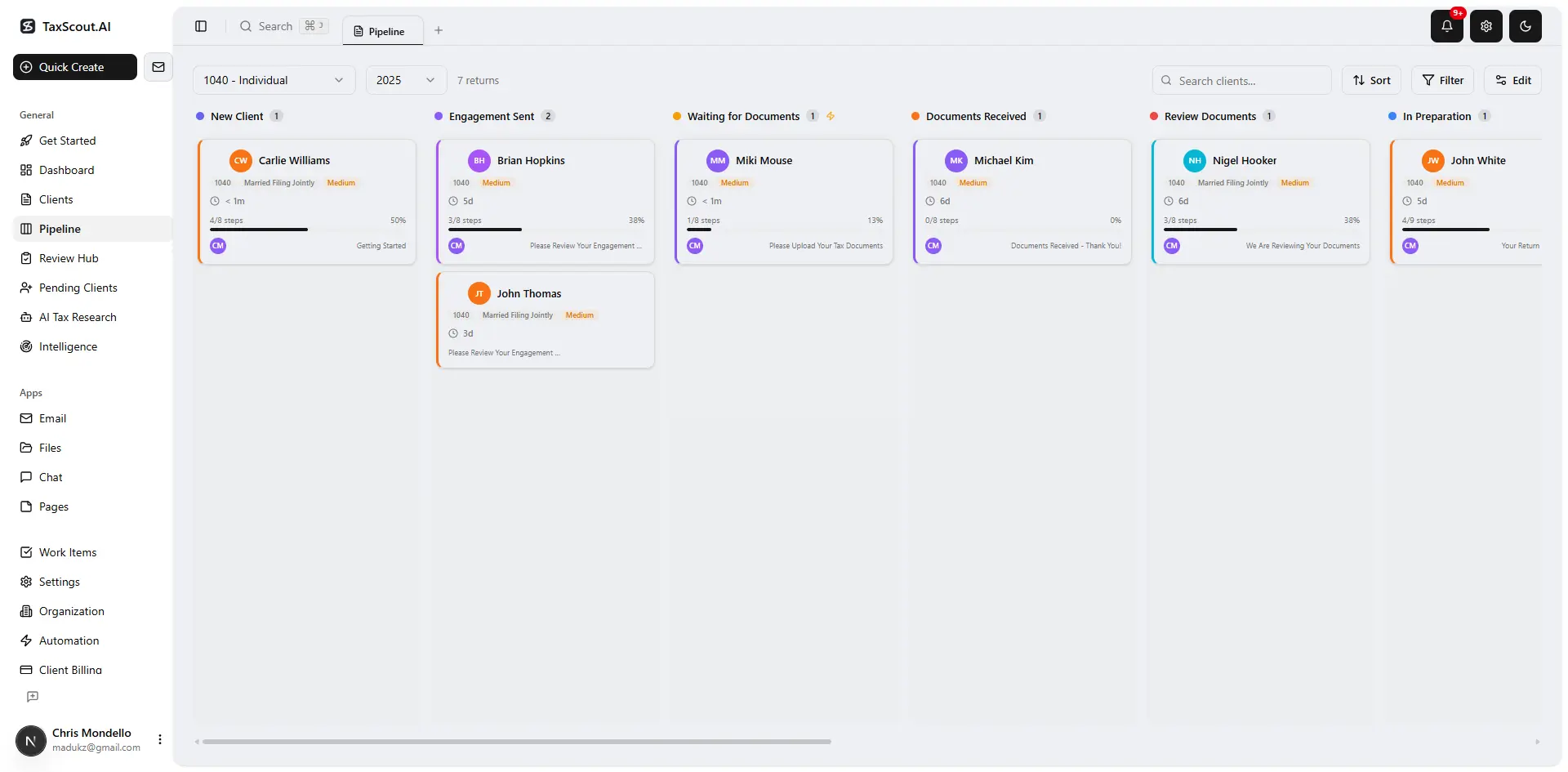
Track every return from intake to filed with drag-and-drop pipeline management
Guidance on Eligible Investments for Trump Accounts: Bottom Line for CPA Firms
The August 21, 2026 proposed regulations are not a crisis, but they are an action item. Firms that identify affected clients now, communicate the investment restriction clearly, and document that communication are well-positioned for whatever the final rule contains. Firms that wait for finalization risk discovering non-compliant holdings after the correction window closes.
The proposed rule is available in full at the Federal Register. Comments are open—if your firm has clients with large Trump Account balances or administers an employer program, consider whether a practitioner comment is warranted before the deadline.
For a broader view of the 2026 legislative environment affecting individual and employer clients, the IRS tax deadlines 2026 guide remains the fastest single reference for deadline and compliance context your team needs this season.
Still tracking proposed regulations manually in a spreadsheet?
TaxScout's 9 AI Research Agents search IRS, Treasury, and Cornell Law in real time—so your firm stays ahead of rule changes without burning staff hours on Federal Register monitoring.

Smart intake auto-fills from uploaded documents and prior-year data
Frequently Asked Questions
Trump Accounts are tax-advantaged savings accounts established for minor beneficiaries under recent federal tax legislation. The proposed regulations published August 21, 2026 affect account beneficiaries (minor children) and the trustees who manage assets on their behalf until the first day of the calendar year the beneficiary turns 18.
Keep reading
Backdoor Roth IRA: How CPAs Execute the Strategy Without Triggering Pro-Rata Tax
Oct 12, 2026 · 1 min read
Amended FBAR Procedures: How CPAs Correct Foreign Account Errors Without Triggering Penalties
Oct 12, 2026 · 1 min read
Transparency in Coverage Final Rules: What CPA Firms Must Do Now
Oct 12, 2026 · 1 min read
Stay up to date
Get the latest tax tech insights delivered to your inbox.