IRS Reminder: Renew Your PTIN Now Before 2027
The IRS issued IR-2026-130 on November 4, 2026, reminding all paid tax return preparers to renew their PTINs before preparing any 2027 returns. CPA firms with multiple preparers on staff face a time-sensitive administrative task before the season opens. Here is a plain-language breakdown of who is…
This IRS reminder, issued November 4, 2026 as IR-2026-130, requires every paid tax return preparer to renew their preparer tax identification number (PTIN) for 2027 before signing or preparing any federal return in the new year. The renewal window is open now at IRS Tax Pro Account. All 1040, S-corp, partnership, and nonprofit return preparers who sign returns for compensation must hold a current, valid PTIN.
On November 4, 2026, the IRS issued IR-2026-130 — an IRS reminder that every paid tax return preparer must renew their preparer tax identification number (PTIN) for 2027. The renewal window is open right now, and any preparer who signs or prepares federal returns for compensation without a current PTIN faces penalties under IRC §6695. For CPA firm owners, this is not an individual compliance matter — it is a firm-wide administrative task with a hard deadline before busy season.
Unlike many IRS announcements that affect client filings, this one lands squarely on your staff roster. Every credentialed preparer and unenrolled return preparer on your payroll who signs federal returns — whether 1040s, S-corp returns, partnership returns, or exempt-organization returns — must hold a valid, renewed PTIN before they touch a single 2027 filing. Firms that employ a mix of CPAs, EAs, and seasonal preparers need to audit every name on the schedule now, not in January. This IRS reminder applies broadly across firm sizes, meaning even small practices with a single associate preparer must verify active PTIN status before any federal return is signed.
This brief summarizes what changed, which preparers and filing types are affected, and the specific actions firm owners should take this week. For broader IRS and regulatory developments that affect your practice, see our complete coverage of firm news. Bookmark this page as we update it whenever a new IRS reminder or regulatory change affects preparer credentials, filing obligations, or firm compliance requirements.
Key dates
- S-corp and partnership returns due (Form 1120-S, 1065): March 16, 2027
- Individual and C-corp returns due (Form 1040, 1120): April 15, 2027 Keep these dates visible in your firm's calendar system, as an IRS reminder about PTIN expiration will not arrive with enough lead time to avoid a last-minute compliance scramble.
What IR-2026-130 Actually Changed
The core requirement is not new: PTINs have been mandatory for paid preparers since 2011 under 26 C.F.R. § 1.6109-2. What IR-2026-130 does is open the annual renewal cycle and put firms on notice that the 2026 PTINs expire at year-end. The IRS reminder: Tax professionals should renew their PTINs for 2027 makes clear that a PTIN issued for 2026 is not automatically valid for 2027 — preparers must actively renew, pay the renewal fee, and confirm their account information is current.
The IRS processes renewals through the online PTIN system at IRS Tax Pro Account. Paper applications remain available via Form W-12 but typically take four to six weeks — meaning any preparer who waits until December to apply by mail may not have a valid PTIN before returns are due in late January and early February. For firms evaluating their IRS reminder approach, this trade-off compounds over time.
The renewal fee remains at $19.75 per preparer for 2027. Firms should budget accordingly if they carry a large seasonal staff. Each of these factors directly shapes how IRS reminder plays out in practice.
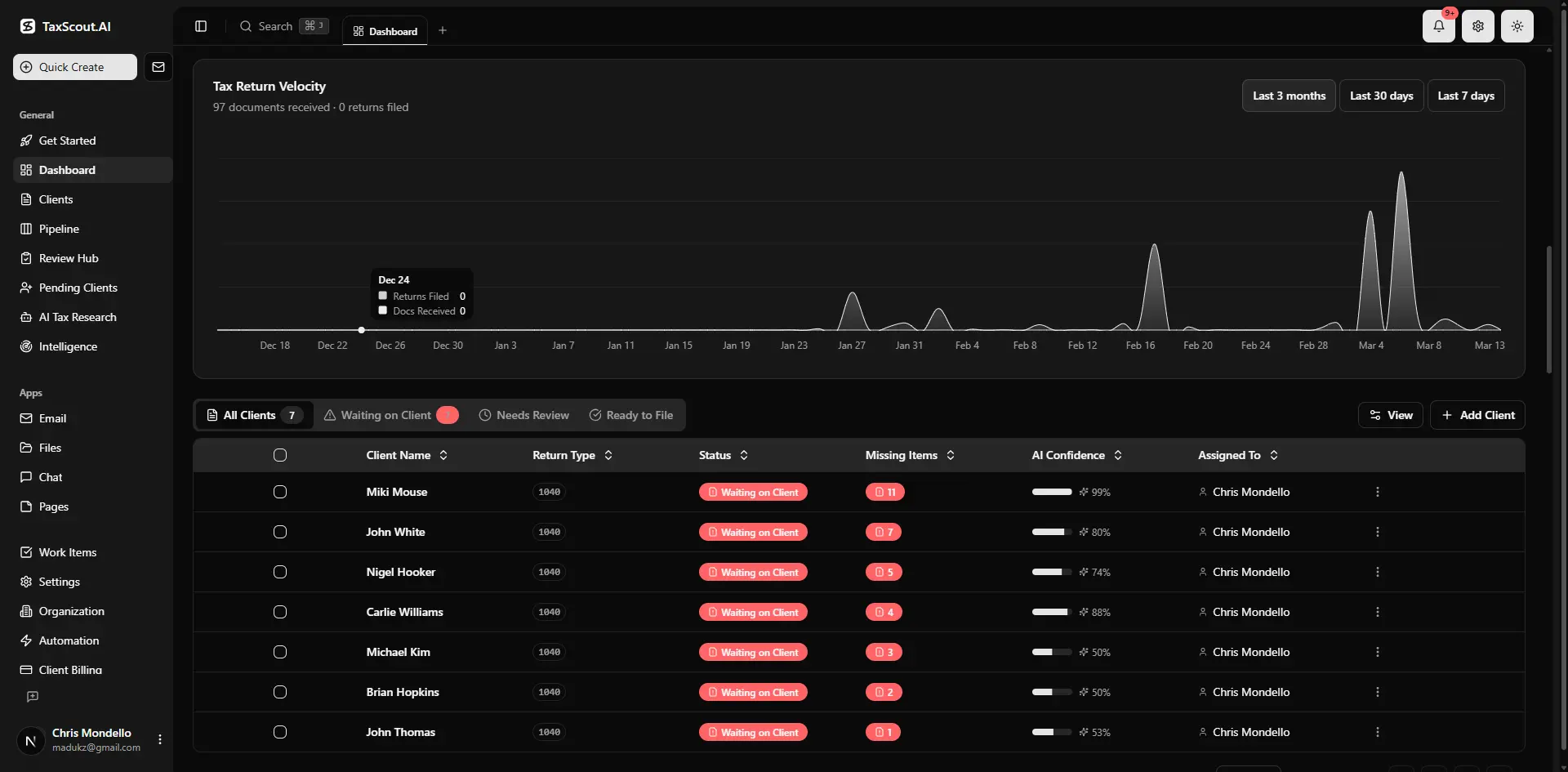
Real-time dashboard showing returns in progress, revenue, and upcoming deadlines
Tracking down PTIN renewals across a team of preparers while managing an open pipeline? Understanding IRS reminder in this context is what separates firms that scale from those that stall.
TaxScout's pipeline management and team tools let you assign tasks, track compliance deadlines, and keep every preparer's status visible in one place.
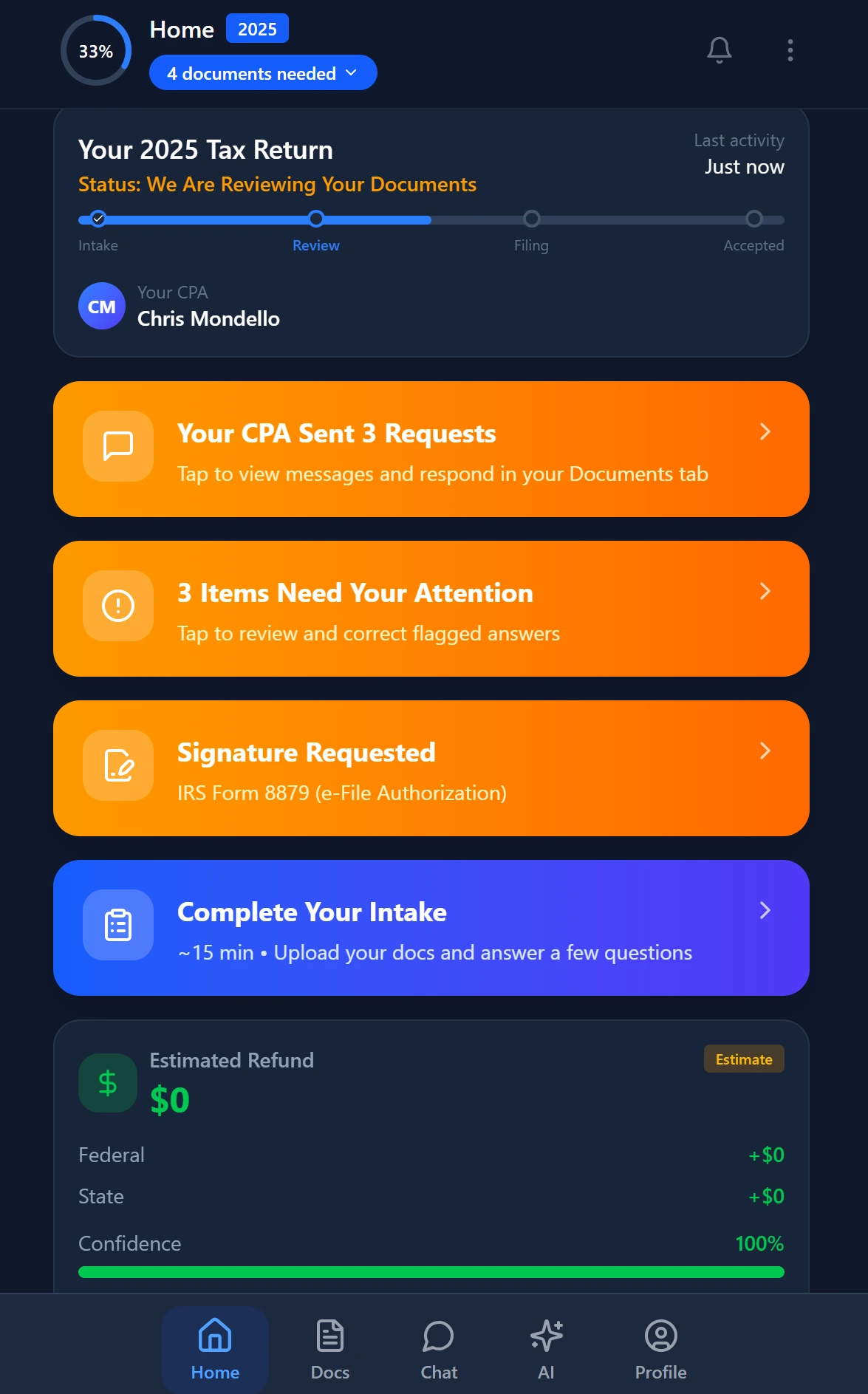
Smart intake auto-fills from uploaded documents and prior-year data
Which Preparers and Filing Types Are Affected
The requirement covers every individual who prepares or substantially assists in the preparation of a federal tax return for compensation and signs that return. That scope is broader than it sounds:
1040 preparers — Any staff member who prepares individual returns and whose name appears in the paid preparer block must have a renewed PTIN. This includes seasonal or part-time preparers hired for the January–April rush.
S-corp and partnership preparers — Preparers who sign Forms 1120-S and 1065 for compensation need a valid PTIN. With the S-corp and partnership deadline falling on March 16, 2027, those preparers are often the first to sign returns in the new year.
C-corp preparers — Form 1120 signers are equally covered. The April 15, 2027 deadline is later, but the PTIN must be valid at the time of signing, not at the deadline.
Exempt-organization return preparers — Any paid preparer who signs Form 990, 990-EZ, or 990-PF for a nonprofit client must hold a current PTIN. Many smaller firms handle a handful of nonprofit clients where a single preparer covers the full return; that preparer needs a renewed PTIN even if they sign only one or two exempt-org returns annually.
Who is exempt — Preparers who are not compensated, volunteers (including VITA/TCE participants acting in that capacity), and individuals who prepare returns only for their employer are not required to have a PTIN. CPAs, EAs, and attorneys who prepare returns as a paid service are always covered, regardless of credential.
What to Do This Week: A Firm Action List
The following steps reflect the operational impact of IR-2026-130 for small and mid-size CPA firms. Work through them before the first returns of the new year are signed.
1. Pull your full preparer roster. List every staff member — partners, managers, senior associates, and seasonal hires — who will sign or substantially prepare federal returns in 2027. Include anyone hired after last year's renewal cycle who may have a PTIN issued for 2026 that has never been renewed.
2. Confirm PTIN status for each preparer. Each preparer must log in individually to their own IRS online account to check status and renew. Firm administrators cannot renew on behalf of staff. Build this into a checklist you send to every qualifying preparer by end of this week.
3. Flag preparers who need a first-time PTIN. New hires who have never held a PTIN must register, not renew. First-time registration through the online system is typically processed within 15 minutes; paper registration (Form W-12) takes four to six weeks.
4. Document completed renewals. Request confirmation screenshots or the PTIN number itself from each preparer and store them in your firm's HR or compliance records. If you use a client management or practice management system, attach the confirmations to each preparer's staff profile.
5. Update engagement letter and return preparation workflows. Confirm that the PTIN field in your tax software (Drake, CCH Axcess, UltraTax CS, Lacerte, ProConnect, ProSeries) reflects the renewed PTIN for each preparer — not last year's, which is formatted identically. A stale PTIN printed on a 2027 return triggers a preparer-level penalty.
6. Set a January 1 hard stop. No preparer should sign a return dated on or after January 1, 2027 until their renewed PTIN is confirmed. Building this into your pipeline management workflow — for example, a checklist item on each preparer's first return of the year — prevents an accidental signing before renewal is complete.
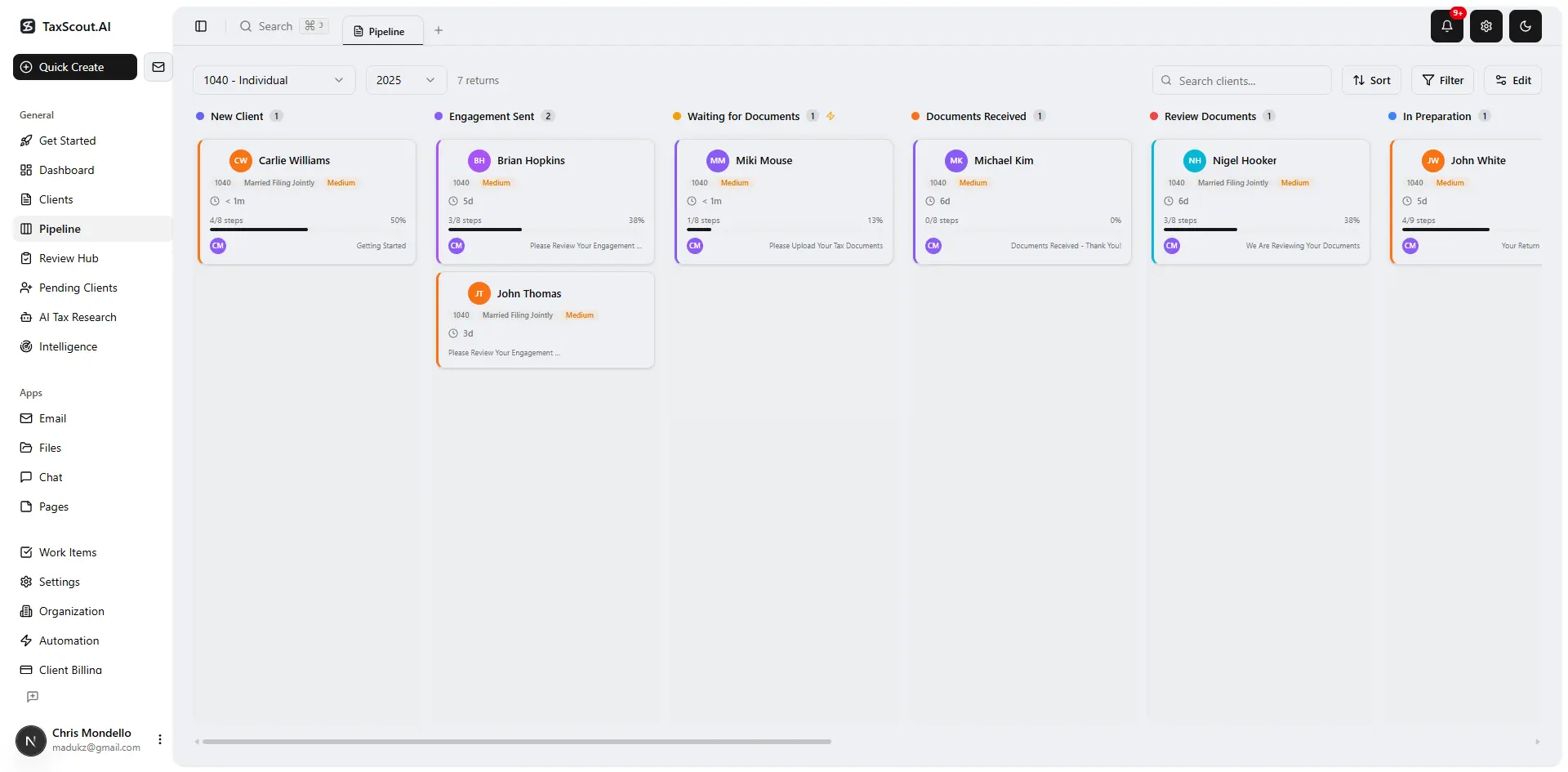
Track every return from intake to filed with drag-and-drop pipeline management

Click any extracted field to see its source highlighted on the original PDF
Penalties for Non-Compliance
The IRS Office of Professional Responsibility (OPR) enforces PTIN rules alongside Circular 230. Under IRC §6695(c), a preparer who fails to include a valid identifying number on a return is subject to a $60 penalty per return, with an annual maximum of $30,000. These penalties accrue per return, per preparer — meaning a busy season without renewed PTINs can produce hundreds of penalty assessments across a firm's production volume.
Beyond the per-return penalty, preparing returns without a valid PTIN can be treated as a Circular 230 violation, potentially triggering OPR review and suspension of the preparer's right to practice before the IRS. For CPAs and EAs whose livelihood depends on that authorization, the stakes are significantly higher than the dollar penalty alone.
The IRS Tax Preparer Directory pulls PTIN data in real time — clients who search for their preparer by PTIN can see immediately whether the credential is current. An expired or unrenewed PTIN is publicly visible, which is a reputational risk that the dollar penalty understates.
How This Fits Into Your Pre-Season Compliance Calendar
PTIN renewal is one of several pre-season compliance tasks that land on CPA firm owners in November and December. For context on how firms are tracking deadline-sensitive tasks this year, see the IRS Nationwide Tax Forum Online Launches 2026 Seminars With New CE Credits post — CE credits earned at those sessions may also affect each preparer's continuing education record, which the IRS ties to PTIN status for Registered Tax Return Preparers (RTRPs) in certain preparer programs.
If your firm uses IRS Tax Pro Account, note that the account now supports business-client payment authorizations as well — see our earlier coverage of IRS Expands Tax Pro Account for Business Client Payments for how that feature intersects with the same portal you will use for PTIN renewal.
Firms that have not yet structured their tax intake and onboarding workflows for 2027 should treat PTIN renewal as the trigger to review the full pre-season checklist. A valid PTIN is table stakes; the competitive advantage comes from having intake, e-signatures, and pipeline tracking ready before the first client documents arrive.
Is your firm's pre-season checklist still a spreadsheet?
TaxScout gives CPA firms a full pipeline, smart intake, e-signatures, and AI document processing — all at a flat monthly rate with no per-user fees.

Your clients see your brand — OTP login, document upload, and real-time status
Sources
- IRS reminder: Tax professionals should renew their PTINs for 2027
- 26 C.F.R. § 1.6109-2 — Tax return preparers required to furnish identifying number
- IRC §6695 — Other assessable penalties with respect to the preparation of tax returns
- IRS Office of Professional Responsibility — Circular 230
Ready to see the difference? TaxScout gives your firm AI extraction, 5-layer validation, and complete practice management — on flat firm pricing with unlimited team members. → Book a 15-Min Demo — See It Live
Frequently Asked Questions
PTINs are valid for a calendar year and expire on December 31 of that year. A PTIN issued or renewed for 2026 is not valid for use on returns prepared on or after January 1, 2027. Preparers must renew through the IRS online PTIN system or by submitting Form W-12 before they sign any 2027 returns.
Keep reading
IRS Income Taxes Rule Published August 21 2026: What CPA Firms Must Do Now
Aug 23, 2026 · 1 min read
Federal Independent Dispute Resolution Operations Correction: What CPA Firms Must Do Now
Sep 9, 2026 · 1 min read
IRS Releases Tax Inflation Adjustments for Tax Year 2027: What CPA Firms Must Do Now
Nov 11, 2026 · 1 min read
Stay up to date
Get the latest tax tech insights delivered to your inbox.