Partnership Guaranteed Payments: How CPAs Handle SE Tax and Deductibility
Partnership guaranteed payments occupy a distinct and frequently mishandled zone: deductible by the partnership, taxable to the recipient, and subject to self-employment tax. This guide walks CPAs through the Section 707(c) rules, SE tax mechanics, QBI implications, basis effects, and the…
Partnership guaranteed payments are one of the most consistently mishandled items in pass-through practice. Unlike ordinary profit allocations or simple draws, partnership guaranteed payments occupy a unique statutory position under IRC Section 707(c): they are deductible at the partnership level, includible in the recipient partner's gross income, and subject to self-employment tax regardless of whether the partnership shows a profit. That three-part character creates a cascade of consequences — on the Form 1065, on Schedule K-1, on the partner's individual return, and inside the QBI computation — that competitors writing about K-1 allocations and phantom income rarely address in full.
The confusion is understandable. In practice, guaranteed payments look like compensation: a managing member collects $10,000 per month for services rendered to the LLC, and the operating agreement calls it a 'guaranteed payment.' But the moment a practitioner treats it as a draw or a distribution, the return is wrong in at least three places: the partnership's ordinary deduction is missing, the partner's SE income is understated, and the basis calculation is off. For CPAs with partnership-heavy books, these errors compound year over year and become especially dangerous on audit. Understanding how partnership guaranteed payments differ from ordinary distributions is the first step toward avoiding costly classification errors.
This guide covers the mechanics that matter most: the deductibility rules under Section 707(c), self-employment tax treatment for both general partners and LLC members, the interaction with the Section 199A QBI deduction, how guaranteed payments affect outside basis differently from income allocations, the W-2 versus guaranteed payment framing question, and the documentation practices that hold up under IRS scrutiny. For context on related pass-through planning, see our article on Section 1231 gain planning and other blog resources covering pass-through tax strategy. This guide covers the mechanics that matter most for partnership guaranteed payments, including the deductibility rules under Section 707(c), self-employment tax treatment for both general partners and LLC members, the interaction with the Section 199A QBI deduction, and how guaranteed payments affect outside basis differently from income allocations.
What Section 707(c) Actually Says About Guaranteed Payments
Section 707(c) of the Internal Revenue Code defines guaranteed payments as amounts paid to a partner for services or the use of capital — without regard to the income of the partnership. That 'without regard to income' standard is the key phrase distinguishing a guaranteed payment from a distributive share. A distributive share fluctuates with the partnership's results; a guaranteed payment is fixed or determinable in advance, like a salary floor or a minimum capital return. Section 707(c) of the Internal Revenue Code defines partnership guaranteed payments as amounts paid to a partner for services or the use of capital — without regard to the income of the partnership.
The statute treats guaranteed payments as made to a non-partner for purposes of computing partnership gross income and the partner's gross income. In practice, this means the partnership deducts the payment as an ordinary business expense on Form 1065, reducing the ordinary income (or increasing the ordinary loss) allocated to all partners. The recipient partner then reports the guaranteed payment as ordinary income on Schedule E, line 28, with a description identifying it as a guaranteed payment rather than a distributive share. For firms evaluating their partnership guaranteed payments approach, this trade-off compounds over time.
Treasury Regulations under Section 707 clarify that the guaranteed payment character applies even when the partnership agreement calls the item a 'management fee,' a 'priority return,' or a 'salary.' The label in the operating agreement is not controlling; the economic substance — payment without regard to partnership income — governs. The IRS's partnership audit guide notes that examiners are specifically trained to identify reclassification opportunities when operating agreements use ambiguous compensation terminology. Each of these factors directly shapes how partnership guaranteed payments plays out in practice.
One nuance CPAs frequently miss: a payment that is partly determined by income and partly fixed is bifurcated. The fixed floor qualifies as a Section 707(c) guaranteed payment; the excess tied to income is a distributive share. Practitioners must split the characterization when the operating agreement creates a hybrid arrangement, something that becomes especially important when the QBI deduction is in play. Understanding partnership guaranteed payments in this context is what separates firms that scale from those that stall.
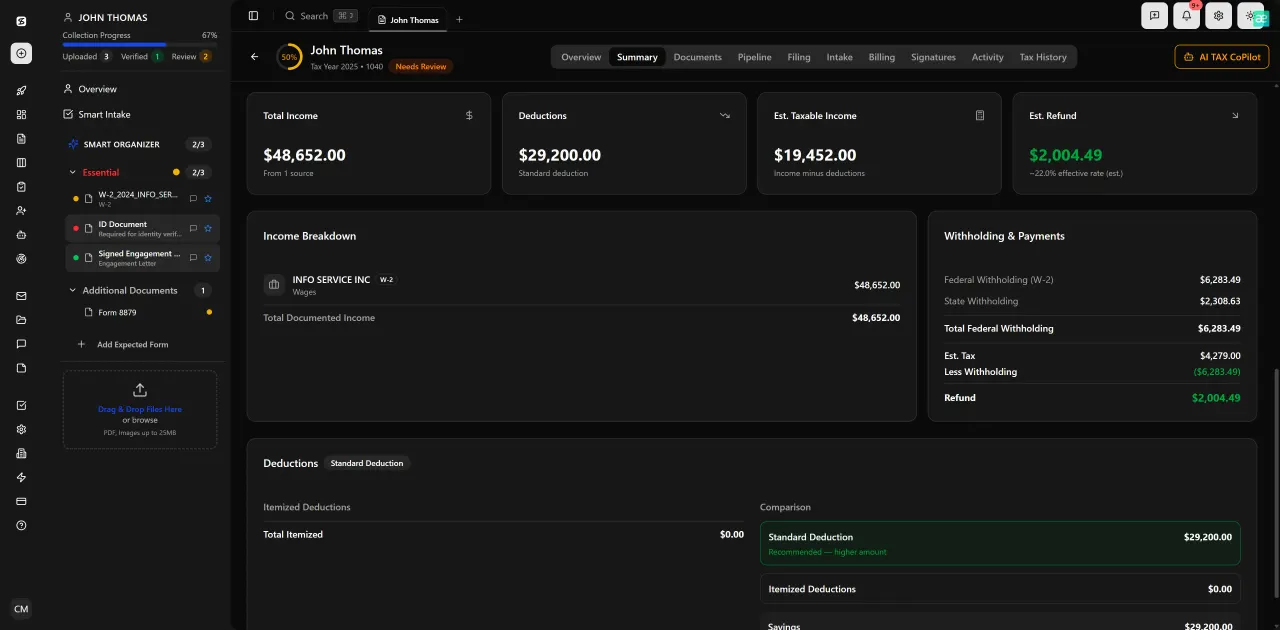
Review with AI assist — 9 agents answer questions with full client context
Self-Employment Tax on Guaranteed Payments to Partners
Guaranteed payments for services are subject to self-employment tax under IRC Section 1402(a). This is one of the most consequential and frequently overlooked implications for clients who receive them. Unlike a distributive share of partnership income — which may or may not be subject to SE tax depending on the partner's level of participation — guaranteed payments for services are unambiguously SE income. This is precisely where a deliberate partnership guaranteed payments strategy pays off.
The SE tax calculation flows through Schedule SE. The net earnings from self-employment include the full guaranteed payment amount, reduced by the deductible portion of SE tax (one-half), which then flows to Schedule 1 as an above-the-line deduction on the partner's Form 1040. For 2025, the SE tax rate is 15.3% on earnings up to the Social Security wage base and 2.9% on the excess, with a 0.9% Additional Medicare Tax applying above the applicable threshold. Clients should confirm current wage bases with IRS Publication 15 before filing. Partnership guaranteed payments sits at the center of this decision — get it wrong and the rest unravels.
Guaranteed payments for the use of capital — as opposed to services — are a different story. Revenue Ruling 91-26 and subsequent IRS guidance confirm that capital-based guaranteed payments are not subject to SE tax because they represent a return on investment rather than compensation for labor. CPAs must therefore parse operating agreement language carefully: a payment labeled 'preferred return' that is truly without regard to income may be a Section 707(c) guaranteed payment for capital, not subject to SE tax, while a 'management fee' for active services definitely is. When firms revisit their partnership guaranteed payments priorities, the gaps usually surface here.
LLC members occupy a technically contested space. The IRS has never finalized proposed regulations issued in 1997 addressing LLC member SE tax, leaving practitioners to rely on the general rule that active LLC members who perform services are treated like general partners for SE tax purposes. Most practitioners, and most IRS examiners, apply SE tax to guaranteed payments received by active LLC members for services without hesitation. Passive LLC members in certain limited-partner-equivalent roles may have an argument against SE tax on their distributive share, but that argument does not extend to partnership guaranteed payments received for services performed.
Tired of manually cross-referencing K-1s, guaranteed payment schedules, and SE tax worksheets every filing season?
TaxScout.ai's AI research agents surface authoritative IRS, Treasury, and Cornell Law guidance on partnership tax issues in seconds — while your pipeline keeps every client on track.
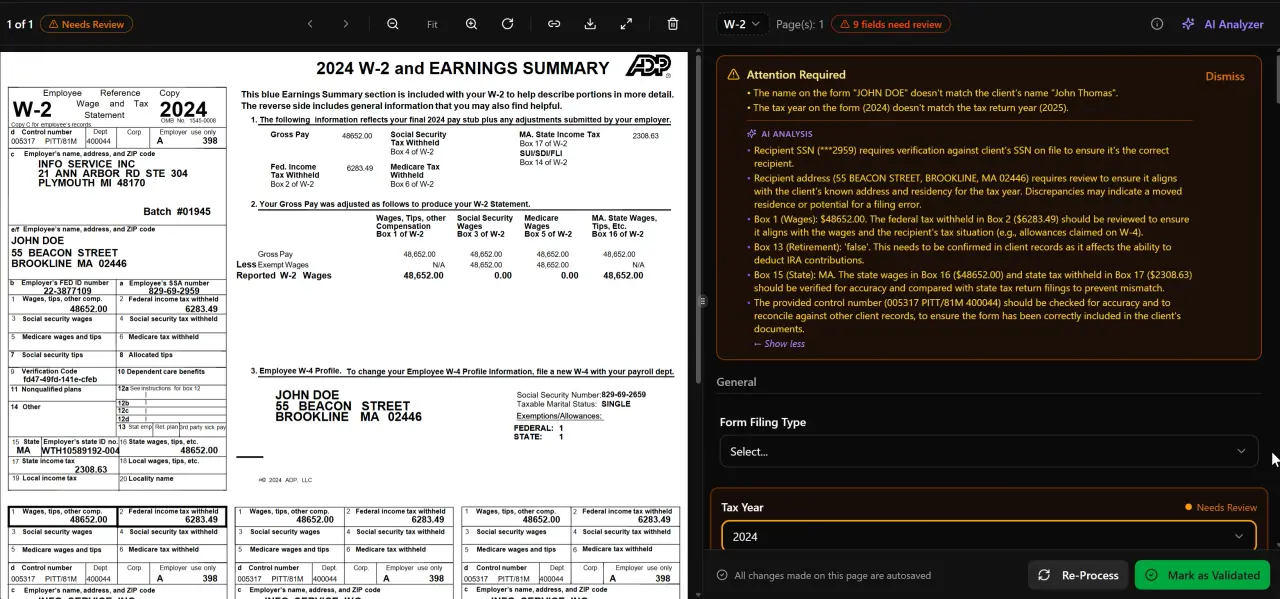
AI classifies, extracts, and validates every document automatically
Guaranteed Payment Deductibility at the Partnership Level
At the entity level, the partnership deducts guaranteed payments as an ordinary and necessary business expense under Section 707(c), reported on Form 1065, line 10 (guaranteed payments to partners). This deduction reduces the ordinary income figure that flows through to all partners' Schedule K-1 boxes 1 and 2, which means non-service partners also benefit — their allocable share of ordinary income is lower because the managing partner's guaranteed payment reduced the pool.
The deductibility is not absolute. If the partnership uses a fiscal year and the partner is a cash-basis taxpayer, timing mismatches can arise under the matching rules of Section 706(a). The partner includes the guaranteed payment in income in the taxable year in which the partnership's taxable year ends — not when the cash is received, and not when it accrues — unless the partnership uses the calendar year. For accrual-basis partnerships, the deduction is taken when the obligation is fixed and determinable. CPAs should review the partnership's accounting method and year-end before assuming the deduction and income land in the same client tax year. Correctly timing partnership guaranteed payments across fiscal years is one of the most overlooked sources of cross-year mismatches in multi-partner returns.
Guaranteed payments do not reduce a partner's capital account in the same way a distribution does. They flow through the income statement and increase the partner's capital account before any distribution is made, because the partner first recognizes income (the guaranteed payment) and then that income is netted against the deemed distribution of cash. This accounting treatment has practical consequences for negative capital account analysis and the Section 704(b) substantial economic effect tests.

Click any extracted field to see its source highlighted on the original PDF
How Guaranteed Payments Affect Partner Outside Basis
The basis mechanics of guaranteed payments differ from ordinary income allocations in a way that confuses even experienced practitioners. A partner's outside basis is first increased by the guaranteed payment (as income inclusion), then decreased by the deemed cash distribution equal to the payment amount. The net effect on basis is zero — the income inclusion and the deemed distribution wash out — which is exactly opposite from what many practitioners expect when they analogize guaranteed payments to salary.
By contrast, when a partner receives an ordinary income allocation (a distributive share), the partner's outside basis increases by the allocation, and only decreases if actual cash is distributed. That means an ordinary income allocation without a corresponding cash distribution creates basis (and can absorb losses in future years), while a guaranteed payment followed by the same cash outflow leaves basis unchanged. For clients with thin basis positions or suspended loss carryovers, this distinction can determine whether a deduction is available in the current year.
The basis interplay also matters for guaranteed payments that are not paid in cash but instead accrue as a payable on the partnership's books. The partner still recognizes income in the year the partnership's taxable year ends, which means basis increases from income recognition — but the offsetting decrease from the deemed distribution only occurs when the cash is actually distributed. Practitioners should track accrued-but-unpaid partnership guaranteed payments on the balance sheet and adjust basis calculations accordingly. For firms handling complex multi-entity structures, TaxScout.ai's client-context AI memory tracks entity structures and filing history across years to flag these timing differences automatically.
One additional basis trap: if the guaranteed payment creates or increases an ordinary loss at the partnership level (the entity had no income against which to offset it), that loss flows out to partners on Schedule K-1 and can be limited by basis, at-risk, or passive activity rules at the individual level. The recipient of the guaranteed payment has basis equal to the income recognized, but the other partners absorbing the increased ordinary loss may not.
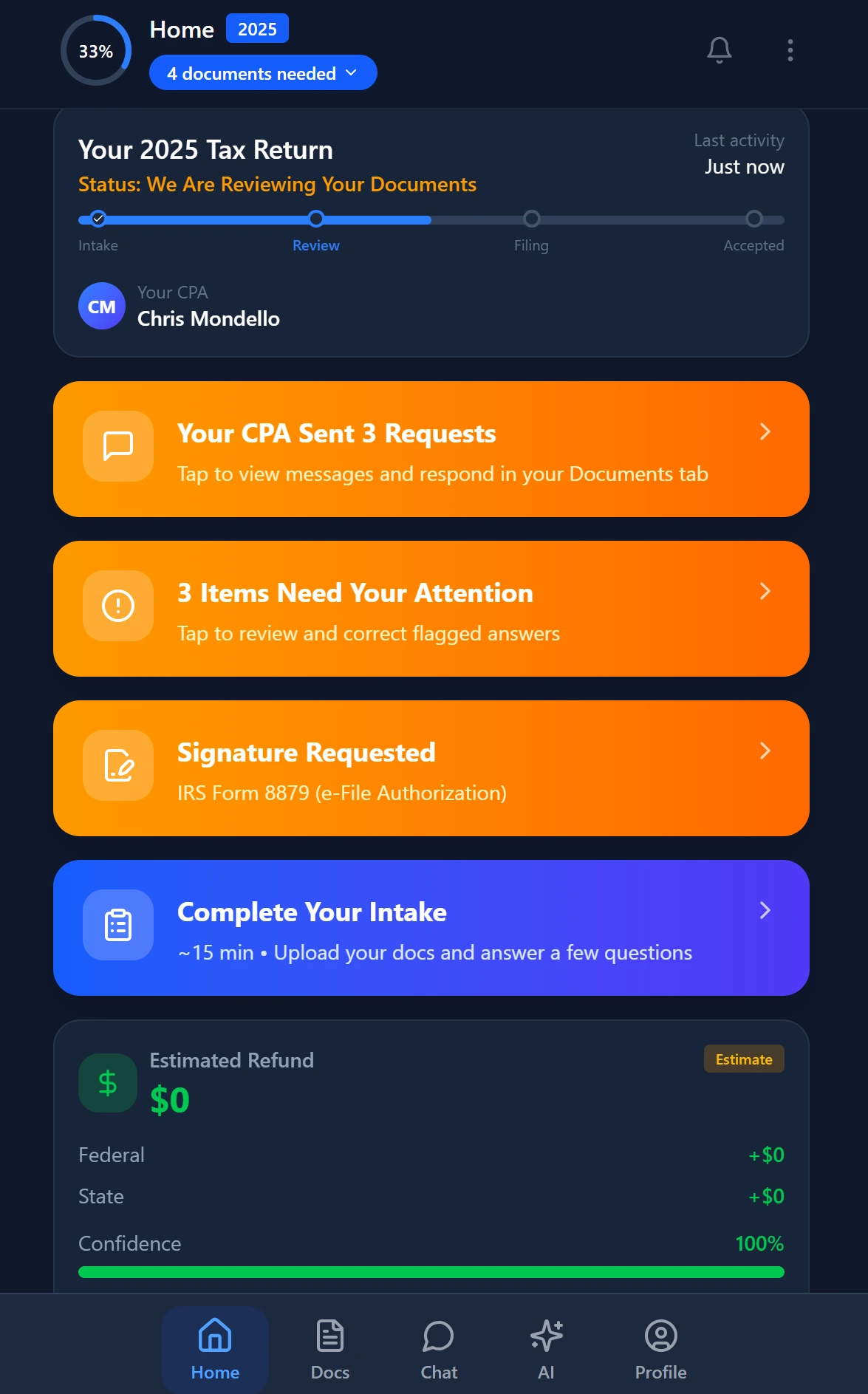
Smart intake auto-fills from uploaded documents and prior-year data
Guaranteed Payments and the Section 199A QBI Deduction
This is the intersection that virtually no competitor content addresses: partnership guaranteed payments directly reduce qualified business income (QBI) at the partnership level under Treasury Regulation Section 1.199A-3, and they are excluded from QBI at the partner level. The double exclusion is intentional but frequently misunderstood.
At the entity level, the guaranteed payment reduces the partnership's QBI because it is treated as an expense for services performed in the capacity of a non-partner. At the individual level, the recipient partner cannot include the guaranteed payment in their own QBI calculation — it is explicitly excluded under the final Section 199A regulations. The result: a $120,000 guaranteed payment taken by a managing member in a profitable LLC reduces the partnership's QBI by $120,000 (shrinking what flows to the other partners as QBI) and generates $0 of QBI for the recipient. The recipient has $120,000 of ordinary income subject to SE tax, but no 20% deduction on that amount.
This has planning implications. In some partnerships, restructuring a guaranteed payment into a larger distributive share — compensated by a special allocation — can shift dollars from the non-QBI guaranteed payment bucket into the QBI-eligible distributive share bucket, potentially generating a meaningful Section 199A benefit. However, that restructuring must satisfy the Section 704(b) substantial economic effect requirements, and it may affect SE tax exposure. Under current law (P.L. 119-21 made the Section 199A deduction permanent effective for tax years beginning after 2025), the stakes of this planning are long-term, not just through a near-term sunset. Advisors working through partnership guaranteed payments restructuring scenarios should model both the QBI and SE tax impact before recommending any changes to the operating agreement.
CPAs advising partnership clients on QBI optimization should also coordinate with the W-2 wage limitation. If the partnership pays W-2 wages to non-partner employees, those wages factor into the Section 199A limitation for partners receiving distributive shares, but they do not rehabilitate a guaranteed payment's excluded status. See our Schedule K-3 reporting guide for related pass-through reporting considerations that intersect with QBI for international partners.
Guaranteed Payments vs. Distributions: The LLC Operating Agreement Trap
The most common documentation error in multi-member LLC returns is an operating agreement that describes compensation to a managing member as 'draws' or 'distributions' when the economic reality — payment without regard to income — makes it a guaranteed payment. The mislabeling has cascading consequences: the partnership misses its ordinary deduction, the managing member's SE income is understated, and the K-1 allocations to other members are overstated.
IRS examiners examining partnership returns are increasingly focused on this exact pattern. The IRS Large Business and International division's pass-through entity campaign has flagged multi-member LLC returns where compensation-like payments to managing members are not reflected on line 10 of Form 1065. When an examiner finds that a managing member received predictable monthly payments regardless of profitability but the partnership took no guaranteed payment deduction, the audit risk expands to all open years.
The fix is straightforward: the operating agreement should explicitly use the term 'guaranteed payment' and reference Section 707(c), specify that the payment is made without regard to partnership income, and authorize the partnership to deduct the payment as an ordinary business expense. Many practitioners also include a separate Schedule of Guaranteed Payments as an exhibit to the operating agreement, updated annually to reflect any changes in amounts. This documentation, combined with consistent Form 1065 reporting, creates a strong audit trail. The reasonable basis defense for accuracy-related penalty protection is substantially strengthened when the governing documents are unambiguous.
A related trap: some operating agreements treat partnership guaranteed payments as 'advances against distributions.' This language conflates two fundamentally different mechanisms. An advance against distributions is a loan or a prepayment of the partner's economic interest — it does not reduce the partnership's income and does not trigger SE tax until distributions are actually made. Guaranteed payments under Section 707(c) are not advances; they are compensation. Using advance language in the agreement while deducting the payment as a guaranteed payment on the return creates an inconsistency that survives neither a tax audit nor a partnership dispute.
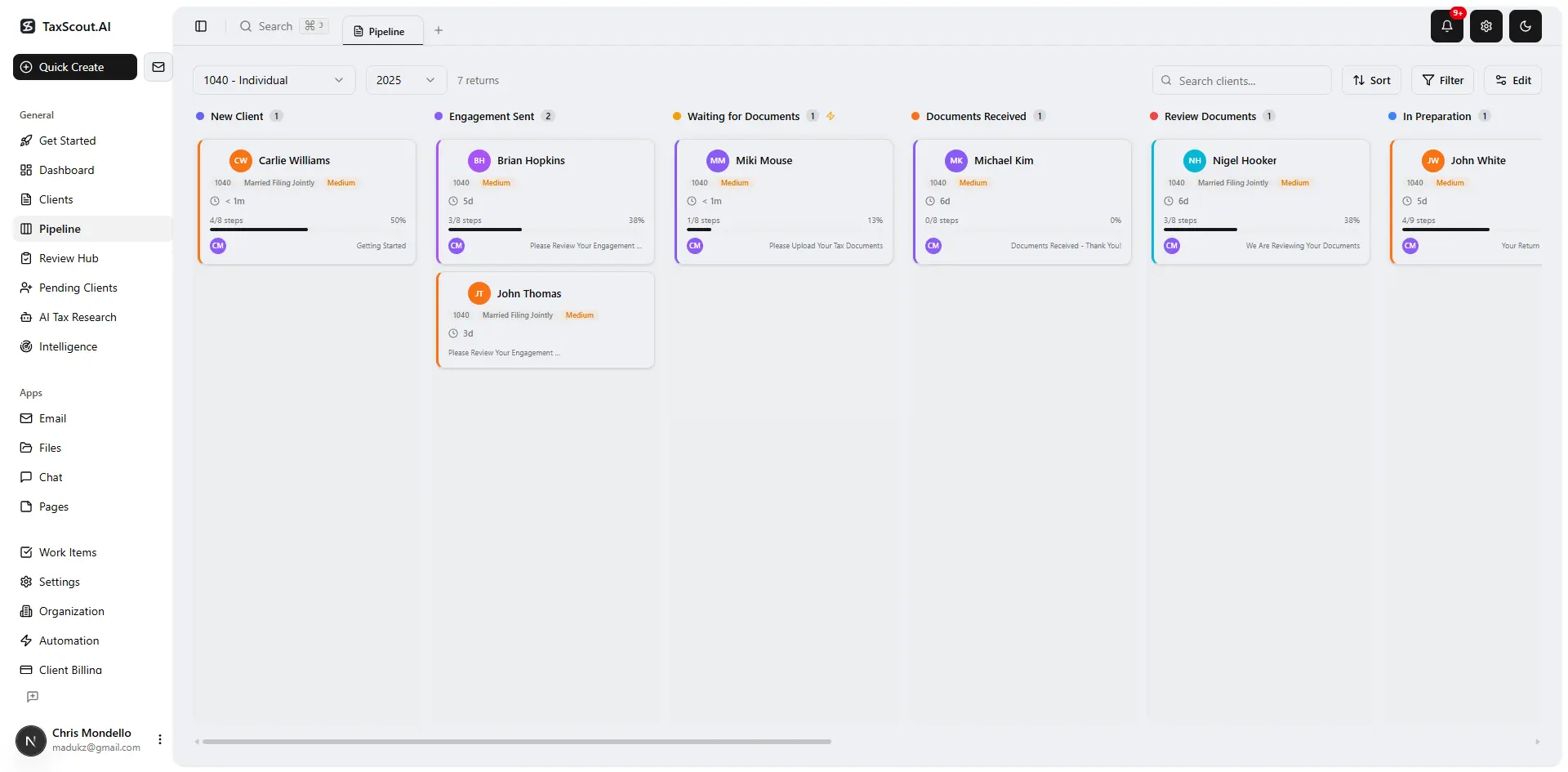
Track every return from intake to filed with drag-and-drop pipeline management
Guaranteed Payments vs. Distributions vs. Ordinary Allocations: Key Tax Differences
| Characteristic | Guaranteed Payment (§707(c)) | Distribution | Ordinary Income Allocation |
|---|---|---|---|
| Partnership deduction | Yes — ordinary business expense | No | No |
| Partner income inclusion | Ordinary income, year partnership year ends | Not taxable (return of basis) | Ordinary income per K-1 |
| SE tax (services) | Yes — self-employment income | No | Depends on partner type |
| Effect on partner basis | Net zero (income up, deemed distribution down) | Reduces basis | Increases basis |
| Included in partner QBI | No — explicitly excluded | N/A | Yes (if QBI-eligible activity) |
| Reduces partnership QBI | Yes — treated as §199A expense | No | No separate effect |

Every client gets organized documents, status tracking, and a complete history
W-2 Wages vs. Guaranteed Payments: Owner-Employee Framing
A question that surfaces frequently when CPAs advise clients converting from S corporations to partnerships: can a partner receive W-2 wages instead of guaranteed payments? The answer under established IRS guidance is no. Revenue Ruling 69-184 holds that a bona fide partner cannot simultaneously be an employee of the same partnership for federal employment tax purposes. A partnership cannot issue a W-2 to a partner for services rendered in that partner's capacity as a partner.
This distinction matters enormously for payroll tax strategy. S corporation owner-employees can split compensation between W-2 wages (subject to FICA) and distributions (not subject to FICA), which is the basis of the well-known S corp reasonable compensation planning strategy. Partners have no equivalent split: all service-based partnership guaranteed payments are subject to SE tax, and there is no statutory mechanism to route compensation through payroll to access the employer FICA deduction or avoid SE tax on the excess. For clients weighing entity structure, this SE tax difference is often the dominant factor after accounting for state tax treatment and administrative costs.
There is one narrow exception: a partner may be an employee of the partnership for services rendered in a capacity other than as a partner — for example, as a part-time technician performing non-partner functions for a separate business line. IRS guidance on this exception is narrow and requires genuine separation between the partner and employee roles. Most CPA clients in active management roles do not qualify, and practitioners should document the analysis if they take this position. The IRS's employment tax guidance for partnerships outlines the controlling authority.
For LLCs taxed as partnerships that want the payroll-split benefit, the structural answer is an S corporation election. The SE tax comparison between a multi-member LLC and an S corp is one of the most common advisory engagements in partnership-heavy CPA practices, and the guaranteed payment SE tax burden is almost always the central quantitative input. TaxScout.ai's AI research agents can surface current IRS guidance, Treasury regulations, and state-level treatment differences to support this analysis without hours of manual research.
Documenting Guaranteed Payments to Survive an IRS Challenge
From a professional liability and audit-defense perspective, the documentation requirements for guaranteed payments cluster around four areas: the governing agreement, the annual return consistency, the payroll and accounting records, and the SE tax workpapers. A gap in any of these areas creates exposure.
First, the operating agreement must clearly authorize the guaranteed payment, specify the amount or formula, and confirm the 'without regard to income' standard. Practitioners should review the operating agreement at onboarding and flag ambiguous compensation language before preparing the first return. Many agreements drafted by business attorneys without tax input use distribution or draw language for what is economically a guaranteed payment; correcting this requires an amendment before the issue surfaces in an audit.
Second, the Form 1065 must consistently reflect the guaranteed payment on line 10, the K-1 for the recipient must show the guaranteed payment in Box 4, and the recipient's Form 1040 must reflect it on Schedule E with the SE tax computed on Schedule SE. Inconsistency between any of these three returns — which are all available to an IRS examiner — is an immediate red flag. Using TaxScout.ai's split-screen document viewer to cross-reference the K-1, the partnership return, and the prior-year return during preparation dramatically reduces the chance of a cross-document inconsistency going undetected.
Third, if the guaranteed payment is paid in installments, the partnership's books should show each payment as a debit to the guaranteed payment expense account and a credit to cash (or accrued liabilities if unpaid). A partner capital account movement without a corresponding income statement entry is a sign that the bookkeeper treated the payment as a distribution. Fourth, the SE tax workpaper should document the nature of the services (confirming this is a Section 707(c) payment for services, not capital), cross-reference the operating agreement, and note the basis adjustment analysis. For firms using AI-assisted practice management, maintaining these workpapers in a structured document system — with version control and client-context memory — means the analysis is available and auditable across multiple tax years without rebuilding it from scratch.
Managing partnership clients across multiple entity tiers, guaranteed payment schedules, and QBI calculations?
TaxScout.ai gives CPA firms unlimited team members, 9 AI research agents, and a full document pipeline — starting at $49/month with no per-user fees.
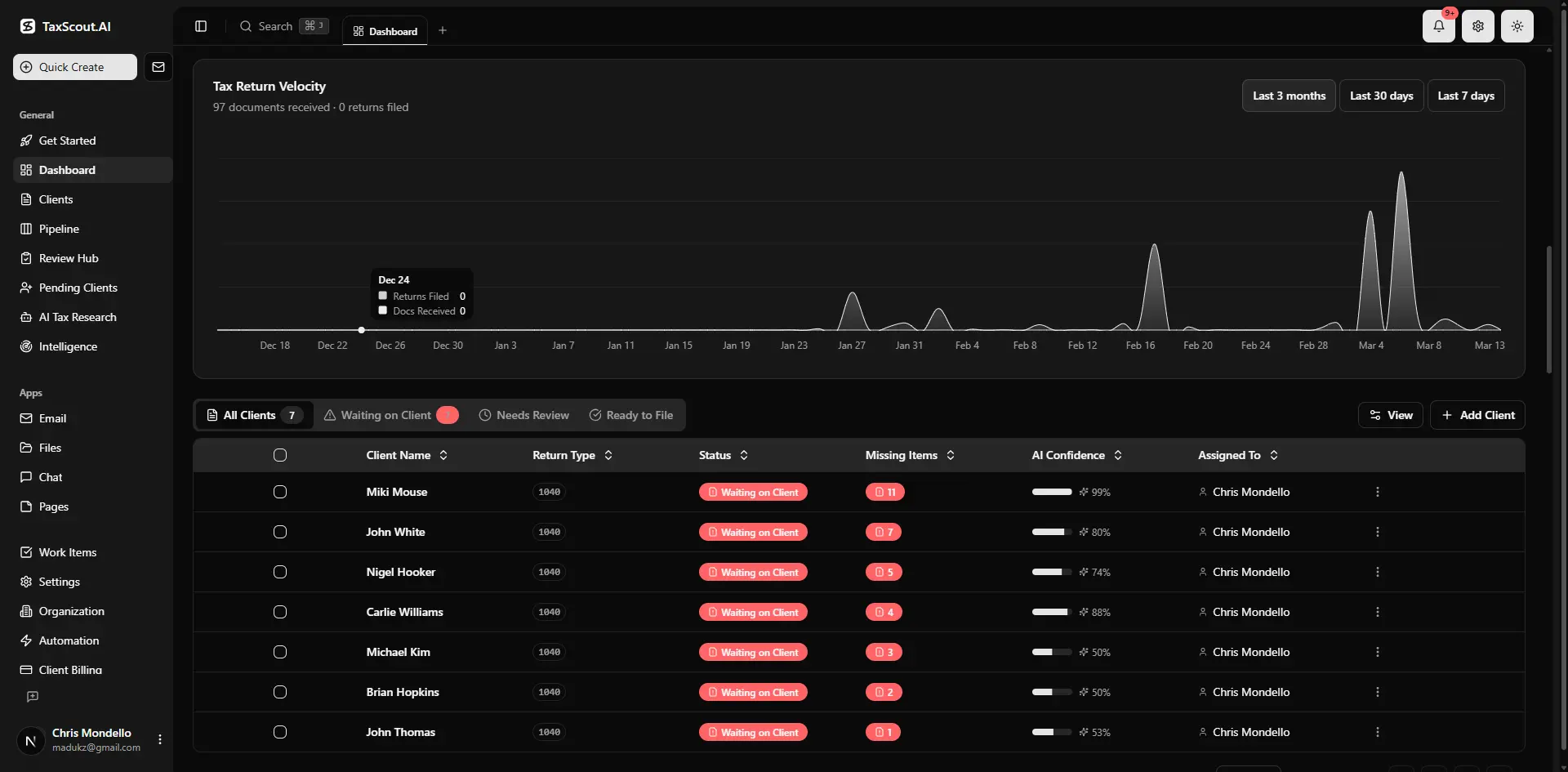
Real-time dashboard showing returns in progress, revenue, and upcoming deadlines
Frequently Asked Questions
Guaranteed payments for services rendered to the partnership are subject to self-employment tax under IRC Section 1402(a). However, guaranteed payments for the use of capital — such as a minimum preferred return on a partner's capital contribution — are not subject to SE tax because they represent a return on investment, not compensation for labor. CPAs must parse the operating agreement to determine whether each payment is for services or capital, and bifurcate hybrid arrangements accordingly.
Keep reading
Guidance Under Section 355 Concerning Device and Active Trade or Business Partial Withdrawal
Oct 22, 2026 · 1 min read
Section 1031 Boot Tax: How CPAs Calculate and Minimize Taxable Gain in Partial Exchanges
Oct 21, 2026 · 1 min read
Section 1231 Gain Planning: How CPAs Minimize Tax on Business Asset Sales
Oct 21, 2026 · 1 min read
Stay up to date
Get the latest tax tech insights delivered to your inbox.